
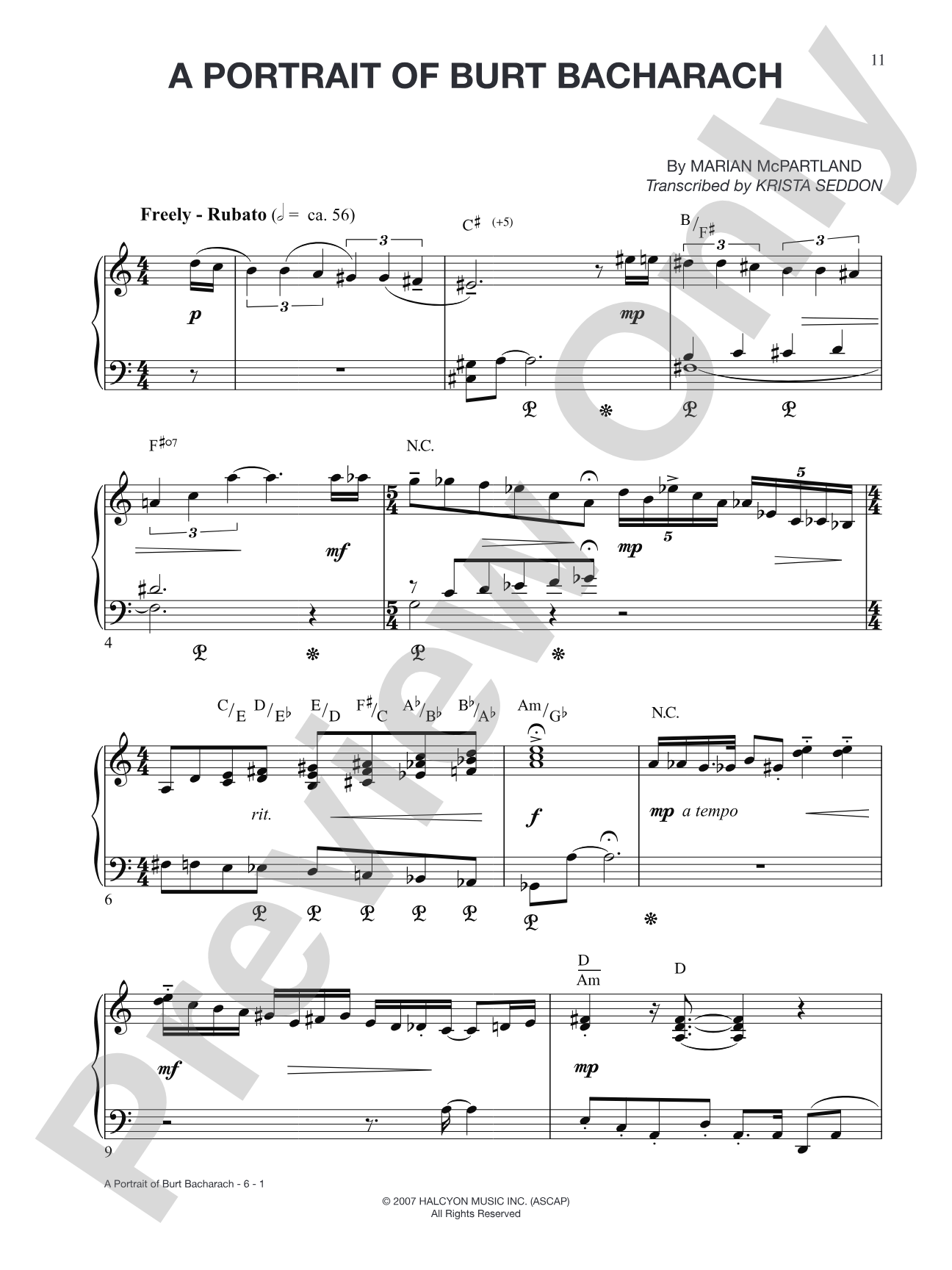
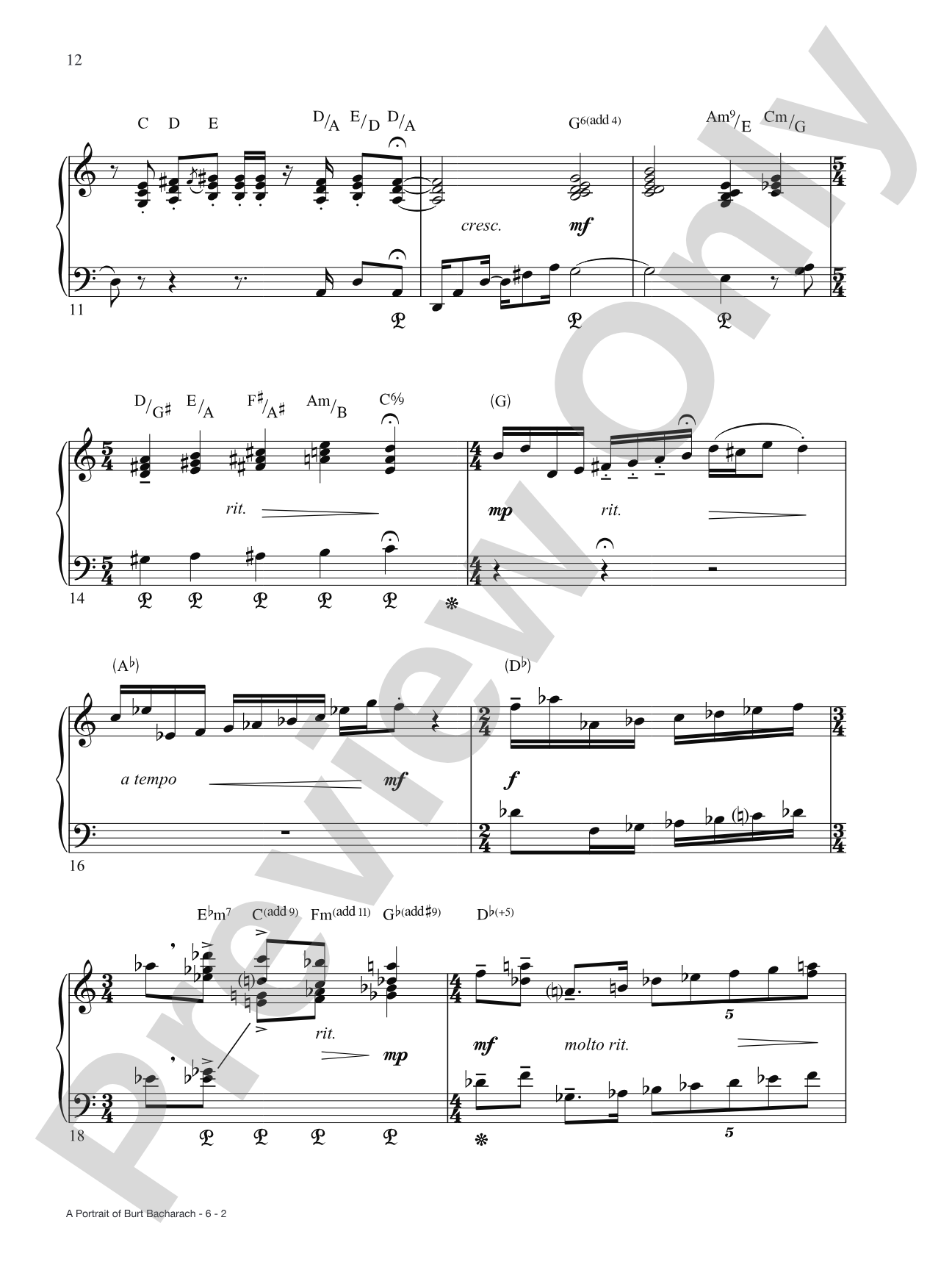

A Portrait of Burt Bacharach: Piano
Marian McPartland
Level: Advanced
Item: 00-PS-0013075
$5.99
Pickup currently not available
Related Items
A Portrait of Clint Eastwood: Piano |
$4.99
|
View | |
A Song for Earma: Piano |
$5.99
|
View | |
A Portrait of Bix: Piano |
$5.99
|
View | |
A Portrait of Billy Taylor: Piano |
$4.99
|
View | |
A Portrait of Ron Carter: Piano |
$5.99
|
View | |
A Portrait of Keith Jarrett: Piano |
$5.99
|
View | |
A Portrait of Eldar: Piano |
$5.99
|
View | |
A Portrait of Whitney Balliett: Piano |
$4.99
|
View | |
Marian McPartland Portraits: The Second Set: Piano Book |
$17.99
|
View |
Description
This book is the sequel to Marian McPartland's previously published collection of musical impressions of personalities interviewed on the National Public Radio program Marian McPartland's Piano Jazz. In this second edition, McPartland's compositions celebrate the personalities and musicality of actor Clint Eastwood, writer Whitney Balliett, composer Burt Bacharach, jazz musicians Ron Carter, Keith Jarrett, and Dr. Billy Taylor, and her own musical reflection of Bix Beiderbecke.


A Portrait of Burt Bacharach: Piano isn't in MakeMusic Cloud just yet...but it could be. Let us know you'd like to see it, and you'll help shape what comes next. In the meantime, start a free trial and dive into thousands of interactive titles your students can play along with today.
Request This Title
Tell us you want it.
Start Your Free Trial
Explore everything that's ready to play right now.
Sample Audio
No sample audio found.
Sample Video
No sample videos found.
Additional Details
Publisher:
Alfred Music
Page Count:
64
SKU:
00-PS-0013075
More about this title
About the Composer: Marian McPartland
Marian McPartland (1918-2020) was a pioneering jazz pianist and bandleader whose career spanned seven decades. Born in England, she moved to the United States and became a fixture of the American jazz scene, performing at major venues and festivals while maintaining a distinctive compositional voice rooted in bebop and cool jazz sensibilities.
McPartland is perhaps best known as the creator and host of "Marian McPartland's Piano Jazz," the longest-running jazz radio program in NPR history. The show gave her a unique platform to interview and perform alongside jazz luminaries, composers, and artists from diverse fields. Her "Personality" compositions, written as musical tributes to her guests, represent a singular achievement: jazz portraiture through the piano, capturing not just musical style but individual character and spirit.
Why we love this
McPartland's gift for crystallizing a person's essence into a piano piece makes this collection a masterclass in character writing and musical storytelling. Each composition balances respect for its subject with McPartland's own harmonic voice, offering advanced pianists the chance to explore how jazz can capture personality without resorting to imitation. The range of subjects—from Beiderbecke's introspective elegance to Bacharach's sophisticated harmonic language—demands imaginative interpretation and yields fresh musical discovery with each reading.
What to expect
These pieces breathe with the intimacy of a one-on-one conversation. McPartland's piano voice is warm and observant, never caricature; each composition unfolds with the nuance and vulnerability of a portrait session, balancing moments of gentle reflection with flashes of the subject's distinctive personality and musical brilliance.
Who it's for
Advanced pianists drawn to jazz composition and interpretation will find rich material here. This collection suits jazz students preparing for performance or study at the university level, as well as experienced classical pianists expanding into the jazz repertoire and seeking pieces that reward deep musical and intellectual engagement.
How to get the most out of it
- Study recordings of your subject when available (especially for Bacharach and the jazz musicians) to absorb their musical temperament, phrasing, and interpretive choices before internalizing McPartland's compositional response to them.
- Treat harmonic color as a primary expressive tool; McPartland's voicings carry emotional weight equal to the melodic line, so voice each chord with intention and listen for the resonance underneath.
- Resist the urge to swing rigidly; McPartland's touch ranges from loose and conversational to precisely articulated, shifting within pieces to reflect changing moods and musical personalities.
- Use the full range of dynamic control and pedaling to shape the impressionistic and reflective passages, which often define these pieces as much as their more energetic sections.
How to use it
Feature individual pieces in solo recitals or jazz ensemble concerts, pairing them with interviews or recorded excerpts from "Piano Jazz" to give audiences context for McPartland's musical choices. The collection also works beautifully as a complete solo set for a pianist presenting a retrospective of McPartland's compositional voice.
Skills your students will build
- Interpreting jazz harmony and voice leading at an advanced level
- Capturing character and emotional nuance through compositional detail
- Balancing melodic storytelling with harmonic color and texture
- Performing jazz with flexibility in articulation, dynamics, and phrasing
- Understanding how jazz composers reference and honor musical personalities