
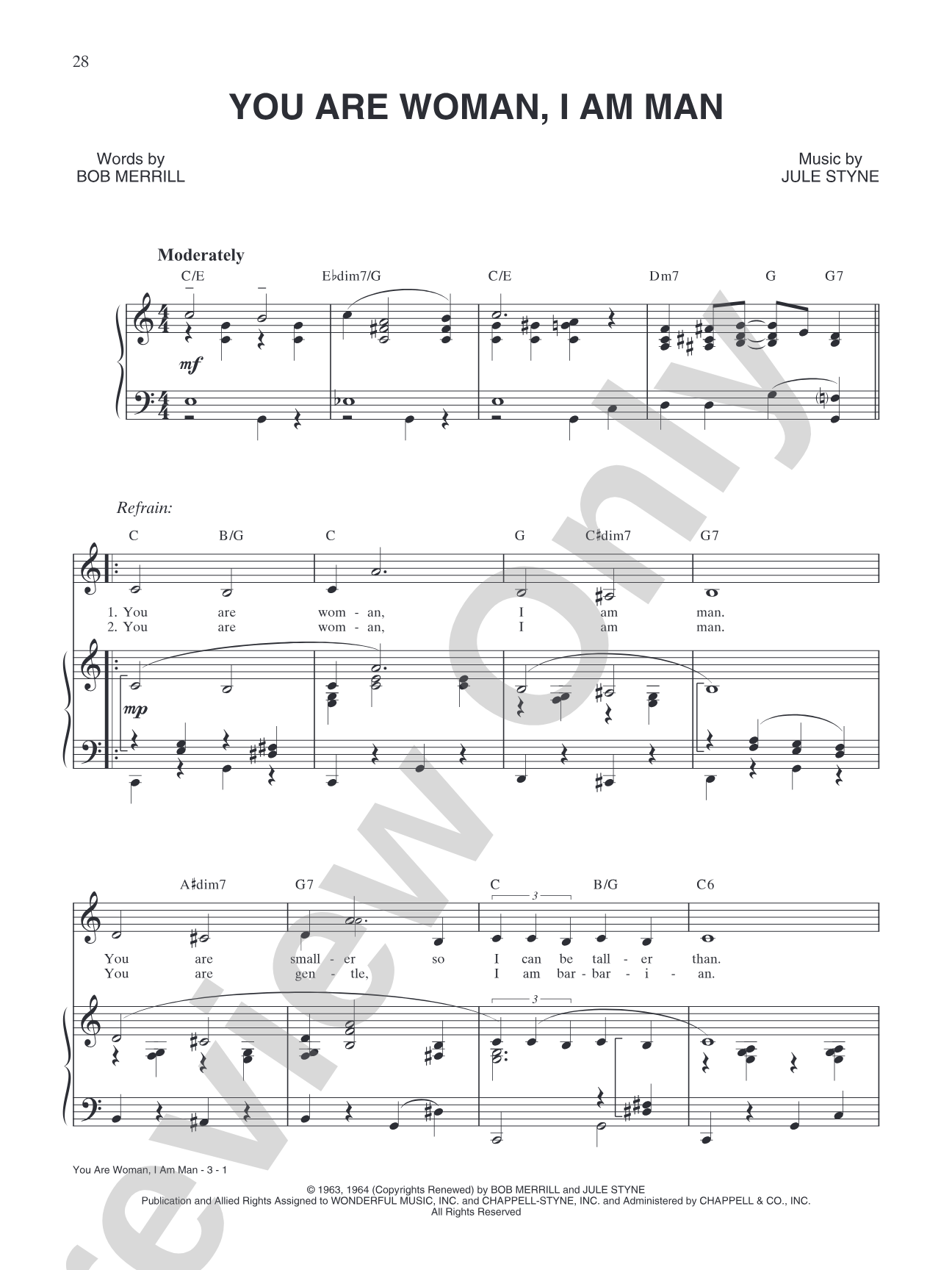

You Are Woman, I Am Man (from "Funny Girl"): Piano/Vocal/Chords
Music by Jule Styne, lyrics by Bob Merrill
Item: 00-XS-0000469
$4.99
One moment…
Related Items
Funny Girl (from "Funny Girl"): Piano/Vocal/Chords |
$4.99
|
View | |
The Music That Makes Me Dance (from "Funny Girl"): Piano/Vocal/Chords |
$4.99
|
View | |
Sadie, Sadie (from "Funny Girl"): Piano/Vocal/Chords |
$4.99
|
View | |
Who Are You Now? (from "Funny Girl"): Piano/Vocal/Chords |
$4.99
|
View | |
His Love Makes Me Beautiful (from "Funny Girl"): Piano/Vocal/Chords |
$4.99
|
View | |
I Want to be Seen with You Tonight (from "Funny Girl"): Piano/Vocal/Chords |
$4.99
|
View | |
Henry Street (from "Funny Girl"): Piano/Vocal/Chords |
$4.99
|
View | |
Cornet Man (from "Funny Girl"): Piano/Vocal/Chords |
$4.99
|
View | |
Don't Rain On My Parade (from "Funny Girl"): Piano/Vocal/Chords |
$5.99
|
View | |
I'm the Greatest Star (from "Funny Girl"): Piano/Vocal/Chords |
$5.99
|
View | |
People (from "Funny Girl"): Piano/Vocal/Chords |
$4.99
|
View |
Description
Funny Girl is Broadway's classic rags-to-riches love story about legendary entertainer Fanny Brice during Ziegfeld's Golden Era of burlesque. Its beloved score by Jule Styne and Bob Merrill is filled with unforgettable songs like "Don't Rain on My Parade," "I'm the Greatest Star," "The Music That Makes Me Dance," and the iconic hit "People." Barbra Streisand first immortalized these songs in the original 1964 Broadway smash, and yet again in the famous movie adaptation several years later. The show continues to enjoy immense popularity today with a major Broadway revival and countless productions worldwide. Pianists and singers will delight in this updated piano/vocal selections folio, in which the arrangements of several songs have been upgraded to better reflect the familiar original cast recordings compared to earlier printed editions. Also added is the song "Funny Girl," which Styne and Merrill wrote for the 1968 movie adaptation. Contents: * I'm the Greatest Star * Cornet Man * His Love Makes Me Beautiful * I Want to Be Seen with You Tonight * Henry Street * People * You Are Woman, I Am Man * Don't Rain on My Parade * Sadie, Sadie * Who Are You Now? * The Music That Makes Me Dance * Funny Girl.


You Are Woman, I Am Man (from "Funny Girl"): Piano/Vocal/Chords isn't in MakeMusic Cloud just yet...but it could be. Let us know you'd like to see it, and you'll help shape what comes next. In the meantime, start a free trial and dive into thousands of interactive titles your students can play along with today.
Request This Title
Tell us you want it.
Start Your Free Trial
Explore everything that's ready to play right now.
Sample Audio
No sample audio found.
Sample Video
No sample videos found.
Additional Details
Publisher:
Alfred Music
Page Count:
52
SKU:
00-XS-0000469
More about this title
About the Composer: Jule Styne
Jule Styne (1905–1975) was a prolific Broadway composer whose gift for melody shaped the sound of mid-century American musical theater. He collaborated with lyricist Bob Merrill on Funny Girl, one of Broadway's most enduring comedies, and his work across decades of productions demonstrates an instinctive understanding of what singers need to shine. His scores balance theatrical storytelling with singable, memorable lines that audiences leave humming.
Beyond Funny Girl, Styne's catalog includes Gypsy, Bells Are Ringing, and Gentlemen Prefer Blondes, works that continue to define the golden age of Broadway. He understood that great musical theater music serves the character and story first; technical showiness comes only when it serves the moment. For singers and pianists, his writing remains a masterclass in how to craft songs that feel both crafted and spontaneous.
Why we love this
This folio captures the Funny Girl score with arrangements that closely mirror the original cast recordings, making it invaluable for singers who grew up with Streisand's definitive performances. The inclusion of "Funny Girl" from the 1968 movie adaptation adds welcome depth to what was already a stellar collection. Pianists will find the accompaniments gratifyingly detailed without becoming overshadowed, allowing the voice to remain the focus while the keys provide genuine musical substance.
What to expect
The music captures the glamour and vulnerability of Fanny Brice's world: brash comedic numbers like "I'm the Greatest Star" sit alongside tender moments of genuine longing in "The Music That Makes Me Dance" and "You Are Woman, I Am Man." There's a theatrical generosity throughout, with melodies that feel both intimate and grand, whether the scene calls for Fanny's defiant charm or her quieter emotional depths.
Who it's for
Singers preparing audition material, performing selections from Funny Girl, or building a Broadway repertoire will find dependable, familiar arrangements in this folio. Pianists accompanying vocalists in lesson, rehearsal, or performance settings will appreciate accompaniments that are musically intelligent and reference the show's most celebrated recordings. This collection serves advanced students and working professionals equally well.
How to get the most out of it
- Balance the vocal line against the piano part by thinking of the accompaniment as a partner rather than support; Styne's arrangements deserve to be heard clearly even as the singer carries the melody.
- Pay attention to the rhythmic life in the piano figures, especially in numbers like "Don't Rain on My Parade" and "You Are Woman, I Am Man," where syncopation and forward motion are essential to the character.
- Use dynamic contrast between verses and refrains to shape the narrative arc of each song; these pieces tell stories, and pacing through quieter moments makes the jubilant returns more impactful.
- Listen closely to the original recordings when learning the material; the printed arrangements reference those performances, and catching the nuances of phrasing and interpretation will elevate both the singing and playing.
How to use it
Use individual selections for audition preparation, recital programs, or classroom performance in musical theater units. The full folio works beautifully as a performer's anthology, allowing singers to explore the range of character and mood Styne and Merrill created. Pair selections with other Golden Age Broadway material for a concert program that showcases the enduring appeal of this era's songwriting.
Skills your students will build
- Legible sight-reading of piano/vocal score layouts and chord symbols
- Phrasing and interpretation informed by original cast recordings
- Syncopated rhythm and jazz-inflected accompaniment patterns typical of 1960s Broadway
- Character-driven vocal storytelling across contrasting song types (comedic, tender, triumphant)
- Coordination between vocal line and piano part in ensemble singing contexts