
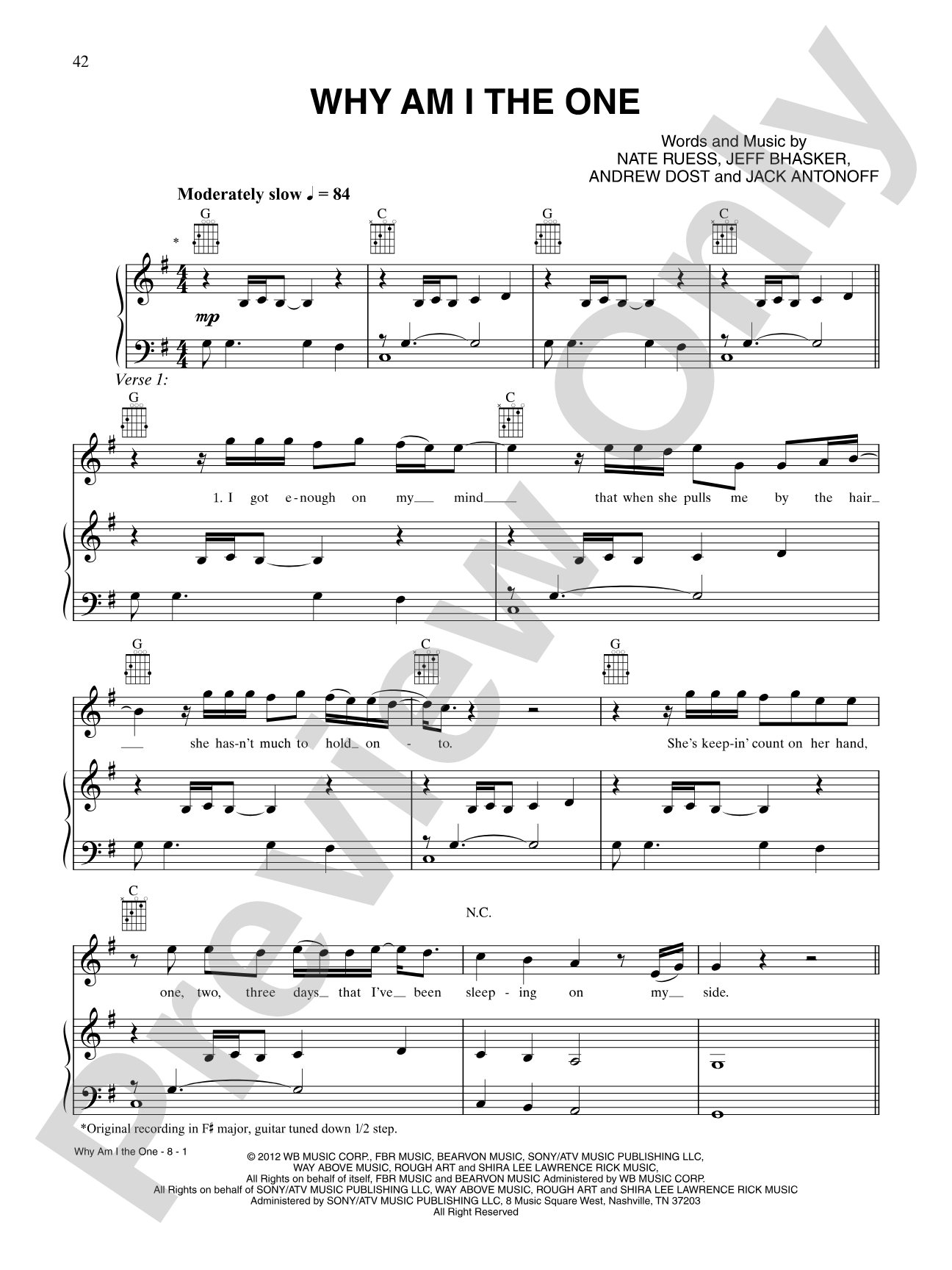
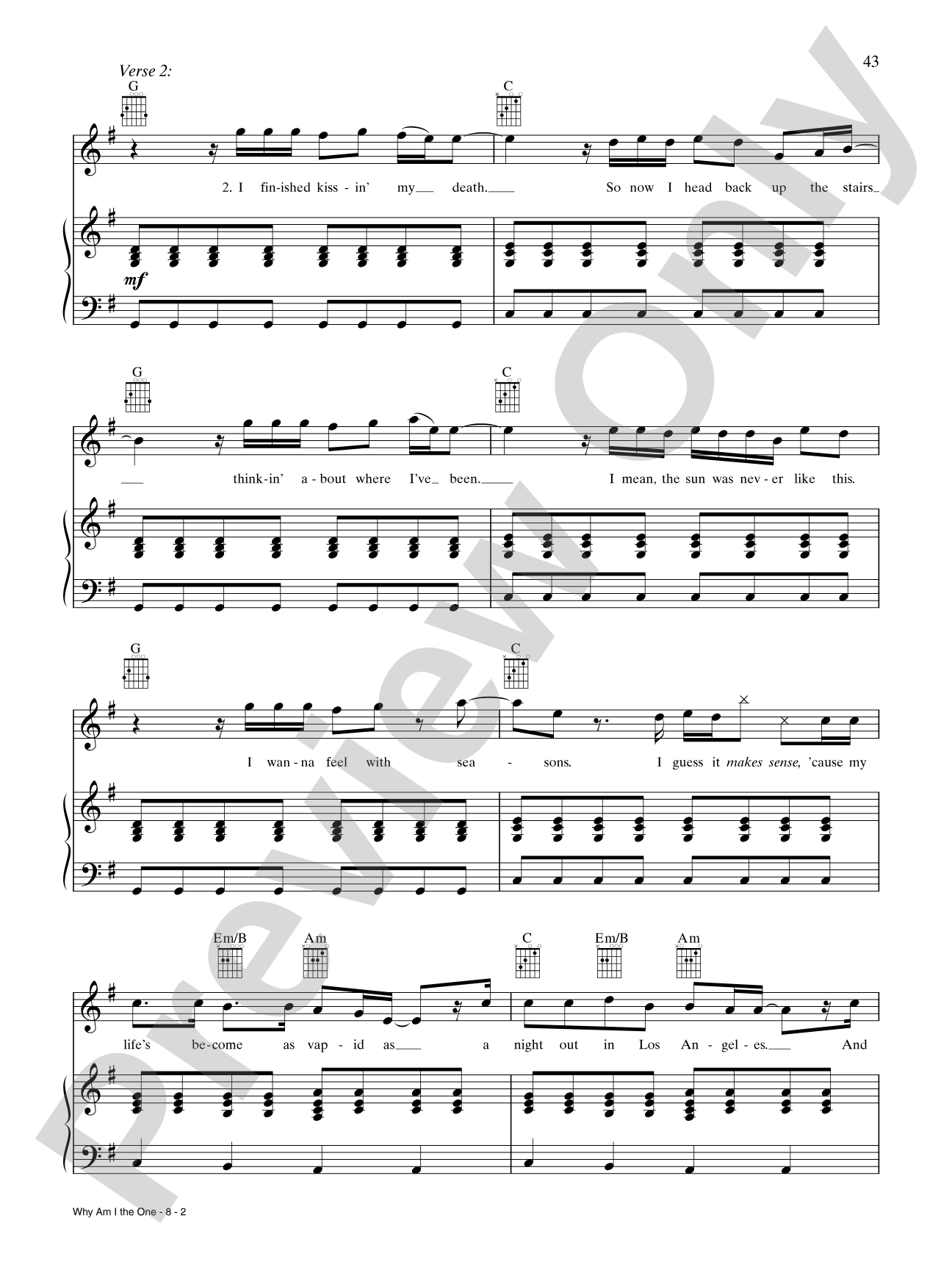

Why Am I the One: Piano/Vocal/Chords
fun.
Item: 00-PS-0015613
$5.99
One moment…
Related Items
We Are Young: Piano/Vocal/Chords |
$5.99
|
View | |
Some Nights: Piano/Vocal/Chords |
$9.99
|
View | |
All Alone: Piano/Vocal/Chords |
$5.99
|
View | |
All Alright: Piano/Vocal/Chords |
$5.99
|
View | |
Carry On: Piano/Vocal/Chords |
$5.99
|
View | |
It Gets Better: Piano/Vocal/Chords |
$5.99
|
View | |
One Foot: Piano/Vocal/Chords |
$5.99
|
View | |
Out on the Town: Piano/Vocal/Chords |
$9.99
|
View | |
Some Nights (Intro): Piano/Vocal/Chords |
$5.99
|
View | |
Stars: Piano/Vocal/Chords |
$9.99
|
View |
Description
The chart-topping second album by Grammy®-winning, indie superstar band fun. is packed with melodic and piano-driven songs that their fans want to play! This album-matching sheet music collection makes it possible, with great-sounding piano arrangements that accurately depict what's played on the album. Complete vocal melodies, lyrics, and basic guitar chord fingering grids are included. Titles: Some Nights (Intro) * Some Nights * We Are Young * Carry On * It Gets Better * Why Am I the One * All Alone * All Alright * One Foot * Stars * Out on the Town.


Discover MakeMusic Cloud: thousands of interactive titles your students can play along with today.
Sample Audio
No sample audio found.
Sample Video
No sample videos found.
Additional Details
Publisher:
Alfred Music
Page Count:
92
SKU:
00-PS-0015613
More about this title
About the Composer: Nate Ruess
Nate Ruess is the lead singer and primary songwriter of fun., the indie pop band that emerged in the early 2010s with a distinctive blend of theatrical pop sensibilities and genuinely inventive songwriting. His compositions, often developed in collaboration with producers and co-writers like Jeff Bhasker and Jack Antonoff, balance hooky melodies with unexpected harmonic turns and textural variety that rewards close listening.
Why we love this
This collection captures songs that students actually want to play, drawn from an album that hit cultural moment. The arrangements stay true to what listeners know from the recordings while remaining playable for pianists at intermediate levels, and the inclusion of chord grids makes it accessible for guitarists or pianists learning to comp.
What to expect
These songs inhabit a thoughtful space between indie sincerity and pop accessibility. You'll find yourself navigating memorable melodies that sit comfortably in the voice, bright piano figures that suggest the band's theatrical sensibility, and harmonic choices that feel both fresh and emotionally grounded.
Who it's for
Pianists and singers who love contemporary pop and want to perform music they genuinely connect to, whether in recitals, studios, or informal settings. Guitarists will find the chord grids particularly useful for adding texture to vocal-piano performances or working independently.
How to get the most out of it
- Pay attention to the piano's rhythmic role in songs like 'Some Nights,' where the accompaniment pattern drives the groove as much as the vocal melody does.
- Balance the vocal line against the piano arrangement; these songs work best when the accompaniment feels conversational rather than subordinate.
- Use the chord grids as a starting point for exploring your own voicings, especially in the more open, sparse sections where the original recording leaves room for interpretation.
- Lean into the song-specific dynamic shifts; fun.'s production hinges on contrast between intimate verses and fuller sections.
How to use it
Solo pianists can feature standout tracks in recitals or student showcases, while singers performing with piano accompaniment will find album-accurate arrangements that don't require a full band to sound complete. The variety of tempos and moods across 11 titles makes this collection useful for building thematic recital sets around contemporary music.
Skills your students will build
- reading and playing piano-driven pop arrangements with rhythmic precision
- coordinating vocal phrasing with piano accompaniment
- interpreting chord grids and exploring harmonic voicings on guitar
- understanding contemporary pop song structure and production-aware arrangement choices
- sight-reading melodies in pop contexts with varying note densities