
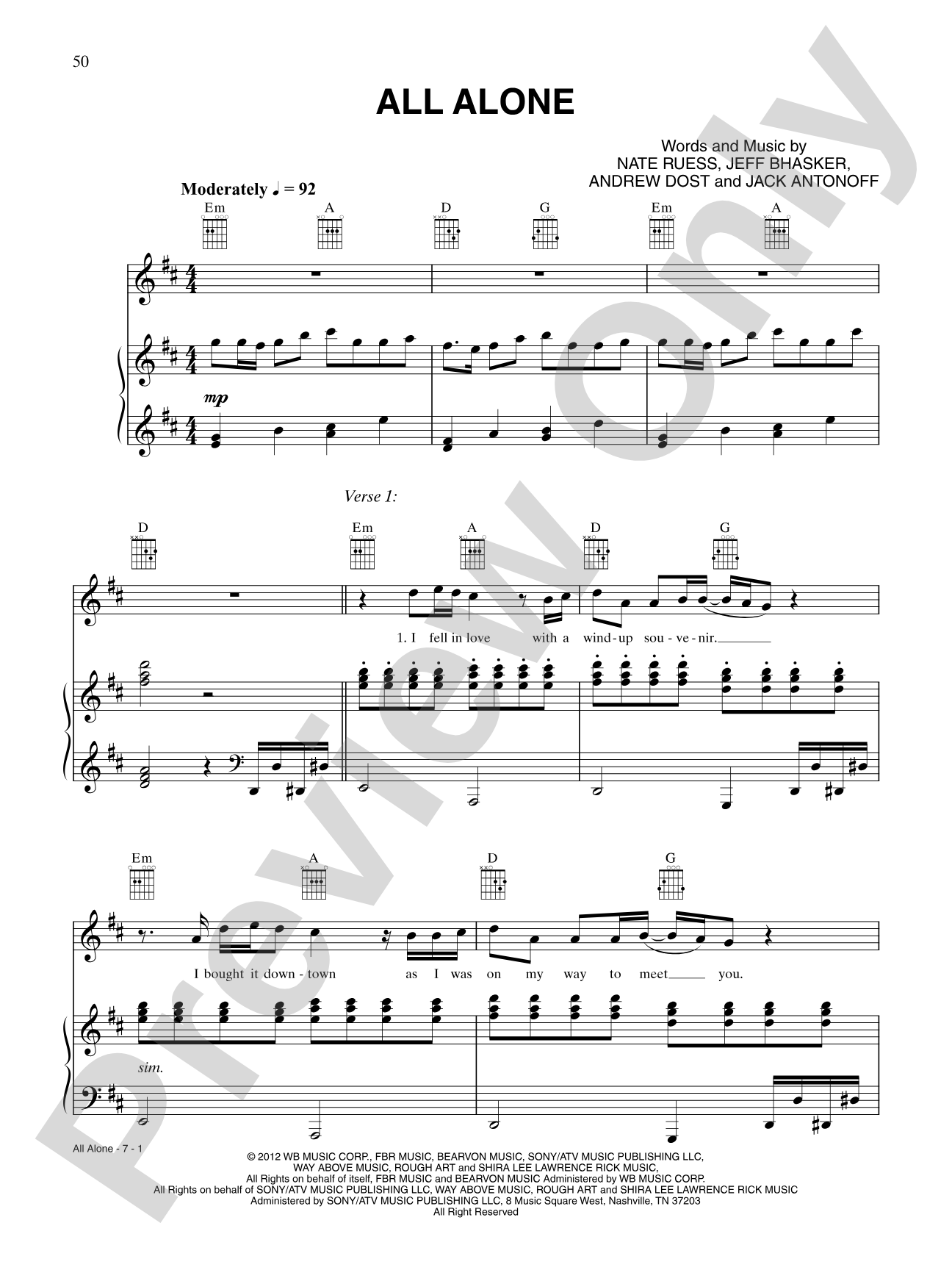
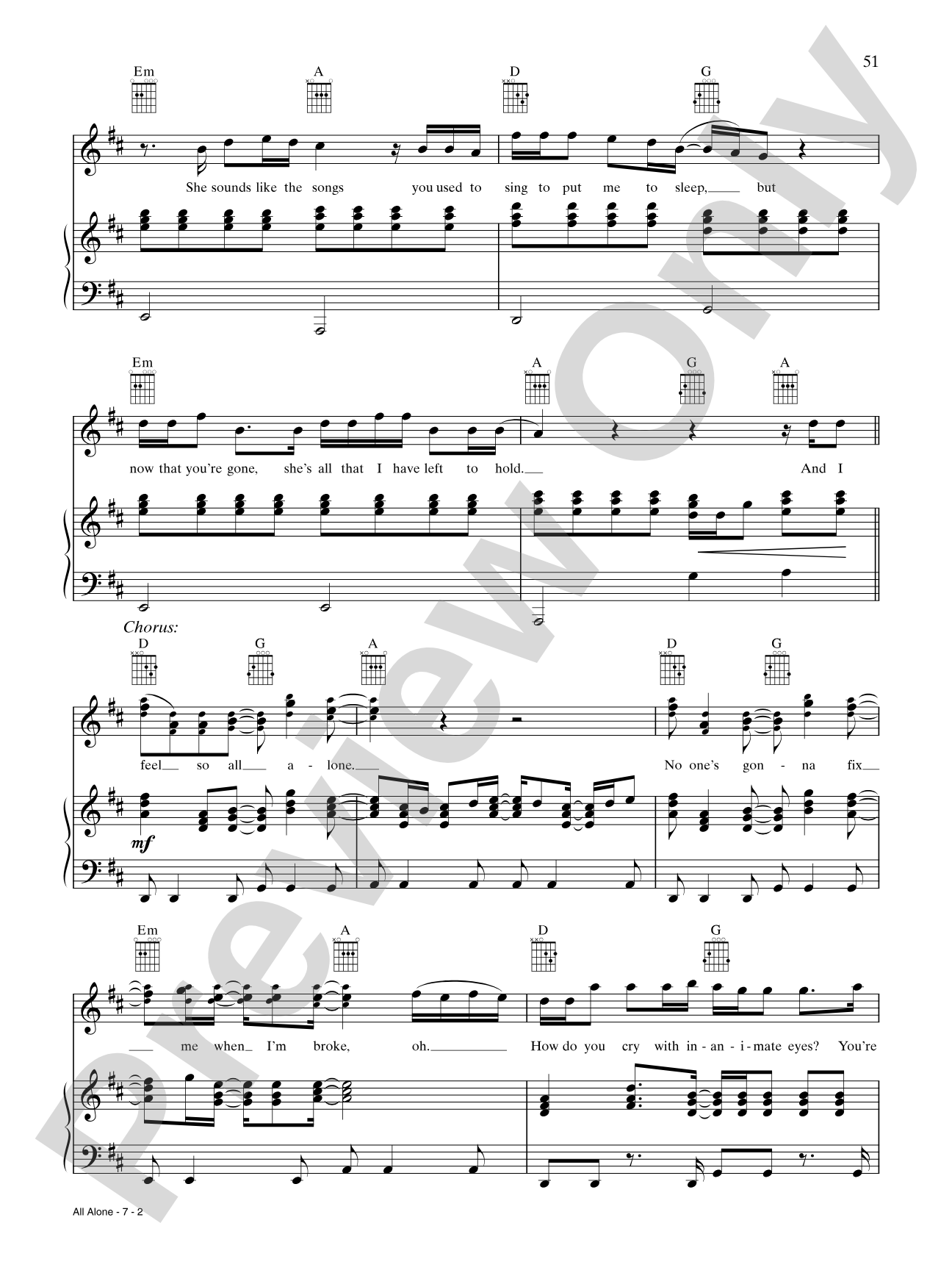

All Alone: Piano/Vocal/Chords
fun.
Item: 00-PS-0015605
$5.99
One moment…
Related Items
We Are Young: Piano/Vocal/Chords |
$5.99
|
View | |
Some Nights: Piano/Vocal/Chords |
$9.99
|
View | |
All Alright: Piano/Vocal/Chords |
$5.99
|
View | |
Carry On: Piano/Vocal/Chords |
$5.99
|
View | |
It Gets Better: Piano/Vocal/Chords |
$5.99
|
View | |
One Foot: Piano/Vocal/Chords |
$5.99
|
View | |
Out on the Town: Piano/Vocal/Chords |
$9.99
|
View | |
Some Nights (Intro): Piano/Vocal/Chords |
$5.99
|
View | |
Stars: Piano/Vocal/Chords |
$9.99
|
View | |
Why Am I the One: Piano/Vocal/Chords |
$5.99
|
View |
Description
The chart-topping second album by Grammy®-winning, indie superstar band fun. is packed with melodic and piano-driven songs that their fans want to play! This album-matching sheet music collection makes it possible, with great-sounding piano arrangements that accurately depict what's played on the album. Complete vocal melodies, lyrics, and basic guitar chord fingering grids are included. Titles: Some Nights (Intro) * Some Nights * We Are Young * Carry On * It Gets Better * Why Am I the One * All Alone * All Alright * One Foot * Stars * Out on the Town.


Discover MakeMusic Cloud: thousands of interactive titles your students can play along with today.
Sample Audio
No sample audio found.
Sample Video
No sample videos found.
Additional Details
Publisher:
Alfred Music
Page Count:
92
SKU:
00-PS-0015605
More about this title
About the Composer: Nate Ruess
Nate Ruess is the lead vocalist and primary songwriter for fun., the indie pop band that emerged from New York in the early 2010s. His songwriting blends introspective lyricism with infectious pop melodies, often built around piano and synth textures that became the band's signature sound. Ruess has collaborated across genres and platforms, from film soundtracks to theatrical projects, bringing a strong melodic sensibility to everything he writes.
As a composer working in popular music, Ruess focuses on accessibility without sacrificing emotional depth. His arrangements prioritize memorable hooks and singable melodies, making his work valuable for musicians learning to balance commercial appeal with genuine artistry.
Why we love this
These arrangements capture the infectious energy and piano-forward production that made fun.'s breakthrough album so appealing to young musicians. The collection balances contemporary pop sensibility with solid harmonic structure, giving pianists and vocalists genuinely rewarding material that connects with their listening lives. Singers get melodies that sit well on the voice, guitarists have accessible chord voicings, and pianists work with arrangements that sound like the recordings without requiring advanced technique.
What to expect
These arrangements inhabit the emotional middle ground that defines fun.'s work: uplifting without being saccharine, introspective without being heavy. The piano writing feels conversational, often establishing an intimate mood before the vocal melody enters. There's real melodic substance beneath the pop accessibility, with harmonic turns that reward careful listening.
Who it's for
This collection serves singers and pianists in recital settings, small ensemble groups, or studio musicians learning contemporary pop arrangements. Guitar players can use it for chording practice and understanding how indie pop voicings differ from standard guitar charts. Any performer comfortable reading melody, basic harmony, and guitar chord symbols will find usable material here.
How to get the most out of it
- Build the vocal line with the piano rather than against it. These arrangements are designed so melody and accompaniment work together; listen to how the recorded versions layer the voices.
- Pay attention to the rhythmic pocket in the piano parts. Many of these songs live in the space between strict time and groove, especially in the intro passages. Lock in with a drummer or metronome to find where the elasticity happens.
- Use the chord grids to comp underneath rather than play them literally. Guitar and keyboard can trade rhythmic responsibility throughout a song; experiment with which instrument supports the vocal line at different moments.
- Balance the vocal line so it sits above the piano arrangement without strain. These melodies are singable, but they work best when the accompanying instruments don't compete for the same frequency space.
How to use it
Feature these as solo recital pieces for piano and voice, or build a contemporary pop set that shows students the craft behind current charts. They work well in informal concert settings or studio recording projects where vocalists and instrumentalists collaborate. Consider programming a full set of fun. songs to demonstrate how a band's catalog holds together musically.
Skills your students will build
- Reading and interpreting guitar chord grids in a vocal context
- Balancing melody and accompaniment at the keyboard
- Singing with piano accompaniment that doesn't double the vocal line
- Understanding contemporary pop voice leading and harmonic movement
- Translating recorded arrangements into playable sheet music formats