
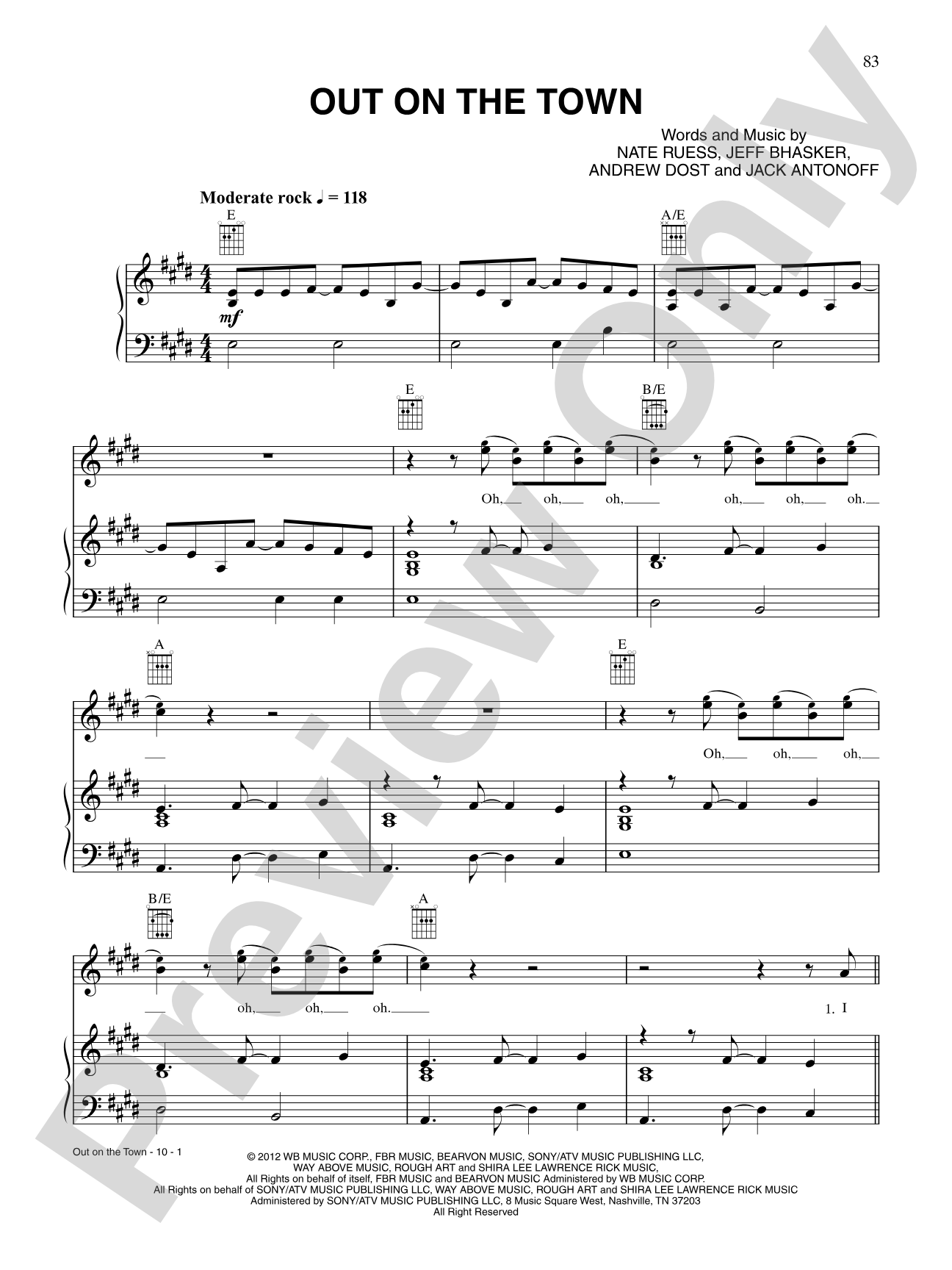
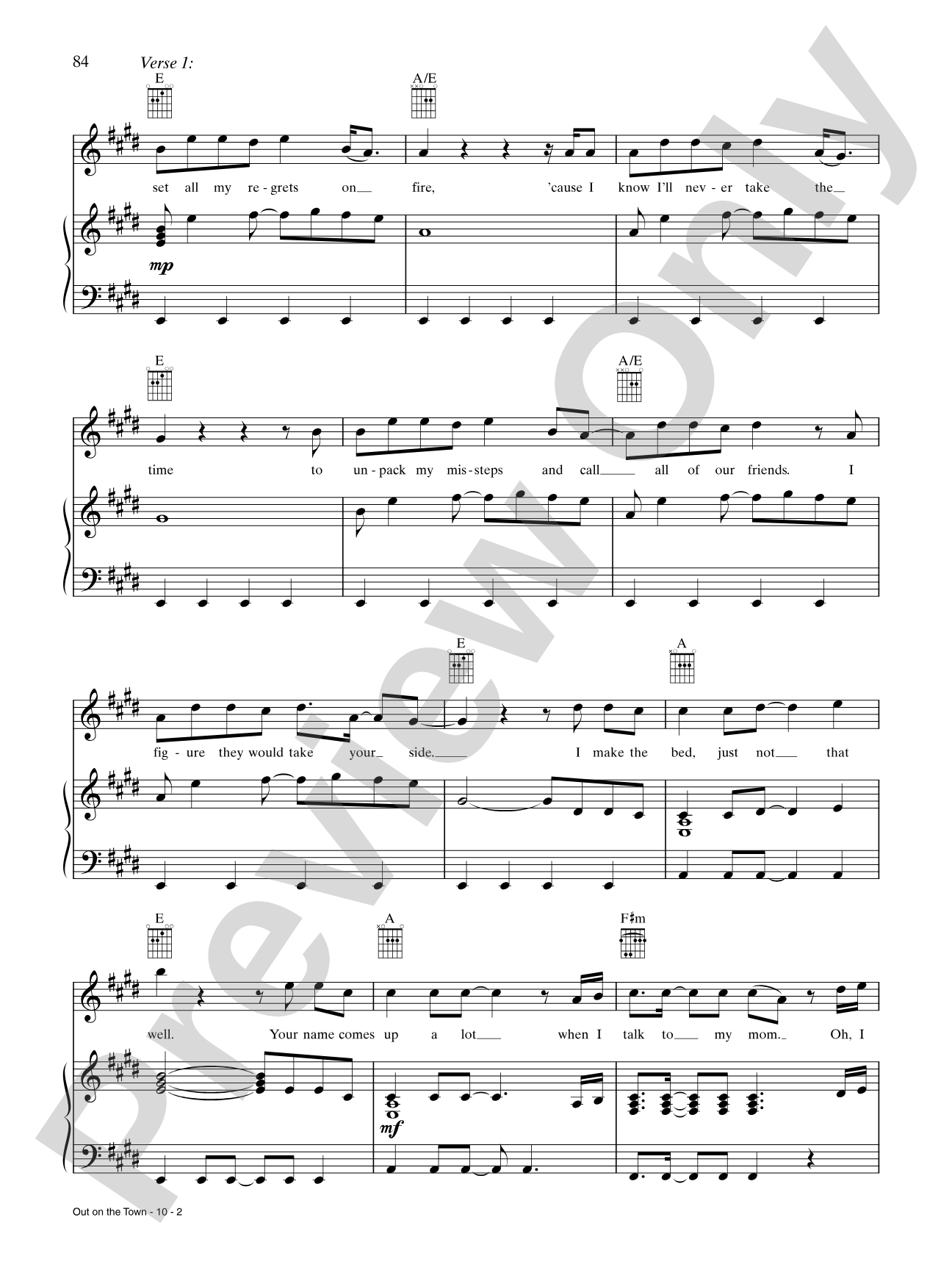

Out on the Town: Piano/Vocal/Chords
fun.
Item: 00-PS-0015610
$9.99
One moment…
Related Items
We Are Young: Piano/Vocal/Chords |
$5.99
|
View | |
Some Nights: Piano/Vocal/Chords |
$9.99
|
View | |
All Alone: Piano/Vocal/Chords |
$5.99
|
View | |
All Alright: Piano/Vocal/Chords |
$5.99
|
View | |
Carry On: Piano/Vocal/Chords |
$5.99
|
View | |
It Gets Better: Piano/Vocal/Chords |
$5.99
|
View | |
One Foot: Piano/Vocal/Chords |
$5.99
|
View | |
Some Nights (Intro): Piano/Vocal/Chords |
$5.99
|
View | |
Stars: Piano/Vocal/Chords |
$9.99
|
View | |
Why Am I the One: Piano/Vocal/Chords |
$5.99
|
View |
Description
The chart-topping second album by Grammy®-winning, indie superstar band fun. is packed with melodic and piano-driven songs that their fans want to play! This album-matching sheet music collection makes it possible, with great-sounding piano arrangements that accurately depict what's played on the album. Complete vocal melodies, lyrics, and basic guitar chord fingering grids are included. Titles: Some Nights (Intro) * Some Nights * We Are Young * Carry On * It Gets Better * Why Am I the One * All Alone * All Alright * One Foot * Stars * Out on the Town.


Discover MakeMusic Cloud: thousands of interactive titles your students can play along with today.
Sample Audio
No sample audio found.
Sample Video
No sample videos found.
Additional Details
Publisher:
Alfred Music
Page Count:
92
SKU:
00-PS-0015610
More about this title
About the Composer: Nate Ruess
Nate Ruess is the lead vocalist and primary songwriter of fun., the indie pop band that achieved mainstream success in the early 2010s. His compositions balance infectious pop melodies with emotional depth, drawing from his background in gospel and soul music. Ruess's work as a composer demonstrates a sophisticated understanding of how vocal melody, harmony, and production can work together to create songs that feel both radio-friendly and personally resonant.
Why we love this
These arrangements capture the piano-forward production of the album without oversimplifying the harmonic language or vocal writing. Students and young musicians gravitate to repertoire they actually want to play, and this collection includes genuine hits alongside deeper tracks that reward repeated listening and discovery. The vocal line sits naturally with chord changes that are accessible but not boring, making this material work equally well for classroom performance, recitals, or independent study.
What to expect
These songs swing between infectious exuberance and genuine vulnerability. The piano writing feels both lively and intimate, with moments that build to stadium-sized anthems alongside quieter passages where every note matters. There's a warmth to the harmonic palette that makes even complex chord progressions feel approachable and emotionally clear.
Who it's for
Pianists and singers at the intermediate to advanced high school level who want to perform contemporary popular music with harmonic substance. Musicians studying voice, piano, or guitar in private studios or school programs will find familiar, engaging material that motivates practice and performance. Anyone interested in learning how vocal melody and accompaniment work together in modern production will benefit from studying these songs.
How to get the most out of it
- Balance the vocal melody against the piano accompaniment rather than letting either disappear. The album's strength lies in how the voice and keys interact, so listen closely to how much space each occupies in your arrangement.
- Pay attention to the dynamics printed in the score. fun.'s production often builds through dynamic layering rather than tempo changes, so gradual shifts in volume will shape the emotional arc more effectively than rushing ahead.
- Use the chord grids not as a crutch but as a roadmap for understanding the harmonic movement. Understanding why certain chords follow others will deepen your interpretation of the melody.
- When playing these songs in ensemble settings with guitar accompaniment, lock the rhythmic feel early. Many of these tracks have a specific groove that depends on both instruments sitting together comfortably.
How to use it
Include these arrangements in a contemporary music unit that demonstrates how modern songwriters approach melody and harmony. A recital featuring two or three fun. songs showcases what engaged student musicians sound like when they're performing material they genuinely connect with. The mix of upbeat numbers and reflective ballads also works well in showcase concerts where variety in mood and energy is programmatically valuable.
Skills your students will build
- Reading and interpreting chord symbols accurately
- Balancing vocal melody against accompanying figures
- Maintaining rhythmic precision in syncopated pop grooves
- Transitioning smoothly between different harmonic areas
- Understanding modern pop song structure and phrasing
- Collaborating between voice, piano, and guitar parts