
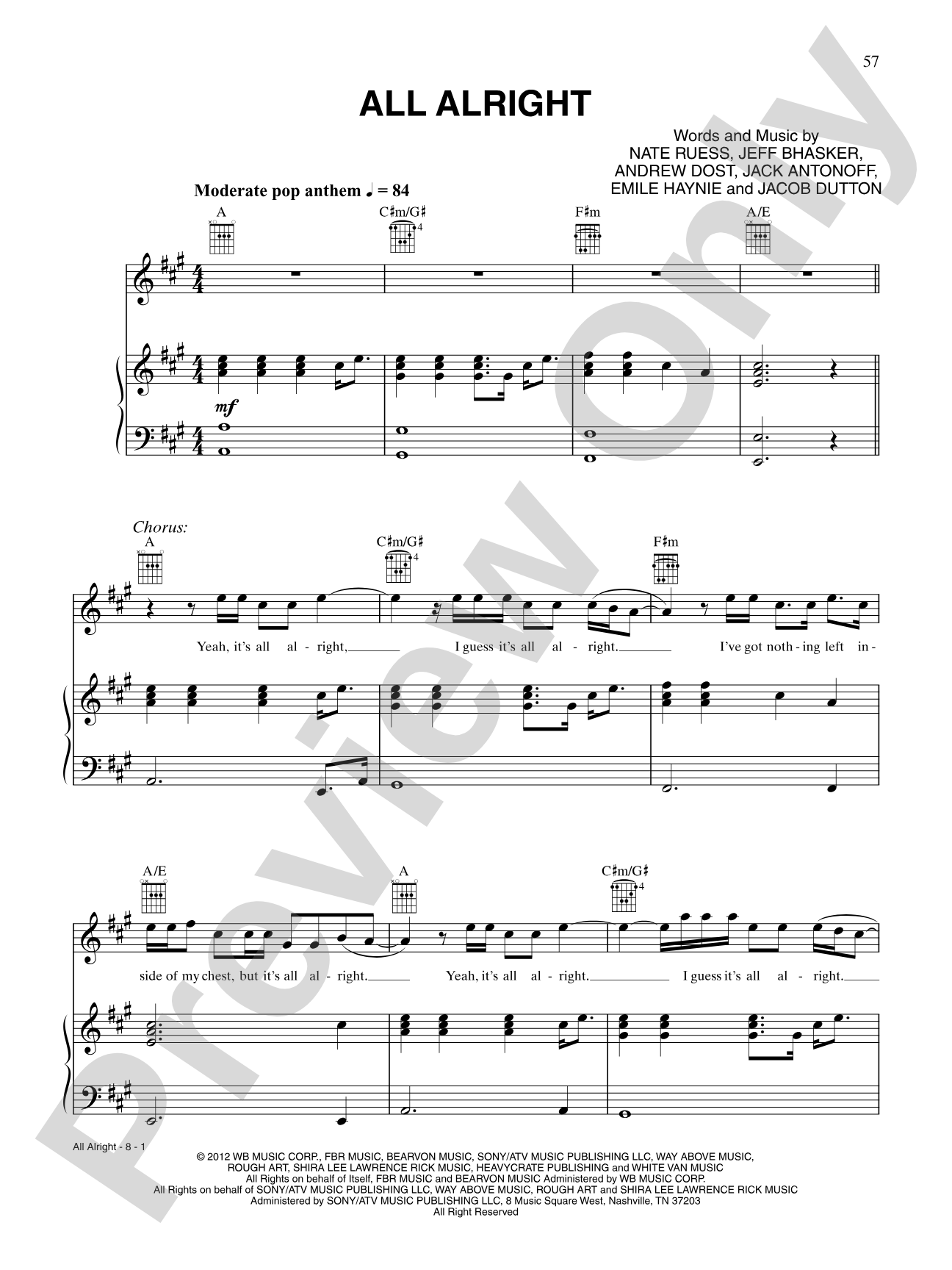
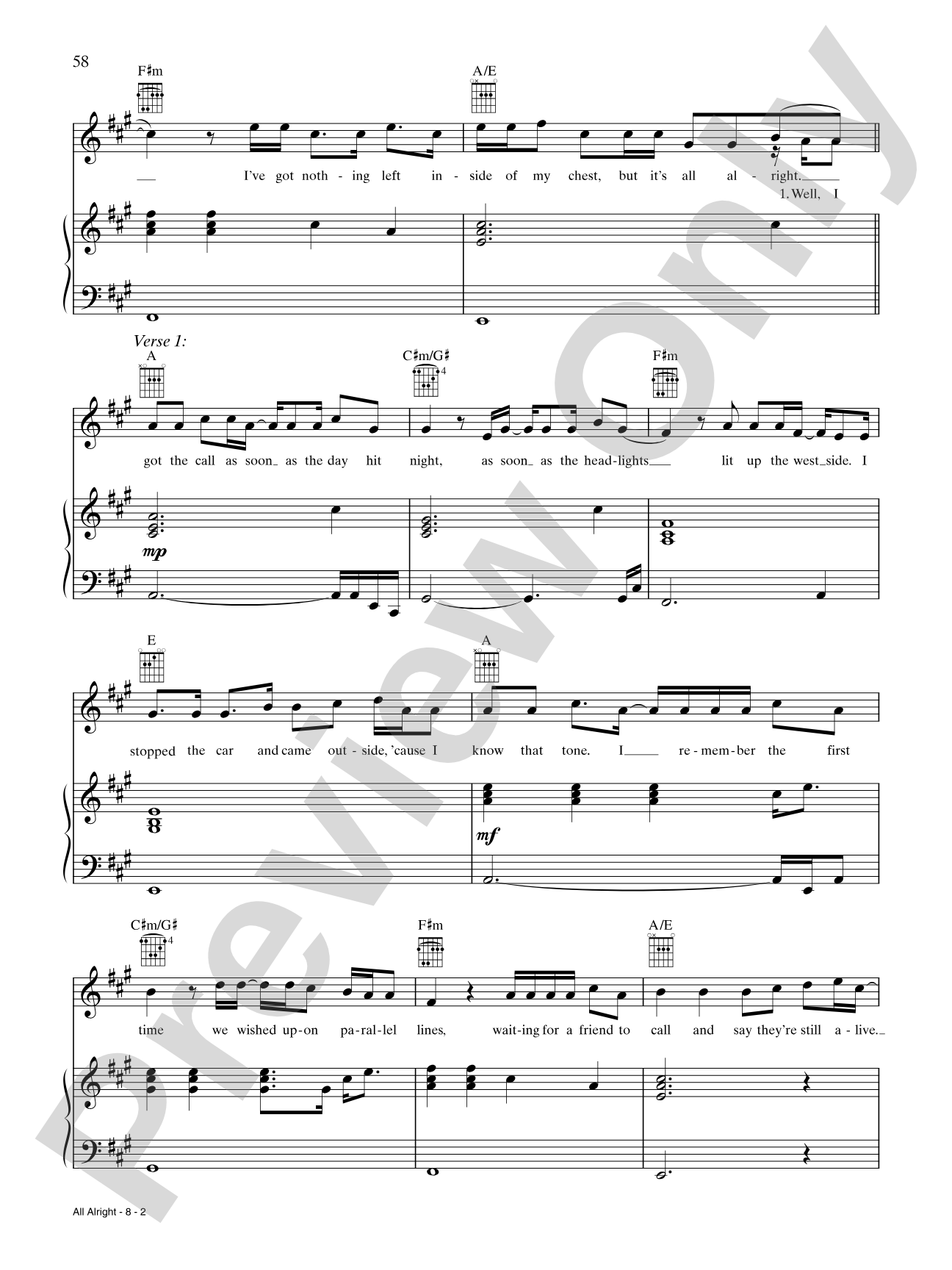

All Alright: Piano/Vocal/Chords
fun.
Item: 00-PS-0015606
$5.99
One moment…
Related Items
We Are Young: Piano/Vocal/Chords |
$5.99
|
View | |
Some Nights: Piano/Vocal/Chords |
$9.99
|
View | |
All Alone: Piano/Vocal/Chords |
$5.99
|
View | |
Carry On: Piano/Vocal/Chords |
$5.99
|
View | |
It Gets Better: Piano/Vocal/Chords |
$5.99
|
View | |
One Foot: Piano/Vocal/Chords |
$5.99
|
View | |
Out on the Town: Piano/Vocal/Chords |
$9.99
|
View | |
Some Nights (Intro): Piano/Vocal/Chords |
$5.99
|
View | |
Stars: Piano/Vocal/Chords |
$9.99
|
View | |
Why Am I the One: Piano/Vocal/Chords |
$5.99
|
View |
Description
The chart-topping second album by Grammy®-winning, indie superstar band fun. is packed with melodic and piano-driven songs that their fans want to play! This album-matching sheet music collection makes it possible, with great-sounding piano arrangements that accurately depict what's played on the album. Complete vocal melodies, lyrics, and basic guitar chord fingering grids are included. Titles: Some Nights (Intro) * Some Nights * We Are Young * Carry On * It Gets Better * Why Am I the One * All Alone * All Alright * One Foot * Stars * Out on the Town.


Discover MakeMusic Cloud: thousands of interactive titles your students can play along with today.
Sample Audio
No sample audio found.
Sample Video
No sample videos found.
Additional Details
Publisher:
Alfred Music
Page Count:
92
SKU:
00-PS-0015606
More about this title
About the Composer: Nate Ruess
Nate Ruess co-founded fun. in 2008 and has served as the band's primary vocalist and songwriter. His work with fun., particularly on the album "Some Nights," earned Grammy recognition and established him as a distinctive voice in contemporary pop music. Beyond fun., Ruess has collaborated with major pop and hip-hop artists, contributed to film soundtracks, and pursued solo work, demonstrating versatility across multiple musical contexts.
As a composer, Ruess built fun.'s sound on strong melodic sensibilities and accessible song structures that resonate with both casual listeners and musicians seeking material to perform. His arrangements prioritize clear vocal lines and supportive instrumental parts, making his work naturally suited to musicians looking for contemporary repertoire with strong harmonic foundations.
Why we love this
These arrangements capture what made "Some Nights" such a successful album while remaining playable for pianists and vocalists working at intermediate levels. The collection balances contemporary pop appeal with genuine musical substance, featuring the kinds of songs students actually want to learn. Piano-forward writing paired with singable vocal lines makes this ideal for studios, small ensembles, or recitals where current repertoire matters.
What to expect
Sophisticated pop writing that avoids both oversimplification and unnecessary complexity. The arrangements honor the album's moody introspection and cinematic qualities, with moments of driving energy balanced by intimate, sparse sections that let the melody shine.
Who it's for
Pianists and singers working at intermediate level who want contemporary material with real commercial appeal and harmonic depth. This collection works equally well for private studio lessons, youth ensemble programs, or students preparing recital repertoire from music they genuinely connect with.
How to get the most out of it
- Honor the album's production values by maintaining clarity in the right-hand piano voicings, especially in the verses where minimal accompaniment gives the vocal room to breathe.
- Lock the tempo early and keep it steady; these songs rely on their rhythmic groove as much as their melodies, so inconsistent pacing will flatten the energy.
- Use dynamic contrast between sections to replicate the building intensity on the recording, resisting the urge to play everything at the same volume level.
- Work the vocal line for phrasing and breath placement before adding full accompaniment; these melodies often have unexpected phrase lengths that need careful planning.
How to use it
Feature individual songs in recitals or studio showcases where contemporary music matters to your audience. The variety in tempos, moods, and vocal ranges across the collection means you can pair selections strategically with classical or musical theater repertoire, or use the entire set as a thematic program exploring modern songwriting craft.
Skills your students will build
- Reading piano accompaniment patterns that support rather than double the vocal line
- Interpreting vocal phrasing in contemporary pop contexts
- Coordinating vocal line with chord changes in real time
- Using dynamic shaping to highlight structural sections (verse, chorus, bridge)
- Managing sustained vocal lines over rhythmically active accompaniment