
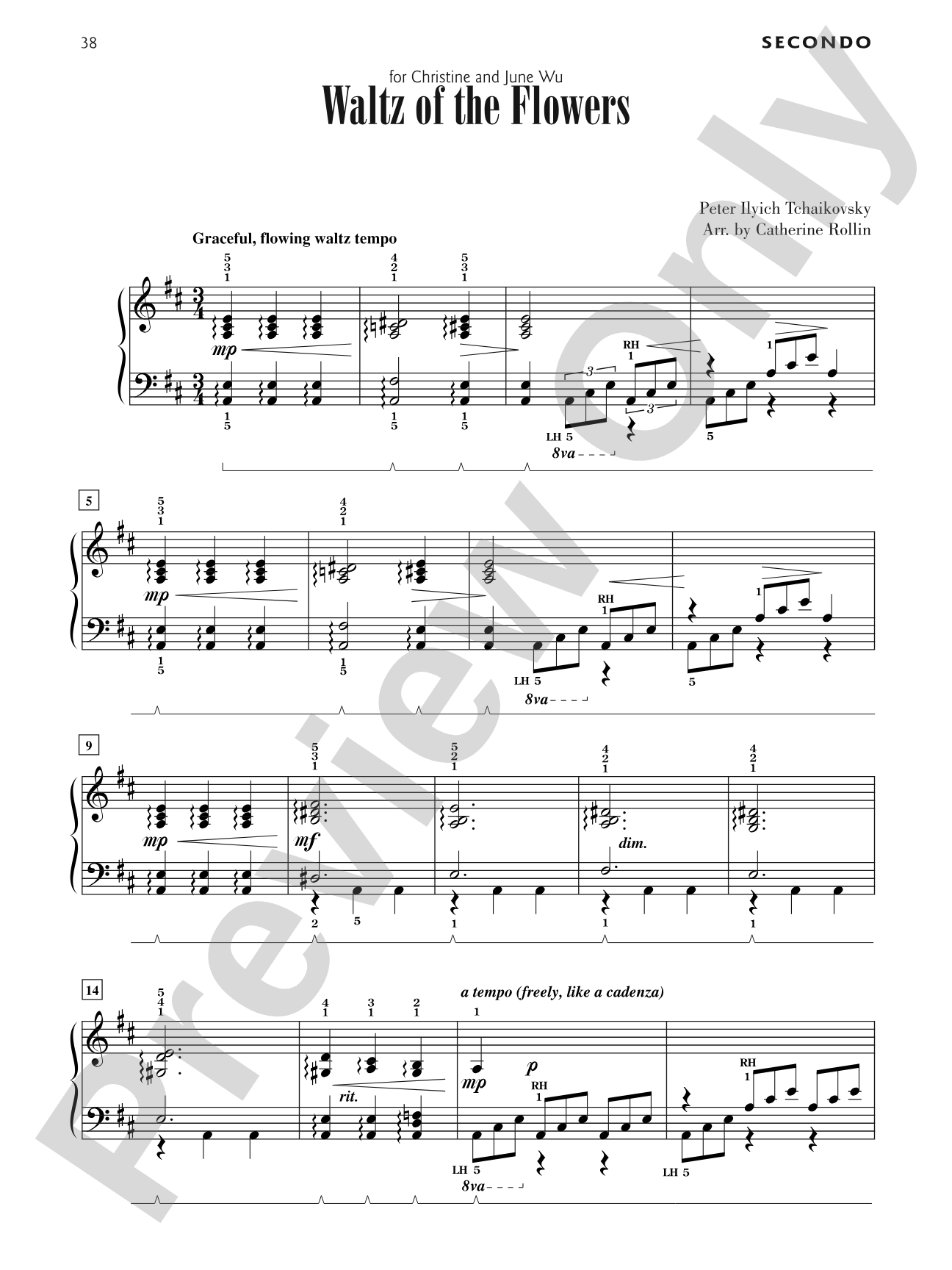
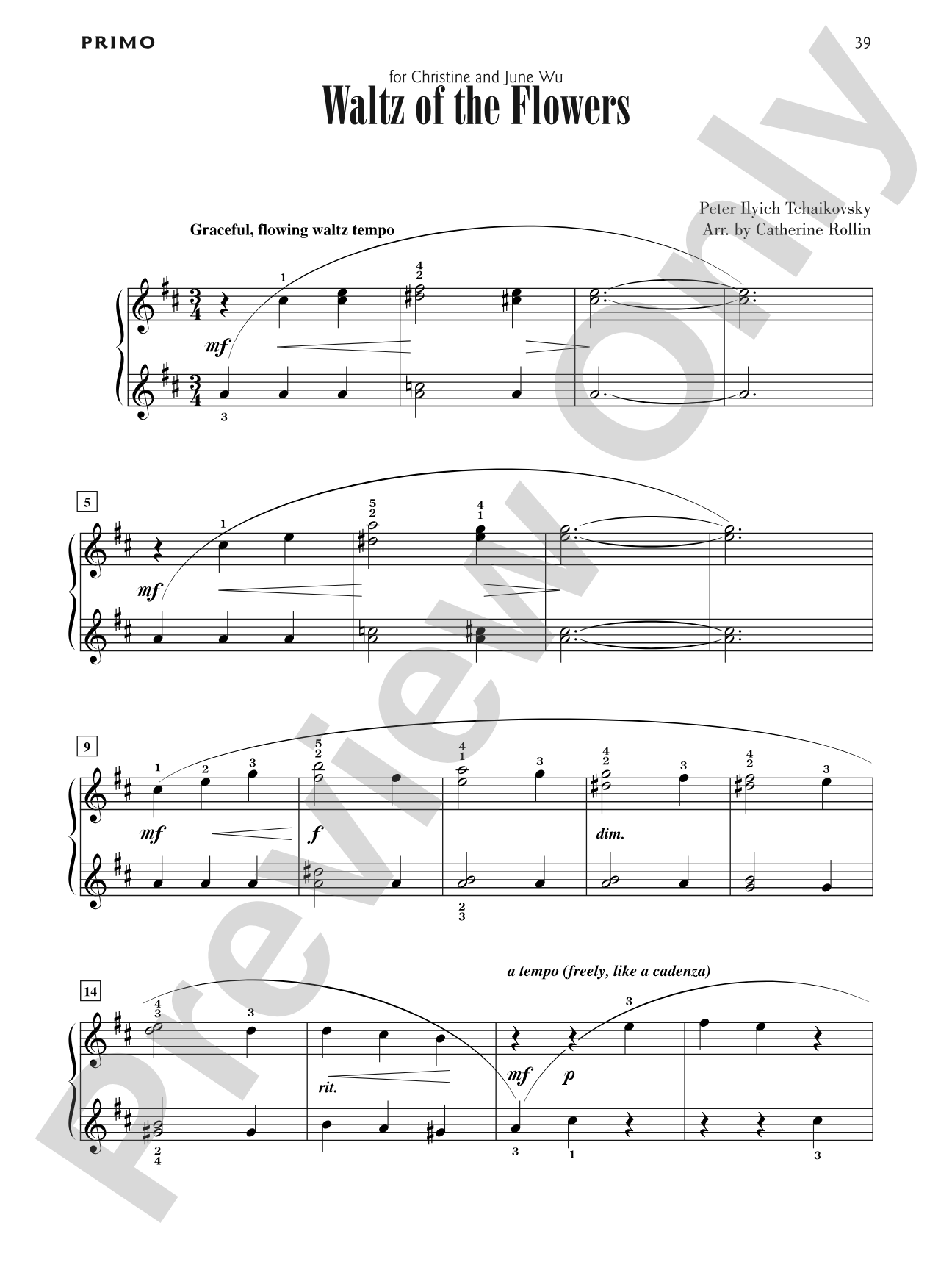

Waltz of the Flowers - Piano Duet (1 Piano, 4 Hands): Piano Duet (1 Piano, 4 Hands)
Duet Arrangements for Intermediate to Late Intermediate Pianists
By Peter Ilyich Tchaikovsky / arr. Catherine Rollin
Level: Intermediate / Late Intermediate
Item: 00-PS-0017635
$5.99
Pickup currently not available
Related Items
Arab Dance - Piano Duet (1 Piano, 4 Hands): Piano Duet (1 Piano, 4 Hands) |
$5.99
|
View | |
Chinese Dance - Piano Duet (1 Piano, 4 Hands): Piano Duet (1 Piano, 4 Hands) |
$4.99
|
View | |
Dance of the Reed Flutes - Piano Duet (1 Piano, 4 Hands): Piano Duet (1 Piano, 4 Hands) |
$4.99
|
View | |
Dance of the Sugar Plum Fairy - Piano Duet (1 Piano, 4 Hands): Piano Duet (1 Piano, 4 Hands) |
$5.99
|
View | |
March - Piano Duet (1 Piano, 4 Hands): Piano Duet (1 Piano, 4 Hands) |
$8.95
|
View | |
Miniature Overture - Piano Duet (1 Piano, 4 Hands): Piano Duet (1 Piano, 4 Hands) |
$5.99
|
View | |
Russian Dance (Trépak) - Piano Duet (1 Piano, 4 Hands): Piano Duet (1 Piano, 4 Hands) |
$5.99
|
View | |
The Nutcracker Suite for Two: Piano Duet (1 Piano, 4 Hands) Book |
$8.95
|
View |
Description
A charming tale of a young girl and her beloved nutcracker . . . what better way to celebrate the holiday season than with a piano duet collaboration of great accessible arrangements from The Nutcracker Ballet. Ideal for intermediate to late intermediate pianists, these enjoyable duets are as true to Tchaikovsky's orchestral score as possible, giving each pianist an equally important part wherever feasible. From the first notes of the lively Miniature Overture to the climactic close of Waltz of the Flowers, duet partners and their audiences will enjoy the colorful images conjured by this enduring masterpiece. A Federation Festivals 2024-2028 selection.


Waltz of the Flowers - Piano Duet (1 Piano, 4 Hands): Piano Duet (1 Piano, 4 Hands) isn't in MakeMusic Cloud just yet...but it could be. Let us know you'd like to see it, and you'll help shape what comes next. In the meantime, start a free trial and dive into thousands of interactive titles your students can play along with today.
Request This Title
Tell us you want it.
Start Your Free Trial
Explore everything that's ready to play right now.
Sample Audio
No sample audio found.
Sample Video
No sample videos found.
Additional Details
Publisher:
Alfred Music
Page Count:
48
SKU:
00-PS-0017635
More about this title
About the Composer: Peter Ilyich Tchaikovsky
Peter Ilyich Tchaikovsky (1840-1893) stands as one of the most performed composers in the world, celebrated for his gift for melody and his ability to infuse orchestral color with emotional depth. His ballet scores, particularly The Nutcracker and Swan Lake, represent the pinnacle of 19th-century ballet composition and remain central to the classical dance repertoire.
Why we love this
Catherine Rollin's arrangement captures the orchestral sweep of Tchaikovsky's original without sacrificing the independence each pianist needs to stay engaged. The Waltz of the Flowers finale delivers genuine musical satisfaction, giving intermediate players access to a work they've likely heard but thought was beyond their technical reach. This piece opens doors to serious music-making while keeping the joy of collaboration at its center.
What to expect
The orchestral richness of The Nutcracker unfolds across the keyboard in warm, celebratory colors. From the spirited energy of the opening to the sweeping elegance of the Waltz, these arrangements invite pianists into a world of Russian Romantic opulence, where delicate detail and grand gesture live side by side.
Who it's for
Intermediate to late intermediate pianists ready to move beyond simplified arrangements into music with real textural and harmonic substance. Duet partners seeking holiday season material that honors the original orchestration while remaining accessible to players in this level range will find this collection invaluable for recital or festive ensemble performance.
How to get the most out of it
- Balance the melodic and accompanimental roles carefully; even when one pianist carries the primary theme, the other's part shapes the harmonic foundation and needs clarity.
- Work through hand-crossing or position shifts together before running sections at tempo, so both players can anticipate the movement without hesitation.
- Shape the climactic moments of the Waltz with graduated dynamics and slight rubato, allowing the arrangement's orchestral intent to shine through.
- Establish a steady, confident pulse from the opening Miniature Overture to build trust between both pianists, especially when the texture thickens.
How to use it
Feature this as the centerpiece of a winter or holiday recital program, pairing it with other seasonal selections for a full concert or using it to frame a mixed repertoire set. The collection works equally well as a mid-year duet recital showcase, giving intermediate players confidence and audience appeal without overextending their current abilities.
Skills your students will build
- Balance and independence between primo and secondo parts
- Reading and executing hand crossings or position shifts at performance tempo
- Sustaining ensemble cohesion through longer formal structures
- Dynamic shaping and phrasing across a full orchestral arrangement
- Coordination of rubato and expression between two players