
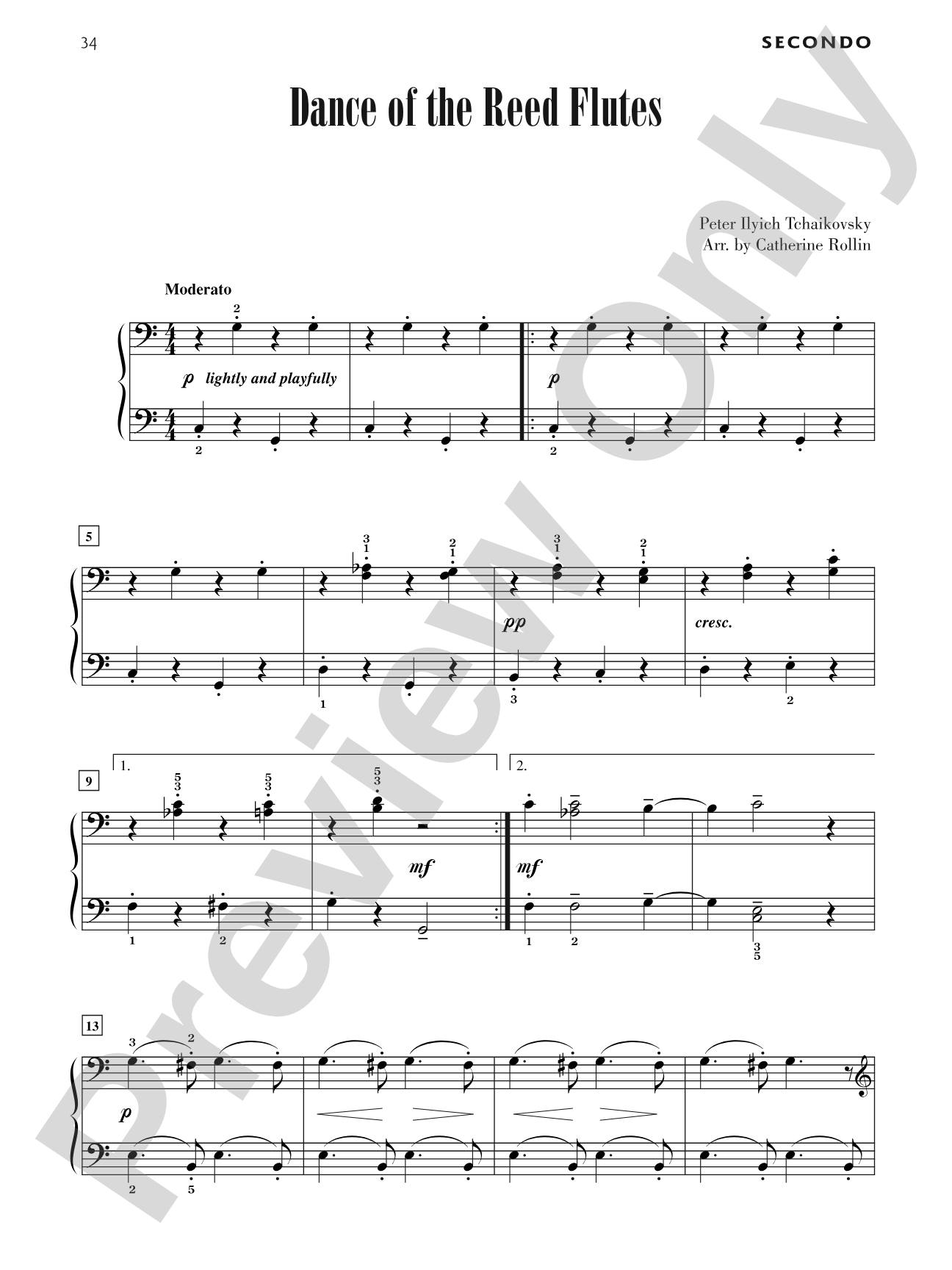

Dance of the Reed Flutes - Piano Duet (1 Piano, 4 Hands): Piano Duet (1 Piano, 4 Hands)
Duet Arrangements for Intermediate to Late Intermediate Pianists
By Peter Ilyich Tchaikovsky / arr. Catherine Rollin
Level: Intermediate / Late Intermediate
Item: 00-PS-0017630
$4.99
Pickup currently not available
Related Items
Arab Dance - Piano Duet (1 Piano, 4 Hands): Piano Duet (1 Piano, 4 Hands) |
$5.99
|
View | |
Chinese Dance - Piano Duet (1 Piano, 4 Hands): Piano Duet (1 Piano, 4 Hands) |
$4.99
|
View | |
Dance of the Sugar Plum Fairy - Piano Duet (1 Piano, 4 Hands): Piano Duet (1 Piano, 4 Hands) |
$5.99
|
View | |
March - Piano Duet (1 Piano, 4 Hands): Piano Duet (1 Piano, 4 Hands) |
$8.95
|
View | |
Miniature Overture - Piano Duet (1 Piano, 4 Hands): Piano Duet (1 Piano, 4 Hands) |
$5.99
|
View | |
Russian Dance (Trépak) - Piano Duet (1 Piano, 4 Hands): Piano Duet (1 Piano, 4 Hands) |
$5.99
|
View | |
Waltz of the Flowers - Piano Duet (1 Piano, 4 Hands): Piano Duet (1 Piano, 4 Hands) |
$5.99
|
View | |
The Nutcracker Suite for Two: Piano Duet (1 Piano, 4 Hands) Book |
$8.95
|
View |
Description
A charming tale of a young girl and her beloved nutcracker . . . what better way to celebrate the holiday season than with a piano duet collaboration of great accessible arrangements from The Nutcracker Ballet. Ideal for intermediate to late intermediate pianists, these enjoyable duets are as true to Tchaikovsky's orchestral score as possible, giving each pianist an equally important part wherever feasible. From the first notes of the lively Miniature Overture to the climactic close of Waltz of the Flowers, duet partners and their audiences will enjoy the colorful images conjured by this enduring masterpiece. A Federation Festivals 2024-2028 selection.


Discover MakeMusic Cloud: thousands of interactive titles your students can play along with today.
Sample Audio
No sample audio found.
Sample Video
No sample videos found.
Additional Details
Publisher:
Alfred Music
Page Count:
48
SKU:
00-PS-0017630
More about this title
About the Composer: Peter Ilyich Tchaikovsky
Peter Ilyich Tchaikovsky (1840-1893) stands as one of the most performed composers of the Romantic era, bridging European classical tradition with deeply Russian musical sensibility. His orchestral works, ballets, and concertos are staples of concert halls worldwide, celebrated for their emotional directness, memorable melodies, and masterful orchestration.
The Nutcracker Ballet, premiered in 1892, represents Tchaikovsky at his most inventive. Though initially met with mixed reviews, it has become a beloved holiday fixture, treasured for its magical storytelling and accessible yet sophisticated musical language. Educators value The Nutcracker as an entry point to orchestral masterworks and as a gateway to understanding how dance and music collaborate to create theatrical magic.
Why we love this
Catherine Rollin's arrangements respect Tchaikovsky's orchestral palette while creating genuinely rewarding parts for both pianists. Rather than relegating one player to accompanimental patterns, these duets distribute the musical leadership, making collaboration feel balanced and musically substantial. The progression from the overture through to the Waltz of the Flowers offers a satisfying arc that builds engagement across a full performance.
What to expect
These arrangements sparkle with the magic Tchaikovsky embedded in the ballet. Delicate, enchanting moments blend with passages of warmth and grandeur, creating an emotional journey that feels both accessible and genuinely orchestral. Playing through all of these selections captures the whimsy and wonder of the Nutcracker story itself.
Who it's for
Intermediate and late intermediate pianists seeking meaningful duet repertoire that moves beyond simple accompaniment. Duet partners in piano studios, music schools, and community music programs will find these arrangements satisfying to learn and exciting to perform together.
How to get the most out of it
- Balance the melody and accompaniment carefully in passages where one hand crosses over the other's staff. Listen actively to ensure both pianists contribute to a unified sound rather than a divided one.
- The lively sections benefit from precise rhythmic coordination. Count subdivisions aloud during rehearsal to lock in tempo together, especially during the faster figurations.
- Pay attention to the dynamic swells in the Waltz of the Flowers. Coordinate these crescendos and diminuendos as a team so they feel orchestral rather than accidental.
- Establish clear visual cues (nods, eye contact) at transitions between sections. These moments require mutual awareness to keep the ensemble cohesive.
How to use it
Program this collection as a full suite during winter concerts or holiday celebrations, or extract individual pieces to complement other seasonal repertoire. The Miniature Overture works beautifully as a concert opener, while the Waltz of the Flowers serves as a striking finale or standalone feature.
Skills your students will build
- Balanced ensemble playing between primo and secondo parts
- Coordinating tempo and dynamics with a collaborative partner
- Navigating hand crossings and shared staff space
- Interpreting Romantic era orchestral idioms on piano
- Managing rubato and rubato recovery in ensemble context