
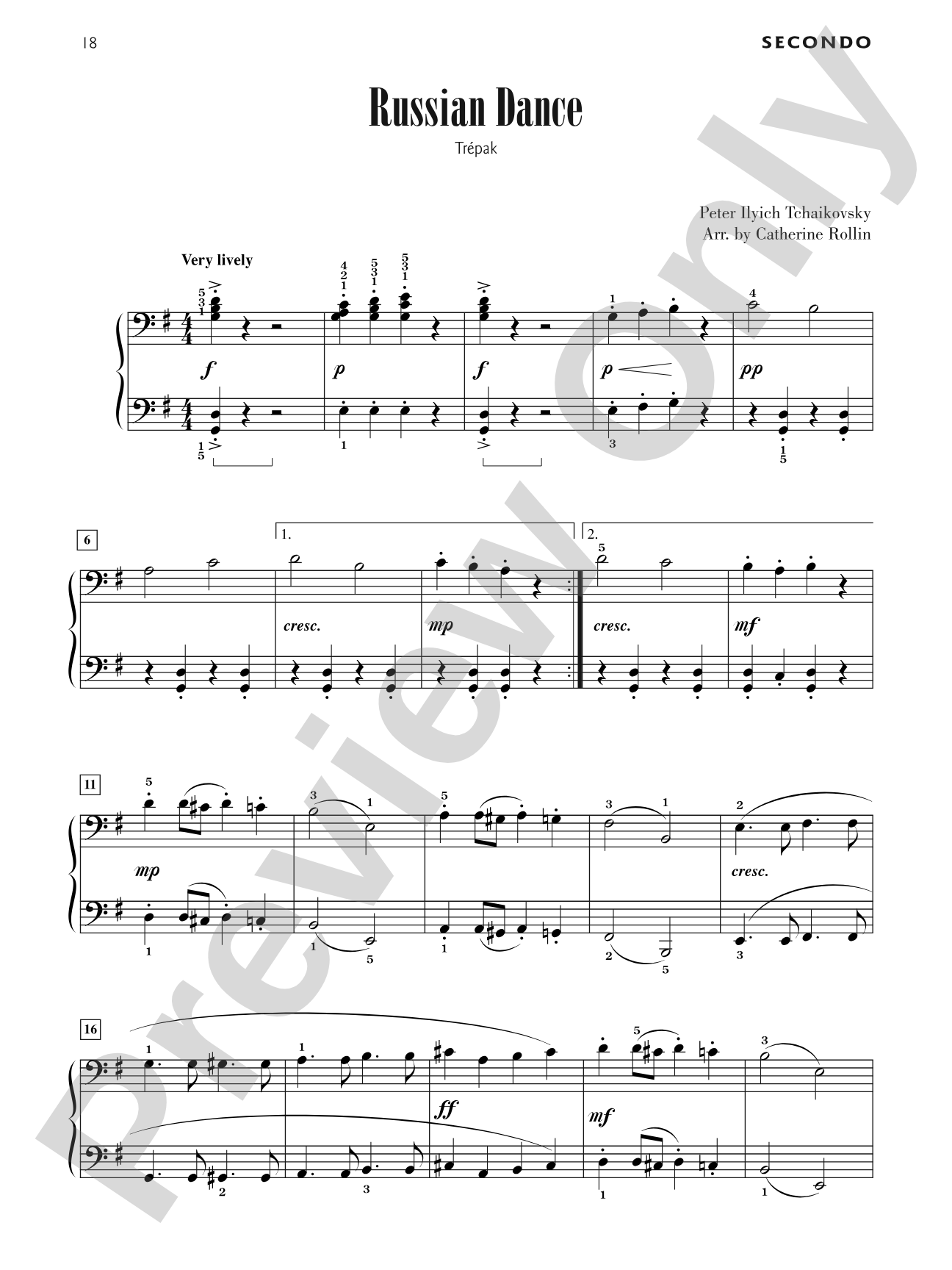
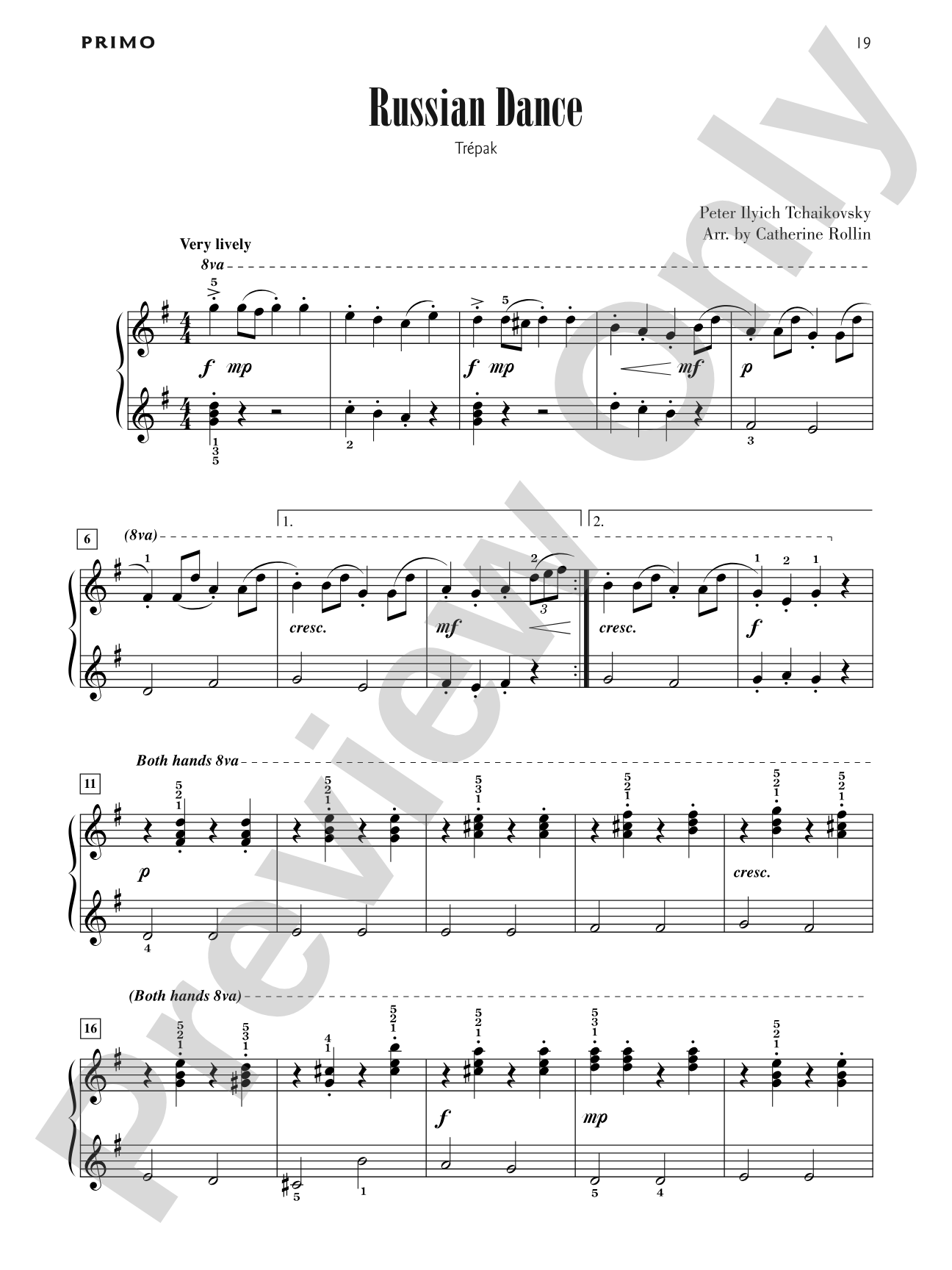

Russian Dance (Trépak) - Piano Duet (1 Piano, 4 Hands): Piano Duet (1 Piano, 4 Hands)
Duet Arrangements for Intermediate to Late Intermediate Pianists
By Peter Ilyich Tchaikovsky / arr. Catherine Rollin
Level: Intermediate / Late Intermediate
Item: 00-PS-0017634
$5.99
Pickup currently not available
Related Items
Arab Dance - Piano Duet (1 Piano, 4 Hands): Piano Duet (1 Piano, 4 Hands) |
$5.99
|
View | |
Chinese Dance - Piano Duet (1 Piano, 4 Hands): Piano Duet (1 Piano, 4 Hands) |
$4.99
|
View | |
Dance of the Reed Flutes - Piano Duet (1 Piano, 4 Hands): Piano Duet (1 Piano, 4 Hands) |
$4.99
|
View | |
Dance of the Sugar Plum Fairy - Piano Duet (1 Piano, 4 Hands): Piano Duet (1 Piano, 4 Hands) |
$5.99
|
View | |
March - Piano Duet (1 Piano, 4 Hands): Piano Duet (1 Piano, 4 Hands) |
$8.95
|
View | |
Miniature Overture - Piano Duet (1 Piano, 4 Hands): Piano Duet (1 Piano, 4 Hands) |
$5.99
|
View | |
Waltz of the Flowers - Piano Duet (1 Piano, 4 Hands): Piano Duet (1 Piano, 4 Hands) |
$5.99
|
View | |
The Nutcracker Suite for Two: Piano Duet (1 Piano, 4 Hands) Book |
$8.95
|
View |
Description
A charming tale of a young girl and her beloved nutcracker . . . what better way to celebrate the holiday season than with a piano duet collaboration of great accessible arrangements from The Nutcracker Ballet. Ideal for intermediate to late intermediate pianists, these enjoyable duets are as true to Tchaikovsky's orchestral score as possible, giving each pianist an equally important part wherever feasible. From the first notes of the lively Miniature Overture to the climactic close of Waltz of the Flowers, duet partners and their audiences will enjoy the colorful images conjured by this enduring masterpiece. A Federation Festivals 2024-2028 selection.


Discover MakeMusic Cloud: thousands of interactive titles your students can play along with today.
Sample Audio
No sample audio found.
Sample Video
No sample videos found.
Additional Details
Publisher:
Alfred Music
Page Count:
48
SKU:
00-PS-0017634
More about this title
About the Composer: Peter Ilyich Tchaikovsky
Peter Ilyich Tchaikovsky (1840-1893) was a Russian Romantic composer whose gift for melody and orchestral color made him one of the most performed classical composers worldwide. His ballet scores, including The Nutcracker, demonstrate his mastery of writing music that appeals equally to concert halls and the concert grand piano.
Tchaikovsky had an exceptional ability to craft memorable themes that work across instruments and ensembles. His music balances emotional depth with accessibility, which is why his works translate so successfully into duet and simplified arrangements for student pianists.
Why we love this
Catherine Rollin's arrangement preserves the orchestral brilliance of Tchaikovsky's score while giving both pianists genuinely rewarding parts. The primo and secondo voices are balanced thoughtfully, so neither player sits on accompaniment patterns for long stretches. This makes it one of the most satisfying intermediate duet experiences available, especially during the holiday season when Nutcracker demand peaks.
What to expect
The Russian Dance crackles with folk energy and spirited rhythmic drive, evoking the quick footwork and celebratory mood of traditional Russian dance. Moving into passages of soaring melody and rich harmonic color, the music captures both the whimsy and the deeper emotional warmth Tchaikovsky wove throughout The Nutcracker.
Who it's for
Intermediate to late intermediate pianists ready to perform duets with genuine musical substance will thrive with this arrangement. Music teachers and studio instructors can use it for holiday recitals, student collaboration, or as a rewarding technical and interpretive challenge that builds confidence.
How to get the most out of it
- Balance the primo melody against the secondo's harmonic and rhythmic foundation by listening actively during rehearsals. The secondo part is not subordinate; it anchors the color and texture.
- Coordinate pedal changes between both pianists to avoid muddiness in passages with dense harmonic movement. A brief verbal cue before rehearsing problem spots prevents overlap.
- Maintain steady tempo through the dances by thinking in larger phrase units rather than individual measures. Tchaikovsky's rhythmic patterns reward forward momentum.
- Bring out the character changes between contrasting sections. The Trépak's Russian folk-dance energy differs markedly from the elegance of other movements in the suite.
How to use it
Program this duet alongside other Nutcracker selections to create a coherent winter or holiday concert suite. It also serves beautifully as an opening number, establishing energy and showcasing collaborative artistry before moving into solo or other ensemble works.
Skills your students will build
- Coordinating ensemble balance and listening actively with a duo partner
- Executing folk-dance rhythms and character with rhythmic precision
- Interpreting Romantic-era orchestration through piano texture and voicing
- Sustaining tempo consistency across contrasting musical sections
- Reading two independent musical lines simultaneously while maintaining musical communication