
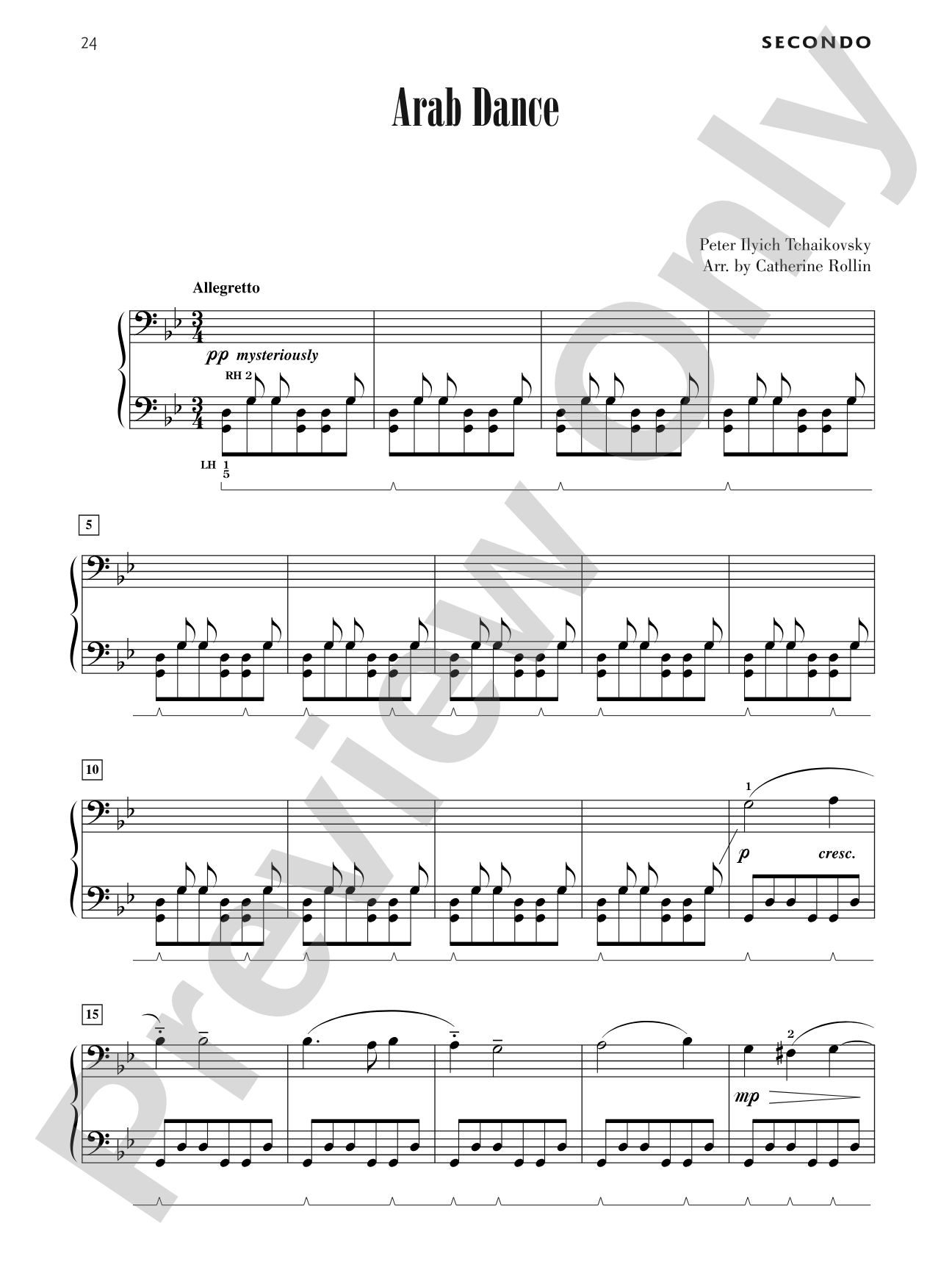
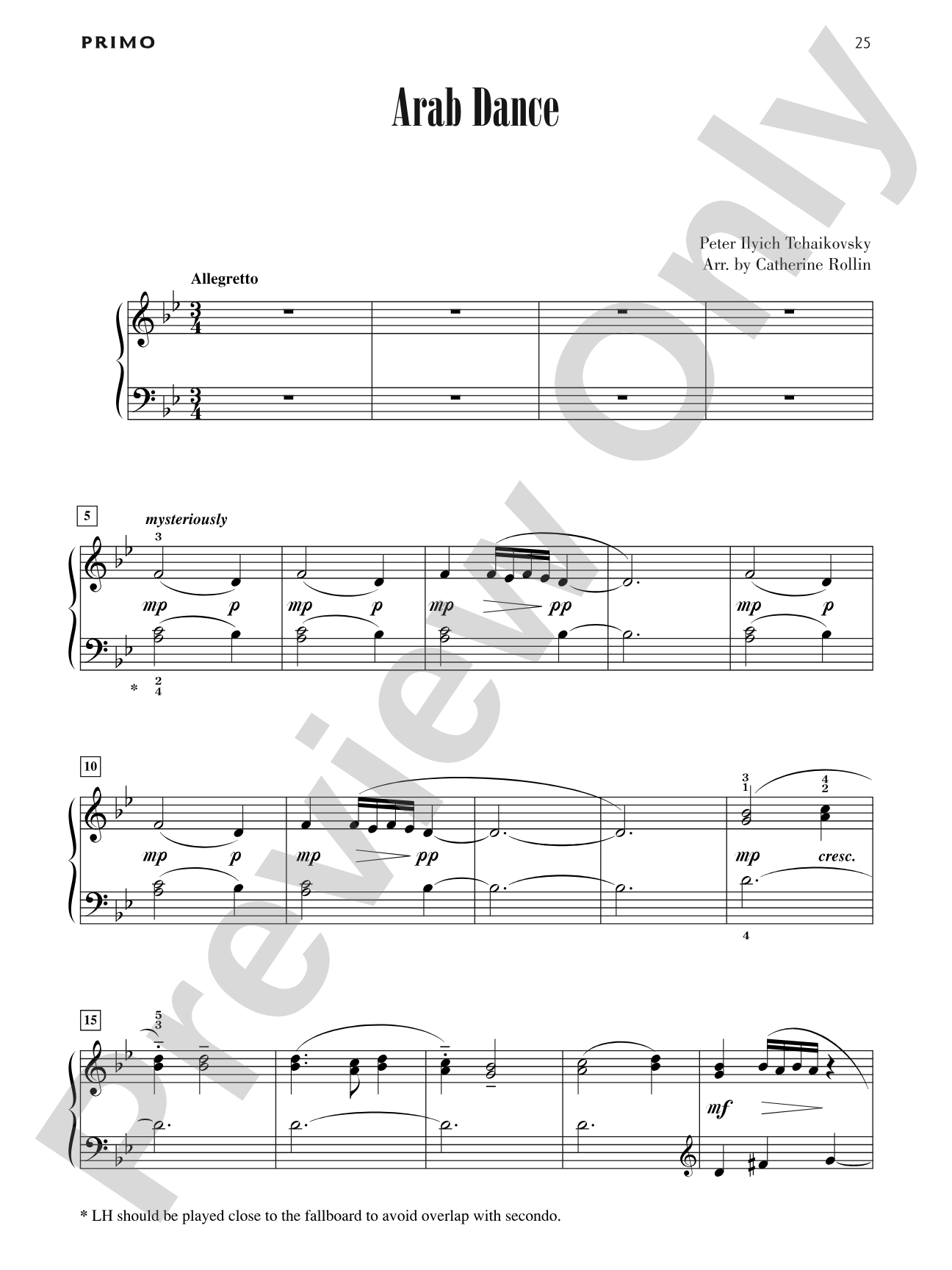

Arab Dance - Piano Duet (1 Piano, 4 Hands): Piano Duet (1 Piano, 4 Hands)
Duet Arrangements for Intermediate to Late Intermediate Pianists
By Peter Ilyich Tchaikovsky / arr. Catherine Rollin
Level: Intermediate / Late Intermediate
Item: 00-PS-0017628
$5.99
Pickup currently not available
Related Items
Chinese Dance - Piano Duet (1 Piano, 4 Hands): Piano Duet (1 Piano, 4 Hands) |
$4.99
|
View | |
Dance of the Reed Flutes - Piano Duet (1 Piano, 4 Hands): Piano Duet (1 Piano, 4 Hands) |
$4.99
|
View | |
Dance of the Sugar Plum Fairy - Piano Duet (1 Piano, 4 Hands): Piano Duet (1 Piano, 4 Hands) |
$5.99
|
View | |
March - Piano Duet (1 Piano, 4 Hands): Piano Duet (1 Piano, 4 Hands) |
$8.95
|
View | |
Miniature Overture - Piano Duet (1 Piano, 4 Hands): Piano Duet (1 Piano, 4 Hands) |
$5.99
|
View | |
Russian Dance (Trépak) - Piano Duet (1 Piano, 4 Hands): Piano Duet (1 Piano, 4 Hands) |
$5.99
|
View | |
Waltz of the Flowers - Piano Duet (1 Piano, 4 Hands): Piano Duet (1 Piano, 4 Hands) |
$5.99
|
View | |
The Nutcracker Suite for Two: Piano Duet (1 Piano, 4 Hands) Book |
$8.95
|
View |
Description
A charming tale of a young girl and her beloved nutcracker . . . what better way to celebrate the holiday season than with a piano duet collaboration of great accessible arrangements from The Nutcracker Ballet. Ideal for intermediate to late intermediate pianists, these enjoyable duets are as true to Tchaikovsky's orchestral score as possible, giving each pianist an equally important part wherever feasible. From the first notes of the lively Miniature Overture to the climactic close of Waltz of the Flowers, duet partners and their audiences will enjoy the colorful images conjured by this enduring masterpiece. A Federation Festivals 2024-2028 selection.


Discover MakeMusic Cloud: thousands of interactive titles your students can play along with today.
Sample Audio
No sample audio found.
Sample Video
No sample videos found.
Additional Details
Publisher:
Alfred Music
Page Count:
48
SKU:
00-PS-0017628
More about this title
About the Composer: Peter Ilyich Tchaikovsky
Peter Ilyich Tchaikovsky (1840-1893) was a Russian composer whose gift for melody and orchestral color made him one of the most performed composers in the concert hall. His ballets—Swan Lake, Sleeping Beauty, and The Nutcracker—remain cornerstones of the classical repertoire, beloved for their narrative clarity and musical invention.
Tchaikovsky's gift was translating vivid storytelling into sound. He wrote with orchestral brilliance but also understood the expressive possibilities of every instrument, which is why his work adapts so naturally to the piano. For music educators, Tchaikovsky offers students an entry point into the Romantic era through melodies and harmonies that feel immediately engaging.
Why we love this
Rollin's arrangement preserves the orchestral sweep of The Nutcracker while giving both pianists equally rewarding parts, making this a genuine collaboration rather than primo-secondo hierarchy. The duet format transforms what could be a passive listen into active music-making, and intermediate pianists get to inhabit the lush harmonic world of a masterwork without oversimplification.
What to expect
Stepping into Tchaikovsky's magical world: one moment you're caught up in the pageantry of the Miniature Overture, the next you're suspended in the delicate fantasy of the Waltz of the Flowers. The writing balances sparkle and depth, giving you moments of pure musical joy alongside the textural richness that made The Nutcracker unforgettable on stage.
Who it's for
Intermediate and late intermediate pianists ready to experience collaborative music-making at a level that challenges them musically without overwhelming them technically. Duet partners preparing for recitals, studio showcases, or festival performances will find genuine artistic satisfaction here rather than simplified arrangements.
How to get the most out of it
- Balance the primo and secondo parts so neither voice disappears into accompaniment; both players should hear their line as the musical story.
- Establish a clear pulse between partners before rehearsal begins. Mark a steady tempo reference together and use light eye contact at key transitions to stay aligned.
- Shape phrases with shared intention. Because you're playing one instrument, dynamics and rubato must flow as if from a single musical mind.
- Bring out the character changes between movements (the lively Overture contrasts sharply with the dreamy, delicate Swan Lake movement).
How to use it
Program the entire duet collection for a holiday season recital or studio performance, or select individual movements to pair with student solos on the same concert. This also works beautifully for winter studio showcases where you want to showcase advanced intermediate pianists in a sustained collaboration.
Skills your students will build
- Ensemble listening and responding to a partner's phrasing in real time
- Sustaining musical line and avoiding rhythmic drift when sharing one keyboard
- Balancing two independent melodic lines of equal importance
- Interpreting Romantic era orchestral writing at the keyboard
- Navigating position changes and hand crossing smoothly with a partner