
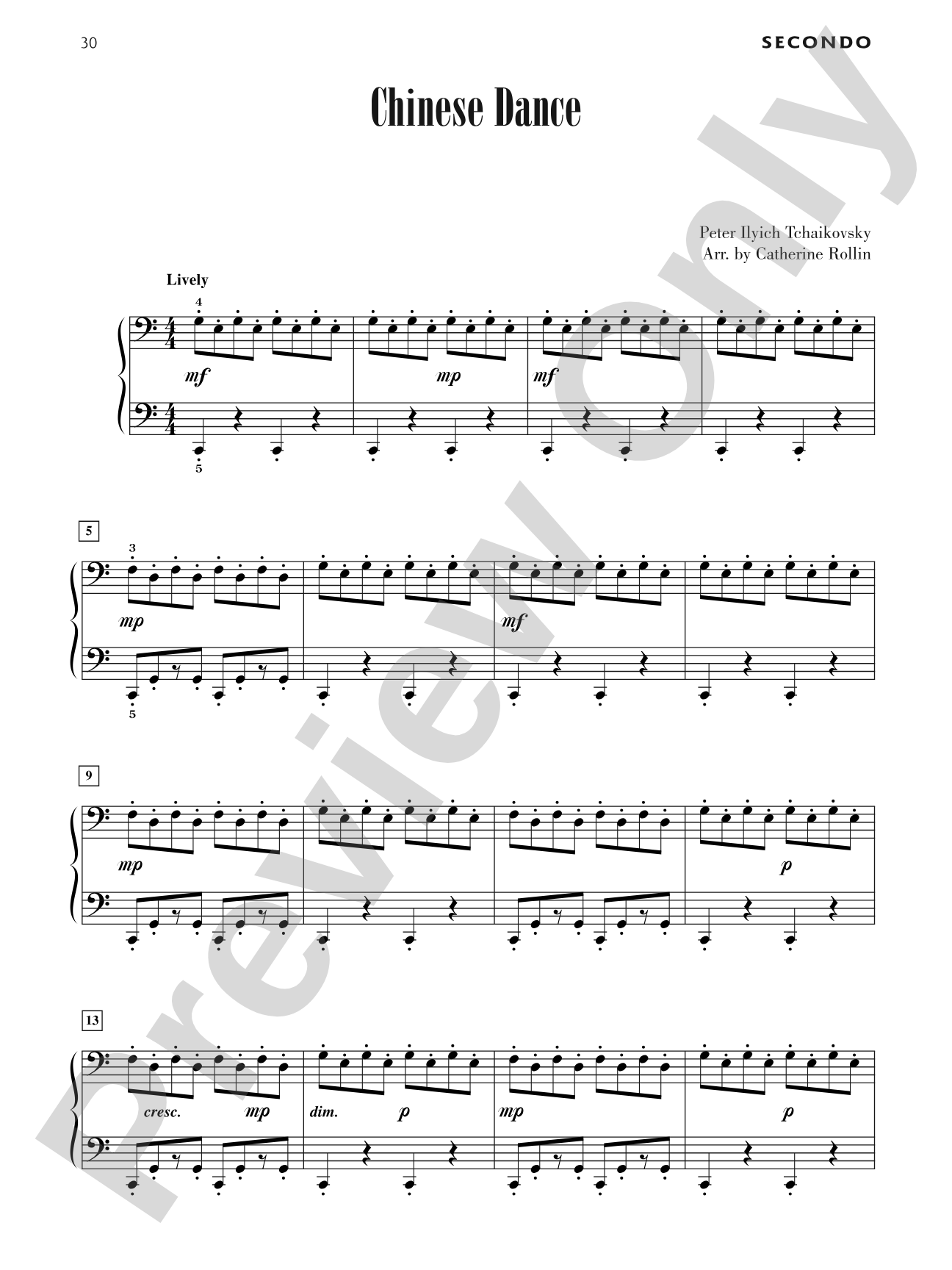

Chinese Dance - Piano Duet (1 Piano, 4 Hands): Piano Duet (1 Piano, 4 Hands)
Duet Arrangements for Intermediate to Late Intermediate Pianists
By Peter Ilyich Tchaikovsky / arr. Catherine Rollin
Level: Intermediate / Late Intermediate
Item: 00-PS-0017629
$4.99
Pickup currently not available
Related Items
Arab Dance - Piano Duet (1 Piano, 4 Hands): Piano Duet (1 Piano, 4 Hands) |
$5.99
|
View | |
Dance of the Reed Flutes - Piano Duet (1 Piano, 4 Hands): Piano Duet (1 Piano, 4 Hands) |
$4.99
|
View | |
Dance of the Sugar Plum Fairy - Piano Duet (1 Piano, 4 Hands): Piano Duet (1 Piano, 4 Hands) |
$5.99
|
View | |
March - Piano Duet (1 Piano, 4 Hands): Piano Duet (1 Piano, 4 Hands) |
$8.95
|
View | |
Miniature Overture - Piano Duet (1 Piano, 4 Hands): Piano Duet (1 Piano, 4 Hands) |
$5.99
|
View | |
Russian Dance (Trépak) - Piano Duet (1 Piano, 4 Hands): Piano Duet (1 Piano, 4 Hands) |
$5.99
|
View | |
Waltz of the Flowers - Piano Duet (1 Piano, 4 Hands): Piano Duet (1 Piano, 4 Hands) |
$5.99
|
View | |
The Nutcracker Suite for Two: Piano Duet (1 Piano, 4 Hands) Book |
$8.95
|
View |
Description
A charming tale of a young girl and her beloved nutcracker . . . what better way to celebrate the holiday season than with a piano duet collaboration of great accessible arrangements from The Nutcracker Ballet. Ideal for intermediate to late intermediate pianists, these enjoyable duets are as true to Tchaikovsky's orchestral score as possible, giving each pianist an equally important part wherever feasible. From the first notes of the lively Miniature Overture to the climactic close of Waltz of the Flowers, duet partners and their audiences will enjoy the colorful images conjured by this enduring masterpiece. A Federation Festivals 2024-2028 selection.


Discover MakeMusic Cloud: thousands of interactive titles your students can play along with today.
Sample Audio
No sample audio found.
Sample Video
No sample videos found.
Additional Details
Publisher:
Alfred Music
Page Count:
48
SKU:
00-PS-0017629
More about this title
About the Composer: Peter Ilyich Tchaikovsky
Peter Ilyich Tchaikovsky (1840-1893) stands among the most performed composers in concert halls worldwide, yet his path to recognition was neither swift nor smooth. A Russian Romantic whose orchestral imagination was boundless, Tchaikovsky created music of visceral emotional depth and architectural brilliance, drawing listeners into worlds both intimate and grand. The Nutcracker Ballet, premiered in 1892, represents the culmination of his mastery of narrative storytelling through orchestral color and melody, cementing his legacy as one of the most accessible yet sophisticated voices in classical music.
For music educators, Tchaikovsky's gift lies in his melodic generosity and harmonic clarity. Every phrase speaks directly to performers and audiences alike, making his works ideal vehicles for building musicianship at all levels. His ballet scores remain treasured by pianists and ensembles because the music itself teaches; rhythm, phrasing, and structural clarity emerge naturally from the compositional voice.
Why we love this
Catherine Rollin's arrangement preserves Tchaikovsky's orchestral brilliance while creating two genuinely equal partnerships at the keyboard. Rather than relegating one pianist to accompaniment duty, this duet version distributes melodic and supportive material with care, so both players remain engaged and feel ownership over the result. The collection spans the full arc of The Nutcracker's magic, making it a substantial concert experience that intermediate pianists can tackle with confidence.
What to expect
These arrangements shimmer with the pageantry of Tchaikovsky's ballet without overwhelming the pianists. There is sparkle in the Miniature Overture's quick-silver passages, tenderness in the slower dances, and genuine grandeur in the closing Waltz of the Flowers; four hands at one piano create textures that feel far larger than their technical demands suggest.
Who it's for
Intermediate and late intermediate pianists ready to step into collaborative chamber music will thrive with this collection. Duet partners seeking substantial repertoire that challenges both players equally, and holiday programming that carries real musical weight, will find exactly what they need.
How to get the most out of it
- Balance the melody and accompaniment by listening through the opening passages during rehearsal. Identify which hand holds the primary line in each section, then shade the supporting material back by a dynamic level or two so harmonic color enhances rather than obscures the tune.
- Work out the primo and secondo parts separately at first, then rehearse hands-together passages multiple times before combining at tempo. Rhythmic precision matters far more than speed in creating ensemble cohesion.
- Attend to Tchaikovsky's orchestration cues throughout: where the original score shifts from strings to winds or adds percussion, allow slight color shifts in tone and touch to mirror those instrumental changes.
- Establish a steady visual connection with your duet partner before each piece begins. A preparatory gesture and shared breath make a profound difference in ensemble entries and transitions.
How to use it
The full collection serves beautifully as a holiday recital centerpiece or a winter concert's anchor work, offering enough variety to sustain audience interest across the entire ballet narrative. Individual dances also work as shorter offerings if your programming calls for separate selections rather than the suite performed in sequence. This is equally at home in a studio recital or a community concert where both pianists deserve spotlight.
Skills your students will build
- Balancing melody and accompaniment in ensemble contexts
- Reading and performing syncopated rhythms (particularly in the Miniature Overture and Waltz of the Flowers)
- Coordinating attacks and releases with a partner across multiple voice ranges
- Interpreting tempo rubato and expressive phrasing within a collaborative framework
- Maintaining rhythmic independence while listening for harmonic blend