
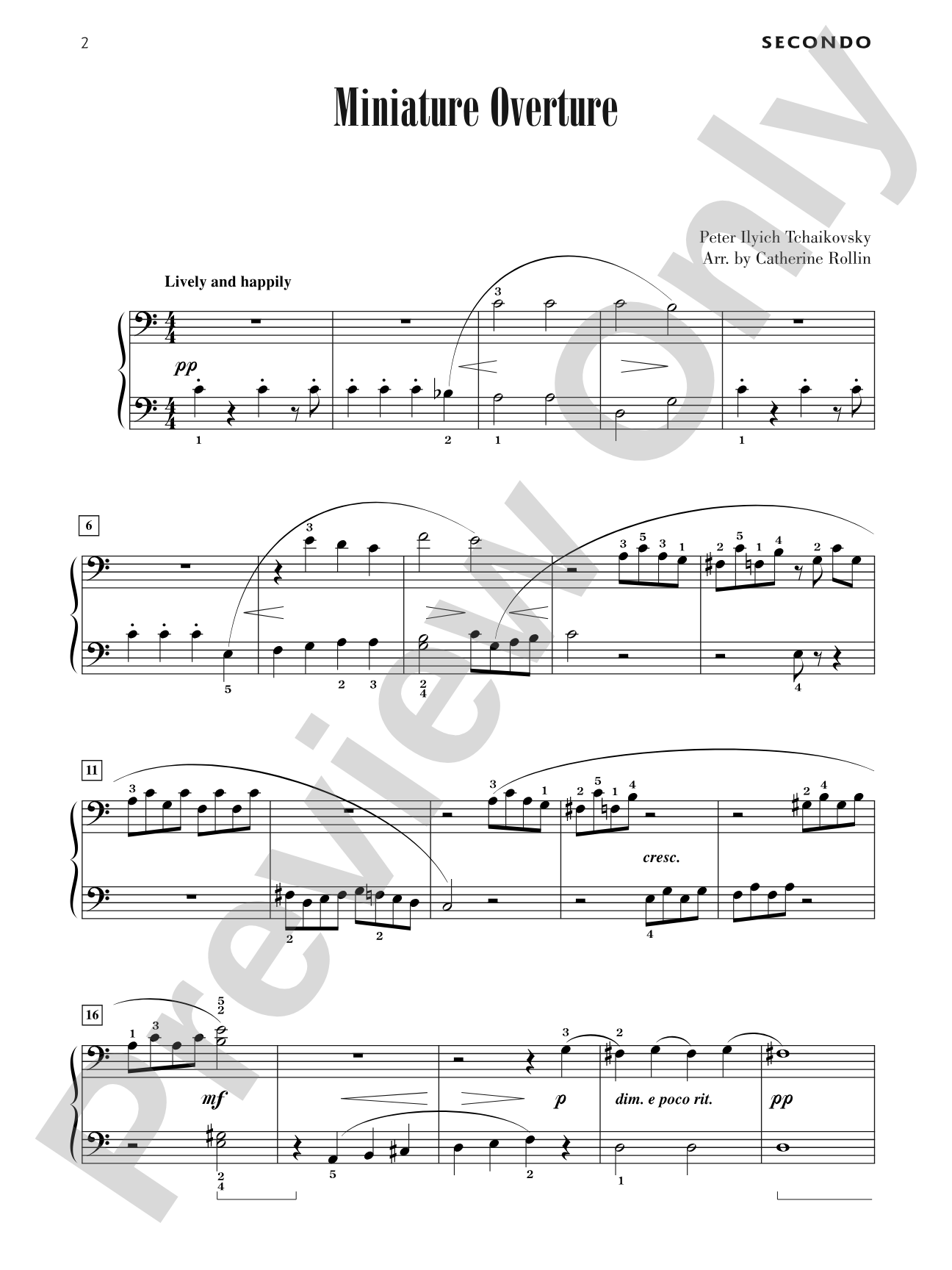
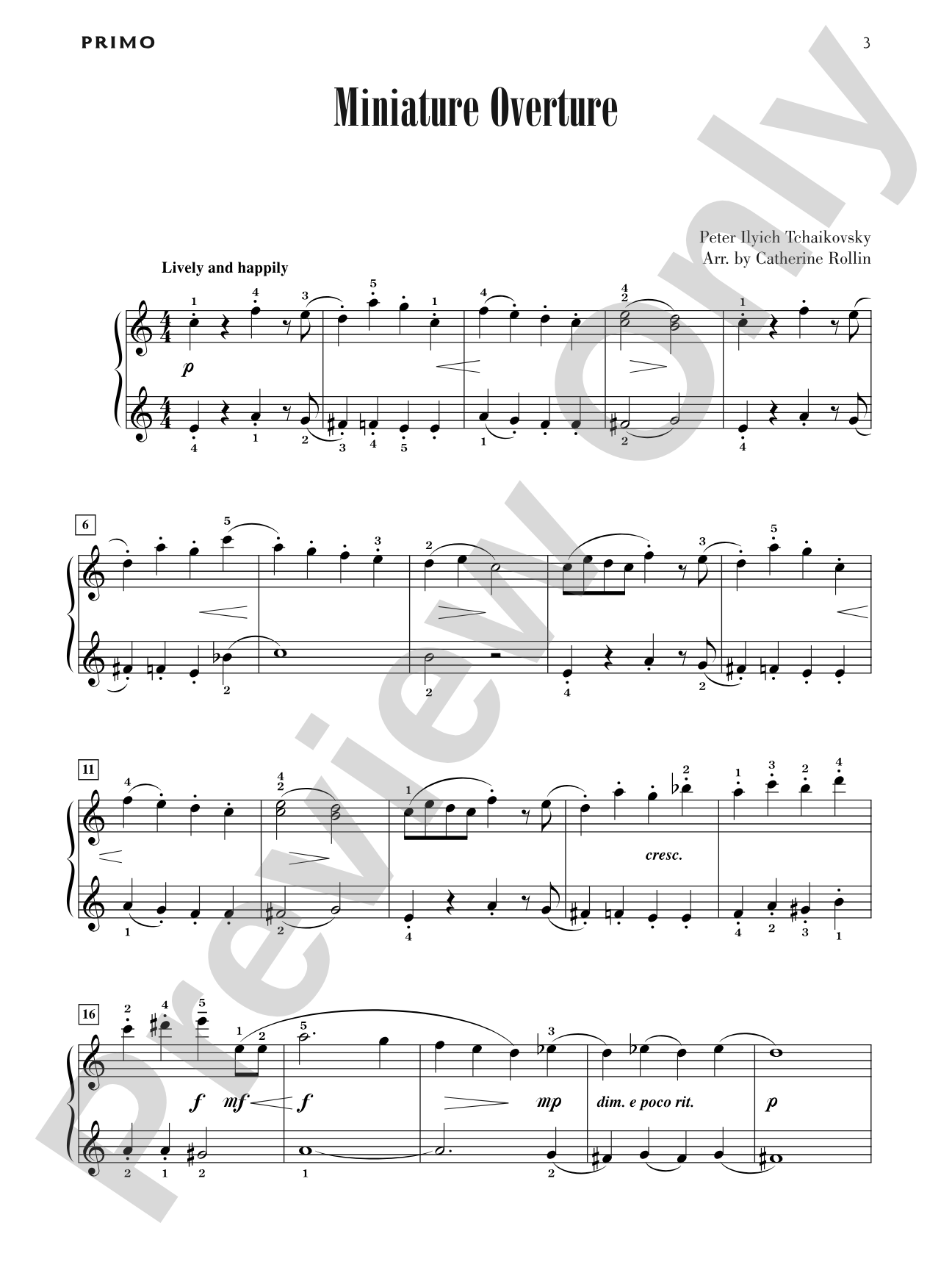

Miniature Overture - Piano Duet (1 Piano, 4 Hands): Piano Duet (1 Piano, 4 Hands)
Duet Arrangements for Intermediate to Late Intermediate Pianists
By Peter Ilyich Tchaikovsky / arr. Catherine Rollin
Level: Intermediate / Late Intermediate
Item: 00-PS-0017633
$5.99
Pickup currently not available
Related Items
Arab Dance - Piano Duet (1 Piano, 4 Hands): Piano Duet (1 Piano, 4 Hands) |
$5.99
|
View | |
Chinese Dance - Piano Duet (1 Piano, 4 Hands): Piano Duet (1 Piano, 4 Hands) |
$4.99
|
View | |
Dance of the Reed Flutes - Piano Duet (1 Piano, 4 Hands): Piano Duet (1 Piano, 4 Hands) |
$4.99
|
View | |
Dance of the Sugar Plum Fairy - Piano Duet (1 Piano, 4 Hands): Piano Duet (1 Piano, 4 Hands) |
$5.99
|
View | |
March - Piano Duet (1 Piano, 4 Hands): Piano Duet (1 Piano, 4 Hands) |
$8.95
|
View | |
Russian Dance (Trépak) - Piano Duet (1 Piano, 4 Hands): Piano Duet (1 Piano, 4 Hands) |
$5.99
|
View | |
Waltz of the Flowers - Piano Duet (1 Piano, 4 Hands): Piano Duet (1 Piano, 4 Hands) |
$5.99
|
View | |
The Nutcracker Suite for Two: Piano Duet (1 Piano, 4 Hands) Book |
$8.95
|
View |
Description
A charming tale of a young girl and her beloved nutcracker . . . what better way to celebrate the holiday season than with a piano duet collaboration of great accessible arrangements from The Nutcracker Ballet. Ideal for intermediate to late intermediate pianists, these enjoyable duets are as true to Tchaikovsky's orchestral score as possible, giving each pianist an equally important part wherever feasible. From the first notes of the lively Miniature Overture to the climactic close of Waltz of the Flowers, duet partners and their audiences will enjoy the colorful images conjured by this enduring masterpiece. A Federation Festivals 2024-2028 selection.


Discover MakeMusic Cloud: thousands of interactive titles your students can play along with today.
Sample Audio
No sample audio found.
Sample Video
No sample videos found.
Additional Details
Publisher:
Alfred Music
Page Count:
48
SKU:
00-PS-0017633
More about this title
About the Composer: Peter Ilyich Tchaikovsky
Peter Ilyich Tchaikovsky (1840-1893) stands as one of the Romantic era's most direct emotional communicators. His gift for melody, orchestral color, and dramatic storytelling made him equally at home writing symphonies, concertos, and ballet scores that have never left the concert repertoire.
The Nutcracker, premiered in 1892, showcases Tchaikovsky's mastery of orchestration and his ability to write music that speaks to audiences of all ages. Its blend of folk melodies, Eastern-inspired harmonies, and purely imaginative instrumental writing has made it a cultural touchstone, particularly during the winter season.
Why we love this
Catherine Rollin's arrangement treats Tchaikovsky's orchestral colors as seriously as they deserve, translating them into two equally engaging piano parts that avoid the trap of relegating one player to accompaniment. The Miniature Overture sets an immediate tone of brightness and forward motion, making it an ideal opening that captures listeners from the first measure.
What to expect
The Miniature Overture crackles with the anticipation of holiday pageantry, all bright articulation and energetic momentum. Rollin's voicing preserves Tchaikovsky's orchestral sparkle, creating a sense of movement and theatrical excitement that draws listeners into a world of wooden soldiers and sugar plums.
Who it's for
Intermediate and late intermediate pianists ready for genuine collaborative playing will find equally rewarding parts here. The level is accessible without being trivial, making this ideal for studio students preparing for recital or festival performance, or for two pianists in a school music program seeking quality duet literature.
How to get the most out of it
- Balance the melody line between both players based on Rollin's voice leading rather than hand position; the primo part doesn't always carry the top note.
- Practice the rhythmic unison passages separately to lock the ensemble before addressing tempo transitions.
- Use the dynamic markings to shape phrases across the four hands, treating the duet as a single twenty-finger instrument.
- Record yourselves to identify spots where the accompaniment figure pulls ahead or falls behind the melody.
How to use it
Open a winter or holiday concert with this piece to immediately establish festive energy and showcase partnership between two of your pianists. Its manageable length and appeal make it equally suitable for a student recital, a community holiday event, or a chamber music showcase highlighting intermediate-level collaboration.
Skills your students will build
- Balancing melody and accompaniment across two performers
- Maintaining ensemble cohesion without a conductor
- Executing rhythmic unison in varying tempos
- Interpreting orchestral voicing on a keyboard instrument
- Reading and executing Rollin's specific dynamic and articulation markings
- Sustaining musical momentum in rapid, light textures