
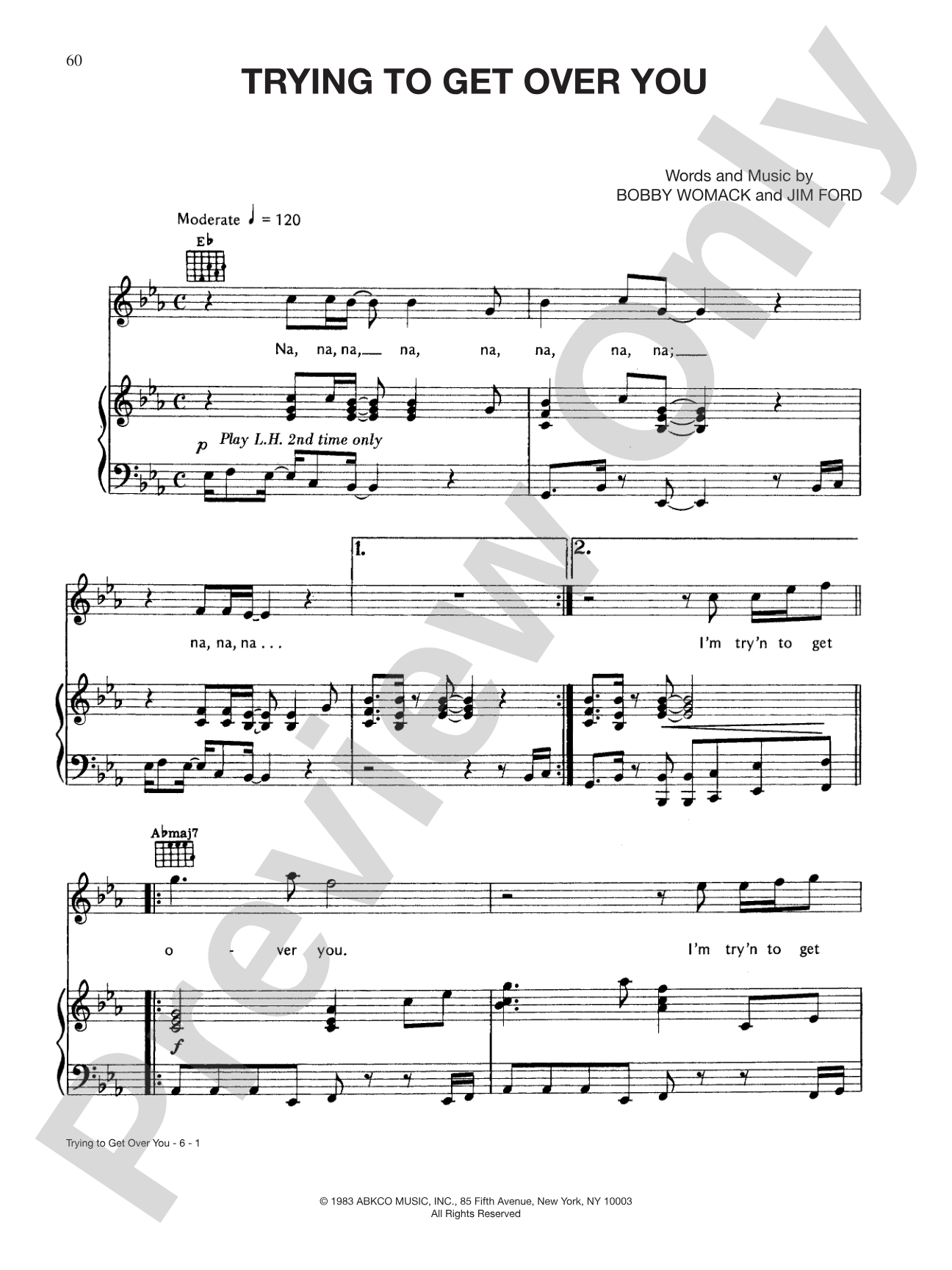
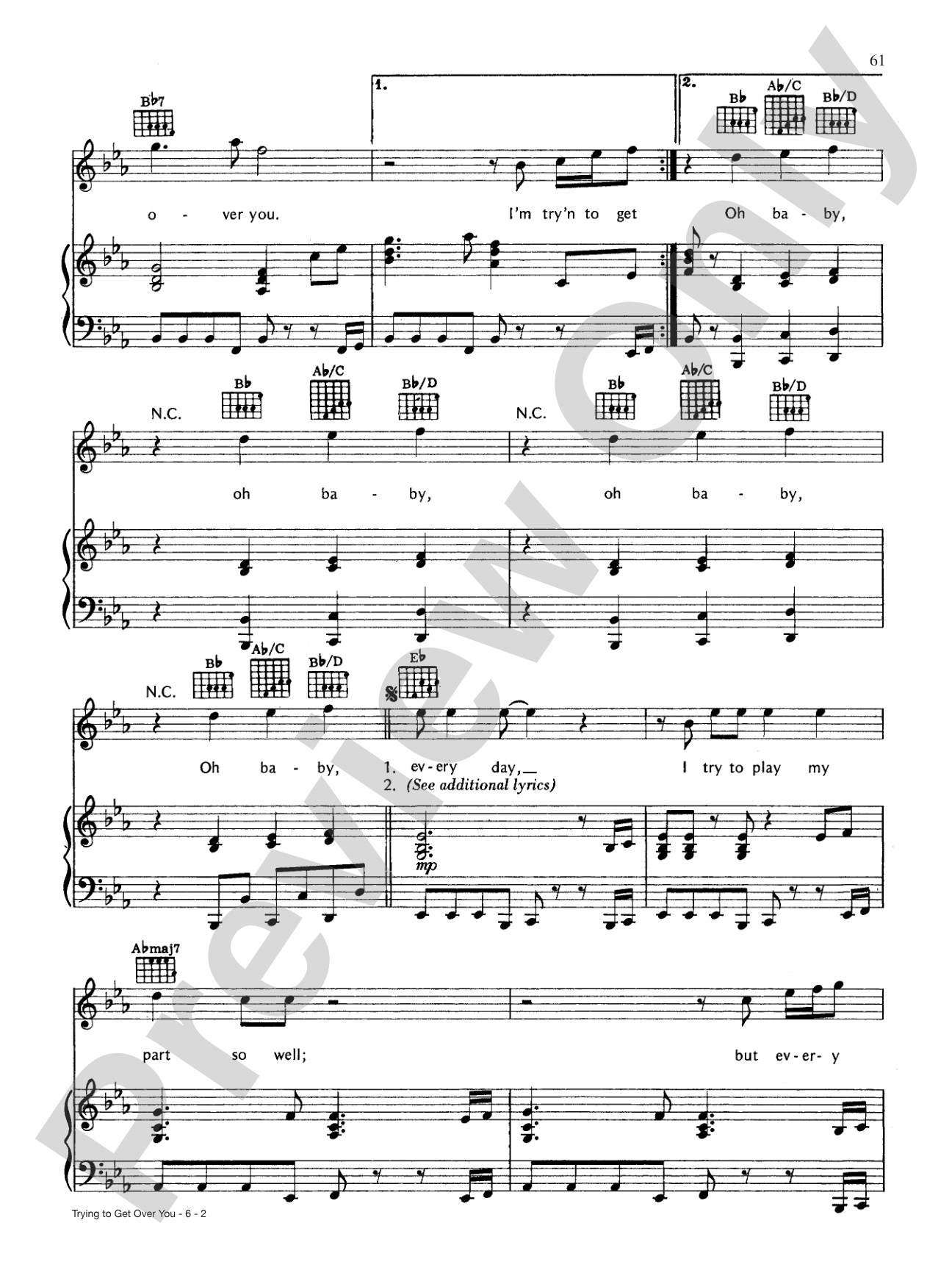

Trying to Get Over You: Piano/Vocal/Chords
Bobby Womack
Item: 00-PS-0012091
$5.99
Pickup currently not available
Related Items
I Wish I Had Someone to Go Home To: Piano/Vocal/Chords |
$4.99
|
View | |
Just My Imagination: Piano/Vocal/Chords |
$4.99
|
View | |
If You Think You're Lonely Now: Piano/Vocal/Chords |
$4.99
|
View | |
Love Has Finally Come at Last: Piano/Vocal/Chords |
$4.99
|
View | |
American Dream: Piano/Vocal/Chords |
$4.99
|
View | |
Surprise, Surprise: Piano/Vocal/Chords |
$5.99
|
View | |
Tell Me Why (Can't We Work it Out): Piano/Vocal/Chords |
$4.99
|
View | |
Through the Eyes of a Child: Piano/Vocal/Chords |
$4.99
|
View | |
Who's Fooling Who: Piano/Vocal/Chords |
$5.99
|
View | |
Games: Piano/Vocal/Chords |
$4.99
|
View | |
It Takes a lot of Strength to Say Goodbye: Piano/Vocal/Chords |
$5.99
|
View | |
Lay Some Lovin' On Me: Piano/Vocal/Chords |
$4.99
|
View | |
Secrets: Piano/Vocal/Chords |
$4.99
|
View | |
So Many Sides of You: Piano/Vocal/Chords |
$4.99
|
View | |
Where Do We Go From Here: Piano/Vocal/Chords |
$5.99
|
View | |
Bobby Womack: The Poet / The Poet II: Piano/Vocal/Chords Book |
$19.95
|
View |
Description
The consecutive release in the 1980s of The Poet and The Poet II propelled Bobby Womack to the top ranks of soul music majesty. Now, in celebration of Womack's ongoing career and his Rock and Roll Hall of Fame induction, this songbook makes sheet music for these landmark albums available to music makers.
Titles:
* American Dream
* Games
* I Wish I Had Someone to Go Home To
* If You Think You're Lonely Now
* It Takes a Lot of Strength to Say Goodbye
* Just My Imagination
* Lay Your Lovin' on Me
* Love Has Finally Come at Last
* Secrets
* So Many Sides of You
* Stand Up
* Surprise, Surprise
* Tell Me Why
* Through the Eyes of a Child
* Trying to Get Over You
* Where Do We Go from Here
* Who's Fooling Who


Titles:
* American Dream
* Games
* I Wish I Had Someone to Go Home To
* If You Think You're Lonely Now
* It Takes a Lot of Strength to Say Goodbye
* Just My Imagination
* Lay Your Lovin' on Me
* Love Has Finally Come at Last
* Secrets
* So Many Sides of You
* Stand Up
* Surprise, Surprise
* Tell Me Why
* Through the Eyes of a Child
* Trying to Get Over You
* Where Do We Go from Here
* Who's Fooling Who
Trying to Get Over You: Piano/Vocal/Chords isn't in MakeMusic Cloud just yet...but it could be. Let us know you'd like to see it, and you'll help shape what comes next. In the meantime, start a free trial and dive into thousands of interactive titles your students can play along with today.
Request This Title
Tell us you want it.
Start Your Free Trial
Explore everything that's ready to play right now.
Sample Audio
No sample audio found.
Sample Video
No sample videos found.
Additional Details
Publisher:
Alfred Music
Page Count:
84
SKU:
00-PS-0012091
More about this title
About the Composer: Bobby Womack
Bobby Womack emerged as one of soul music's most influential voices during the 1970s and 1980s, bringing sophisticated songwriting and emotional depth to every project he undertook. His albums The Poet (1981) and The Poet II (1983) became defining works of the era, showcasing his ability to blend soulful vocals with introspective lyricism and earned him induction into the Rock and Roll Hall of Fame.
Why we love this
This collection captures some of soul music's most enduring melodies and lyrics at a moment when Womack's artistry reached its peak. The songs balance accessibility with sophisticated harmonic language, making them rewarding for both singers developing interpretive depth and pianists seeking stylistically rich accompaniment material. Programming selections from this songbook connects your students to a transformative moment in American soul music.
What to expect
These songs carry the warmth and vulnerability of late-night reflection, moving between moments of quiet introspection and soulful proclamation. Each piece invites singers to explore lyrical storytelling while accompanying pianists craft rich harmonic textures that honor soul music's expressive traditions.
Who it's for
This songbook serves singers and pianists in jazz, soul, and popular music contexts who want to develop interpretive skills on authentic material. It works equally well for music theater students studying soul and R&B influences, or for contemporary music ensembles exploring American songwriting from a generative era.
How to get the most out of it
- Support the vocal line with intentional space in the piano part, especially during held notes and emotional moments; resist filling every beat.
- Pay attention to the chord voicings provided—they often suggest specific rhythmic figures that anchor the groove and support the singer's phrasing.
- Explore dynamics across an entire song rather than within single phrases; these songs benefit from building intensity over their full arc.
- Communicate with your vocalist about tempo and feel before performing; Womack's songs sit differently depending on how much space you allow for the lyrical content.
How to use it
Feature selections from this collection in recitals celebrating American songwriters and soul traditions, or use them in interdisciplinary units exploring 1980s popular music and cultural history. Individual songs work as encore pieces or as part of a jazz or contemporary music set that showcases students' stylistic range.
Skills your students will build
- Interpreting soul music phrasing and vocal production
- Reading and realizing chord symbols with stylistic appropriateness
- Understanding lyrical narrative and emotional arc in songwriting
- Collaborating between vocalist and accompanist across different song structures
- Adapting jazz and R&B harmonic language to individual vocal ranges