
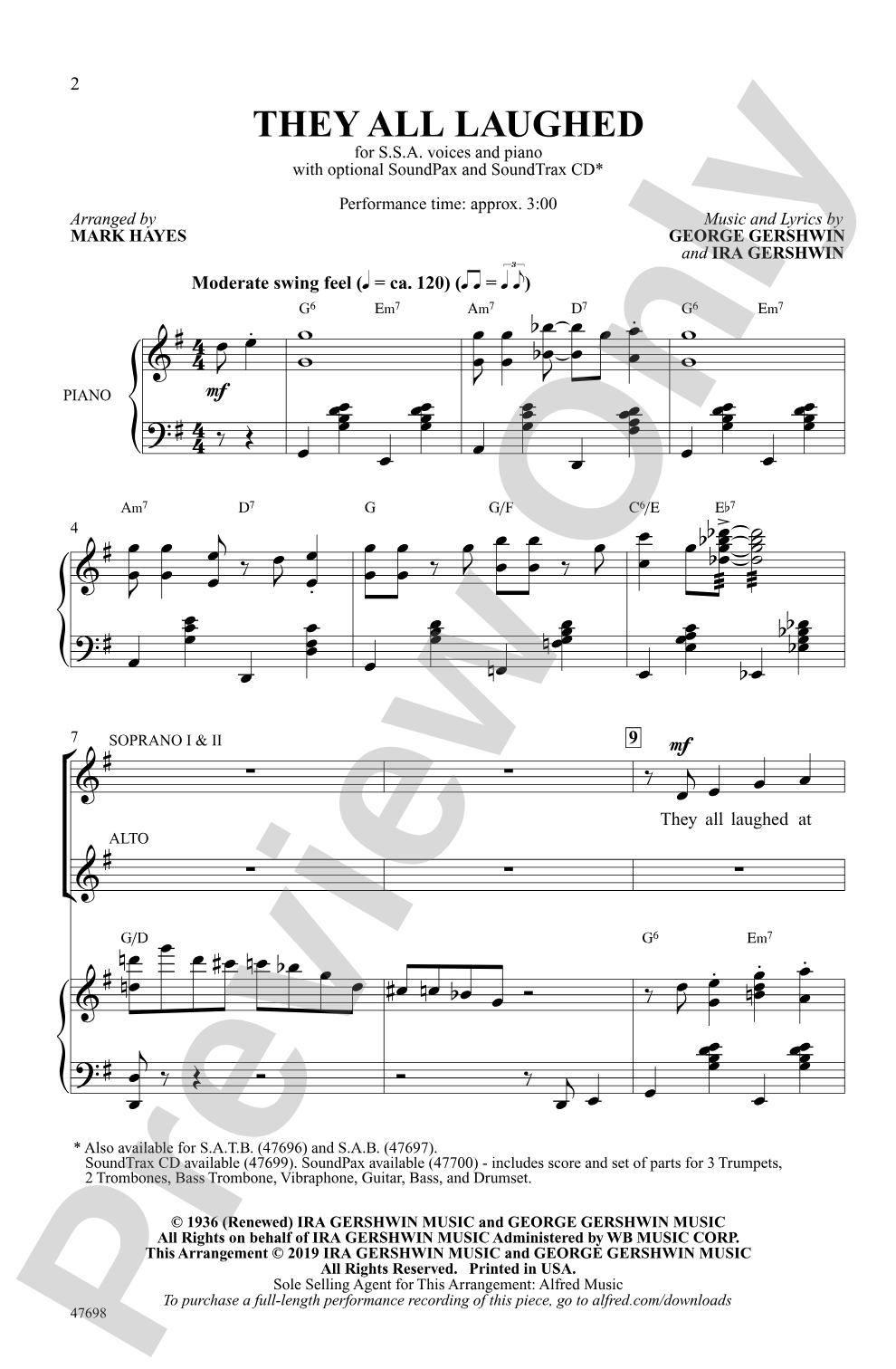
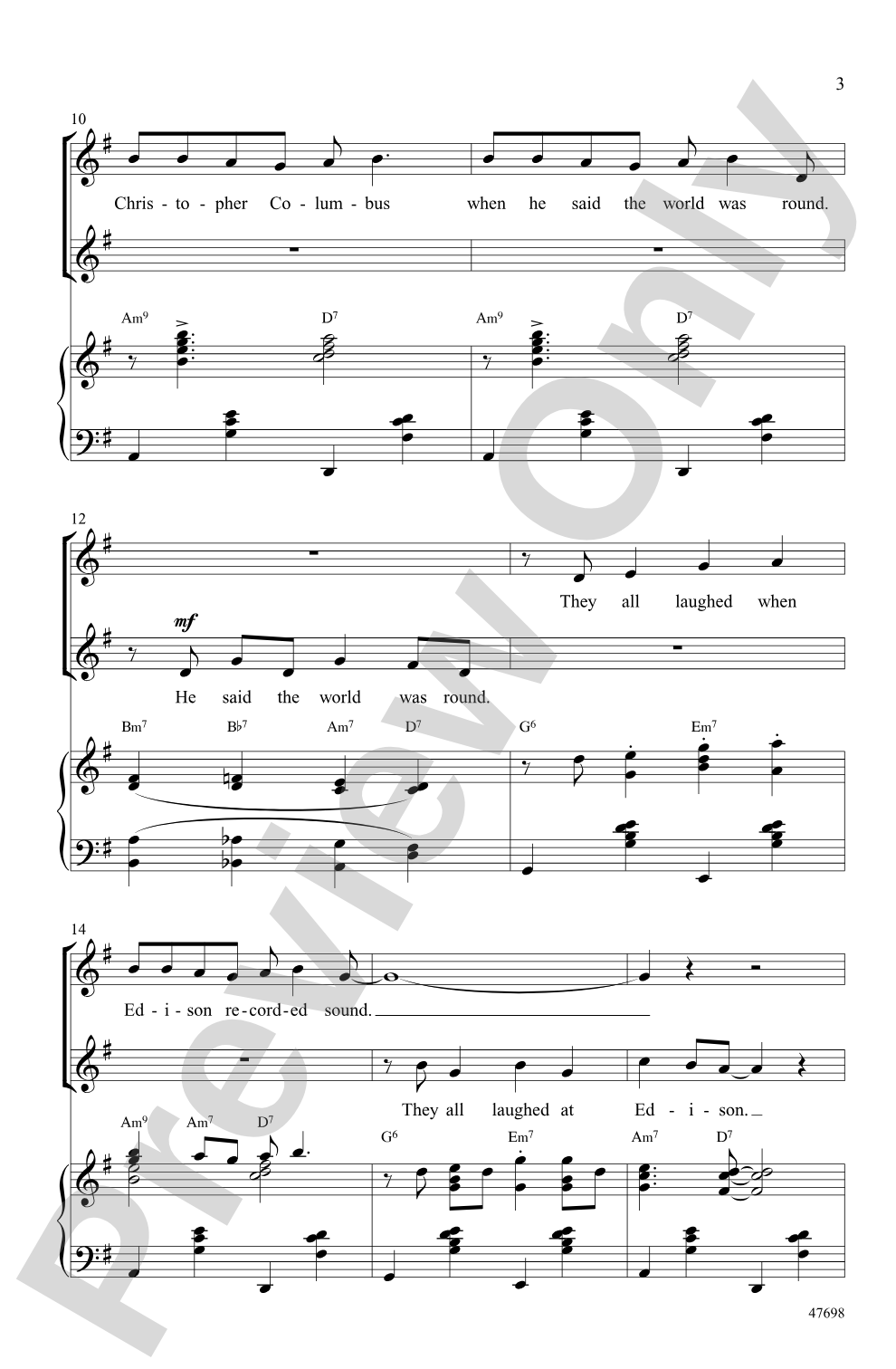
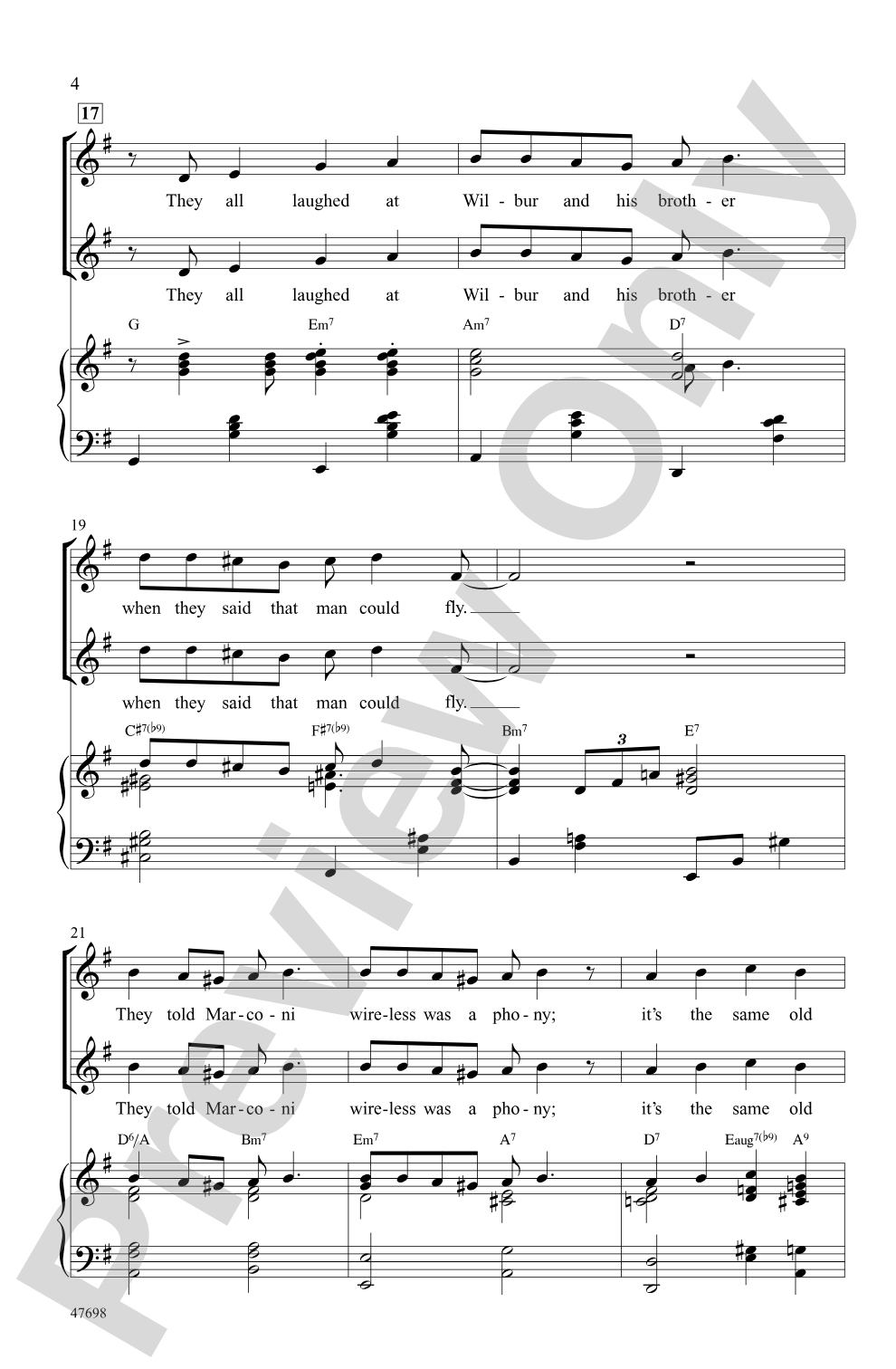

They All Laughed: SSA Choral Octavo
Music and lyrics by George Gershwin and Ira Gershwin / arr. Mark Hayes
Item: 00-PO-0006075

$2.10
Minimum order quantity: 20 copies
One moment…
Related Items
They All Laughed: SoundTrax Digital Audio Download |
$29.99
|
View | |
They All Laughed: SATB Choral Octavo |
$2.10
|
View | |
They All Laughed: SAB Choral Octavo |
$2.10
|
View | |
They All Laughed: Choral SoundPax |
$30.00
|
View | |
They All Laughed: SATB Choral Octavo |
$2.10
|
View | |
They All Laughed: SAB Choral Octavo |
$2.10
|
View | |
They All Laughed: SSA Choral Octavo |
$2.10
|
View | |
They All Laughed: Choral SoundTrax CD |
$29.99
|
View | |
They All Laughed: Choral SoundPax |
$30.00
|
View |
Description
Originally performed by Fred Astaire and Ginger Rogers in the classic movie Shall We Dance, this bubbly Gershwin tune has enjoyed a recent resurgence thanks to the contemporary Lady Gaga and Tony Bennett recording. Full of charm and wit, the arrangement sparkles with light jazz harmonies. Your accompanist will love the stride piano part, and your audience will get a kick out of the uniquely American references.


Don't just read it, hear it, play along with it, and watch your students grow with it. In MakeMusic Cloud, They All Laughed: SSA Choral Octavo comes alive with professional accompaniment, adjustable tempo, and built-in practice tools that turn solo practice into real progress.
Open in the Player
Jump straight in and assign it today.
Start Your Free Trial
Open this title and explore the full library in minutes.
Sample Audio
1
Audio File
--:--
0:00
0:00
Sample Video
1 / 3
Additional Details
Series:
Alfred Pop Choral Series
Publisher:
Alfred Music
Page Count:
12
SKU:
00-PO-0006075
More about this title
About the Composer: George Gershwin
George Gershwin revolutionized American composition by fusing concert hall ambition with popular song idioms. His work bridged classical training and jazz vernacular in ways that made serious music accessible and made popular music intellectually substantial. For educators, Gershwin's catalog offers a goldmine of teachable moments about harmony, orchestration, and the distinctly American voice in 20th-century music.
Why we love this
Mark Hayes captures the effervescent spirit of this Gershwin standard without overcomplicating the voicing, making it accessible for developing choirs while keeping the harmonic sophistication intact. The stride piano accompaniment is genuinely fun to play and gives your rehearsal accompanist something rewarding to dig into. Your singers get to inhabit a song that still resonates across generations, from Astaire and Rogers through contemporary pop, which means the audience connection is immediate and genuine.
What to expect
A sophisticated wink delivered over a martini. The music bubbles with light jazz voicings and clever harmonic twists that keep things fresh, while the melody dances through American references with charm and confidence. There's a playfulness here that feels intelligent rather than precious.
Who it's for
SSA choirs with intermediate harmonic reading skills and an accompanist comfortable with jazz-influenced piano writing. This works equally well for high school and college ensembles looking for contemporary repertoire that doesn't sacrifice musical substance.
How to get the most out of it
- Let the piano's stride pattern establish the groove from measure one; your singers should sit lightly on top of that rhythmic foundation rather than fighting it.
- Keep the diction crisp and conversational, especially on 'They all laughed at us.' This isn't belting or dramatic; it's witty and understated.
- Balance the jazz harmonies carefully in the inner voices so the chromatic movement stays audible without muddying the melody line.
- Shape the phrases around the lyrical content. The humor lands when the melody breathes naturally with the text, not when you're locked into strict bar divisions.
How to use it
Pair this with other Great American Songbook standards for a concert exploring how jazz language shaped mid-century pop music. It also makes a strong closer for a concert focused on wit and humor in choral music, leaving audiences smiling. The recorded accompaniment option makes it practical for smaller programs or situations where you need flexibility with your piano coverage.
Skills your students will build
- Reading jazz-influenced harmonic progressions with chromatic voice leading
- Maintaining rhythmic precision against stride piano accompaniment
- Articulating comedy through musical phrasing and text underlay
- Blending inner harmony voices with a supported melody line