

They All Laughed: SAB Choral Octavo
Music and lyrics by George Gershwin and Ira Gershwin / arr. Mark Hayes
Item: 00-PO-0006073

$2.10
Minimum order quantity: 20 copies
One moment…
Related Items
They All Laughed: SoundTrax Digital Audio Download |
$29.99
|
View | |
They All Laughed: SATB Choral Octavo |
$2.10
|
View | |
They All Laughed: SSA Choral Octavo |
$2.10
|
View | |
They All Laughed: Choral SoundPax |
$30.00
|
View | |
They All Laughed: SATB Choral Octavo |
$2.10
|
View | |
They All Laughed: SAB Choral Octavo |
$2.10
|
View | |
They All Laughed: SSA Choral Octavo |
$2.10
|
View | |
They All Laughed: Choral SoundTrax CD |
$29.99
|
View | |
They All Laughed: Choral SoundPax |
$30.00
|
View |
Description
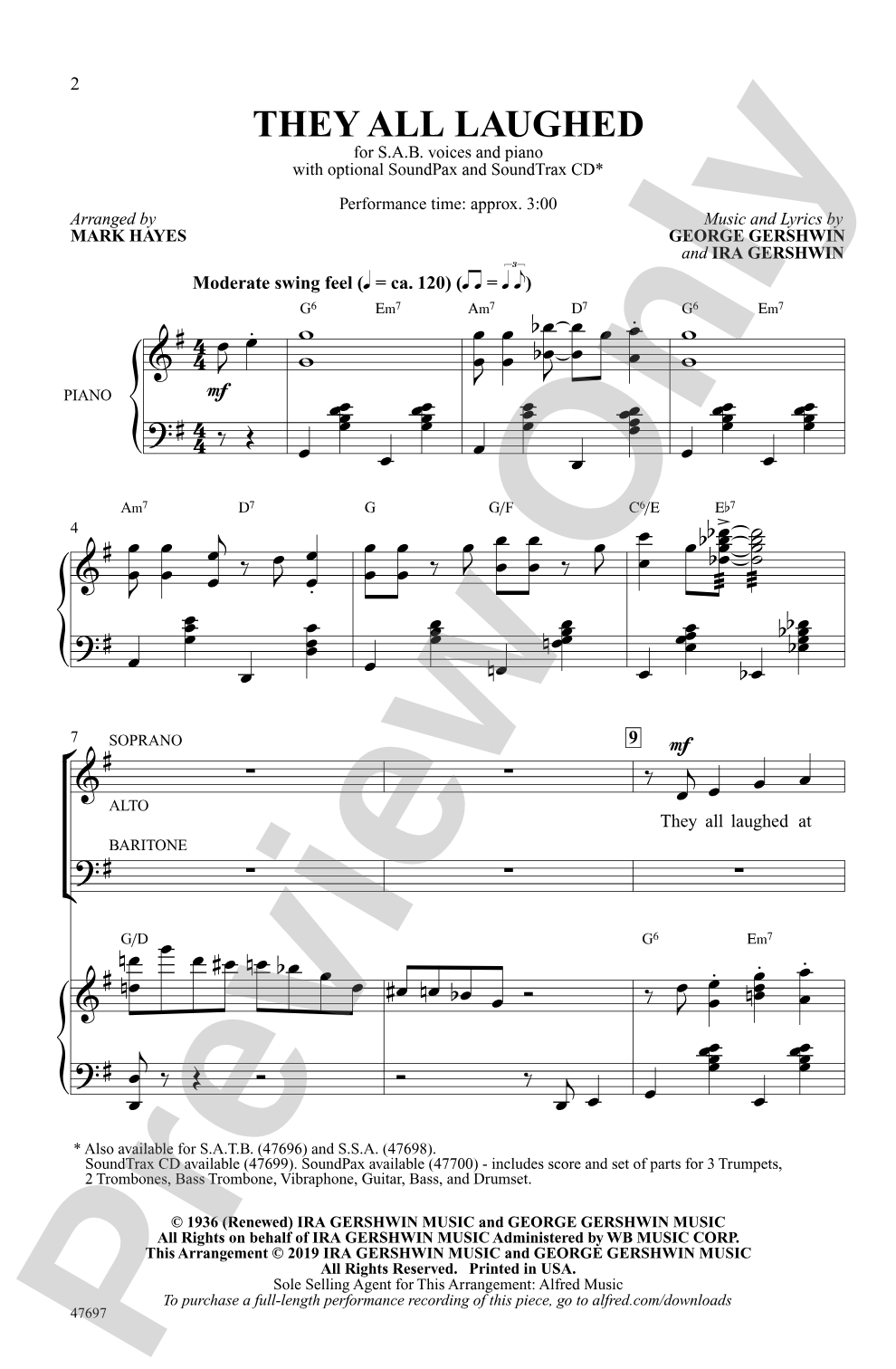
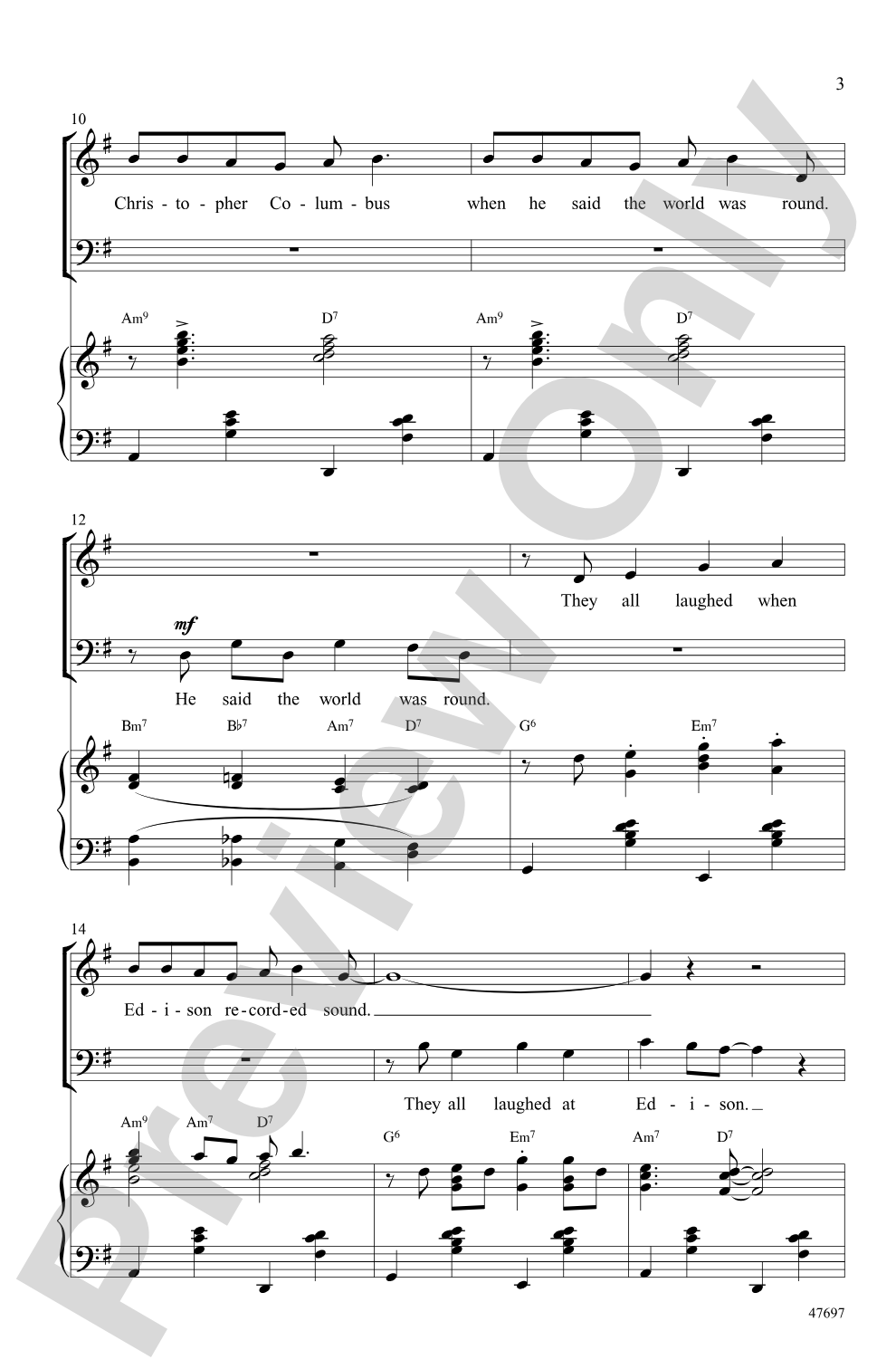
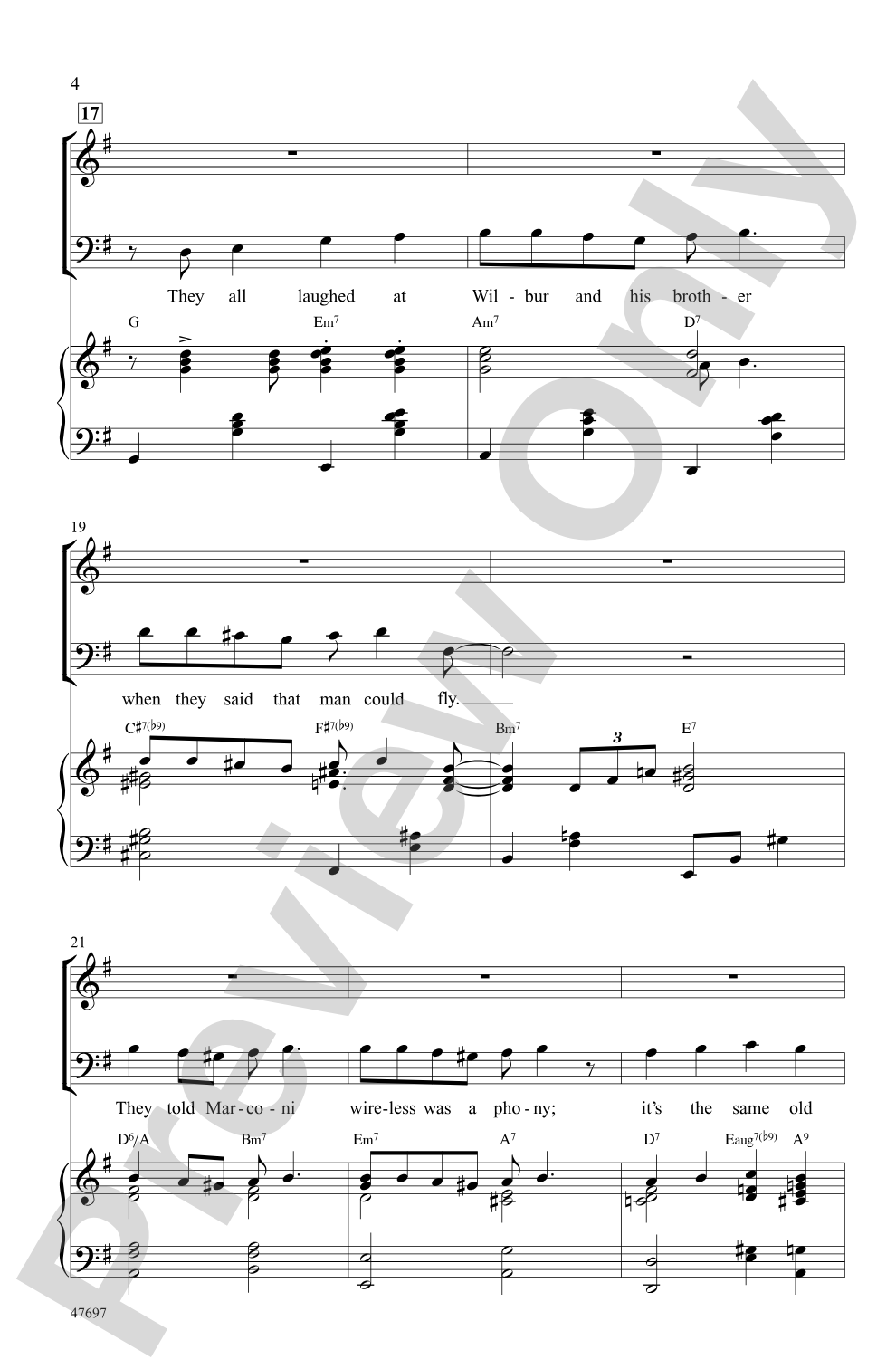
Originally performed by Fred Astaire and Ginger Rogers in the classic movie Shall We Dance, this bubbly Gershwin tune has enjoyed a recent resurgence thanks to the contemporary Lady Gaga and Tony Bennett recording. Full of charm and wit, the arrangement sparkles with light jazz harmonies. Your accompanist will love the stride piano part, and your audience will get a kick out of the uniquely American references.


Don't just read it, hear it, play along with it, and watch your students grow with it. In MakeMusic Cloud, They All Laughed: SAB Choral Octavo comes alive with professional accompaniment, adjustable tempo, and built-in practice tools that turn solo practice into real progress.
Open in the Player
Jump straight in and assign it today.
Start Your Free Trial
Open this title and explore the full library in minutes.
Sample Audio
1
Audio File
--:--
0:00
0:00
Sample Video
1 / 3
Additional Details
Series:
Alfred Pop Choral Series
Publisher:
Alfred Music
Page Count:
12
SKU:
00-PO-0006073
More about this title
About the Composer: George Gershwin
George Gershwin (1898, 1937) bridged concert hall and popular song like few composers of his generation. His gift for melody and harmonic sophistication made jazz idioms respectable in classical contexts, while keeping his popular songs intellectually honest. For music educators, Gershwin represents a crucial moment when American vernacular music came of age, and his songs remain vehicles for teaching contemporary harmony, swing articulation, and the rhythmic drive that defines the Great American Songbook.
Ira Gershwin, George's lyricist brother, had a gift for witty, conversational language that sits perfectly on the musical phrase. His lyrics feel spoken rather than sung, which makes them accessible to student singers and audiences alike.
Why we love this
Mark Hayes' arrangement maintains the elegance of the original while making it entirely singable for three-part voices. The stride piano accompaniment gives your accompanist a genuine showcase, and the jazz harmonies are accessible enough for students to hear clearly without becoming precious or over-arranged. This is Gershwin without condescension, and audiences respond immediately to the sophisticated charm.
What to expect
Effervescent and knowing. There's warmth in the harmony and lift in the melody, but no sentimentality. The piece sparkles with inside jokes and period references that feel both of its time (1937) and timeless in their appeal. Singing it should feel like being part of a clever conversation set to music.
Who it's for
Mixed choirs of intermediate to early advanced level, particularly those with solid diction skills and comfort with contemporary harmonies. Directors building programs around American song, revisiting classic movie music, or looking for secular content with intelligence and humor will find this direct hit.
How to get the most out of it
- Keep the tempo bouncy and conversational. This piece lives in its rhythmic lightness, not in legit ballad territory. The swing should feel inevitable, not imposed.
- Balance the lyrics so the wit lands. Ira Gershwin's humor depends on clear articulation and natural phrasing, especially in the title phrase and the references to famous people.
- Let the SAB voicing breathe. The three-part texture creates natural light and shade; resist the urge to thicken it with excessive dynamics or blend.
- Have your accompanist practice the stride pattern separately. Once it locks, the rhythm section of your choir will settle naturally into the pocket.
How to use it
This pairs naturally with other Gershwin or American Songbook material, or as a sophisticated closer on a concert mixing standards and contemporary work. It also works as a winter holiday program opener if you're building around classic movie themes, and the charm makes it ideal for informal concerts, fundraisers, or events where you need music that's both polished and approachable.
Skills your students will build
- Jazz articulation and swing phrasing in a jazz-standards context
- Light ensemble blend in three-part SAB voicing
- Collaborative listening with a rhythmically active piano accompaniment
- Clear diction for lyrical clarity in contemporary harmonic language
- Stylistic authenticity in Great American Songbook repertoire