
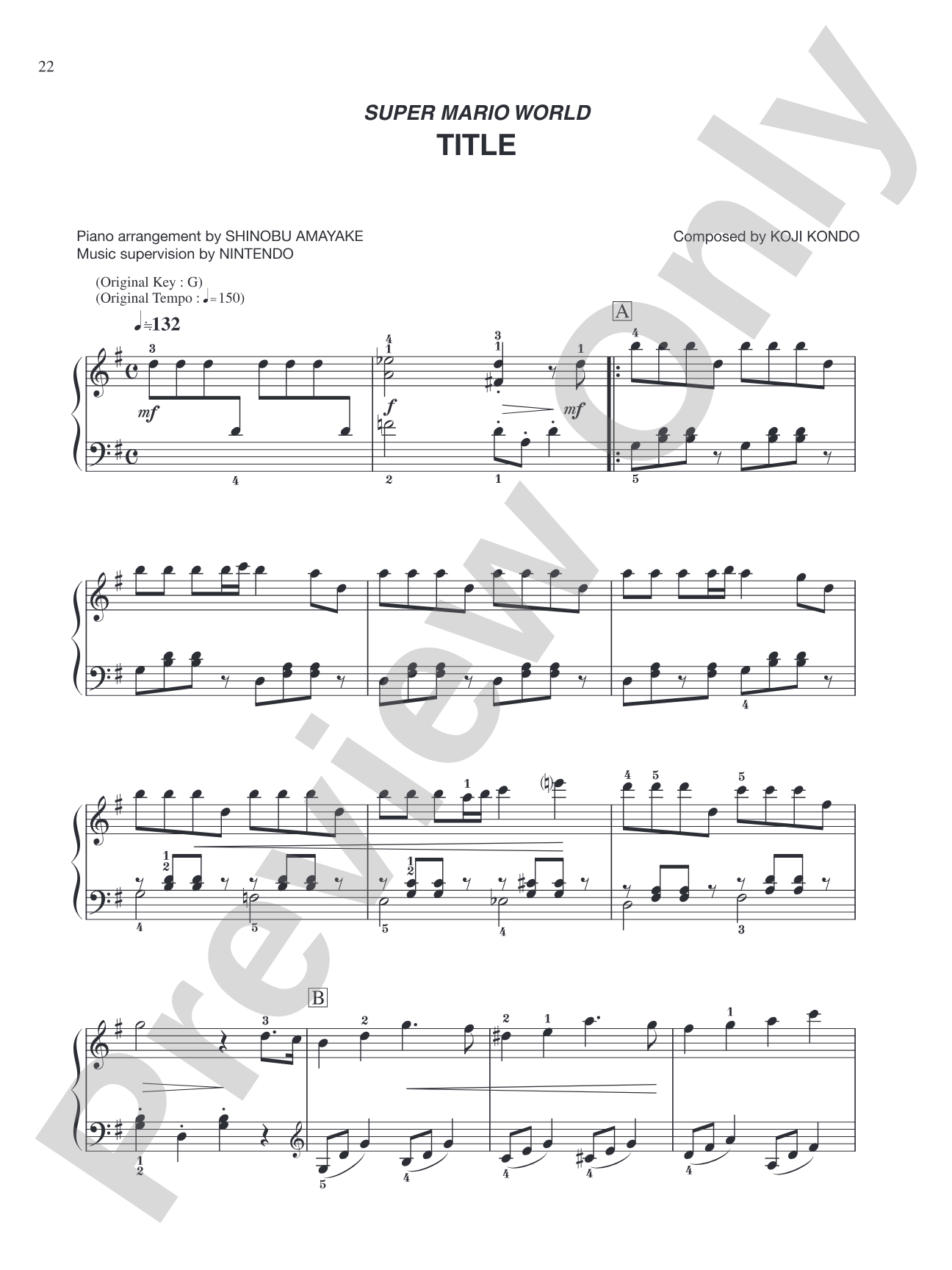

Super Mario World Title: Easy Piano
34 Super Mario™ Themes Arranged for Easy Piano
By Koji Kondo, Shiho Fujii, Asuka Ohta, Soyo Oka, Kenta Nagata, Hirokazu Tanaka, and Mahito Yokota
Level: Easy Piano
Item: 00-PS-0015365
$4.99
One moment…
Related Items
Super Mario Bros. Ground Background Music: Easy Piano |
$4.99
|
View | |
Super Mario Bros. Underground Background Music: Easy Piano |
$4.99
|
View | |
Super Mario Bros. Invincible Background Music: Easy Piano |
$4.99
|
View | |
Super Mario Bros. Underwater Background Music: Easy Piano |
$4.99
|
View | |
Super Mario Bros. Power Down Game Over: Easy Piano |
$4.99
|
View | |
Super Mario Bros. Time Up Warning Fanfare: Easy Piano |
$4.99
|
View | |
Super Mario Bros. Course Clear Fanfare: Easy Piano |
$4.99
|
View | |
Super Mario Bros. World Clear Fanfare: Easy Piano |
$4.99
|
View | |
Super Mario Bros. The Lost Levels Ending: Easy Piano |
$4.99
|
View | |
Super Mario Bros. 3 Map 1: Easy Piano |
$4.99
|
View | |
Super Mario Bros. 3 Ground Background Music: Easy Piano |
$4.99
|
View | |
Super Mario Bros. 3 Boss of the Fortress: Easy Piano |
$4.99
|
View | |
Super Mario Bros. 3 Skyship Background Music: Easy Piano |
$4.99
|
View | |
Super Mario World Castle Background Music: Easy Piano |
$4.99
|
View | |
Dr. Mario Title Background Music: Easy Piano |
$4.99
|
View | |
Dr. Mario Chill: Easy Piano |
$4.99
|
View | |
Super Mario Kart Mario Circuit: Easy Piano |
$4.99
|
View | |
Super Mario World 2 Yoshis Island Ground Background Music: Easy Piano |
$4.99
|
View | |
Super Mario World 2 Yoshis Island Athletic Theme: Easy Piano |
$4.99
|
View | |
Super Mario 64 Main Theme: Easy Piano |
$4.99
|
View | |
Super Mario 64 Water Land: Easy Piano |
$4.99
|
View | |
Mario Kart 64 Circuit: Easy Piano |
$4.99
|
View | |
Super Mario Sunshine Dolpic Town: Easy Piano |
$4.99
|
View | |
New Super Mario Bros. Title: Easy Piano |
$4.99
|
View | |
New Super Mario Bros. Giant Background Music: Easy Piano |
$4.99
|
View | |
New Super Mario Bros. Battle Background Music 1: Easy Piano |
$4.99
|
View | |
New Super Mario Bros. Battle Background Music 2: Easy Piano |
$4.99
|
View | |
Super Mario Galaxy Ending Staff Credit Roll: Easy Piano |
$4.99
|
View | |
Mario Kart World Rainbow Road: Easy Piano |
$4.99
|
View | |
New Super Mario Bros. Wii Ground Background Music: Easy Piano |
$4.99
|
View | |
New Super Mario Bros. Wii Underwater Background Music: Easy Piano |
$4.99
|
View | |
New Super Mario Bros. Wii Desert Background Music: Easy Piano |
$4.99
|
View | |
Super Mario Bros. Castle Background Music: Easy Piano |
$4.99
|
View | |
Super Mario™ Series for Easy Piano: Piano Book |
$19.99
|
View |
Description
After decades of anticipation, Alfred is proud to release the officially licensed, collectible sheet music companion folios to the Super Mario Bros.™ video game series. The 34 arrangements in this Easy Piano edition contain the instantly recognizable melodies beloved by generations of gamers around the globe. From Koji Kondo's iconic "Super Mario Bros.™ Ground Background Music" to the New Super Mario Bros.™ Wii™ themes, the dozens of pieces in this book represent two and a half decades of Nintendo® video game favorites. Adding to the fun, graphics from the corresponding games grace each page of the sheet music. Impress friends, family, and audiences of all ages by playing from this magnificent collection, which makes a great gift for every pianist.
Titles: Super Mario Bros.™ Ground Background Music * Super Mario Bros.™ Underground Background Music * Super Mario Bros.™ Underwater Background Music * Super Mario Bros.™ Castle Background Music * Super Mario Bros.™ Invincible Background Music * Super Mario Bros.™: The Lost Levels Ending * Super Mario Bros.™ 3 Map 1 * Super Mario Bros.™ 3 Ground Background Music * Super Mario Bros.™ 3 Boss of the Fortress * Super Mario Bros.™ 3 Skyship Background Music * Super Mario World™ Title * Super Mario World™ Castle Background Music * Dr. Mario™ Chill * Dr. Mario™ Title Background Music * Super Mario Kart™ Mario Circuit * Super Mario World™ 2 Yoshi's Island™ Athletic * Super Mario World™ 2 Yoshi's Island™ Ground Background Music * Super Mario 64™ Main Theme * Super Mario 64™ Water Land * Mario Kart™ 64 Circuit * Super Mario Sunshine™ Dolpic Town * New Super Mario Bros.™ Title * New Super Mario Bros.™ Giant Background Music * New Super Mario Bros.™ Battle Background Music 2 * New Super Mario Bros.™ Battle Background Music 1 * Super Mario Galaxy™ Ending Staff Credit Roll * Mario Kart™ Wii™ Rainbow Road * New Super Mario Bros.™ Wii™ Ground Background Music * New Super Mario Bros.™ Wii™ Underwater Background Music * New Super Mario Bros.™ Wii™ Desert Background Music * Super Mario Bros.™ Time Up Warning Fanfare * Super Mario Bros.™ Course Clear Fanfare * Super Mario Bros.™ World Clear Fanfare * Super Mario Bros.™ Power Down, Game Over.
"Best in Show" Award at Winter NAMM 2012 presented by Music Inc. magazine.


Titles: Super Mario Bros.™ Ground Background Music * Super Mario Bros.™ Underground Background Music * Super Mario Bros.™ Underwater Background Music * Super Mario Bros.™ Castle Background Music * Super Mario Bros.™ Invincible Background Music * Super Mario Bros.™: The Lost Levels Ending * Super Mario Bros.™ 3 Map 1 * Super Mario Bros.™ 3 Ground Background Music * Super Mario Bros.™ 3 Boss of the Fortress * Super Mario Bros.™ 3 Skyship Background Music * Super Mario World™ Title * Super Mario World™ Castle Background Music * Dr. Mario™ Chill * Dr. Mario™ Title Background Music * Super Mario Kart™ Mario Circuit * Super Mario World™ 2 Yoshi's Island™ Athletic * Super Mario World™ 2 Yoshi's Island™ Ground Background Music * Super Mario 64™ Main Theme * Super Mario 64™ Water Land * Mario Kart™ 64 Circuit * Super Mario Sunshine™ Dolpic Town * New Super Mario Bros.™ Title * New Super Mario Bros.™ Giant Background Music * New Super Mario Bros.™ Battle Background Music 2 * New Super Mario Bros.™ Battle Background Music 1 * Super Mario Galaxy™ Ending Staff Credit Roll * Mario Kart™ Wii™ Rainbow Road * New Super Mario Bros.™ Wii™ Ground Background Music * New Super Mario Bros.™ Wii™ Underwater Background Music * New Super Mario Bros.™ Wii™ Desert Background Music * Super Mario Bros.™ Time Up Warning Fanfare * Super Mario Bros.™ Course Clear Fanfare * Super Mario Bros.™ World Clear Fanfare * Super Mario Bros.™ Power Down, Game Over.
"Best in Show" Award at Winter NAMM 2012 presented by Music Inc. magazine.
Super Mario World Title: Easy Piano isn't in MakeMusic Cloud just yet...but it could be. Let us know you'd like to see it, and you'll help shape what comes next. In the meantime, start a free trial and dive into thousands of interactive titles your students can play along with today.
Request This Title
Tell us you want it.
Start Your Free Trial
Explore everything that's ready to play right now.
Sample Audio
No sample audio found.
Sample Video
Additional Details
Publisher:
Alfred Music
Page Count:
76
SKU:
00-PS-0015365
More about this title
About the Composer: Koji Kondo
Koji Kondo transformed video game music from functional background sound into genuinely memorable composition. His work at Nintendo beginning in the 1980s established sonic signatures so distinctive that millions recognize them instantly across generations. Kondo's melodies prioritize clarity and catchiness without sacrificing harmonic interest, making his scores teach fundamental principles of melodic writing through exposure to deceptively simple but brilliantly crafted themes.
Why we love this
These arrangements unlock genuine musical engagement by grounding it in material your students already love. Kondo's melodies are rhythmically straightforward and harmonically logical, which means pianists can focus on tone, phrasing, and performance confidence rather than wrestling with technical obstacles. The visual game graphics on every page add narrative texture that motivates practice and makes recital performances feel like celebrations rather than obligations.
What to expect
Playful yet purposeful. These arrangements capture the energy and personality of each game level through straightforward harmonic language and memorable melodic contours. Whether exploring an underground cavern or racing across a circuit, the music conveys character and movement that feels satisfying to perform, never mechanical or thin.
Who it's for
Pianists at the early intermediate level seeking repertoire with genuine cultural relevance and immediate audience connection. Teachers looking for material that builds motivation and consistent practice habits because students care about the source material. Recital pianists who want crowd-pleasing selections that demonstrate musicality without requiring advanced technique.
How to get the most out of it
- Keep the iconic melodies singing with consistent tone quality; resist the urge to rush these simple but instantly recognizable themes.
- Shape phrases with subtle dynamic swells rather than mechanical evenness; these pieces reward listening as attentively as you would to any concert piece.
- Lean into the rhythmic character unique to each setting (the march of castle themes versus the fluidity of underwater passages) to communicate the game context through your playing.
- Practice the accompaniment patterns independently from the melody until your hands feel separated; this builds the independence needed to let the melody breathe while maintaining harmonic stability.
How to use it
Include selections as opening or closing pieces in student recitals where they anchor the program with audience familiarity while allowing younger pianists room to shine. Program a medley of three or four contrasting pieces (ground level, underwater, castle) as a thematic concert segment that tells a story through Kondo's compositional range. Assign individual pieces as supplementary repertoire for students who need confidence building before tackling more complex contemporary works.
Skills your students will build
- Consistent dynamic control in simple textures
- Phrasing of melodic lines over static or repeating accompaniments
- Left-hand independence and steady rhythmic foundation
- Reading straightforward harmonic progressions across multiple pages
- Performance confidence through familiarity and cultural relevance