
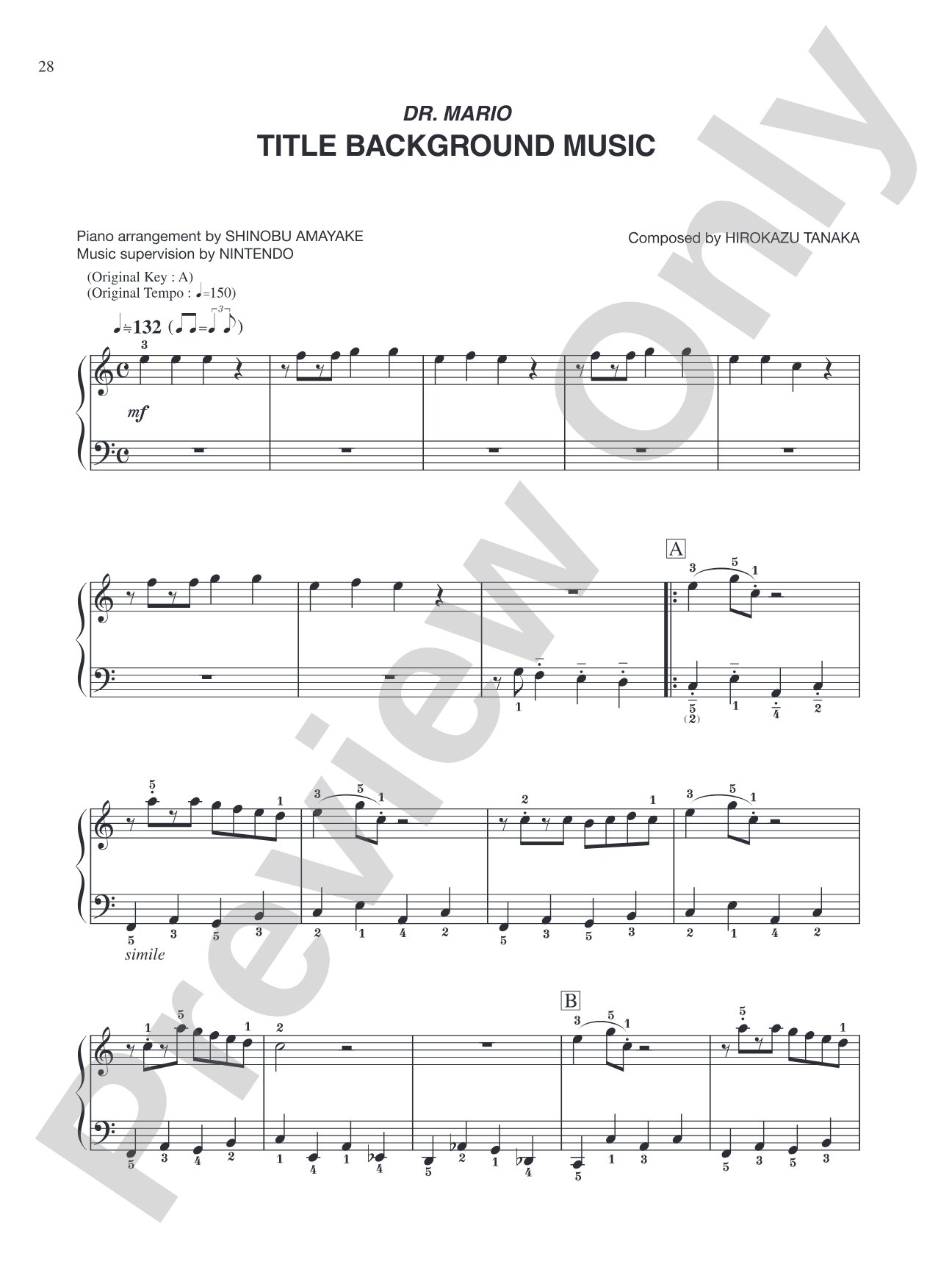

Dr. Mario Title Background Music: Easy Piano
34 Super Mario™ Themes Arranged for Easy Piano
By Koji Kondo, Shiho Fujii, Asuka Ohta, Soyo Oka, Kenta Nagata, Hirokazu Tanaka, and Mahito Yokota
Level: Easy Piano
Item: 00-PS-0015367
$4.99
One moment…
Related Items
Super Mario Bros. Ground Background Music: Easy Piano |
$4.99
|
View | |
Super Mario Bros. Underground Background Music: Easy Piano |
$4.99
|
View | |
Super Mario Bros. Invincible Background Music: Easy Piano |
$4.99
|
View | |
Super Mario Bros. Underwater Background Music: Easy Piano |
$4.99
|
View | |
Super Mario Bros. Power Down Game Over: Easy Piano |
$4.99
|
View | |
Super Mario Bros. Time Up Warning Fanfare: Easy Piano |
$4.99
|
View | |
Super Mario Bros. Course Clear Fanfare: Easy Piano |
$4.99
|
View | |
Super Mario Bros. World Clear Fanfare: Easy Piano |
$4.99
|
View | |
Super Mario Bros. The Lost Levels Ending: Easy Piano |
$4.99
|
View | |
Super Mario Bros. 3 Map 1: Easy Piano |
$4.99
|
View | |
Super Mario Bros. 3 Ground Background Music: Easy Piano |
$4.99
|
View | |
Super Mario Bros. 3 Boss of the Fortress: Easy Piano |
$4.99
|
View | |
Super Mario Bros. 3 Skyship Background Music: Easy Piano |
$4.99
|
View | |
Super Mario World Title: Easy Piano |
$4.99
|
View | |
Super Mario World Castle Background Music: Easy Piano |
$4.99
|
View | |
Dr. Mario Chill: Easy Piano |
$4.99
|
View | |
Super Mario Kart Mario Circuit: Easy Piano |
$4.99
|
View | |
Super Mario World 2 Yoshis Island Ground Background Music: Easy Piano |
$4.99
|
View | |
Super Mario World 2 Yoshis Island Athletic Theme: Easy Piano |
$4.99
|
View | |
Super Mario 64 Main Theme: Easy Piano |
$4.99
|
View | |
Super Mario 64 Water Land: Easy Piano |
$4.99
|
View | |
Mario Kart 64 Circuit: Easy Piano |
$4.99
|
View | |
Super Mario Sunshine Dolpic Town: Easy Piano |
$4.99
|
View | |
New Super Mario Bros. Title: Easy Piano |
$4.99
|
View | |
New Super Mario Bros. Giant Background Music: Easy Piano |
$4.99
|
View | |
New Super Mario Bros. Battle Background Music 1: Easy Piano |
$4.99
|
View | |
New Super Mario Bros. Battle Background Music 2: Easy Piano |
$4.99
|
View | |
Super Mario Galaxy Ending Staff Credit Roll: Easy Piano |
$4.99
|
View | |
Mario Kart World Rainbow Road: Easy Piano |
$4.99
|
View | |
New Super Mario Bros. Wii Ground Background Music: Easy Piano |
$4.99
|
View | |
New Super Mario Bros. Wii Underwater Background Music: Easy Piano |
$4.99
|
View | |
New Super Mario Bros. Wii Desert Background Music: Easy Piano |
$4.99
|
View | |
Super Mario Bros. Castle Background Music: Easy Piano |
$4.99
|
View | |
Super Mario™ Series for Easy Piano: Piano Book |
$19.99
|
View |
Description
After decades of anticipation, Alfred is proud to release the officially licensed, collectible sheet music companion folios to the Super Mario Bros.™ video game series. The 34 arrangements in this Easy Piano edition contain the instantly recognizable melodies beloved by generations of gamers around the globe. From Koji Kondo's iconic "Super Mario Bros.™ Ground Background Music" to the New Super Mario Bros.™ Wii™ themes, the dozens of pieces in this book represent two and a half decades of Nintendo® video game favorites. Adding to the fun, graphics from the corresponding games grace each page of the sheet music. Impress friends, family, and audiences of all ages by playing from this magnificent collection, which makes a great gift for every pianist.
Titles: Super Mario Bros.™ Ground Background Music * Super Mario Bros.™ Underground Background Music * Super Mario Bros.™ Underwater Background Music * Super Mario Bros.™ Castle Background Music * Super Mario Bros.™ Invincible Background Music * Super Mario Bros.™: The Lost Levels Ending * Super Mario Bros.™ 3 Map 1 * Super Mario Bros.™ 3 Ground Background Music * Super Mario Bros.™ 3 Boss of the Fortress * Super Mario Bros.™ 3 Skyship Background Music * Super Mario World™ Title * Super Mario World™ Castle Background Music * Dr. Mario™ Chill * Dr. Mario™ Title Background Music * Super Mario Kart™ Mario Circuit * Super Mario World™ 2 Yoshi's Island™ Athletic * Super Mario World™ 2 Yoshi's Island™ Ground Background Music * Super Mario 64™ Main Theme * Super Mario 64™ Water Land * Mario Kart™ 64 Circuit * Super Mario Sunshine™ Dolpic Town * New Super Mario Bros.™ Title * New Super Mario Bros.™ Giant Background Music * New Super Mario Bros.™ Battle Background Music 2 * New Super Mario Bros.™ Battle Background Music 1 * Super Mario Galaxy™ Ending Staff Credit Roll * Mario Kart™ Wii™ Rainbow Road * New Super Mario Bros.™ Wii™ Ground Background Music * New Super Mario Bros.™ Wii™ Underwater Background Music * New Super Mario Bros.™ Wii™ Desert Background Music * Super Mario Bros.™ Time Up Warning Fanfare * Super Mario Bros.™ Course Clear Fanfare * Super Mario Bros.™ World Clear Fanfare * Super Mario Bros.™ Power Down, Game Over.
"Best in Show" Award at Winter NAMM 2012 presented by Music Inc. magazine.


Titles: Super Mario Bros.™ Ground Background Music * Super Mario Bros.™ Underground Background Music * Super Mario Bros.™ Underwater Background Music * Super Mario Bros.™ Castle Background Music * Super Mario Bros.™ Invincible Background Music * Super Mario Bros.™: The Lost Levels Ending * Super Mario Bros.™ 3 Map 1 * Super Mario Bros.™ 3 Ground Background Music * Super Mario Bros.™ 3 Boss of the Fortress * Super Mario Bros.™ 3 Skyship Background Music * Super Mario World™ Title * Super Mario World™ Castle Background Music * Dr. Mario™ Chill * Dr. Mario™ Title Background Music * Super Mario Kart™ Mario Circuit * Super Mario World™ 2 Yoshi's Island™ Athletic * Super Mario World™ 2 Yoshi's Island™ Ground Background Music * Super Mario 64™ Main Theme * Super Mario 64™ Water Land * Mario Kart™ 64 Circuit * Super Mario Sunshine™ Dolpic Town * New Super Mario Bros.™ Title * New Super Mario Bros.™ Giant Background Music * New Super Mario Bros.™ Battle Background Music 2 * New Super Mario Bros.™ Battle Background Music 1 * Super Mario Galaxy™ Ending Staff Credit Roll * Mario Kart™ Wii™ Rainbow Road * New Super Mario Bros.™ Wii™ Ground Background Music * New Super Mario Bros.™ Wii™ Underwater Background Music * New Super Mario Bros.™ Wii™ Desert Background Music * Super Mario Bros.™ Time Up Warning Fanfare * Super Mario Bros.™ Course Clear Fanfare * Super Mario Bros.™ World Clear Fanfare * Super Mario Bros.™ Power Down, Game Over.
"Best in Show" Award at Winter NAMM 2012 presented by Music Inc. magazine.
Discover MakeMusic Cloud: thousands of interactive titles your students can play along with today.
Sample Audio
No sample audio found.
Sample Video
Additional Details
Publisher:
Alfred Music
Page Count:
76
SKU:
00-PS-0015367
More about this title
About the Composer: Hirokazu Tanaka
Hirokazu Tanaka composed the soundtrack to the original Dr. Mario and contributed to numerous Nintendo franchises throughout the 1980s and 1990s. His melodies became synonymous with some of gaming's most iconic moments, establishing a compositional voice that prioritized accessibility, memorability, and infectious simplicity. Tanaka's work demonstrated that video game music could be both instantly catchy and structurally sophisticated, influencing how music functions in interactive media.
Why we love this
This collection turns some of the most beloved video game themes into genuinely playable easy piano arrangements. The melodies are already embedded in the cultural memory of your students and audiences, which means they'll engage immediately and perform with natural musicality. The visual game graphics on every page add an extra layer of motivation and context that keeps young pianists invested in learning.
What to expect
Bright, propulsive, and unburdened. These pieces capture the pure joy and forward momentum of the games themselves, with melodies that feel inevitable the moment you play them. There's a retro-electronic quality to the accompaniment patterns that evokes the original chiptune sound while remaining warm and human under your fingers.
Who it's for
Young pianists in their first or second year of study who respond to familiar material and benefit from the motivation that comes with recognizable, culturally relevant repertoire. Adult hobby pianists and longtime gamers who want to reconnect with nostalgic music at an accessible level. Teachers seeking material that bridges classical piano study with students' real musical interests.
How to get the most out of it
- Keep the tempo steady and energetic. These pieces thrive on rhythmic consistency rather than expressive rubato; use a metronome during practice to lock in the groove.
- Pay attention to the left hand patterns. Even at easy level, the accompaniment often drives the character of the piece, so balance it carefully with the melody rather than minimizing it.
- Honor the musical simplicity as a strength. Resist the urge to add flourishes or fill empty space; let the iconic melodies speak clearly.
- Experiment with different touch and pedaling choices to shift the mood. The same theme can feel playful or contemplative depending on how lightly or deeply you voice it.
How to use it
Feature individual pieces or medleys from this collection on student recitals to create moments of genuine audience delight and recognition. Schedule these pieces as performance rewards after students complete more demanding classical repertoire, or use them as seasonal novelty items for winter and spring concerts. This book works especially well as a gift-with-purchase incentive or as accessible repertoire for adult beginner students seeking immediate gratification.
Skills your students will build
- Reading and executing consistent left-hand accompaniment patterns (repeated chords, broken figures)
- Maintaining steady tempo and rhythmic accuracy in straightforward time signatures
- Balancing melody and accompaniment textures at the keyboard
- Building performance confidence through accessible, recognizable material
- Understanding how theme and variation function across related pieces in the same stylistic universe