
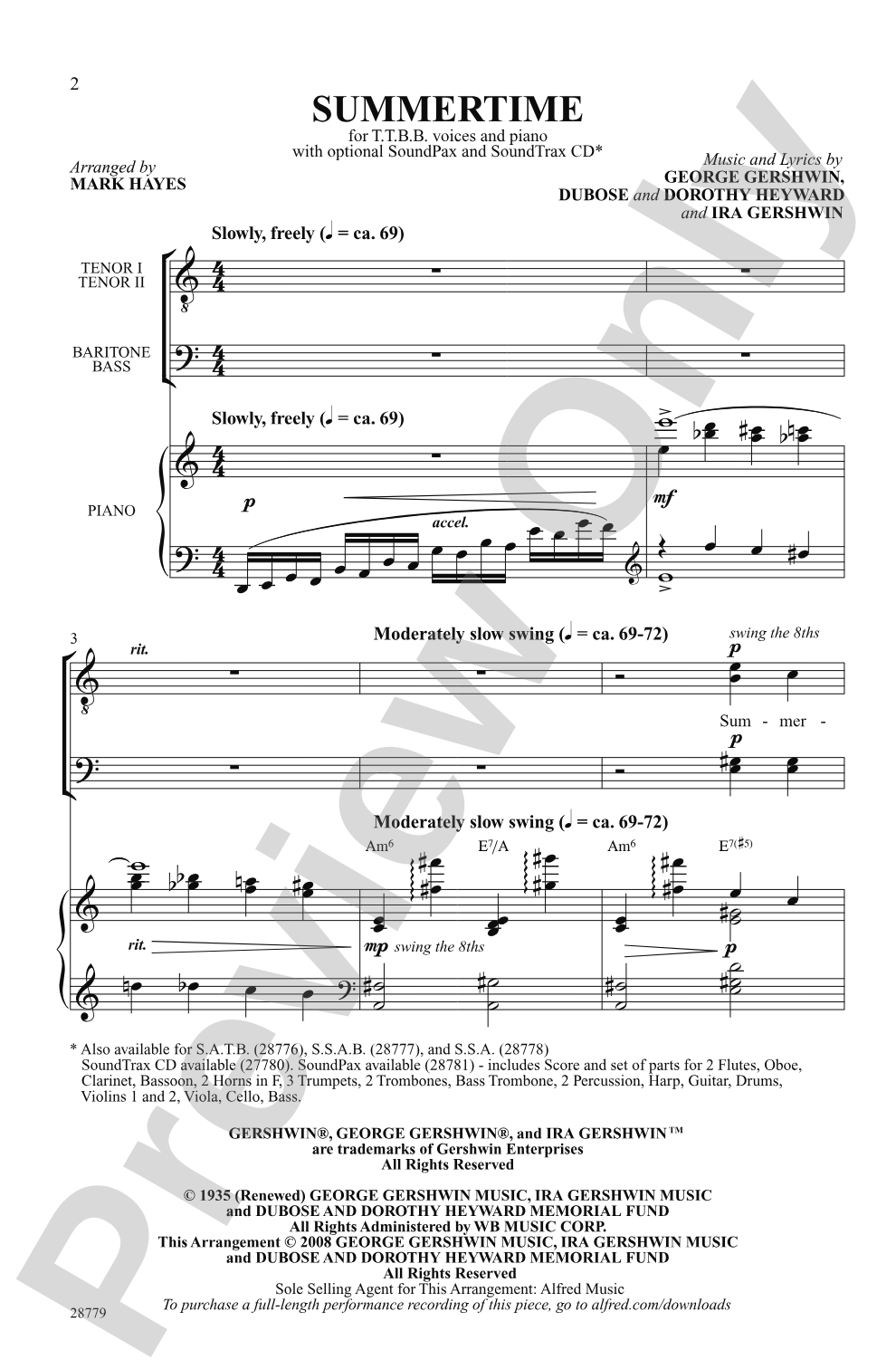
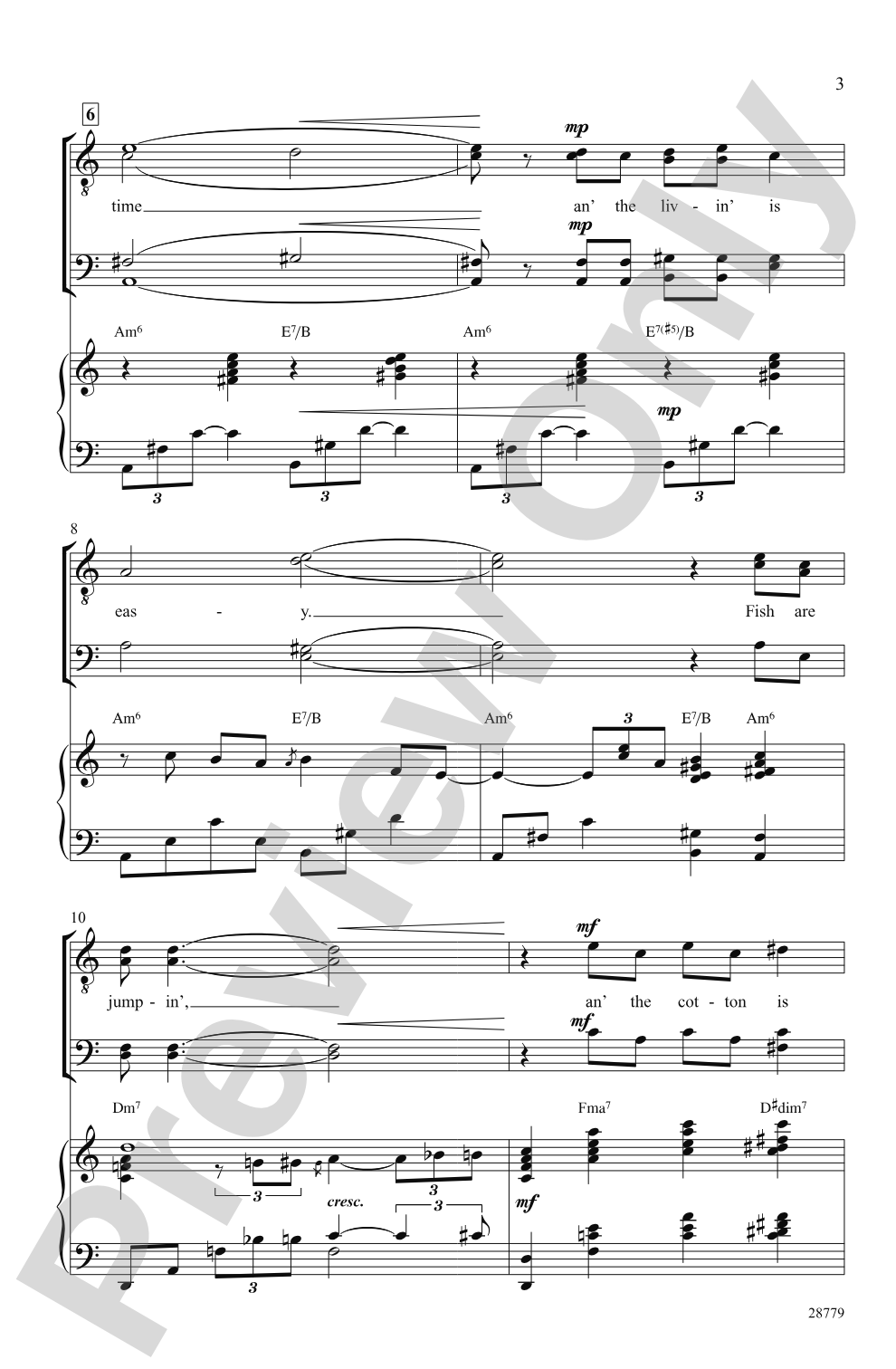
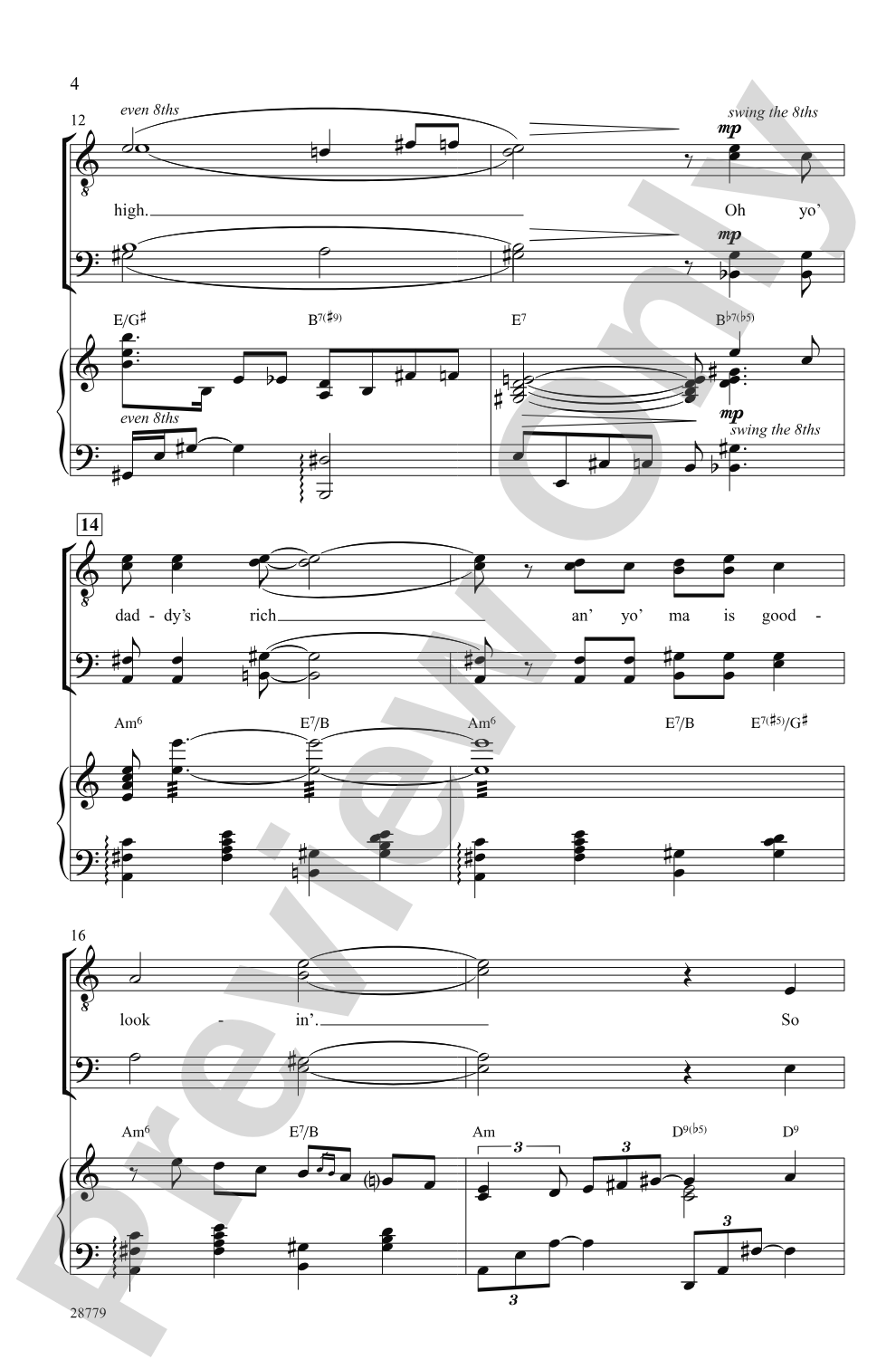

Summertime: TTBB Choral Octavo
From the Musical Porgy and Bess
Music and lyrics by George Gershwin, DuBose and Dorothy Heyward, and Ira Gershwin / arr. Mark Hayes
Item: 00-PO-0006584
$2.25
Minimum order quantity: 20 copies
One moment…
Related Items
Summertime: SoundTrax Digital Audio Download |
$27.99
|
View | |
Summertime (from the musical Porgy and Bess): SATB Choral Octavo |
$2.10
|
View | |
Summertime (from the musical Porgy and Bess): SSAB Choral Octavo |
$1.90
|
View | |
Summertime (from the musical Porgy and Bess): SSA Choral Octavo |
$2.10
|
View | |
Summertime (from the musical Porgy and Bess): Choral SoundPax |
$60.00
|
View | |
Summertime: SATB Choral Octavo |
$2.10
|
View | |
Summertime: SSAB Choral Octavo |
$1.90
|
View | |
Summertime: SSA Choral Octavo |
$2.10
|
View | |
Summertime: TTBB Choral Octavo |
$2.25
|
View | |
Summertime: Choral Octavo SoundTrax CD |
$27.99
|
View | |
Summertime: Choral SoundPax |
$60.00
|
View |
Description
This classic American song from Porgy and Bess® deserves only the finest choral treatment, and Mark Hayes has certainly given it that, with a rich, lush setting. The piano accompaniment carries the voices on a dramatic journey appropriate to the nature of the piece. A song that every singer should know and will love.


Summertime: TTBB Choral Octavo isn't in MakeMusic Cloud just yet...but it could be. Let us know you'd like to see it, and you'll help shape what comes next. In the meantime, start a free trial and dive into thousands of interactive titles your students can play along with today.
Request This Title
Tell us you want it.
Start Your Free Trial
Explore everything that's ready to play right now.
Sample Audio
1
Audio File
--:--
0:00
0:00
Sample Video
No sample videos found.
Additional Details
Series:
Alfred Pop Choral Series
Publisher:
Alfred Music
Page Count:
12
SKU:
00-PO-0006584
More about this title
About the Composer: George Gershwin
George Gershwin (1898, 1937) was an American composer who bridged classical and popular music with unprecedented success. His gift for melody and harmonic sophistication made him central to the development of American musical theater, and his works remain cornerstones of the standard repertoire.
Gershwin's collaboration with lyricist Ira Gershwin and librettists DuBose and Dorothy Heyward on Porgy and Bess resulted in one of the most performed American operas. The score's richness comes from Gershwin's ability to weave jazz idioms, blues inflections, and romantic lyricism into music of genuine depth, giving "Summertime" its enduring power across genres and generations.
Why we love this
Mark Hayes's setting respects the song's emotional weight while giving men's voices the full dramatic arc this melody deserves. The lush piano accompaniment elevates what could be a straightforward arrangement into something that demands listening; your singers will feel the difference between performing a standard and inhabiting a richly realized musical moment.
What to expect
Warm and enveloping, like settling into late afternoon shade on a summer evening. The piece carries a bittersweet undercurrent beneath its lullaby-like surface; there's vulnerability in the melody that Hayes's rich harmonies amplify rather than obscure.
Who it's for
Men's choirs at intermediate to advanced levels who want substantial concert repertoire with immediate audience appeal. This arrangement works equally well for groups building toward a jazz or American songbook concert and those seeking quality secular pieces for mixed programming.
How to get the most out of it
- Let the piano establish the mood in the opening measures before voices enter; the accompaniment isn't background texture but a partner in storytelling.
- Encourage singers to shape long phrases with deliberate breath placement rather than static dynamics; this music needs to breathe like a vocal solo.
- Balance the texture so that harmonic detail emerges without forcing individual lines; Hayes's voicing rewards ensemble blend over soloistic projection.
- Use the recorded accompaniment to internalize the dramatic pacing before performing with your own pianist, especially around the phrase peaks where tempo flexibility matters most.
How to use it
Pair this with other American standards or Gershwin arrangements to create a coherent set, or place it as a standalone moment of beauty in a diverse concert that needs one unmissable ballad. The flexibility of voicing makes it accessible for choirs that may not have perfect TTBB balance, so consider it even if your roster is irregular.
Skills your students will build
- Sustaining long, shaped phrases across multiple measures
- Blending homophonic textures while maintaining individual voice independence
- Following a piano accompaniment that doesn't double the vocal line
- Interpreting rubato and flexible phrasing in popular song arrangements
- Singing jazz-influenced melodic inflections with accuracy and taste