
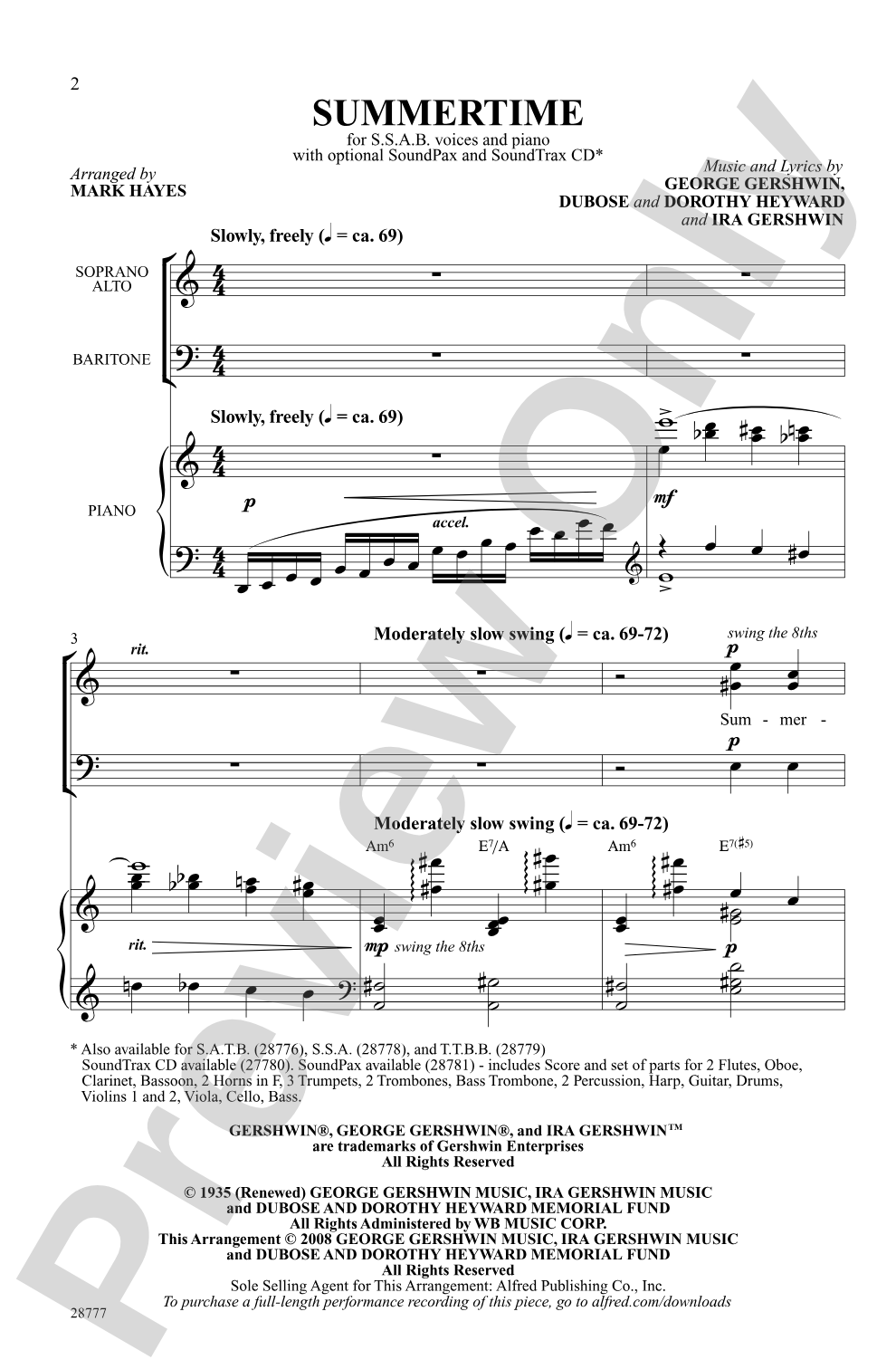

Summertime (from the musical Porgy and Bess): SSAB Choral Octavo
From the Musical Porgy and Bess
Music and lyrics by George Gershwin, DuBose and Dorothy Heyward, and Ira Gershwin / arr. Mark Hayes
Item: 00-PO-0002307
$1.90
Minimum order quantity: 20 copies
One moment…
Related Items
Summertime: SoundTrax Digital Audio Download |
$27.99
|
View | |
Summertime (from the musical Porgy and Bess): SATB Choral Octavo |
$2.10
|
View | |
Summertime (from the musical Porgy and Bess): SSA Choral Octavo |
$2.10
|
View | |
Summertime: TTBB Choral Octavo |
$2.25
|
View | |
Summertime (from the musical Porgy and Bess): Choral SoundPax |
$60.00
|
View | |
Summertime: SATB Choral Octavo |
$2.10
|
View | |
Summertime: SSAB Choral Octavo |
$1.90
|
View | |
Summertime: SSA Choral Octavo |
$2.10
|
View | |
Summertime: TTBB Choral Octavo |
$2.25
|
View | |
Summertime: Choral Octavo SoundTrax CD |
$27.99
|
View | |
Summertime: Choral SoundPax |
$60.00
|
View |
Description
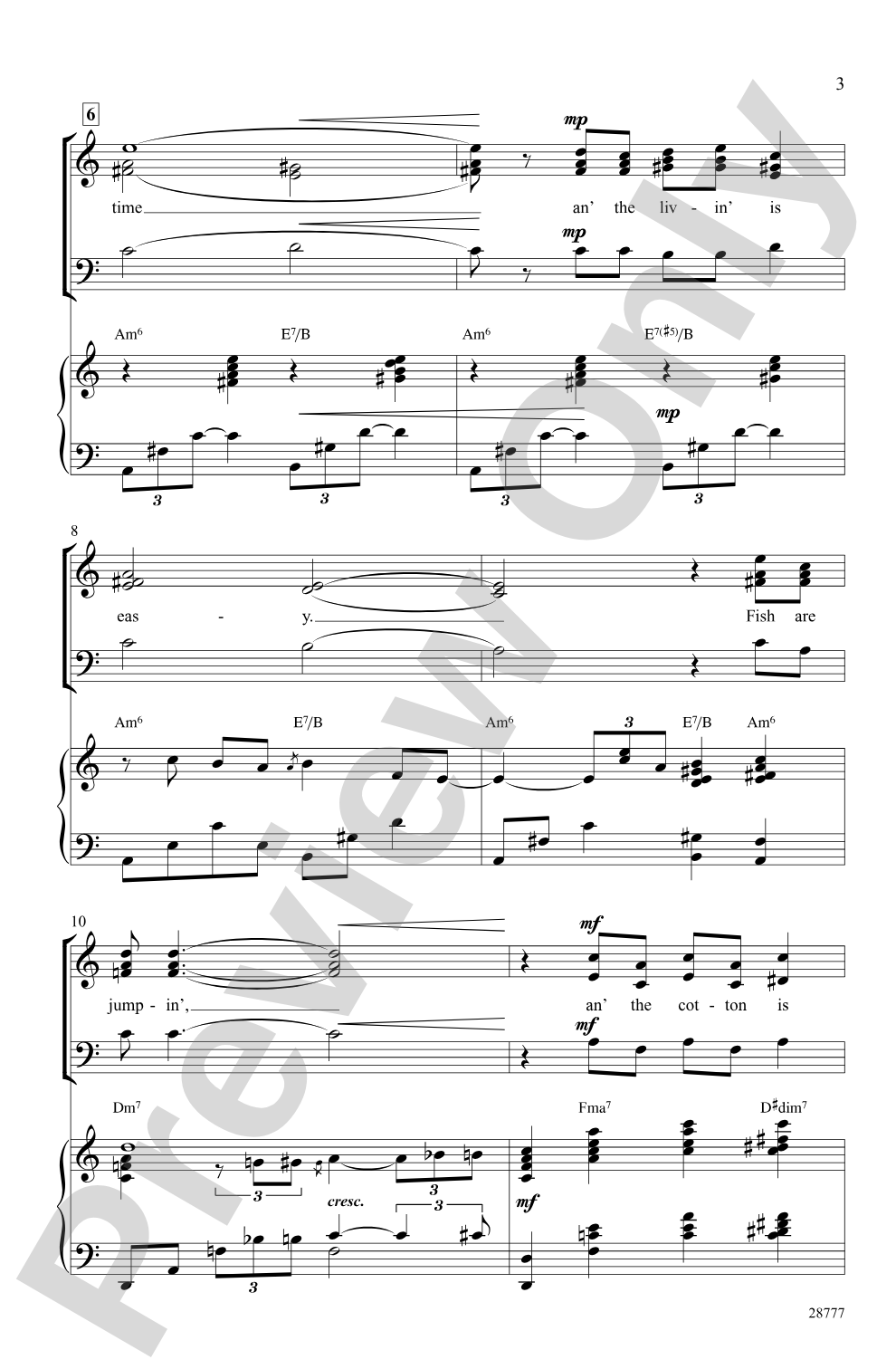
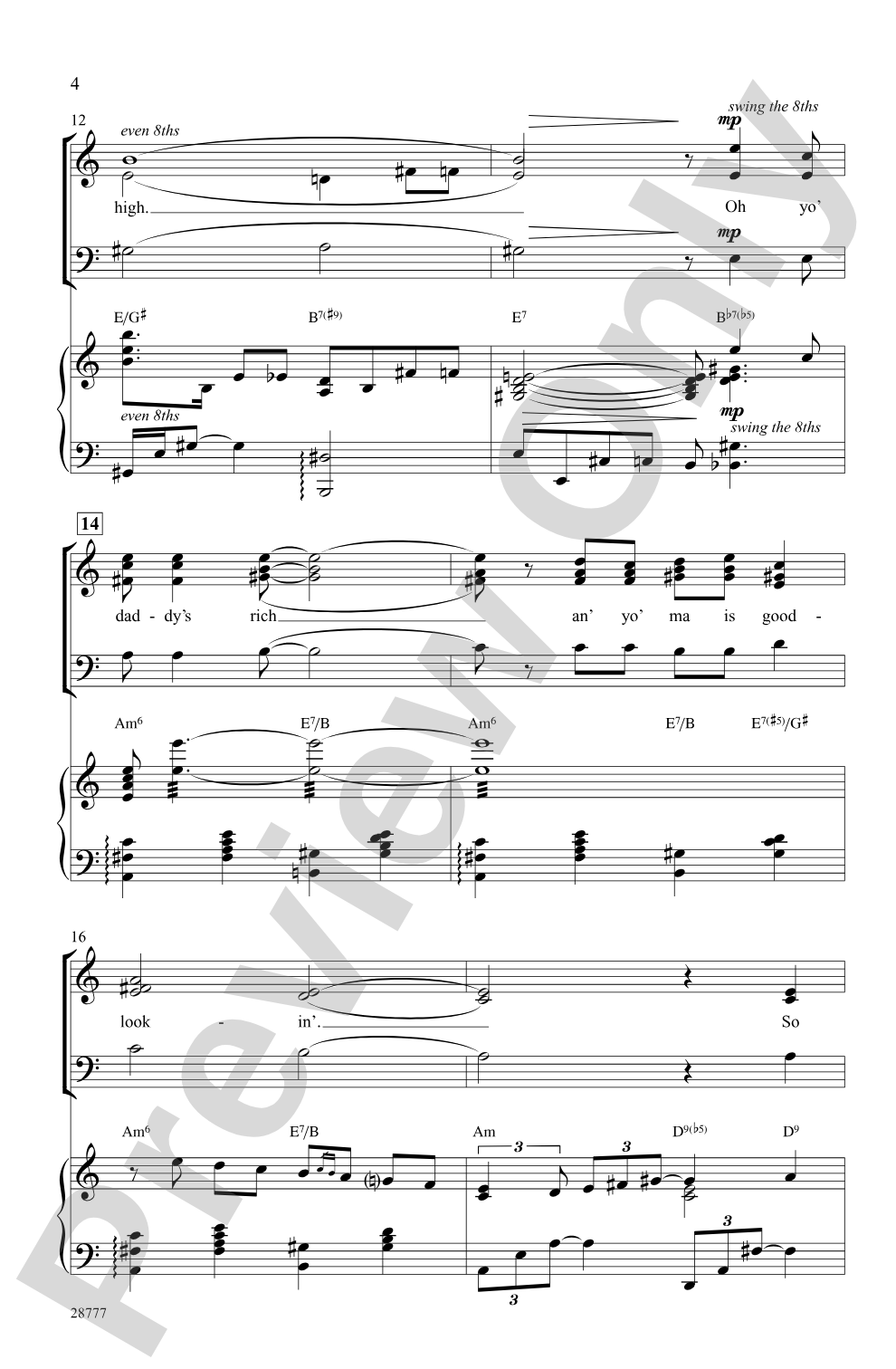
This classic American song from Porgy and Bess® deserves only the finest choral treatment, and Mark Hayes has certainly given it that, with a rich, lush setting. The piano accompaniment carries the voices on a dramatic journey appropriate to the nature of the piece. A song that every singer should know and will love.


Summertime (from the musical Porgy and Bess): SSAB Choral Octavo isn't in MakeMusic Cloud just yet...but it could be. Let us know you'd like to see it, and you'll help shape what comes next. In the meantime, start a free trial and dive into thousands of interactive titles your students can play along with today.
Request This Title
Tell us you want it.
Start Your Free Trial
Explore everything that's ready to play right now.
Sample Audio
1
Audio File
--:--
0:00
0:00
Sample Video
No sample videos found.
Additional Details
Series:
Alfred Pop Choral Series
Publisher:
Alfred Music
Page Count:
12
SKU:
00-PO-0002307
More about this title
About the Composer: George Gershwin
George Gershwin (1898-1937) bridged concert music and popular song with uncommon sophistication, composing Rhapsody in Blue, An American in Paris, and the opera Porgy and Bess. He wrote for Broadway, film, and the concert hall with equal fluency, influencing generations of composers who followed. His harmonic language and rhythmic vitality remain foundational to American musical identity.
Gershwin collaborated with lyricist Ira Gershwin on many of his finest theatrical works. The songwriting team of George and Ira, alongside librettists DuBose and Dorothy Heyward, created Porgy and Bess in 1935, a work that has endured as a cornerstone of American opera and popular song.
Why we love this
Mark Hayes' arrangement honors Gershwin's harmonic sophistication while making the piece accessible to a broad range of choir levels. The lush piano accompaniment does the heavy lifting harmonically, allowing singers to focus on the lyrical line and emotional arc without getting lost in complex voicing. It's a masterwork arrangement that sounds far more intricate than it demands.
What to expect
The piece settles into a contemplative, warm atmosphere despite its dramatic undercurrents. There's an ease and inevitability to the song that belies the care Gershwin took with its construction; it feels simultaneously intimate and expansive, like someone sharing a quiet truth in front of a large audience.
Who it's for
This octavo works beautifully for developing or accomplished choirs seeking a high-profile standard that doesn't require advanced sight-reading or technical agility. Singers at all levels will find the melody familiar and singable, while the arrangement offers enough harmonic richness to satisfy mature musical sensibilities.
How to get the most out of it
- Let the piano set the dramatic tone in measures before the voices enter; the accompaniment isn't background support but a partner in storytelling.
- Shape each phrase with the natural contours of the melody; resist the urge to push into every phrase equally hard, as this spiritual-inflected song thrives on restraint and vulnerability.
- Balance the inner voices (alto and second soprano parts) clearly without letting them overshadow the flowing soprano line; the accompaniment will do much of the harmonic work.
- Use the recorded accompaniment as a rehearsal tool to lock ensemble entrances and phrasing, but in performance, keep the tempo flexible enough to serve the lyrical quality of the text.
How to use it
This works equally well as a concert opener that draws listeners in immediately or as a thoughtful centerpiece that shifts the emotional temperature of a program. It pairs naturally with other American standards or spirituals, making it ideal for programs exploring American song or cultural narratives.
Skills your students will build
- Balancing lyrical lines with harmonic accompaniment
- Sustaining legit tone quality across dynamic changes
- Responding to the emotional subtext of text rather than relying on virtuosity
- Ensemble blend in a richly voiced arrangement
- Interpreting jazz-inflected harmony and phrasing