
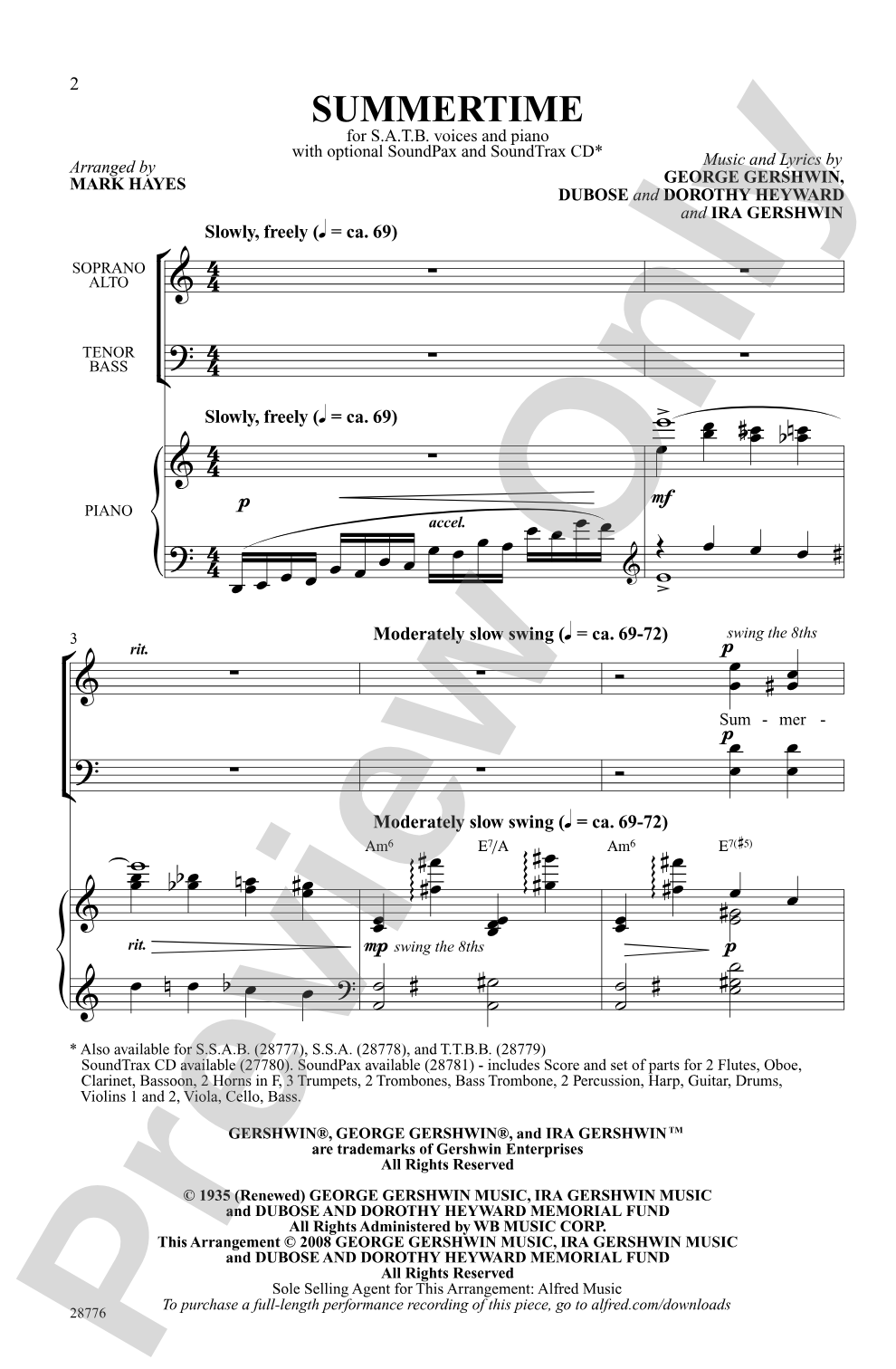

Summertime (from the musical Porgy and Bess): SATB Choral Octavo
From the Musical Porgy and Bess
Music and lyrics by George Gershwin, DuBose and Dorothy Heyward, and Ira Gershwin / arr. Mark Hayes
Item: 00-PO-0002306
$2.10
Minimum order quantity: 20 copies
One moment…
Related Items
Summertime: SoundTrax Digital Audio Download |
$27.99
|
View | |
Summertime (from the musical Porgy and Bess): SSAB Choral Octavo |
$1.90
|
View | |
Summertime (from the musical Porgy and Bess): SSA Choral Octavo |
$2.10
|
View | |
Summertime: TTBB Choral Octavo |
$2.25
|
View | |
Summertime (from the musical Porgy and Bess): Choral SoundPax |
$60.00
|
View | |
Summertime: SATB Choral Octavo |
$2.10
|
View | |
Summertime: SSAB Choral Octavo |
$1.90
|
View | |
Summertime: SSA Choral Octavo |
$2.10
|
View | |
Summertime: TTBB Choral Octavo |
$2.25
|
View | |
Summertime: Choral Octavo SoundTrax CD |
$27.99
|
View | |
Summertime: Choral SoundPax |
$60.00
|
View |
Description
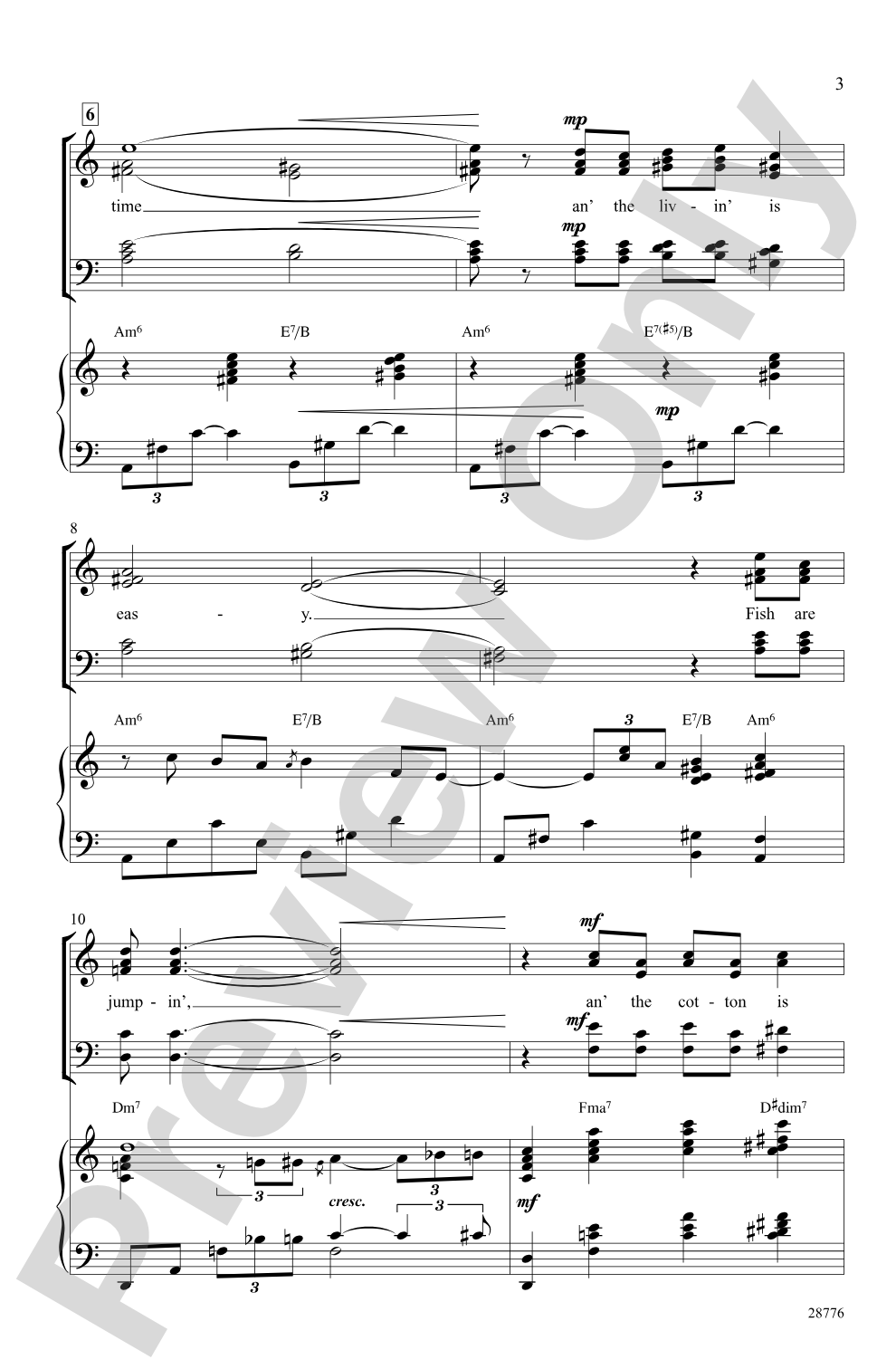
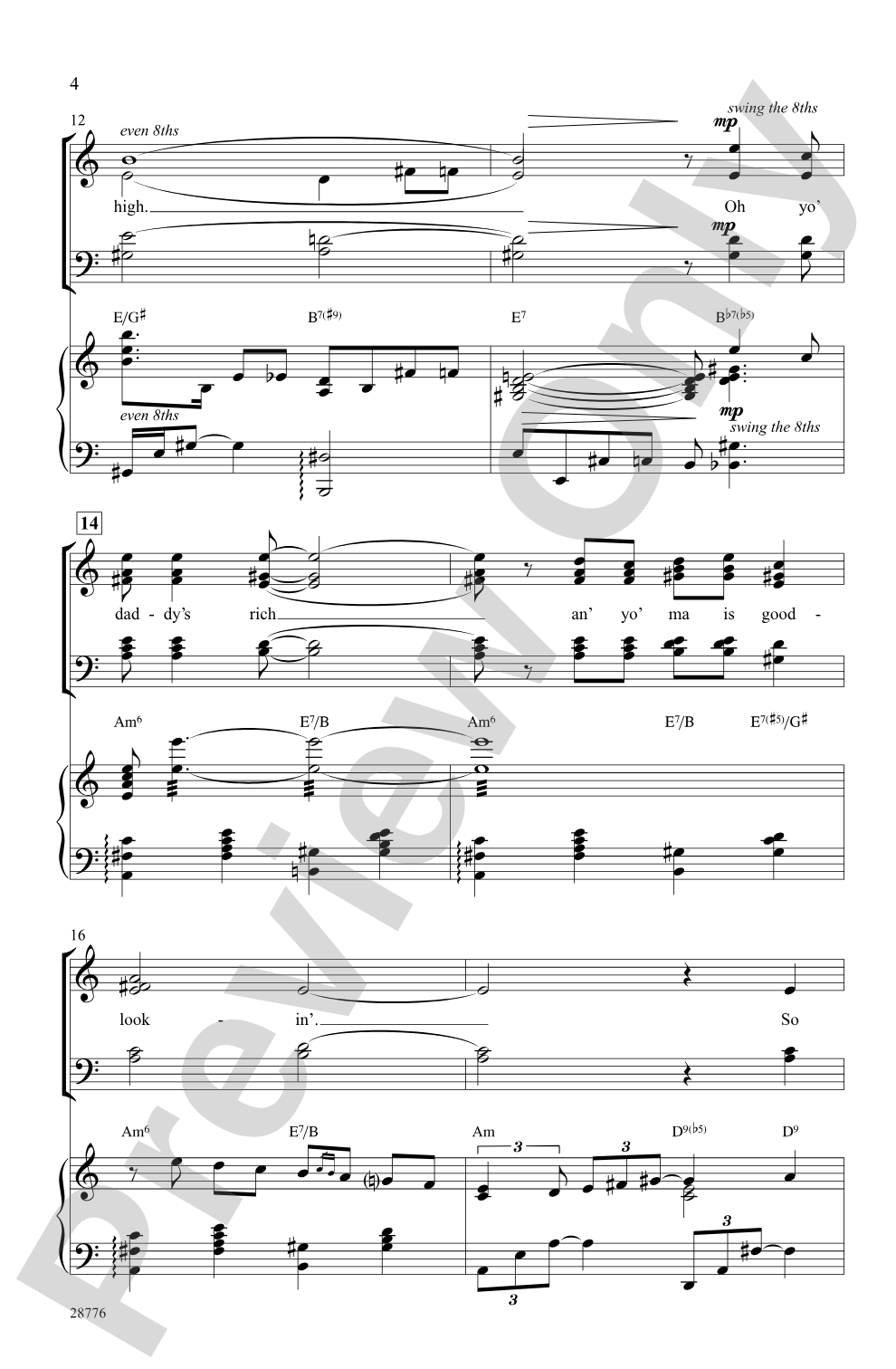
This classic American song from Porgy and Bess® deserves only the finest choral treatment, and Mark Hayes has certainly given it that, with a rich, lush setting. The piano accompaniment carries the voices on a dramatic journey appropriate to the nature of the piece. A song that every singer should know and will love.


Summertime (from the musical Porgy and Bess): SATB Choral Octavo isn't in MakeMusic Cloud just yet...but it could be. Let us know you'd like to see it, and you'll help shape what comes next. In the meantime, start a free trial and dive into thousands of interactive titles your students can play along with today.
Request This Title
Tell us you want it.
Start Your Free Trial
Explore everything that's ready to play right now.
Sample Audio
1
Audio File
--:--
0:00
0:00
Sample Video
No sample videos found.
Additional Details
Series:
Alfred Pop Choral Series
Publisher:
Alfred Music
Page Count:
12
SKU:
00-PO-0002306
More about this title
About the Composer: George Gershwin
George Gershwin (1898–1937) was an American composer who bridged classical and popular music with unprecedented success. His gift for melody and harmonic innovation made him a defining figure of the Jazz Age, and his works remain central to American musical identity. Gershwin's collaboration with lyricists DuBose Heyward, Dorothy Heyward, and Ira Gershwin on Porgy and Bess created one of the most performed American operas in the world, a work that demands serious musical treatment from any ensemble that takes it on.
Why we love this
Mark Hayes's arrangement respects the song's emotional weight without sentimentalizing it. The lush harmonies and dramatic piano writing create a vehicle that challenges singers to find nuance and depth, making this a piece that grows richer with each rehearsal rather than wearing thin from familiarity.
What to expect
The arrangement opens with quiet, introspective beauty and deepens into something more complex and textured. There's a dreamlike quality to the opening that gives way to richer harmonic movement, creating an experience that feels both intimate and grand at once.
Who it's for
This arrangement serves advanced high school choirs and adult singers who can sustain a legit tone and navigate Hayes's sophisticated harmonies. It works equally well in concert settings or as part of a larger Porgy and Bess program, and gives singers the chance to engage with repertoire that demands both technical skill and emotional maturity.
How to get the most out of it
- Balance the voices so the melody emerges clearly from the accompanying lines; the piano carries significant harmonic and dramatic weight, so singers must listen and follow its contours rather than singing over it.
- Shape the phrases with attention to the text's meaning. This is not a light spiritual arrangement; the lyrics speak to longing and vulnerability, which should inform your phrasing and dynamic choices.
- Use the recorded accompaniment during sectional rehearsals to lock each voice part's relationship to the harmonic structure, then work toward blend and balance in full choir rehearsals.
- Find the song's inherent swing without exaggerating it. Gershwin's melody has a natural lift, but overstating rhythmic elasticity will destroy the piece's dignity.
How to use it
Program this as a concert centerpiece that stands alone beautifully or as part of a set exploring American songbook standards and operatic repertoire. It works well alongside other Gershwin selections or paired with spirituals and American art songs that share similar emotional territory.
Skills your students will build
- Singing sustained legit tone in a lush harmonic context
- Reading four-part SATB voicing with chromatic movement
- Responding to dramatic piano accompaniment and following its harmonic language
- Shaping phrases with textual awareness and emotional depth
- Balancing solo lines against supporting harmonic voices