
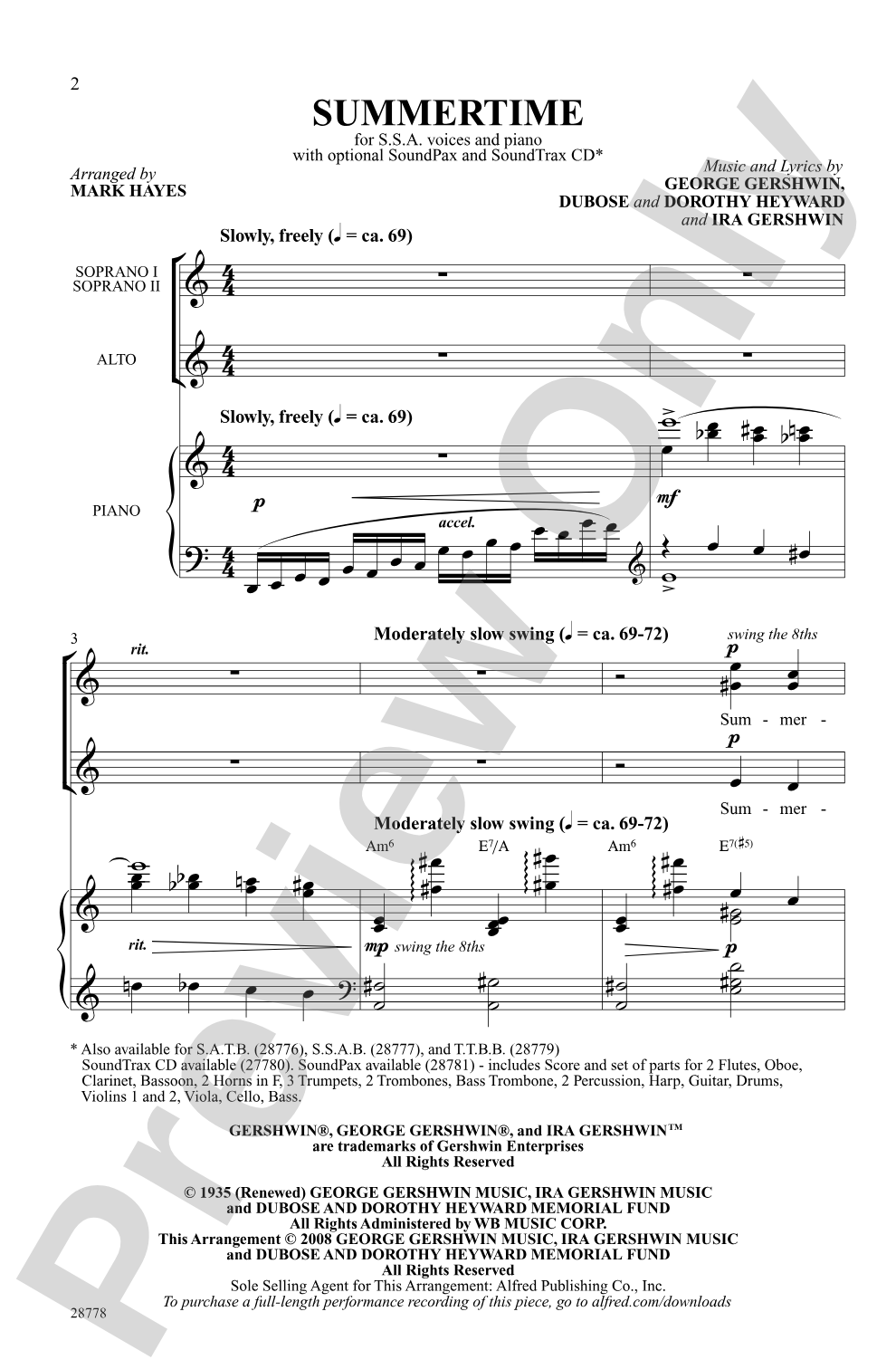
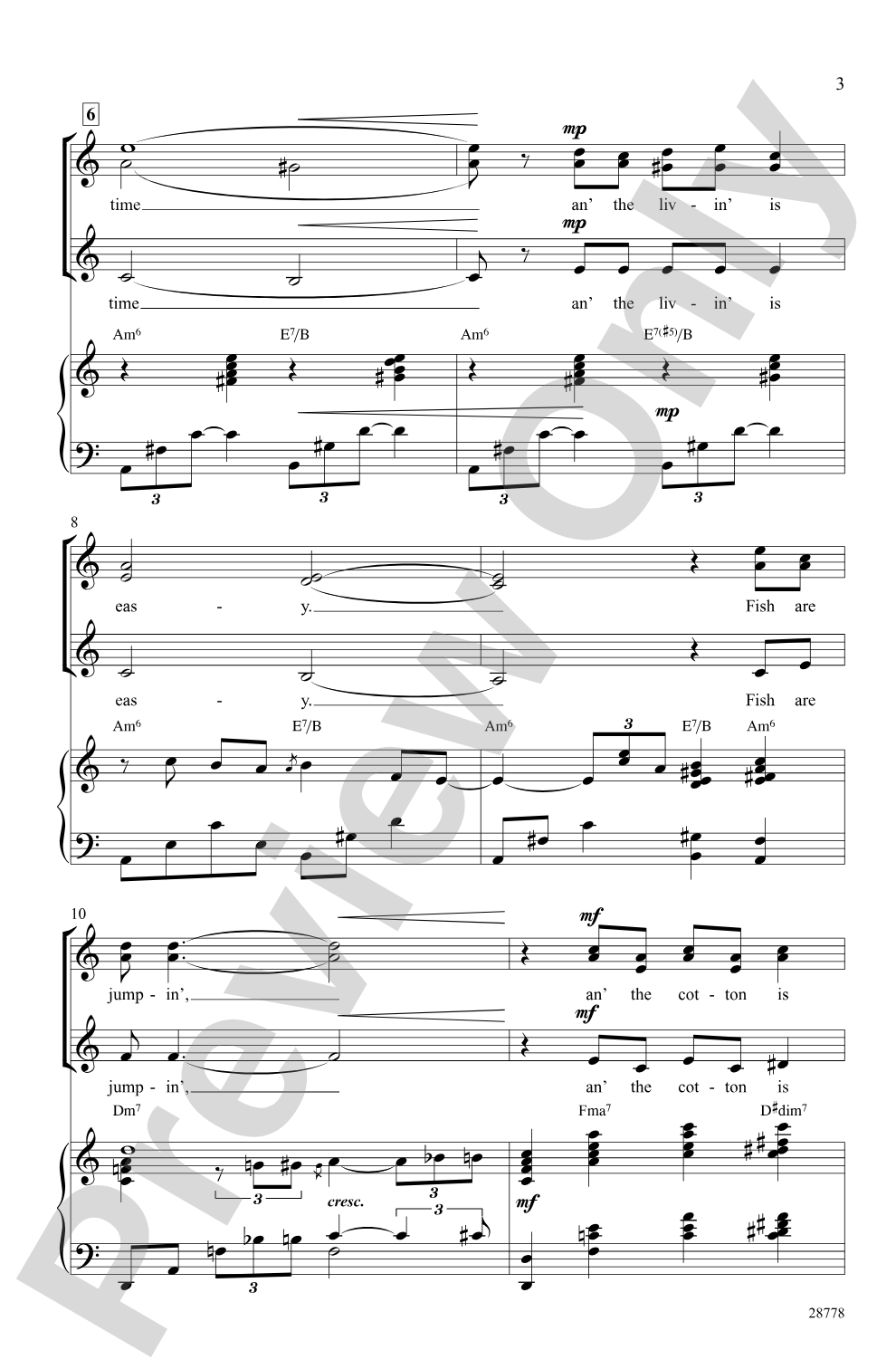
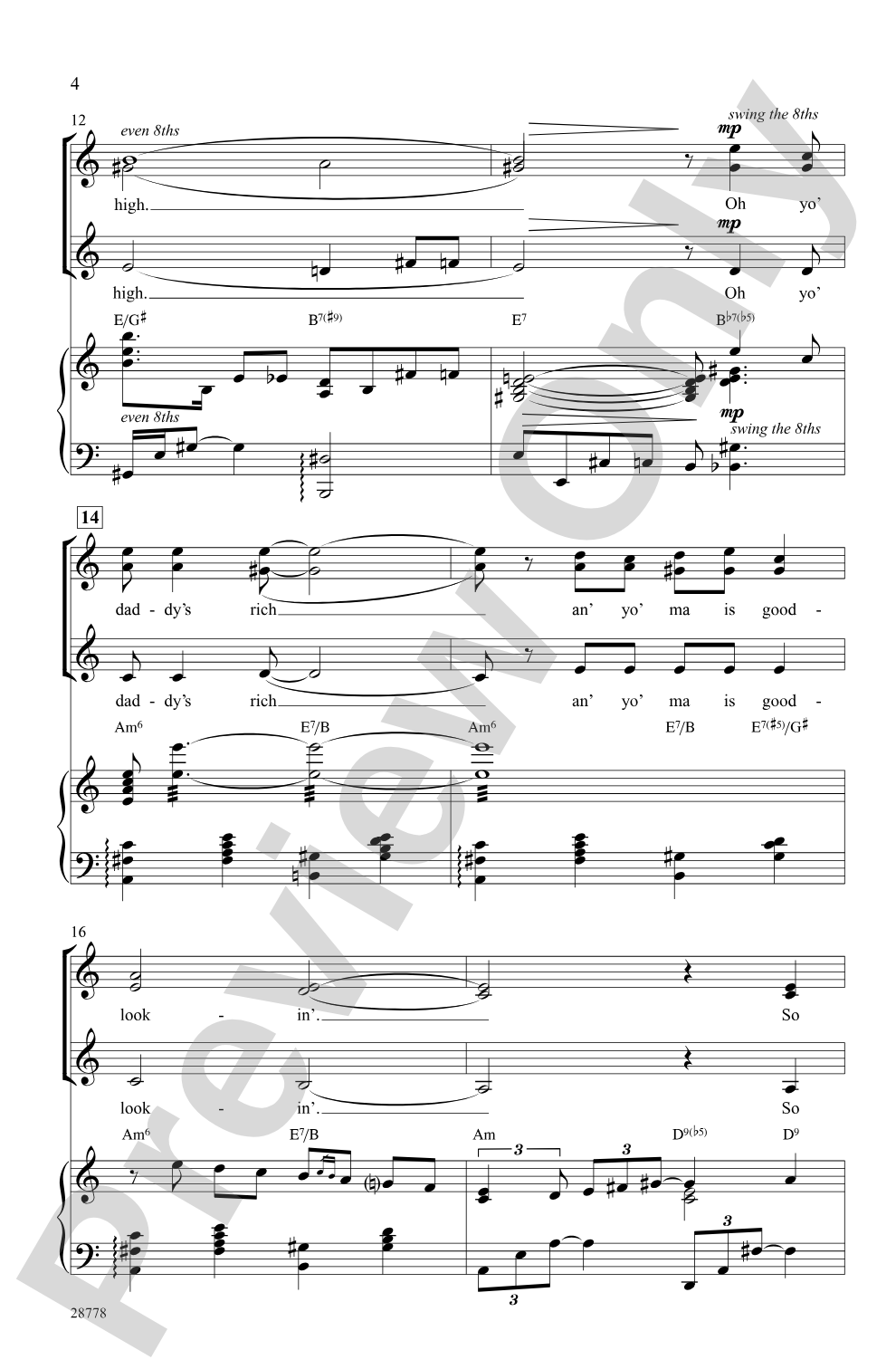

Summertime (from the musical Porgy and Bess): SSA Choral Octavo
From the Musical Porgy and Bess
Music and lyrics by George Gershwin, DuBose and Dorothy Heyward, and Ira Gershwin / arr. Mark Hayes
Item: 00-PO-0002308
$2.10
Minimum order quantity: 20 copies
One moment…
Related Items
Summertime: SoundTrax Digital Audio Download |
$27.99
|
View | |
Summertime (from the musical Porgy and Bess): SATB Choral Octavo |
$2.10
|
View | |
Summertime (from the musical Porgy and Bess): SSAB Choral Octavo |
$1.90
|
View | |
Summertime: TTBB Choral Octavo |
$2.25
|
View | |
Summertime (from the musical Porgy and Bess): Choral SoundPax |
$60.00
|
View | |
Summertime: SATB Choral Octavo |
$2.10
|
View | |
Summertime: SSAB Choral Octavo |
$1.90
|
View | |
Summertime: SSA Choral Octavo |
$2.10
|
View | |
Summertime: TTBB Choral Octavo |
$2.25
|
View | |
Summertime: Choral Octavo SoundTrax CD |
$27.99
|
View | |
Summertime: Choral SoundPax |
$60.00
|
View |
Description
This classic American song from Porgy and Bess® deserves only the finest choral treatment, and Mark Hayes has certainly given it that, with a rich, lush setting. The piano accompaniment carries the voices on a dramatic journey appropriate to the nature of the piece. A song that every singer should know and will love.


Summertime (from the musical Porgy and Bess): SSA Choral Octavo isn't in MakeMusic Cloud just yet...but it could be. Let us know you'd like to see it, and you'll help shape what comes next. In the meantime, start a free trial and dive into thousands of interactive titles your students can play along with today.
Request This Title
Tell us you want it.
Start Your Free Trial
Explore everything that's ready to play right now.
Sample Audio
1
Audio File
--:--
0:00
0:00
Sample Video
No sample videos found.
Additional Details
Series:
Alfred Pop Choral Series
Publisher:
Alfred Music
Page Count:
12
SKU:
00-PO-0002308
More about this title
About the Composer: George Gershwin
George Gershwin (1898-1937) stands at the intersection of classical music and American popular song. He composed Porgy and Bess in 1935, creating what many regard as the first great American opera. His gift was an instinct for melody and harmony that felt both sophisticated and deeply singable, blending jazz idioms with operatic tradition in ways that still feel fresh nearly a century later.
For music educators, Gershwin matters because his work proves that concert music and accessibility are not opposites. Students who perform his songs understand that serious composition can also move people, that innovation doesn't require obscurity, and that American musical voices deserve the same respect as European ones.
Why we love this
Mark Hayes's setting transforms this beloved standard into something singers genuinely want to perform. Rather than strip the song down to basics, Hayes enriches it with harmonic depth and dramatic architecture that respects both the source material and the capabilities of SSA choirs. The piano part does real work here, propelling the voices through a journey that feels purposeful rather than accompanying them passively.
What to expect
Warm, spacious, and deeply lyrical. Hayes's lush harmonies create an intimate setting despite the full sonority, and the piano accompaniment evokes both the languid heat of the Gullah setting and a subtle undercurrent of emotion beneath the surface calm. Singers finish this piece feeling they've traveled somewhere.
Who it's for
SSA choirs seeking repertoire that genuinely excites singers while offering musical substance. This works equally well for high school and community choirs; the arrangement meets singers where they are without condescending to them. Any ensemble ready to claim a piece of American musical theater history will find meaningful work here.
How to get the most out of it
- Treat the piano accompaniment as a full partner. Hayes wrote it to carry dramatic weight, not fill space, so pianists should shape phrases with the singers rather than provide neutral support.
- Balance the SSA voicing to let the melody sing through clearly while the harmonies provide warmth. This isn't a piece where blend means disappearing.
- Let the text guide your interpretation. The lyrics carry the emotional arc of the piece, so singers who understand what they're singing will find the musical choices feel inevitable rather than imposed.
How to use it
Program this as a showcase for your SSA section or as part of a concert celebrating American song. It pairs naturally with other 20th-century American standards, or it can stand alone as a centerpiece that demonstrates serious choral artistry. The 12-page length makes it substantial enough to anchor a set without overshadowing lighter repertoire nearby.
Skills your students will build
- Singing with stylistic awareness of American song repertoire
- Balancing melody and harmony in three-part writing
- Working with jazz-influenced harmony and voice leading
- Responding to piano accompaniment that carries dramatic intent
- Interpreting text-driven phrasing in a non-traditional musical theater context