

Sing Alleluia, Clap Your Hands: SSAB, a cappella Choral Octavo
Words and music by Sally K. Albrecht
Item: 00-PO-0002118
$2.25
Minimum order quantity: 20 copies
Pickup currently not available
Related Items
Sing Alleluia, Clap Your Hands: SATB, a cappella Choral Octavo |
$2.10
|
View | |
Sing Alleluia, Clap Your Hands: SSAA, a cappella Choral Octavo |
$2.20
|
View | |
Sing Alleluia, Clap Your Hands: SATB, a cappella Choral Octavo |
$2.10
|
View | |
Sing Alleluia, Clap Your Hands: SSAB, a cappella Choral Octavo |
$2.25
|
View | |
Sing Alleluia, Clap Your Hands: SSAA, a cappella Choral Octavo |
$2.20
|
View |
Description
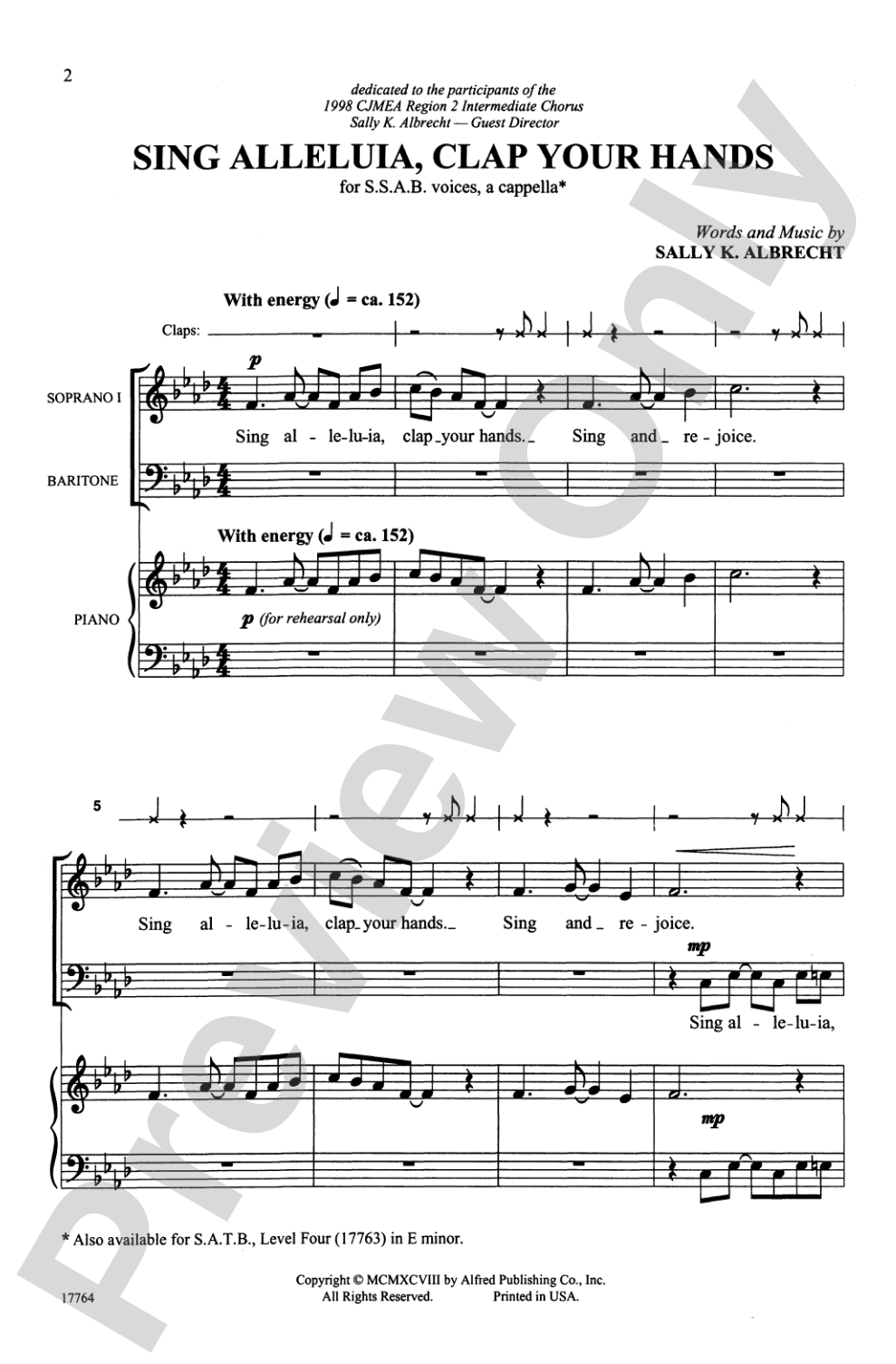
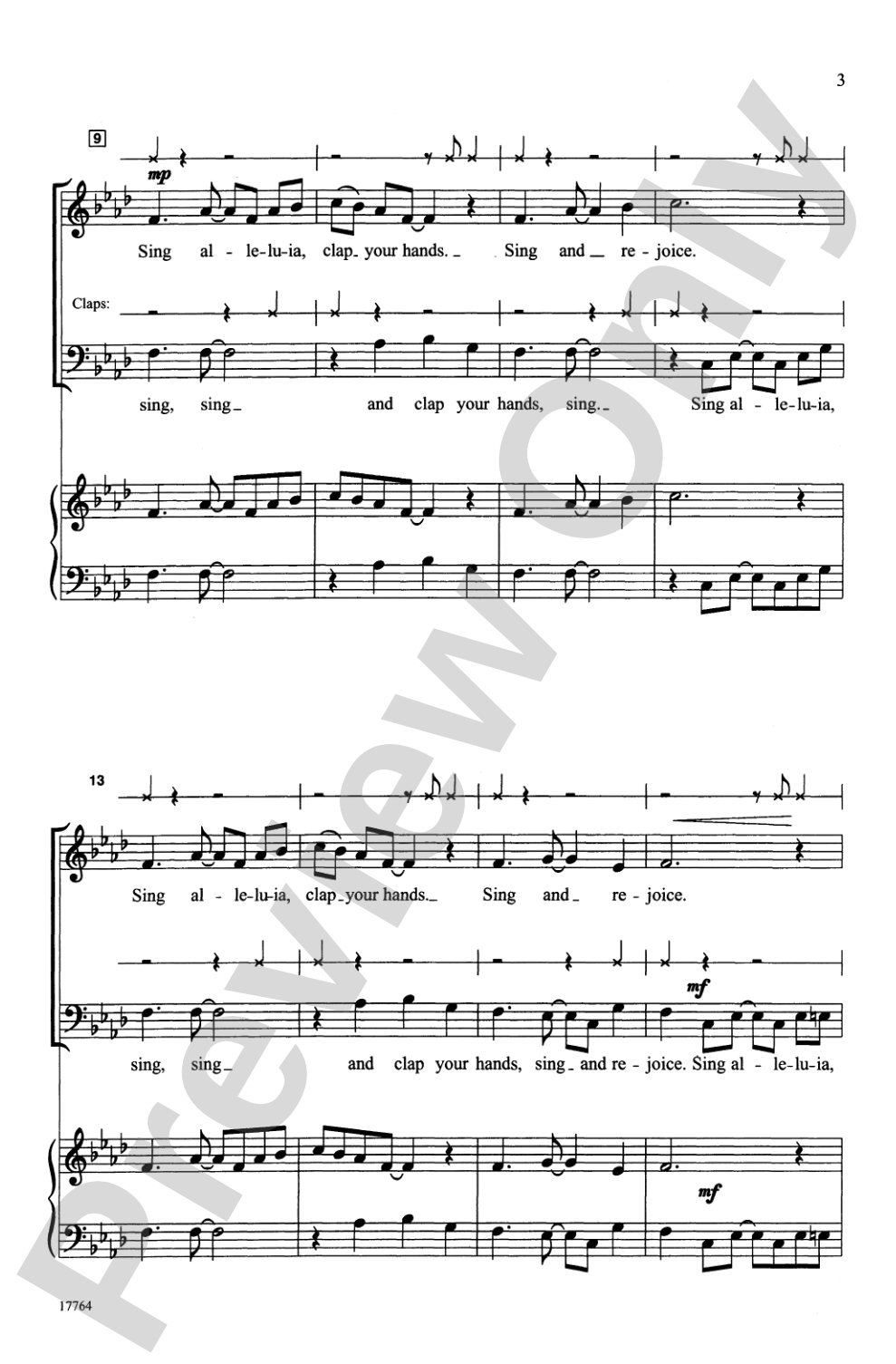
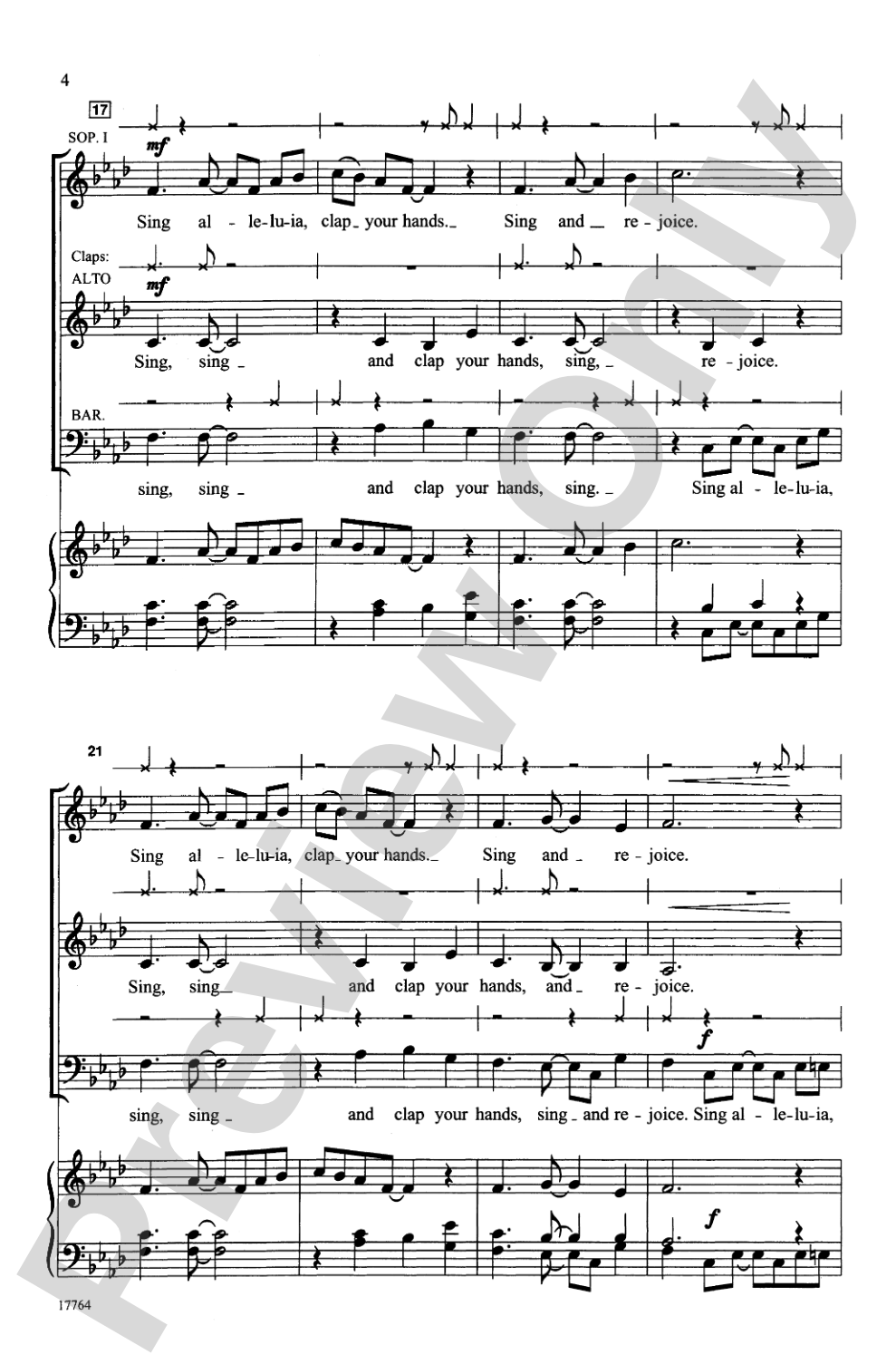
Stacked vocal lines and counterpoint handclaps sound (and look) stunning! Each voice part introduces its own independent melody with claps, until everything combines in joyful polyphony. Some chordal singing and a call-and-response section provide contrast before an energized reprise leads to the brilliant final flourish. A remarkably effective concert/contest feature.


Sing Alleluia, Clap Your Hands: SSAB, a cappella Choral Octavo isn't in MakeMusic Cloud just yet...but it could be. Let us know you'd like to see it, and you'll help shape what comes next. In the meantime, start a free trial and dive into thousands of interactive titles your students can play along with today.
Request This Title
Tell us you want it.
Start Your Free Trial
Explore everything that's ready to play right now.
Sample Audio
1
Audio File
--:--
0:00
0:00
Sample Video
No sample videos found.
Additional Details
Series:
Alfred Archive Edition: Alfred Choral Designs
Publisher:
Alfred Music
Page Count:
12
SKU:
00-PO-0002118
More about this title
About the Composer: Sally K. Albrecht
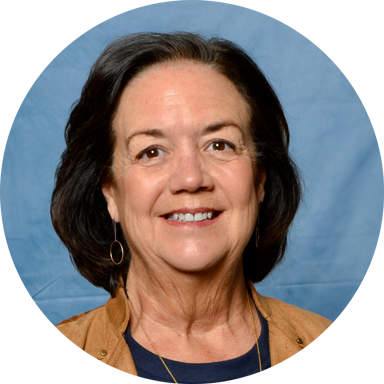
Sally K. Albrecht has shaped American choral music for over forty years as a composer, conductor, and educator. Her output spans more than 600 published choral works alongside 75 larger theatrical and songbook projects, establishing her as one of the most prolific voices in contemporary school music. She has held leadership positions at major educational publishers, conducted honor choirs at Lincoln Center, Carnegie Hall, and The Kennedy Center, and earned ASCAP recognition annually since 1987.
Albrecht holds degrees from Rollins College (B.A. in Music and Theater, 1976), the University of Miami (M.A. in Drama, 1977; M.M. in Accompanying, 1979), and has taught at Oakland University, Jersey City State College, and Meredith College. Her work is particularly distinguished by thoughtful integration of movement and staging into choral performance. She resides in Wake Forest, North Carolina, with her husband, composer and arranger Jay Althouse.
Why we love this
Albrecht writes specifically for what choirs can actually do on stage. The handclap counterpoint isn't window dressing; it's woven into the harmonic fabric so naturally that singers and audiences both hear it as essential. This piece gives you genuine theatrical impact without requiring choreography beyond what emerges organically from the music itself, making it equally powerful in a festival setting or a concert program.
What to expect
The opening brings an almost kaleidoscopic quality as each voice enters with its own melodic gesture before the handclaps lock everyone into rhythmic unison. There's real joy in the polyphony, especially when the independent lines finally converge into chordal blocks, then break free again. The overall effect is celebratory without sentimentality, energized but always in control.
Who it's for
This octavo works beautifully for choirs aiming for contest or concert success at the high school and community levels. Directors seeking a piece that combines musical substance with engaging visual interest will find both in the interlocking vocal lines and movement elements. The SSAB voicing accommodates mixed ensembles with flexible soprano and alto ranges.
How to get the most out of it
- Establish the handclap rhythm in unison before layering it into individual voice parts. A few rehearsals of the entire choir clapping together prevents rhythmic drift when each section claims its independent pattern.
- Let the call-and-response section breathe. Mark clear entrance points for each response group, and resist the urge to rush these moments; the contrast between call and response lands harder when the timing is deliberate.
- Build the final flourish gradually across rehearsals. The piece asks singers to manage both pitch independence and rhythmic precision simultaneously at the end; lock down the harmonic foundation before adding the full energy of performance.
How to use it
This piece earns its place as a contest or festival feature because it holds audience attention from the first clap to the final chord. Program it where you need a strong, uplifting moment that showcases both musicianship and ensemble confidence, or use it as a centerpiece in a program built around sacred joy and celebration. Its twelve pages make it substantial enough to anchor a set without overwhelming other works.
Skills your students will build
- Independence of vocal line within a polyphonic texture
- Rhythmic precision in layered, complex ensemble parts
- Integration of non-vocal sound (handclaps) into harmonic structure
- Sustaining pitch accuracy while managing rhythmic independence
- Contrast and balance between call-and-response sections and dense polyphony
- Concert staging and intentional movement within an a cappella framework