

'S Wonderful with It's De-Lovely!: SATB Choral Octavo
Words and music by George and Ira Gershwin, Cole Porter / arr. Kirby Shaw
Item: 00-PO-0006461
$2.25
Minimum order quantity: 20 copies
One moment…
Related Items
'S Wonderful with It's De-Lovely!: SAB Choral Octavo |
$2.25
|
View | |
'S Wonderful with It's De-Lovely!: SSA Choral Octavo |
$2.25
|
View | |
'S Wonderful with It's De-Lovely!: Choral SoundPax |
$15.00
|
View | |
'S Wonderful with It's De-Lovely!: SATB Choral Octavo |
$2.25
|
View | |
'S Wonderful with It's De-Lovely!: SAB Choral Octavo |
$2.25
|
View | |
'S Wonderful with It's De-Lovely!: SSA Choral Octavo |
$2.25
|
View | |
'S Wonderful with It's De-Lovely!: Choral Octavo SoundTrax CD |
$29.99
|
View | |
'S Wonderful with It's De-Lovely!: Choral SoundPax |
$15.00
|
View |
Description
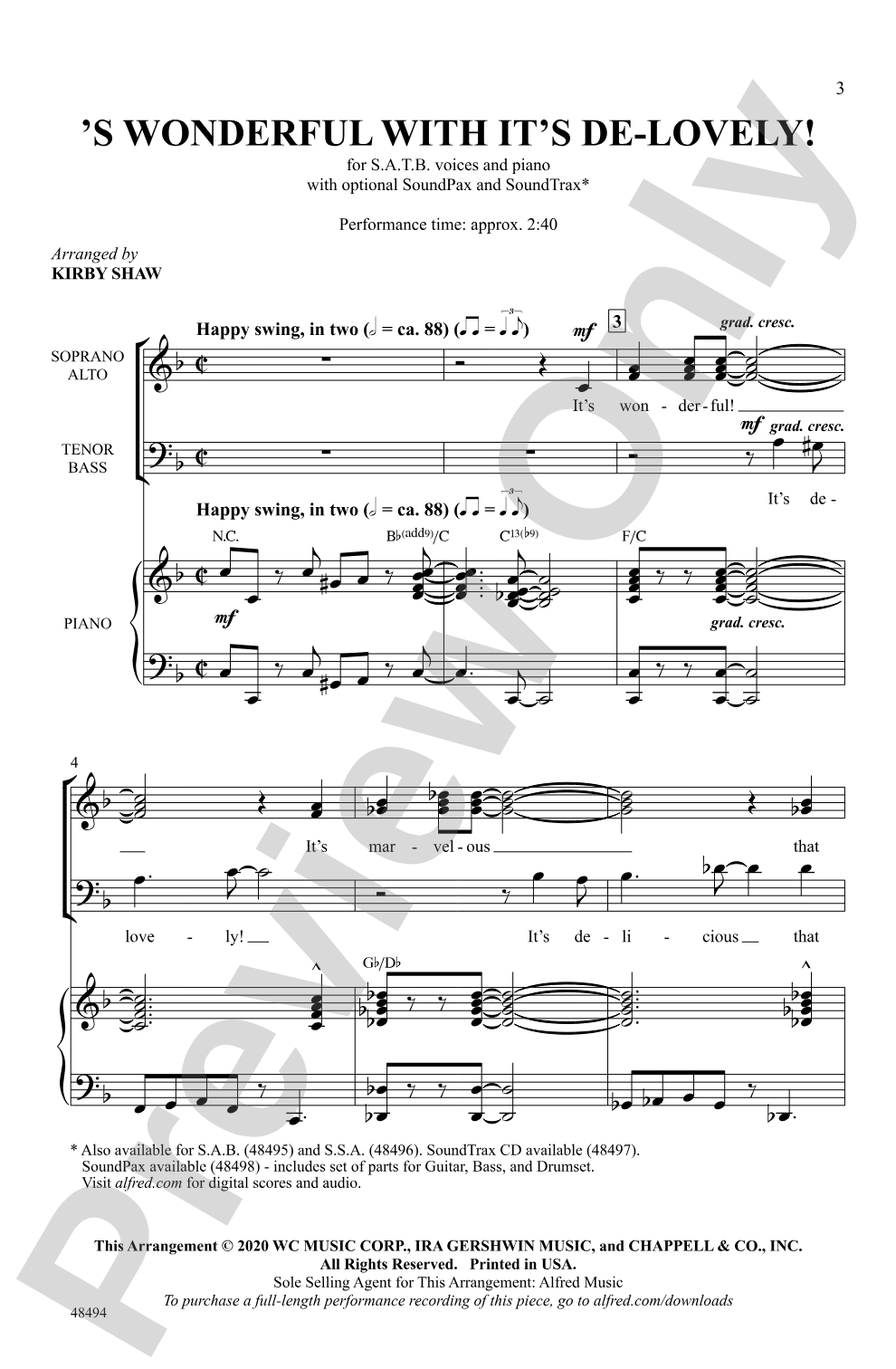
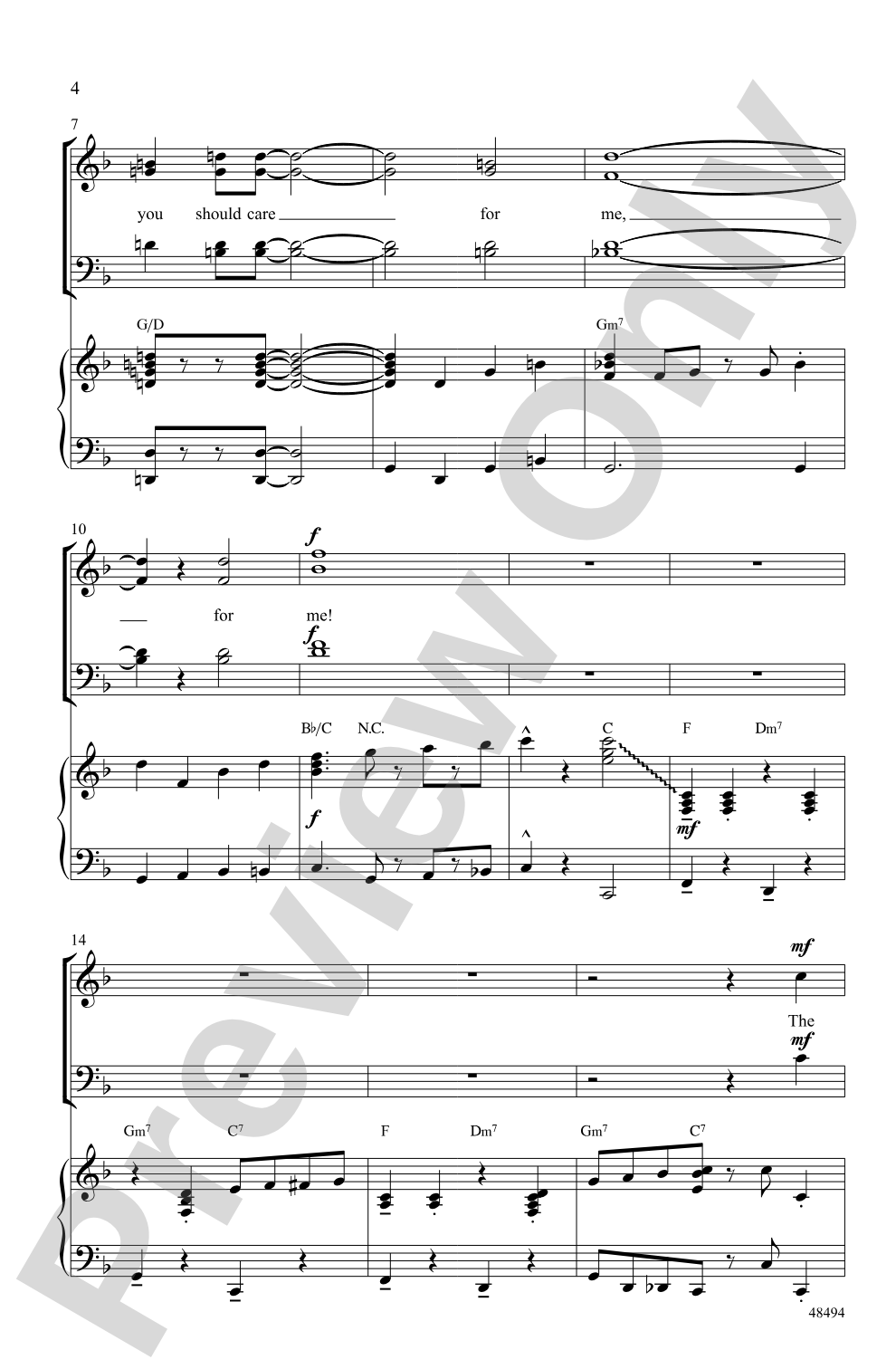
A delectable duo of old-school Broadway tunes from three masters of American musical theater: the Gershswins and Cole Porter. Enjoy playful lyrics and sweet jazz harmonies in combination with a truly swingin' accompaniment, also available as SoundTrax or rhythm section SoundPax. 'S Wonderful, indeed!


'S Wonderful with It's De-Lovely!: SATB Choral Octavo isn't in MakeMusic Cloud just yet...but it could be. Let us know you'd like to see it, and you'll help shape what comes next. In the meantime, start a free trial and dive into thousands of interactive titles your students can play along with today.
Request This Title
Tell us you want it.
Start Your Free Trial
Explore everything that's ready to play right now.
Sample Audio
1
Audio File
--:--
0:00
0:00
Sample Video
Additional Details
Series:
Alfred Pop Choral Series
Publisher:
Alfred Music
Page Count:
16
SKU:
00-PO-0006461
More about this title
About the Creator
George and Ira Gershwin revolutionized American musical theater by fusing classical compositional ambition with jazz idioms and vernacular speech. Their songs became the gold standard for sophisticated popular music, balancing harmonic innovation with immediate melodic appeal. Cole Porter brought a different sensibility to Broadway: urbane, witty, and harmonically adventurous. His melodies were often angular and surprising, yet his lyrics possessed a theatrical elegance that made complex ideas feel effortless. Together, these three composers defined what the Great American Songbook became.
Why we love this
Most SATB arrangements of standards lean toward nostalgia or oversimplification. This pairing captures the actual spirit of these tunes: playful, swinging, and built on real jazz harmony that gives singers something substantive to lock into. The recorded accompaniment reads like a small ensemble rather than a backing track, which changes how your choir approaches phrasing and style.
What to expect
Warm, conversational, and genuinely fun. These are songs that assume intelligence and playfulness from both singer and listener; the jazz harmonies create sophisticated color without ever feeling academic. There's an ease to the writing that comes from tunes designed for the stage, where clarity and style matter more than technical flash.
Who it's for
Choirs comfortable with swing style and jazz sonorities, from community ensembles through advanced high school and college groups. This works equally well for directors programming a pops concert or looking to build sophistication in jazz harmony without venturing into complex contemporary writing.
How to get the most out of it
- Let the rhythm section breathe. These tunes don't need pushed tempos; give the swing feel space to land, and your intonation will thank you.
- Work the lyrics for character early. The humor and wit in both texts will naturally shape dynamics and articulation once your singers hear themselves in the language.
- Balance the harmonic color between sections. Jazz voicings like these reward blend more than projection; close the inner voices so the melody floats naturally.
- Use the SoundPax rhythm section option if you want your ensemble to feel what a real rhythm section does while learning their parts.
How to use it
Pair this with other standards to build a retrospective set, or use it as an accessible entry point into jazz harmony for ensembles transitioning from classical arrangements. The 16-page format suggests a concert grouping that could anchor a lighter half or provide variety in a longer program.
Skills your students will build
- Identifying and executing swing rhythm and jazz phrasing
- Reading jazz chord extensions and harmonic color in SATB voicings
- Balancing blend and clarity in close harmony textures
- Sustaining pitch over rhythmically active accompaniment
- Stylistic interpretation of theatrical diction and comedic timing