
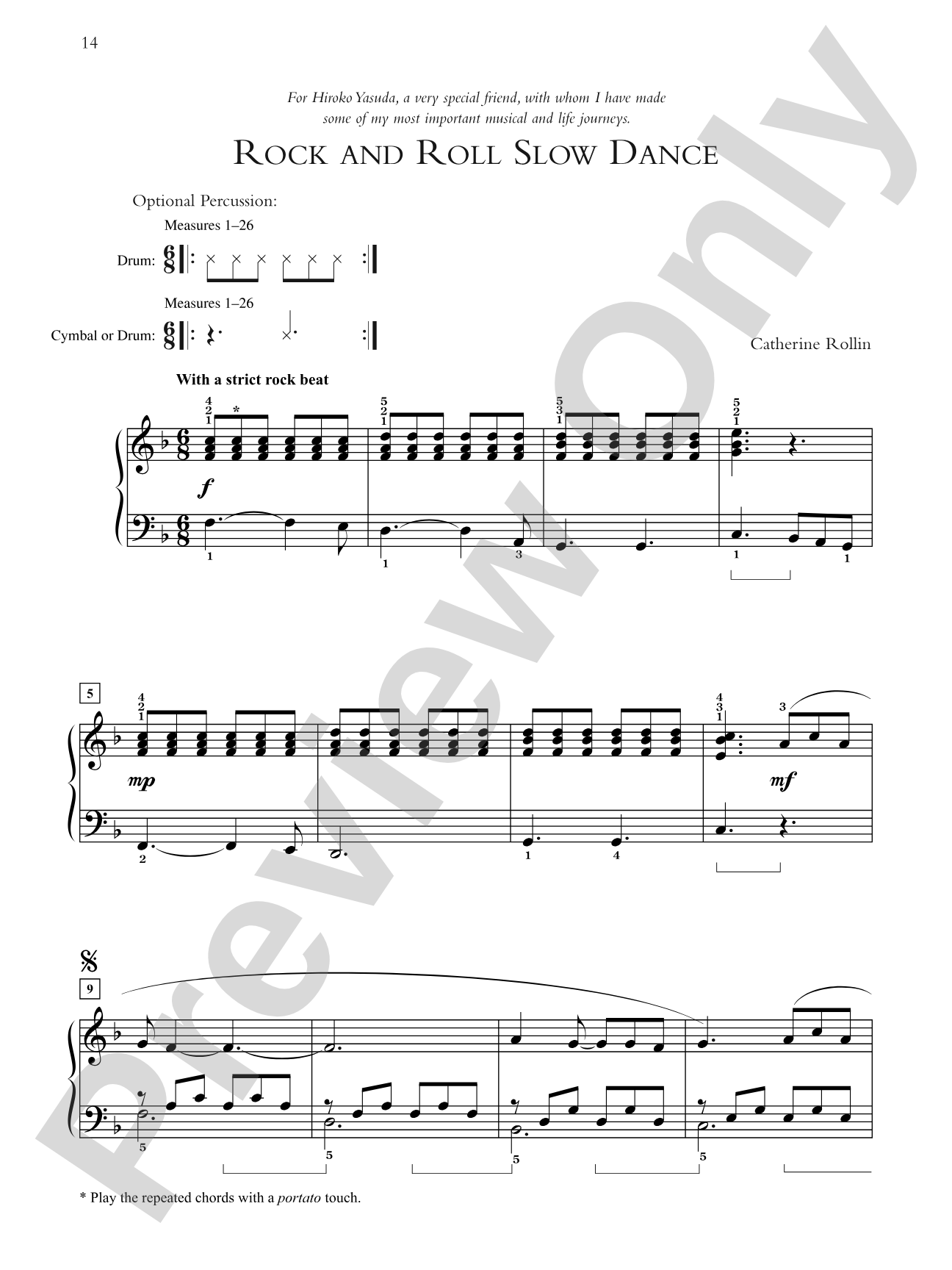

Rock and Roll Slow Dance - Piano Solo: Piano Solo
10 Early Intermediate Piano Solos in Dance Styles
By Catherine Rollin
Level: Early Intermediate
Item: 00-PS-0017281
$4.99
Pickup currently not available
Related Items
Conga, Conga, Conga - Piano Solo: Piano Solo |
$4.99
|
View | |
Island Rumba - Piano Solo: Piano Solo |
$4.99
|
View | |
Make Mine Cha-Cha-Cha! - Piano Solo: Piano Solo |
$4.99
|
View | |
Mazurka for Chopin - Piano Solo: Piano Solo |
$4.99
|
View | |
Mediterranean Dance - Piano Solo: Piano Solo |
$4.99
|
View | |
Spicy Salsa - Piano Solo: Piano Solo |
$4.99
|
View | |
Tantalizing Tango - Piano Solo: Piano Solo |
$4.99
|
View | |
Tap Time Encore - Piano Solo: Piano Solo |
$4.99
|
View | |
The Jester's Gigue - Piano Solo: Piano Solo |
$6.99
|
View | |
Dancing on the Keys, Book 1: Piano Book |
$6.99
|
View |
Description
Teachers and students love Catherine Rollin's duet series Dances for Two, and encouraged her to write all-new solo collections of pieces based on dance rhythms. Book 1 titles: Conga, Conga, Conga * Island Rumba * The Jester's Gigue * Make Mine Cha-Cha-Cha! * Mazurka for Chopin * Mediterranean Dance * Rock and Roll Slow Dance * Spicy Salsa * Tantalizing Tango * Tap Time Encore. A Federation Festivals 2024-2028 selection.


Rock and Roll Slow Dance - Piano Solo: Piano Solo isn't in MakeMusic Cloud just yet...but it could be. Let us know you'd like to see it, and you'll help shape what comes next. In the meantime, start a free trial and dive into thousands of interactive titles your students can play along with today.
Request This Title
Tell us you want it.
Start Your Free Trial
Explore everything that's ready to play right now.
Sample Audio
1
Audio File
--:--
0:00
0:00
Sample Video
Additional Details
Publisher:
Alfred Music
Page Count:
24
SKU:
00-PS-0017281
More about this title
About the Composer: Catherine Rollin

Catherine Rollin balances an active performance schedule with composition and private teaching. Her students consistently win festival awards, and she has presented masterclasses and workshops in over 200 cities across the United States, Canada, Japan, and Taiwan.
Rollin holds a Bachelor of Musical Arts degree with distinction from the University of Michigan and a master of Music degree from Oakland University School of Performing Arts. Her compositions have earned commissions from Clavier Companion magazine, the Music Teachers National Association (MTNA), and the Michigan Music Teachers Association. Multiple works appear in the National Federation of Music Clubs Festivals Bulletin. She has judged the MTNA Student Composition Competition at the national level and served on the panel for the Lynn Freeman Olson Composition Contest. In 2018, the MTNA commissioned Suite Detroit, a trio for flute, alto saxophone, and piano, which premiered at the MTNA national conference in Orlando. That same year, the Steinway Society featured her in concert as both composer and pianist, highlighting her ASCAP award-winning Museum Masterpieces series.
Why we love this
Rollin's approach to dance rhythms gives early intermediate students repertoire that feels contemporary and playful without sacrificing musical substance. The Rock and Roll Slow Dance sits perfectly in that sweet spot where students enjoy playing it, audiences recognize the style, and teachers see genuine learning happening across technique, rhythm, and musical expression. Her success with the duet series translates seamlessly here: solo arrangements that capture all the character and groove of the originals.
What to expect
A nostalgic slow dance with just enough modern sensibility to keep it fresh. The piece has a gentle sway and warmth, mixing straightforward rock and roll rhythms with the kind of harmonic sophistication that makes you want to sit at the piano and linger over it. There's charm in its simplicity and substance beneath its surface appeal.
Who it's for
Early intermediate pianists ready to explore contemporary and popular music styles in a solo context. Students preparing pieces for festivals, recitals, or showcases will find this accessible without feeling simplistic. Teachers looking to balance classical repertoire with music that excites and engages their students.
How to get the most out of it
- Anchor the rhythm section gently. The rock and roll foundation needs a steady pulse from the left hand, but resist playing it mechanically; let it swing just slightly to capture the slow dance feel.
- Bring out the melody with clear phrasing and consistent tone. The right-hand line should sing above the accompaniment without drowning it out.
- Shape phrases by listening to how the harmonies support the melody. Plan your dynamic arc measure by measure rather than playing it all at one level.
- Pay attention to any jazz-inflected harmonies or chromatic passing tones. These details distinguish Rollin's writing from standard rock templates and reward careful listening in performance.
How to use it
Pair this with other selections from Book 1 to create a recital set exploring world dance styles, or program it as a bridge between classical and contemporary music in a mixed concert. It works equally well as a teaching piece throughout the year or as a festival selection for the 2024-2028 Federation cycle.
Skills your students will build
- Steady rhythmic foundation in rock and roll groove
- Balancing melody and accompaniment at early intermediate level
- Interpreting contemporary and popular music idioms on the piano
- Phrasing and dynamic shaping in a non-classical context
- Left-hand independence in maintaining rhythmic patterns