
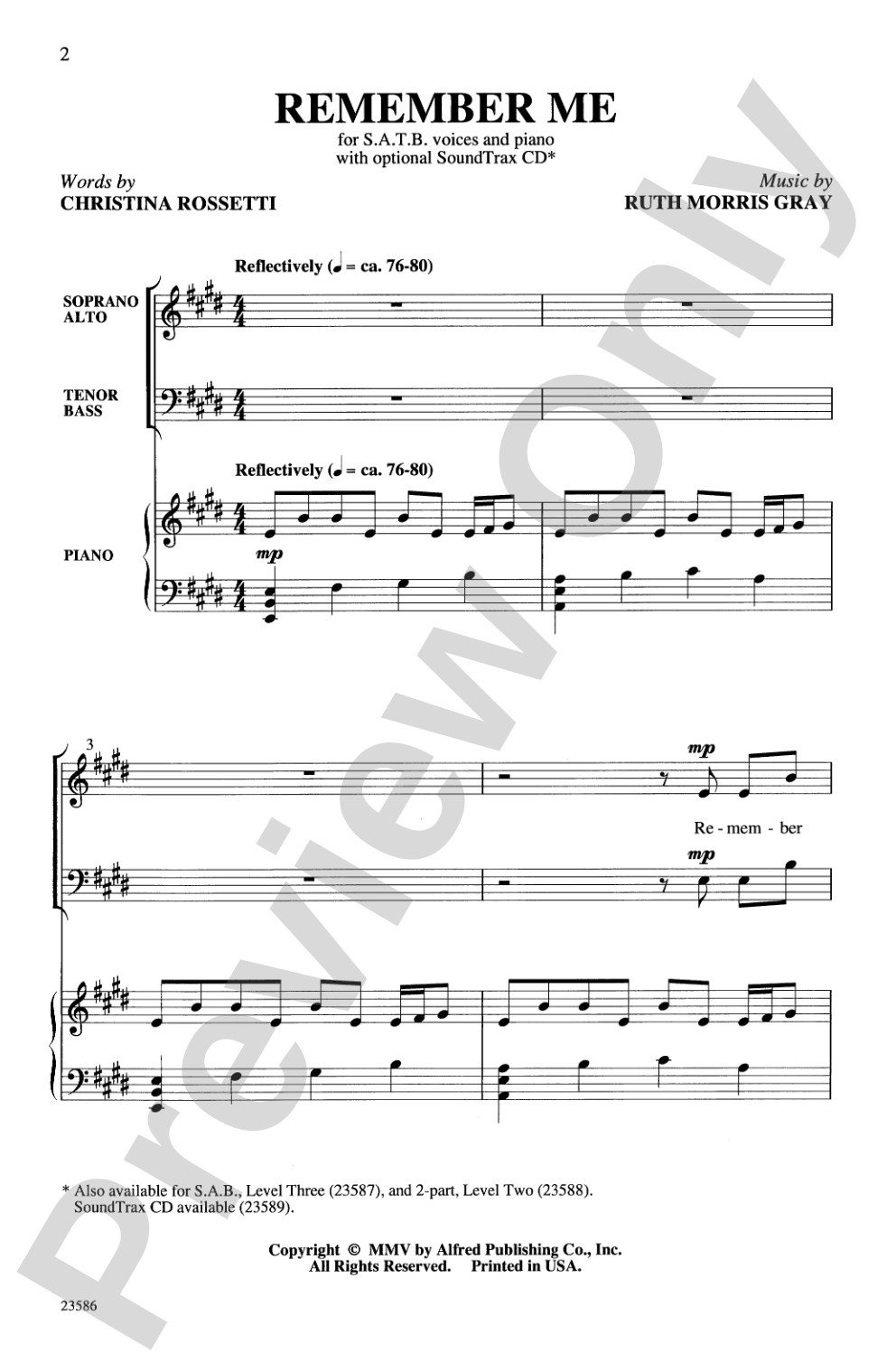

Remember Me: SATB Choral Octavo
Music by Ruth Morris Gray
Item: 00-PO-0006550
$1.65
Minimum order quantity: 20 copies
Pickup currently not available
Related Items
Remember Me: SoundTrax Digital Audio Download |
$22.95
|
View | |
Remember Me: SAB Choral Octavo |
$1.65
|
View | |
Remember Me: 2-Part Choral Octavo |
$2.25
|
View | |
Remember Me: SATB Choral Octavo |
$1.65
|
View | |
Remember Me: SAB Choral Octavo |
$1.65
|
View | |
Remember Me: 2-Part Choral Octavo |
$2.25
|
View | |
Remember Me: Choral Octavo SoundTrax CD |
$22.95
|
View |
Description
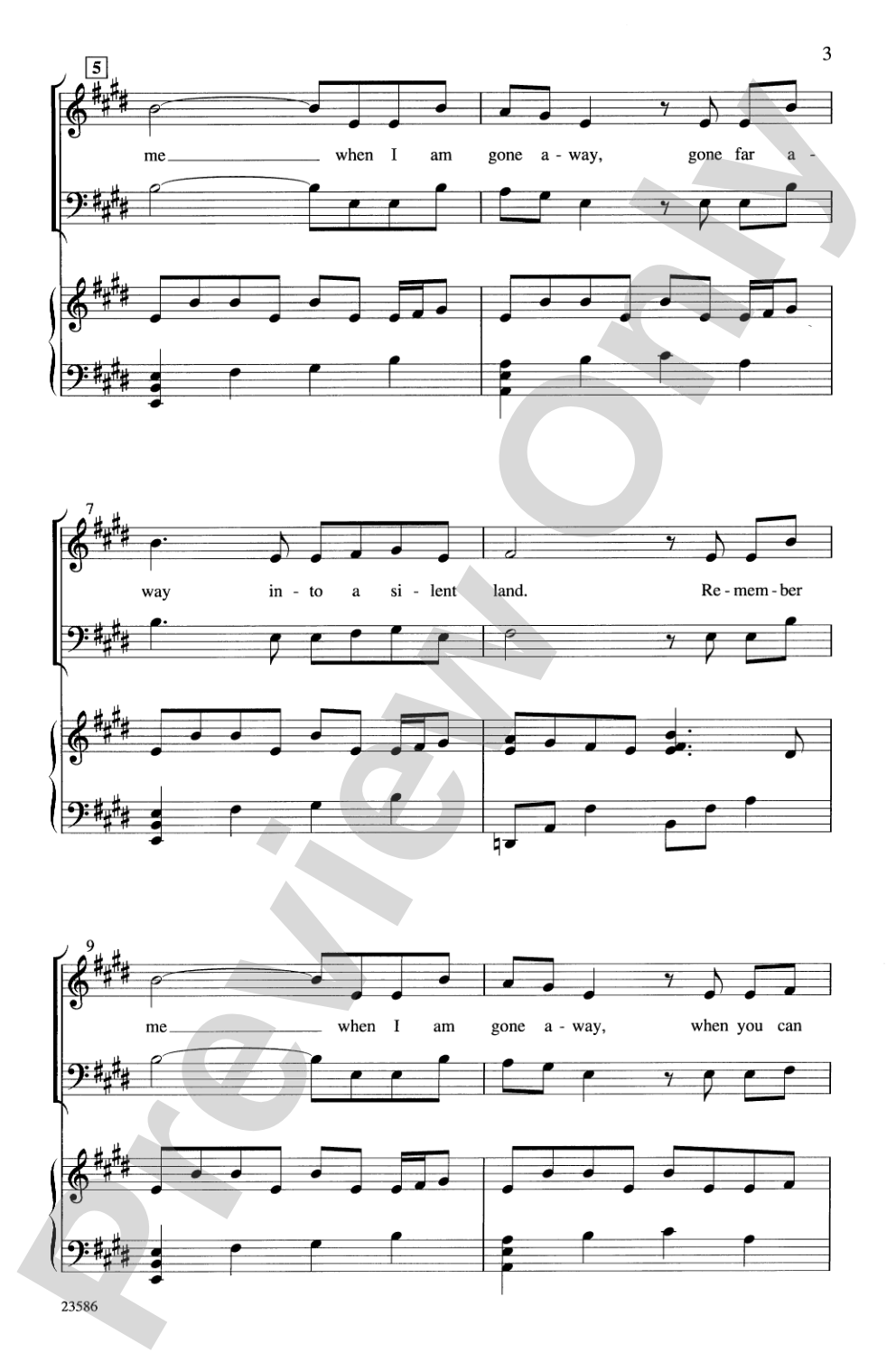
Celtic charisma with poetic polish. This reflective Christina Rossetti text sits so naturally with the haunting melody that it's hard to believe one was composed without the other. Each new counterline is finer than the last, creating a multi-layered masterpiece. No individual voicing is better than another so no choir should pass this one up. An optional SoundTrax CD boasts dramatic cymbal flourishes and an agile wooden flute obbligato.


Remember Me: SATB Choral Octavo isn't in MakeMusic Cloud just yet...but it could be. Let us know you'd like to see it, and you'll help shape what comes next. In the meantime, start a free trial and dive into thousands of interactive titles your students can play along with today.
Request This Title
Tell us you want it.
Start Your Free Trial
Explore everything that's ready to play right now.
Sample Audio
1
Audio File
--:--
0:00
0:00
Sample Video
No sample videos found.
Additional Details
Series:
Alfred Choral Designs
Publisher:
Alfred Music
Page Count:
12
SKU:
00-PO-0006550
More about this title
About the Composer: Ruth Morris Gray

Ruth Morris Gray directs choirs at Rosemead High School in California, where she has shaped the choral program since 2004. She holds degrees in piano performance and composition from Biola University, a master's degree in music composition from UC Santa Barbara, and her California music teaching credential from Cal State Northridge. With more than 100 published choral compositions to her name, Gray continues to balance her work as composer, educator, and performer.
Beyond the music world, Gray pursues an active life that includes travel, swimming, reading, and cycling with her husband, Douglas.
Why we love this
Gray pairs a Christina Rossetti text with a melody that feels inevitable, as if poetry and music were always meant to exist together. The counterpoint grows richer with every voice entry, ensuring that sopranos, altos, tenors, and basses all inhabit equally compelling musical lines. This is a piece that rewards preparation and reveals something new each time your choir sings it.
What to expect
Haunting and contemplative, with a Celtic sensibility that feels both timeless and intimate. The melody unfolds with quiet grace while the inner voices create a rich harmonic landscape that shifts beneath it. This is music for listening closely, for silence afterward, for audiences that lean in.
Who it's for
This octavo works for choirs with solid part-singing skills and singers who can sustain focus through intricate counterpoint. Whether you're preparing for a competition, festival, or concert program that calls for reflective, art-song-adjacent repertoire, this piece fits perfectly. The SATB voicing is accessible to most high school and college choirs.
How to get the most out of it
- Balance the four voice parts as equals. Since no single line dominates, resist the urge to push the soprano melody forward; instead, let each voice reveal its own shape and make sure the ensemble blends seamlessly at all dynamic levels.
- Attend to vowel consistency across the choir. The poetic text demands clarity, and unified vowel shapes will let the Rossetti words land with full impact while maintaining choral blend.
- If using the SoundTrax recording, allow rehearsal time for singers to absorb how the cymbal flourishes and wooden flute obbligato interact with their parts before attempting a full performance with accompaniment.
How to use it
Position this as a centerpiece on a concert devoted to art songs and poetic texts, where it can anchor a set of other introspective pieces. It also serves well as a closing number before an encore, sending audiences out with something remembered and lingering. The literary quality of the Rossetti text makes it an excellent bridge between purely musical programs and those built around themes or ideas.
Skills your students will build
- Singing independent countermelodies while maintaining harmonic awareness
- Textual interpretation informed by poetic language and phrasing
- Blend and balance across four equally important voice parts
- Sustaining legit vocal production through reflective, slower tempos
- Responding to recorded accompaniment cues and interpretation choices