

Over the Rainbow: 2-Part Choral Octavo
Lyrics by E. Y. Harburg, music by Harold Arlen / arr. Andy Beck
Item: 00-PO-0001543
$2.65
Minimum order quantity: 20 copies
One moment…
Related Items
Over the Rainbow: SoundTrax Digital Audio Download |
$27.99
|
View | |
Over the Rainbow: SATB, Opt. a cappella Choral Octavo |
$2.35
|
View | |
Over the Rainbow: SSAB, Opt. a cappella Choral Octavo |
$2.35
|
View | |
Over the Rainbow: TTBB, Opt. a cappella Choral Octavo |
$2.25
|
View | |
Over the Rainbow: SATB, Opt. a cappella Choral Octavo |
$2.35
|
View | |
Over the Rainbow: SSAB, Opt. a cappella Choral Octavo |
$2.35
|
View | |
Over the Rainbow: TTBB, Opt. a cappella Choral Octavo |
$2.25
|
View | |
Over the Rainbow: 2-Part Choral Octavo |
$2.65
|
View | |
Over the Rainbow: Choral Octavo SoundTrax CD |
$27.99
|
View |
Description
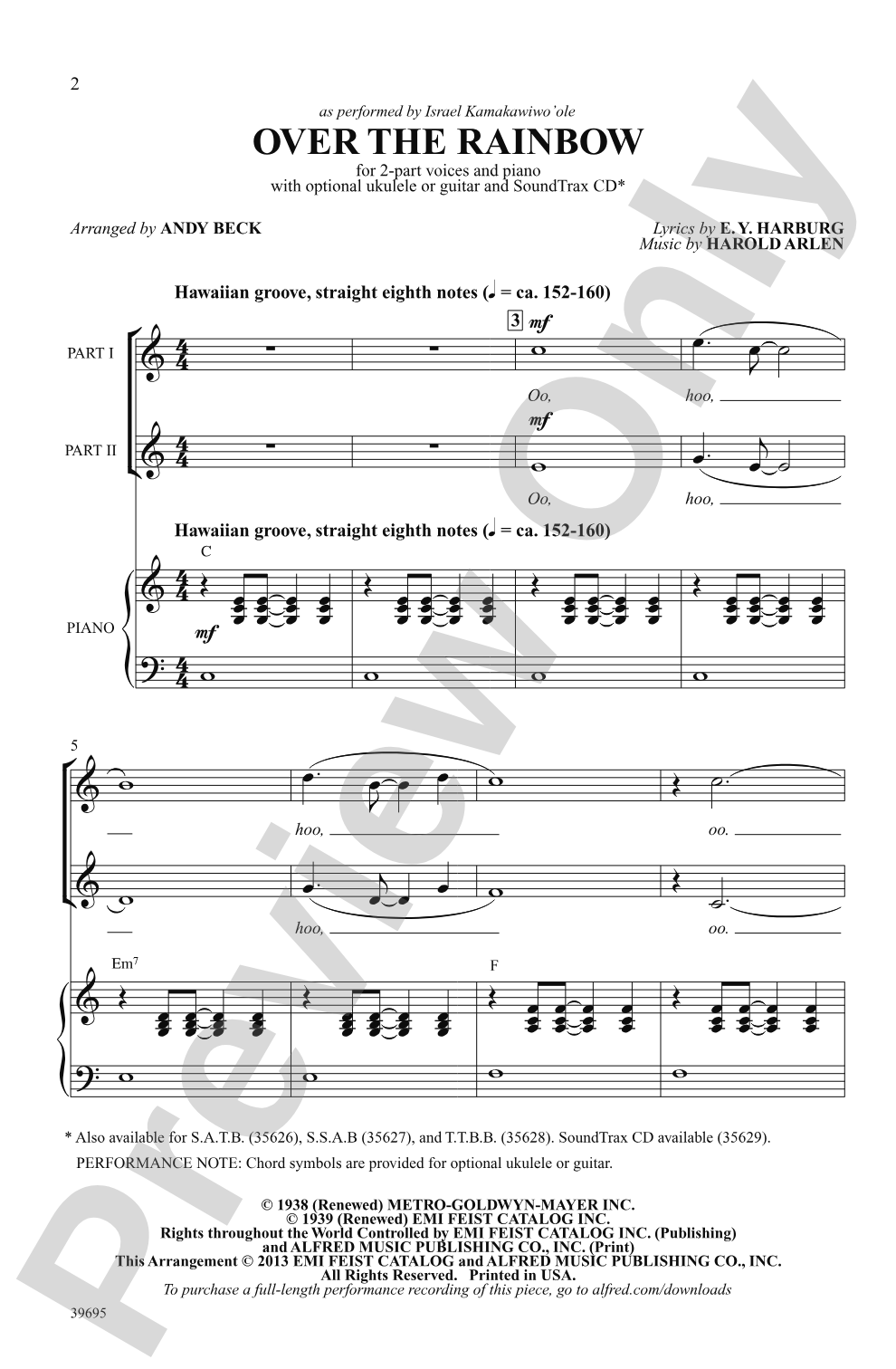
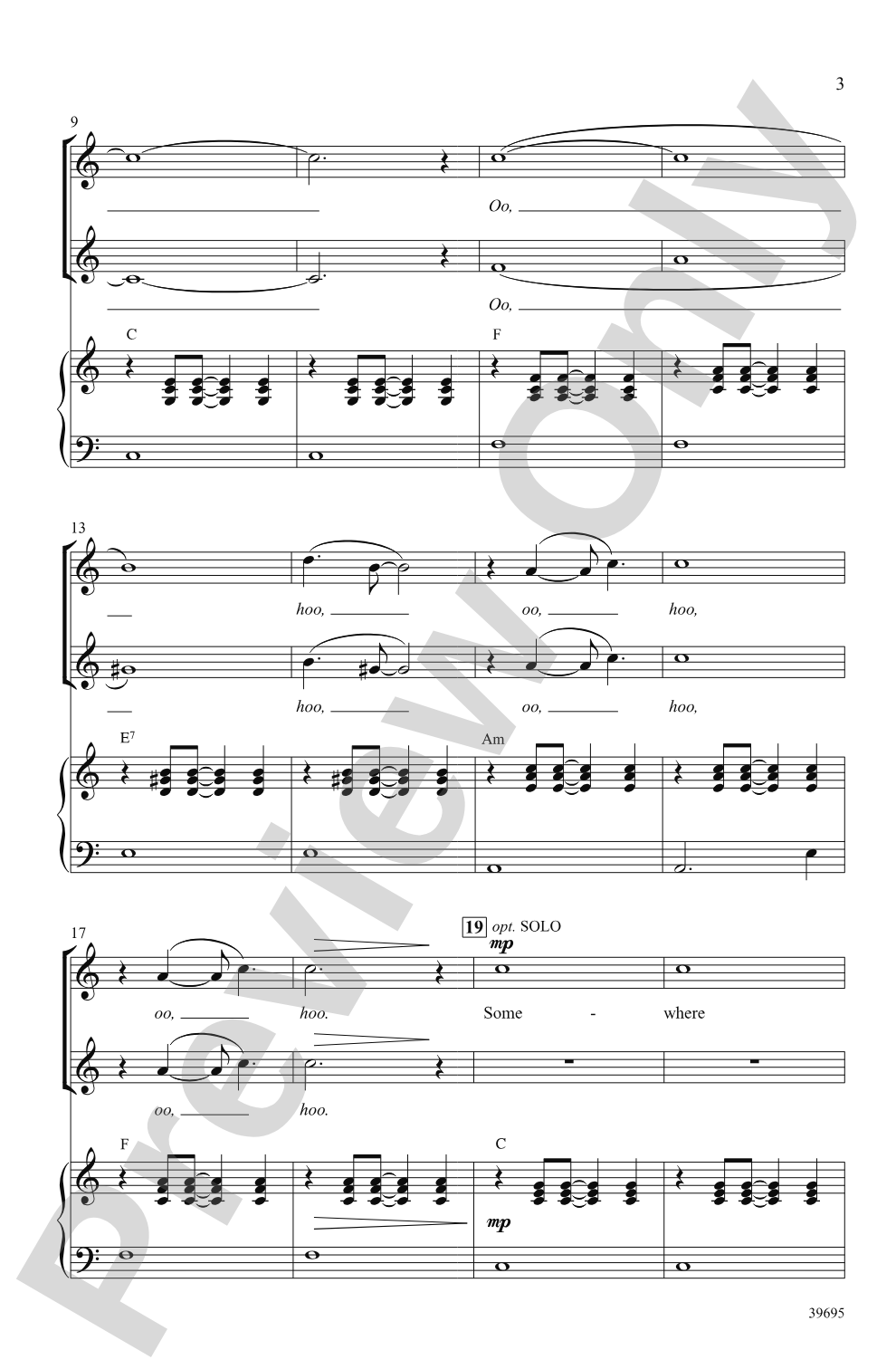
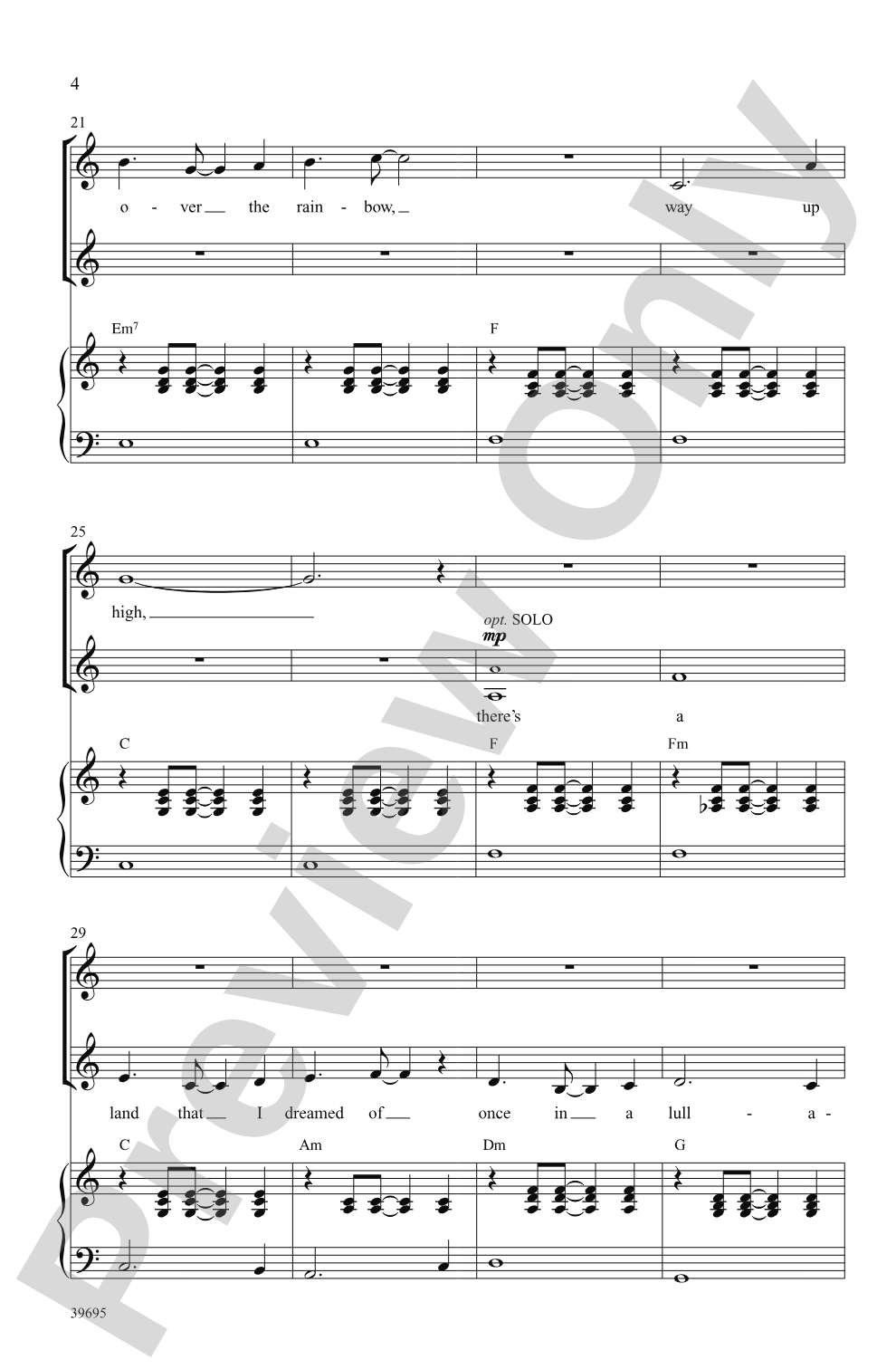
Now available for 2-part accompanied voices, Israel Kamakawiwo'ole's Hawaiian-style "Over the Rainbow" has become a prevalent part of today's popular music. Performed in Glee's first season finale by Matthew Morrison and Mark Salling, the unique setting has been sung by several American Idol contestants and featured in many TV shows and movies. Optional ukulele, or guitar.


Over the Rainbow: 2-Part Choral Octavo isn't in MakeMusic Cloud just yet...but it could be. Let us know you'd like to see it, and you'll help shape what comes next. In the meantime, start a free trial and dive into thousands of interactive titles your students can play along with today.
Request This Title
Tell us you want it.
Start Your Free Trial
Explore everything that's ready to play right now.
Sample Audio
1
Audio File
--:--
0:00
0:00
Sample Video
Additional Details
Series:
Alfred Pop Choral Series
Publisher:
Alfred Music
Page Count:
12
SKU:
00-PO-0001543
More about this title
About the Composer: Harold Arlen
Harold Arlen (1905-1986) composed some of the most enduring popular songs in American musical theater. His gift for melody and harmonic sophistication made him a defining voice in film scores and Broadway musicals during the 1930s and 1940s. "Over the Rainbow," which he composed for The Wizard of Oz, became his signature work and one of the most recorded songs in history.
Arlen's ability to blend jazz idioms with accessible, singable lines shaped popular music for generations. His songs remain central to music education because they bridge classical song tradition with American vernacular style, offering singers both technical challenge and immediate emotional resonance.
Why we love this
Andy Beck's arrangement honors the contemporary Hawaiian-influenced version that has captured popular attention while keeping the 2-part voicing accessible for developing choirs. The optional ukulele and guitar parts give you flexibility to layer instrumentation based on your ensemble's instrumentation, and the recorded accompaniment support makes independent rehearsal possible even without a pianist.
What to expect
There's an unhurried warmth here, a sense of gentle longing wrapped in the shimmer of Hawaiian-influenced harmonies. The 2-part texture keeps the emotional core simple and direct, allowing the iconic melody to shine while the second part provides rich harmonic coloring that feels surprisingly sophisticated for its accessible range.
Who it's for
This arrangement suits intermediate choirs and ensembles with developing sight-readers who benefit from reduced vocal lines. It also works well for high school and adult community choirs seeking contemporary repertoire that connects to popular culture while maintaining musical integrity.
How to get the most out of it
- Balance the parts by having singers feel the harmonic support from the second part rather than doubling the melody. The arrangement likely sits lower than the original film arrangement, so encourage the upper voices to maintain warmth rather than pushing into a bright, soprano-driven sound.
- If adding ukulele or guitar, have the accompanist listen closely to the harmonic movement. These instruments can easily blur the chord changes if played too heavily, so rhythmic clarity and light touch will preserve the arrangement's transparency.
- Pay attention to the tropical and relaxed character implicit in the Hawaii-influenced style. Avoid a rigid, formal interpretation. The phrasing should breathe and allow rubato where the harmony supports it, especially in the bridge.
- Use the recorded accompaniment during sectional rehearsals to help singers internalize their independent lines. This is particularly valuable for building confidence in the second part, which may be less familiar melodically.
How to use it
Program this as a bridge between musical theater and contemporary pop music on a concert celebrating diverse styles. It pairs naturally with other well-known movie songs or with lighter secular pieces, and its cultural specificity makes it a natural choice for spring concerts or programs exploring music across cultures.
Skills your students will build
- Singing independent harmonic lines while maintaining awareness of the melody
- Stylistic interpretation of contemporary popular music arranged for choral performance
- Blending acoustic and optional amplified instrumentation
- Phrasing and rubato in a legit singing style with rhythmic flexibility