
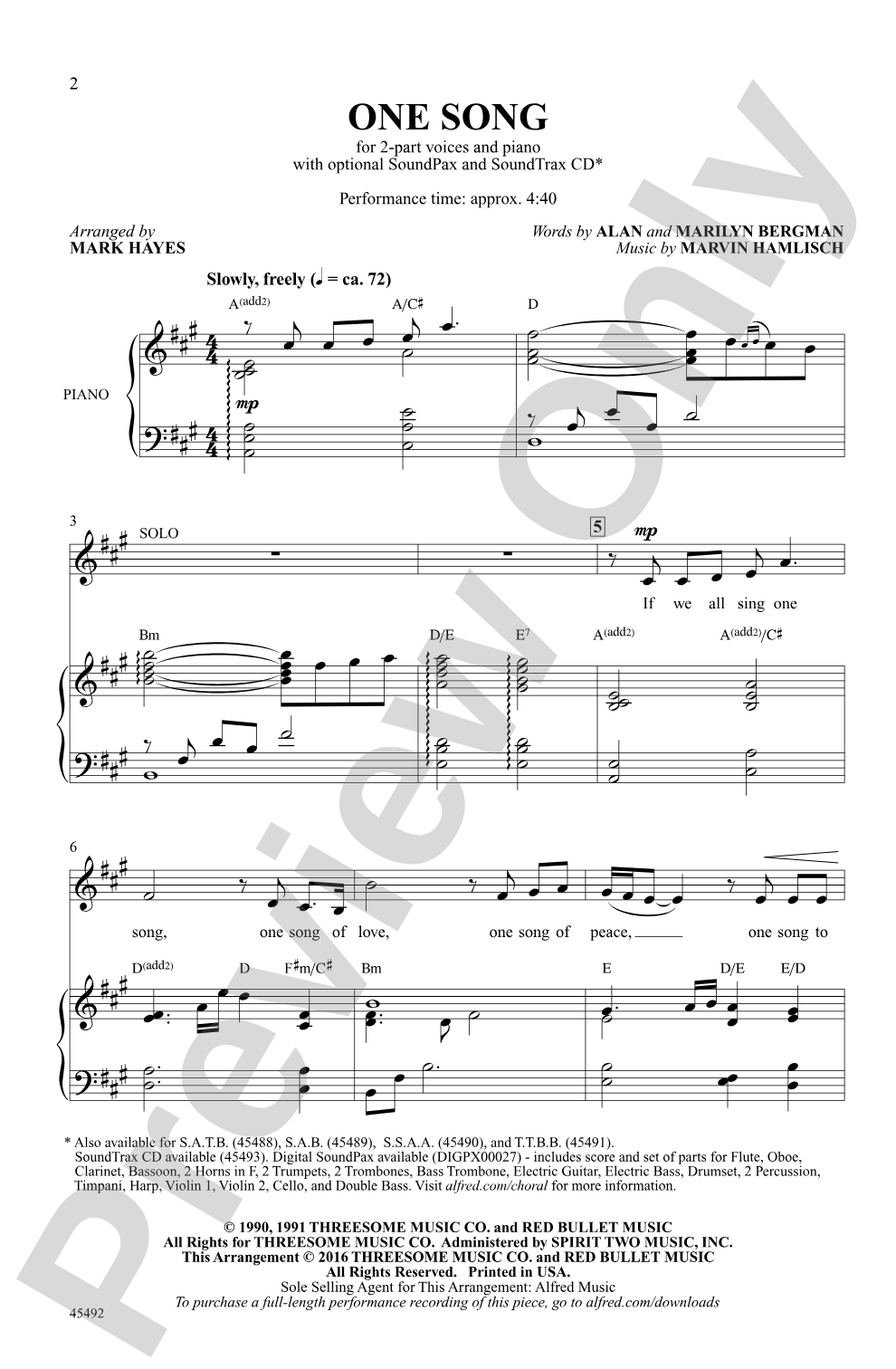
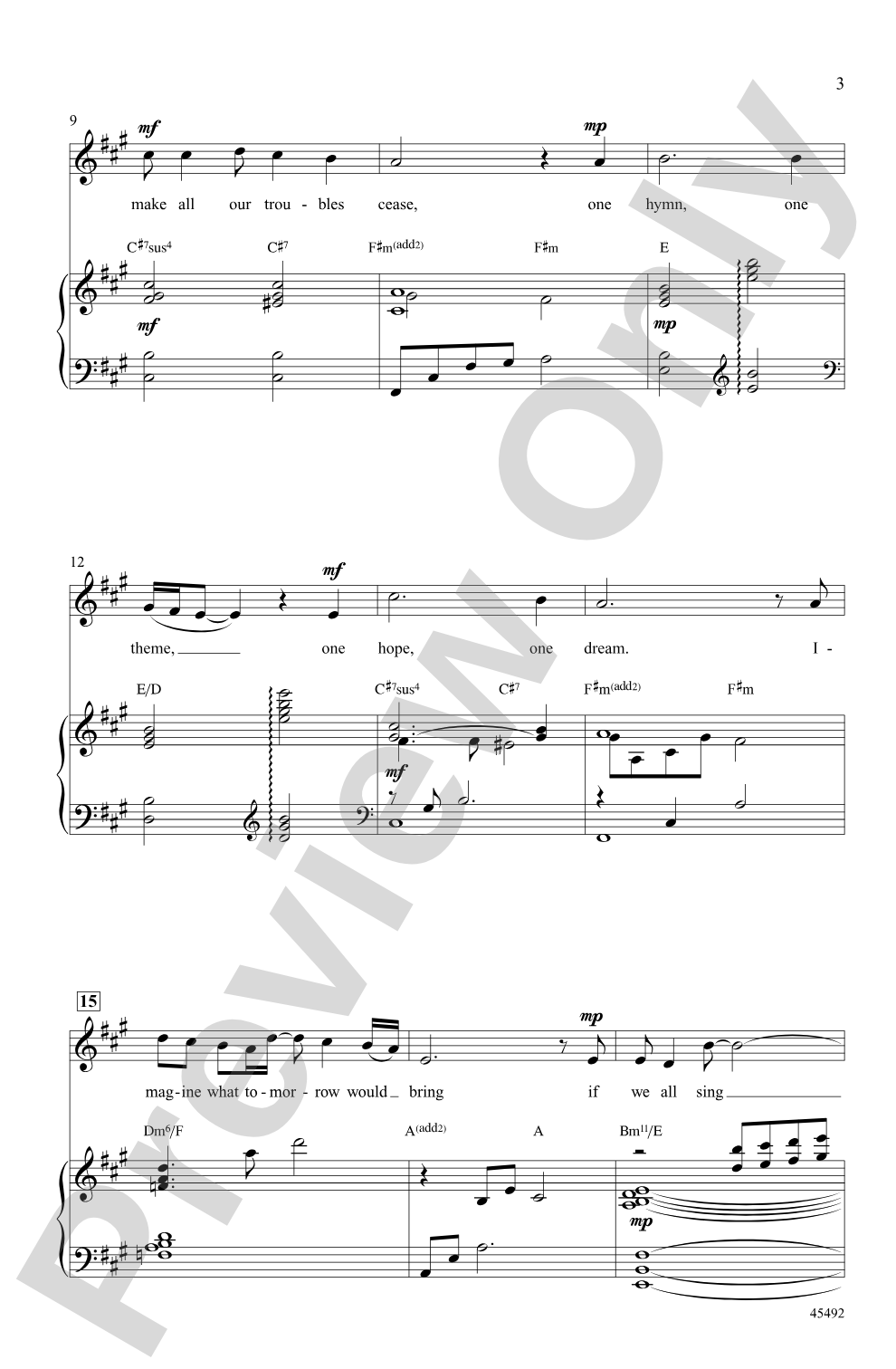
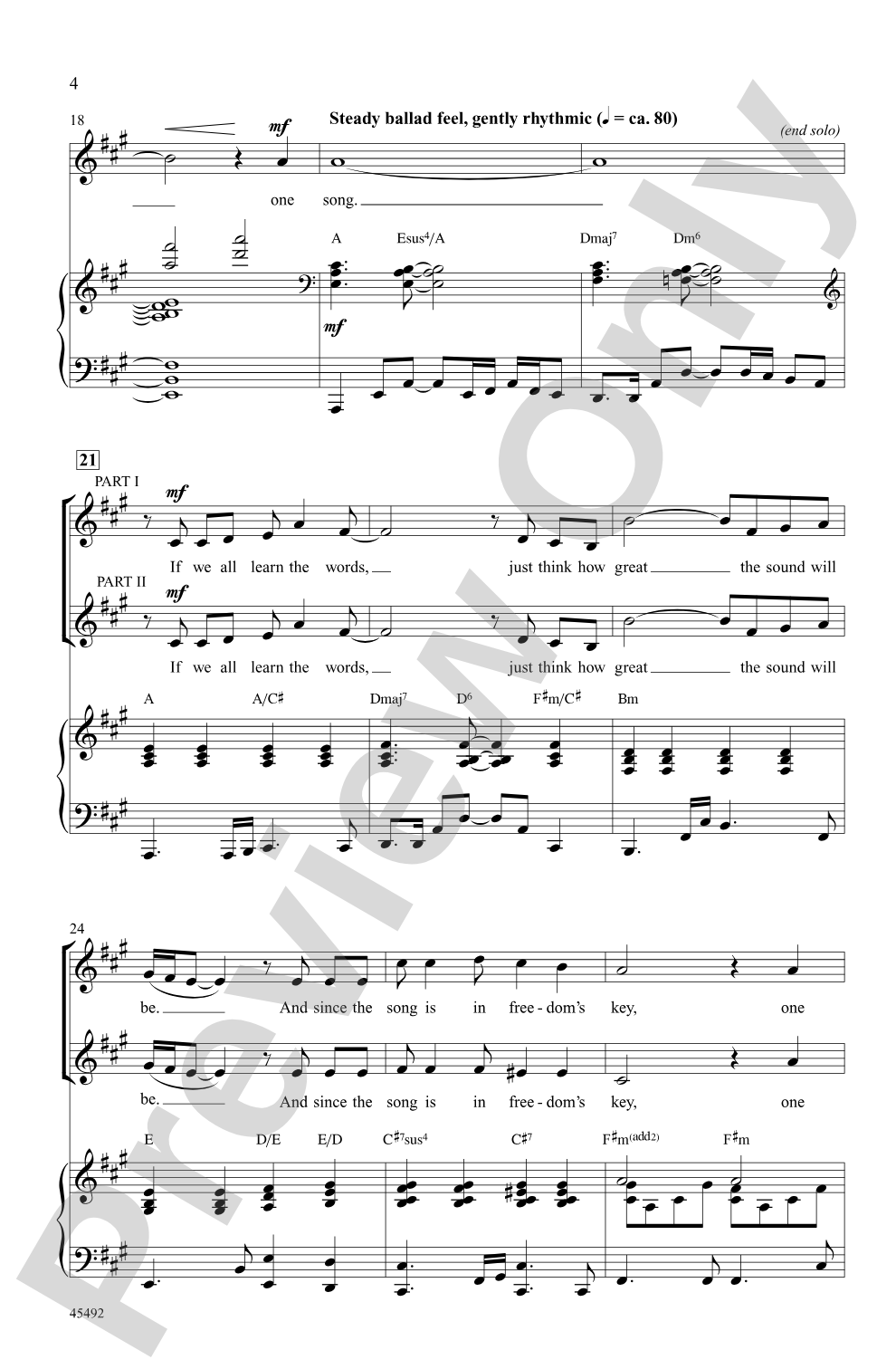

One Song: 2-Part & Opt. Solo Choral Octavo
Words by Alan and Marilyn Bergman, music by Marvin Hamlisch / arr. Mark Hayes
Item: 00-PO-0003728
$2.00
Minimum order quantity: 20 copies
Pickup currently not available
Related Items
One Song: SoundTrax Digital Audio Download |
$29.99
|
View | |
One Song: SATB & Opt. Solo Choral Octavo |
$2.10
|
View | |
One Song: SAB & Opt. Solo Choral Octavo |
$2.00
|
View | |
One Song: SSAA & Opt. Solo Choral Octavo |
$2.00
|
View | |
One Song: TTBB & Opt. Solo Choral Octavo |
$2.00
|
View | |
One Song: SATB & Opt. Solo Choral Octavo |
$2.10
|
View | |
One Song: SAB & Opt. Solo Choral Octavo |
$2.00
|
View | |
One Song: SSAA & Opt. Solo Choral Octavo |
$2.00
|
View | |
One Song: TTBB & Opt. Solo Choral Octavo |
$2.00
|
View | |
One Song: 2-Part & Opt. Solo Choral Octavo |
$2.00
|
View | |
One Song: Choral Octavo SoundTrax CD |
$29.99
|
View | |
One Song: Choral SoundPax |
$60.00
|
View |
Description
Originally recorded by young R&B star Tevin Campbell on his Grammy-nominated debut album in 1991, this soulful ballad is truly stirring. An optional solo at the opening provides the opportunity to feature a star singer, while solid choral writing throughout leads to an uplifting and inspiring finish.


One Song: 2-Part & Opt. Solo Choral Octavo isn't in MakeMusic Cloud just yet...but it could be. Let us know you'd like to see it, and you'll help shape what comes next. In the meantime, start a free trial and dive into thousands of interactive titles your students can play along with today.
Request This Title
Tell us you want it.
Start Your Free Trial
Explore everything that's ready to play right now.
Sample Audio
1
Audio File
--:--
0:00
0:00
Sample Video
No sample videos found.
Additional Details
Series:
Alfred Pop Choral Series
Publisher:
Alfred Music
Page Count:
12
SKU:
00-PO-0003728
More about this title
About the Composer: Marvin Hamlisch
Marvin Hamlisch (1944-2012) was an Academy Award-winning composer whose work spanned Broadway, film, and concert music. His gift for melody and emotional directness made him one of the most performed composers in American musical theater, with credits including "The Sting," "Sophie's Choice," and "A Chorus Line." His compositions consistently reach choral and educational ensembles because they balance sophistication with accessibility.
Hamlisch's approach to songwriting emphasized singability and emotional authenticity. Whether scoring a film or crafting a popular song, he understood how to build a melody that stays with listeners long after the music ends. This sensibility made him a natural collaborator with arrangers like Mark Hayes, who could expand his songs for ensemble performance.
Why we love this
Mark Hayes's arrangement captures the soul of Hamlisch's original without sacrificing the intimacy that makes this ballad so moving. The optional solo creates natural programming flexibility while the two-part writing keeps the focus on the text and emotional arc rather than technical complexity. It's exactly the kind of piece that reminds singers why they joined choir in the first place.
What to expect
Warm, introspective, and ultimately hopeful. The ballad opens with quiet vulnerability before building gradually toward affirmation. There's a soulful quality throughout that reflects its R&B roots while remaining appropriate for concert settings.
Who it's for
This works beautifully for middle school through adult choirs seeking accessible material with genuine emotional weight. It's ideal for ensembles that want a contemporary repertoire piece without the technical demands of more complex modern arrangements.
How to get the most out of it
- Let the optional soloist establish the song's reflective quality before the choir enters. A strong solo voice sets the emotional foundation the group will build upon.
- Shape the phrase endings with breath and intention rather than letting them trail off. This piece gains power through clear musical architecture.
- Find the underlying groove without rushing. The R&B origin gives this ballad a subtle rhythmic pocket that should feel natural, not mechanistic.
- Balance the parts carefully so neither voice dominates the harmony. The arrangement works only when both lines share equal importance.
How to use it
Pair this with other peace or brotherhood-themed pieces to create a thematic set, or use it as a lighter moment between more demanding repertoire. Its contemporary sensibility and uplifting finish make it strong as a closing number for concerts emphasizing unity and inspiration.
Skills your students will build
- Balancing two-part harmony with equal voice independence
- Sustaining emotional expression through extended phrases
- Navigating contemporary rhythmic language without rushing
- Performing music from non-classical genres with stylistic authenticity
- Ensemble blend and intonation in close harmony