

One Song: SSAA & Opt. Solo Choral Octavo
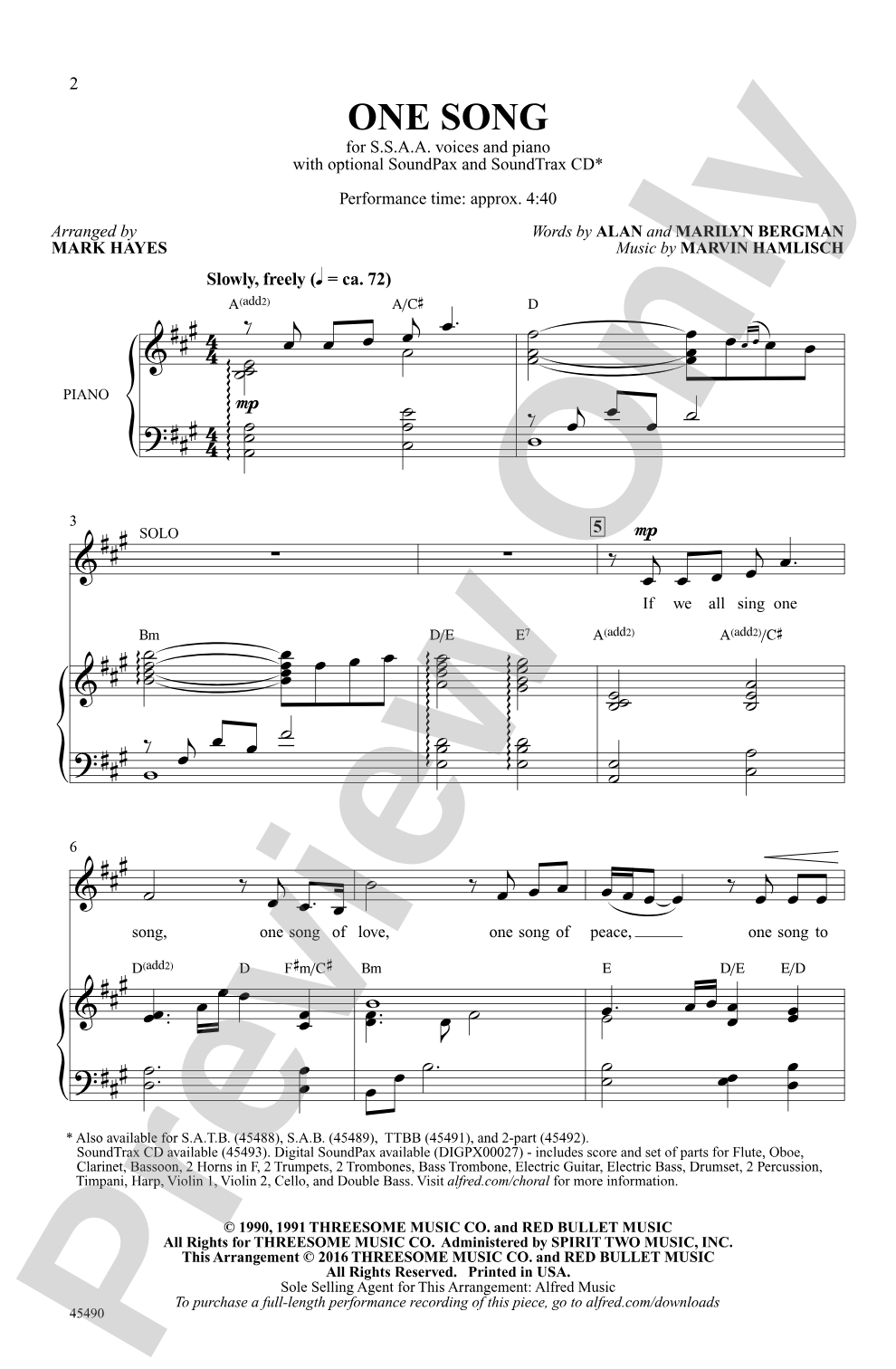
Words by Alan and Marilyn Bergman, music by Marvin Hamlisch / arr. Mark Hayes
Item: 00-PO-0003726
$2.00
Minimum order quantity: 20 copies
Pickup currently not available
Related Items
One Song: SoundTrax Digital Audio Download |
$29.99
|
View | |
One Song: SATB & Opt. Solo Choral Octavo |
$2.10
|
View | |
One Song: SAB & Opt. Solo Choral Octavo |
$2.00
|
View | |
One Song: TTBB & Opt. Solo Choral Octavo |
$2.00
|
View | |
One Song: 2-Part & Opt. Solo Choral Octavo |
$2.00
|
View | |
One Song: SATB & Opt. Solo Choral Octavo |
$2.10
|
View | |
One Song: SAB & Opt. Solo Choral Octavo |
$2.00
|
View | |
One Song: SSAA & Opt. Solo Choral Octavo |
$2.00
|
View | |
One Song: TTBB & Opt. Solo Choral Octavo |
$2.00
|
View | |
One Song: 2-Part & Opt. Solo Choral Octavo |
$2.00
|
View | |
One Song: Choral Octavo SoundTrax CD |
$29.99
|
View | |
One Song: Choral SoundPax |
$60.00
|
View |
Description
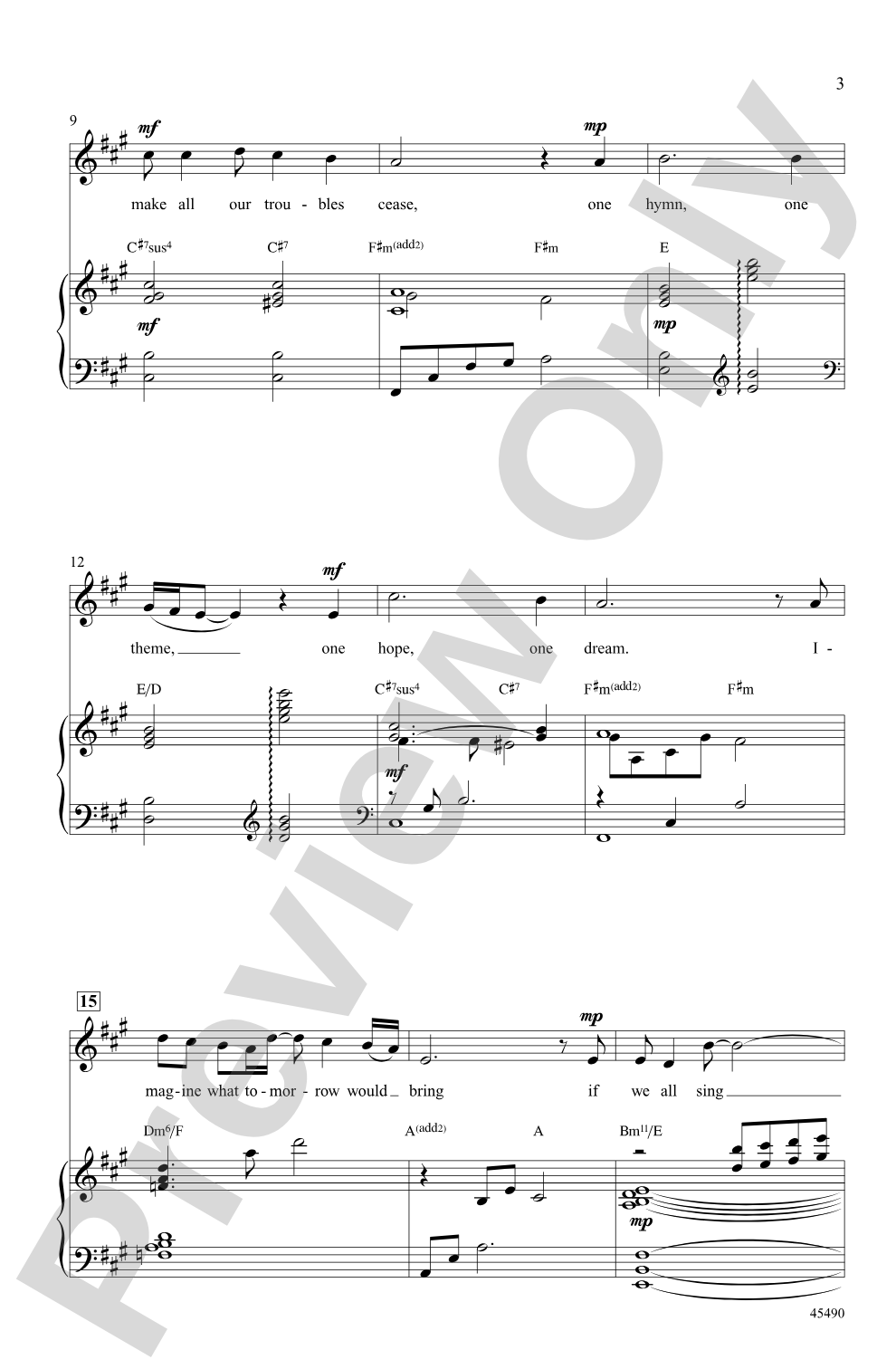
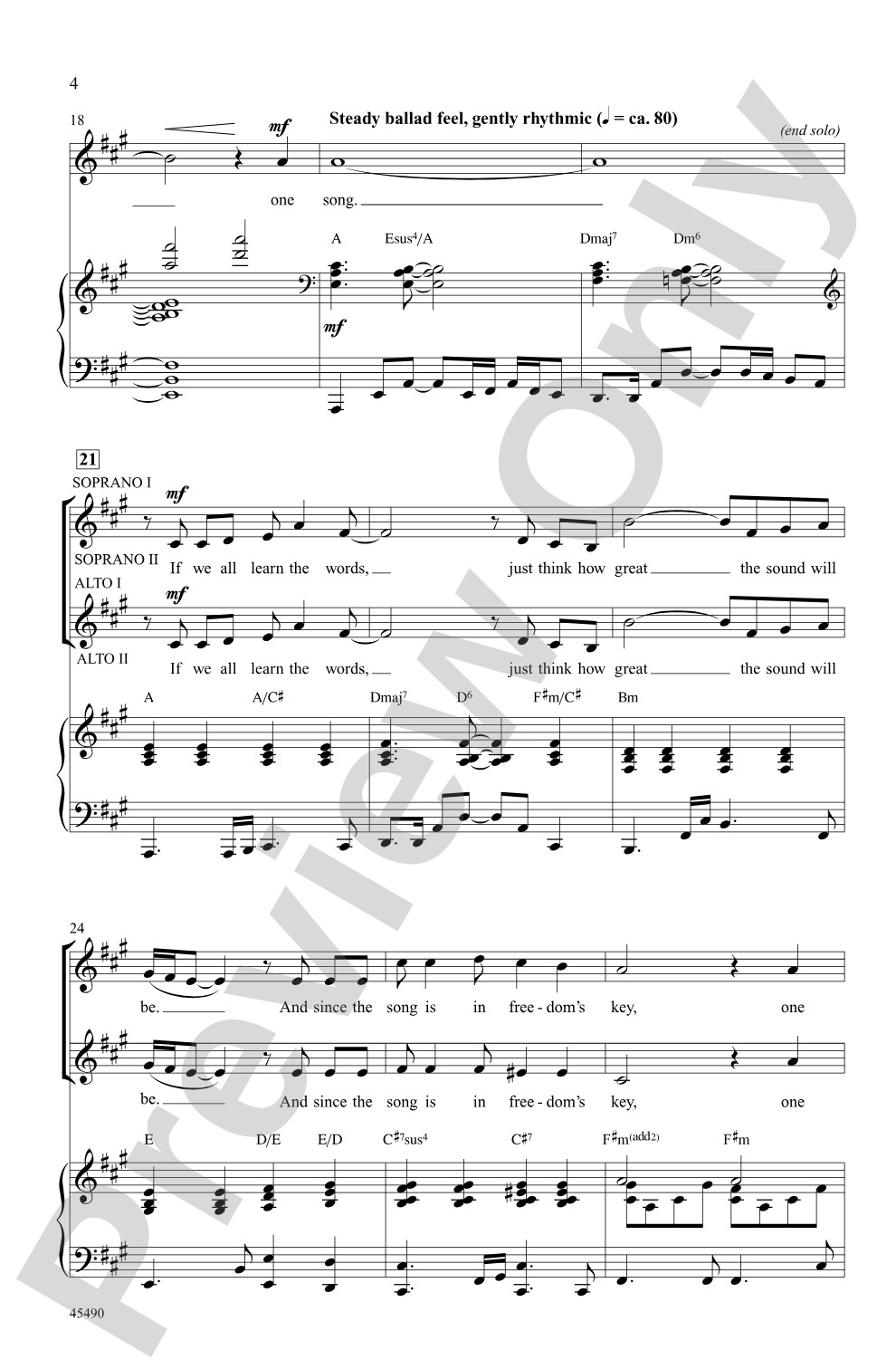
Originally recorded by young R&B star Tevin Campbell on his Grammy-nominated debut album in 1991, this soulful ballad is truly stirring. An optional solo at the opening provides the opportunity to feature a star singer, while solid choral writing throughout leads to an uplifting and inspiring finish.


One Song: SSAA & Opt. Solo Choral Octavo isn't in MakeMusic Cloud just yet...but it could be. Let us know you'd like to see it, and you'll help shape what comes next. In the meantime, start a free trial and dive into thousands of interactive titles your students can play along with today.
Request This Title
Tell us you want it.
Start Your Free Trial
Explore everything that's ready to play right now.
Sample Audio
1
Audio File
--:--
0:00
0:00
Sample Video
No sample videos found.
Additional Details
Series:
Alfred Pop Choral Series
Publisher:
Alfred Music
Page Count:
12
SKU:
00-PO-0003726
More about this title
About the Composer: Marvin Hamlisch
Marvin Hamlisch stands as one of Broadway and film's most celebrated composers, known for his ability to craft melodies that resonate across genres. His work spans theater (A Chorus Line, Smile), film scoring (The Way We Were, The Sting), and popular music, earning him three Academy Awards and four Grammy Awards across his prolific career. Hamlisch's gift for writing vocal music that balances accessibility with emotional depth makes his work particularly valuable in educational choral settings.
Why we love this
Mark Hayes's arrangement captures the soul of Hamlisch's original while making it thoroughly singable for mixed high school and college choirs. The optional solo creates a genuine moment for a strong vocalist to shine without upstaging the ensemble, and the harmonic language throughout stays grounded enough for solid musicianship to emerge naturally from the writing.
What to expect
The piece unfolds with quiet dignity, opening with an intimate solo that sets a contemplative tone before the ensemble enters with warmth and unity. As it progresses, the harmonies deepen and the voices build toward something genuinely moving and uplifting, creating the feel of a shared moment rather than a performance.
Who it's for
This arrangement works beautifully for treble or mixed choirs at the high school, college, or community level seeking a contemporary ballad with substance. Singers with some vocal maturity will connect most deeply with the emotional arc, and groups comfortable with R&B phrasing and soul-inflected singing will bring out its full character.
How to get the most out of it
- Balance the optional solo opening so it draws listeners in rather than overwhelming the choir's entrance. The singer should feel supported by light accompaniment cues.
- Shape the phrase lengths with careful attention to breath points; this ballad breathes like speech, so honor natural text inflection over rigid bar lines.
- Build dynamic intensity gradually toward the finish rather than hitting volume suddenly. The uplifting character comes from cumulative ensemble commitment, not forced crescendos.
- Let the recorded accompaniment breathe with you during sustained passages. Avoid locking mechanically to the track; use it as a guide rather than a metronome.
How to use it
Program this as a concert centerpiece for any concert theme touching on unity, peace, or human connection. Its contemporary idiom paired with substantive harmonic writing makes it ideal for programs mixing classical and popular repertoire, and it lands particularly well as a closing number when the goal is to leave audiences with a sense of hope.
Skills your students will build
- Singing with soulful inflection and rhythmic flexibility within a contemporary R&B idiom
- Blend and balance in four-part writing with independent voice lines
- Sustaining emotional connection across longer phrase structures
- Following a recorded accompaniment while maintaining ensemble cohesion
- Shaping dynamics to support text meaning rather than relying on written markings alone