

On the Pulse of Morning: SSAA Choral Octavo
From Like Dust I Rise (A Choral Song Cycle)
Text by Maya Angelou, music by Mark Hayes
Item: 00-PO-0005651
$1.90
Minimum order quantity: 20 copies
Pickup currently not available
Related Items
On the Pulse of Morning: SoundTrax Digital Audio Download |
$29.99
|
View | |
On the Pulse of Morning: SATB Choral Octavo |
$1.90
|
View | |
On the Pulse of Morning: TTBB Choral Octavo |
$1.90
|
View | |
On the Pulse of Morning: Choral SoundPax |
$50.00
|
View | |
On the Pulse of Morning: SATB Choral Octavo |
$1.90
|
View | |
On the Pulse of Morning: SSAA Choral Octavo |
$1.90
|
View | |
On the Pulse of Morning: TTBB Choral Octavo |
$1.90
|
View | |
On the Pulse of Morning: Choral Octavo SoundTrax CD |
$29.99
|
View | |
On the Pulse of Morning: Choral SoundPax |
$50.00
|
View |
Description
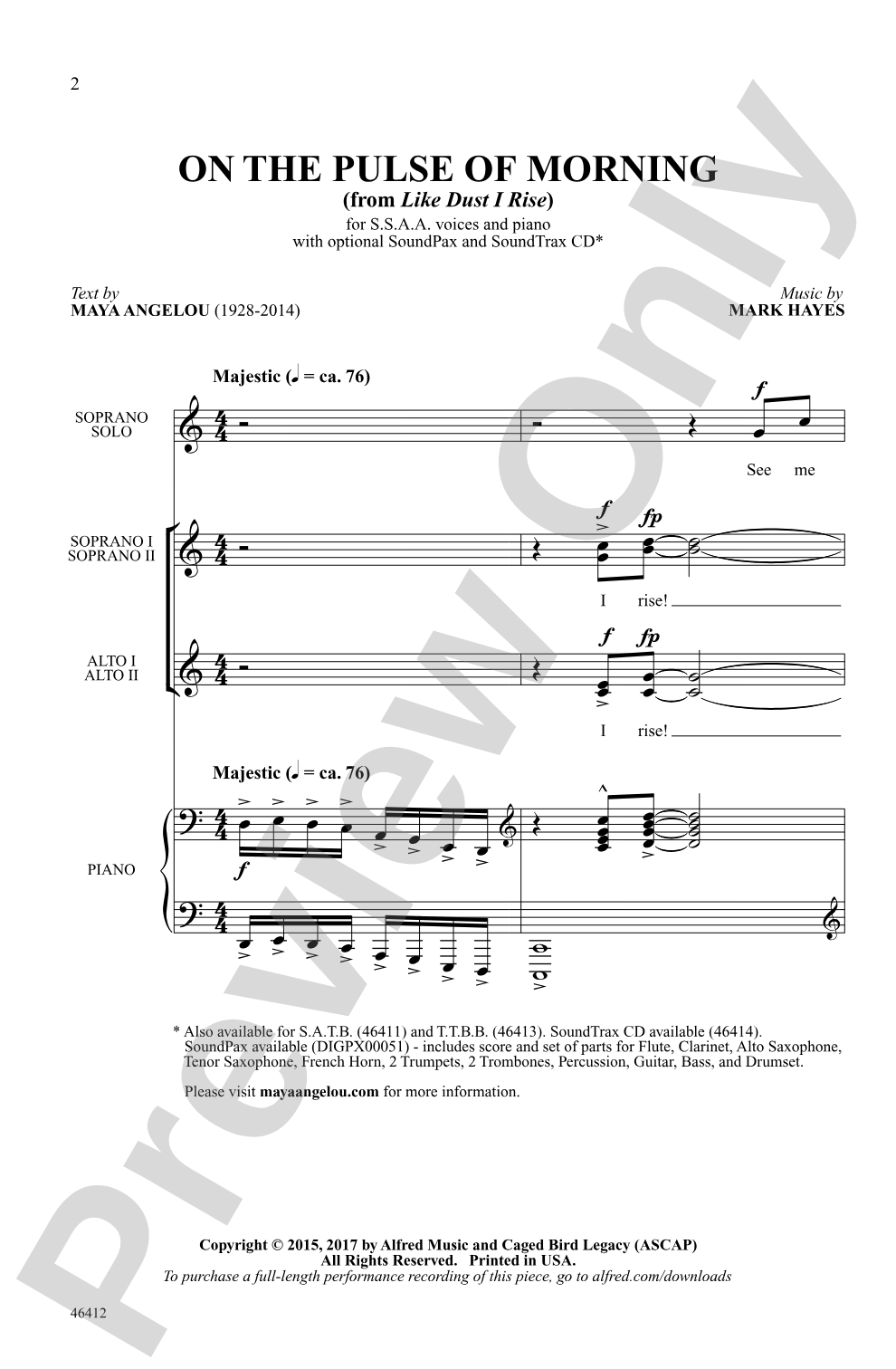
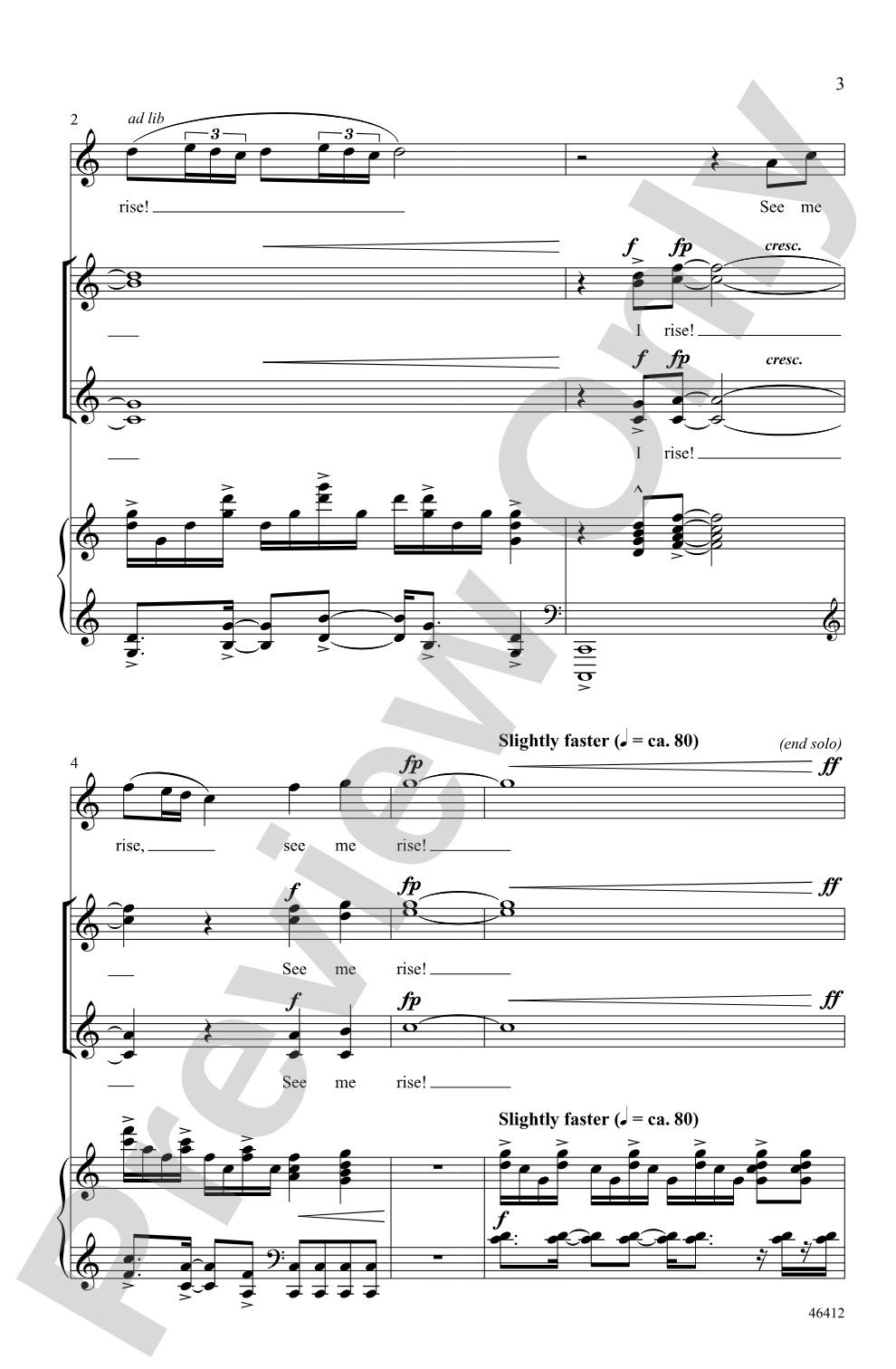
In 1993, Maya Angelou recited this poem at the inauguration of President Bill Clinton, making her the first African American and the first female poet to deliver an inaugural recitation. Subsequently, Angelou's audio recording of "On the Pulse of Morning" won a Grammy Award® for "Best Spoken Word" in 1994. Mark Hayes opens with a resounding "See Me Rise" choral fanfare before presenting the hope-filled latter half of the poem with rhythmic exuberance. This is the opening movement from the song cycle Like Dust I Rise.


On the Pulse of Morning: SSAA Choral Octavo isn't in MakeMusic Cloud just yet...but it could be. Let us know you'd like to see it, and you'll help shape what comes next. In the meantime, start a free trial and dive into thousands of interactive titles your students can play along with today.
Request This Title
Tell us you want it.
Start Your Free Trial
Explore everything that's ready to play right now.
Sample Audio
1
Audio File
--:--
2
SATB Recording
--:--
Audio File
0:00
0:00
Sample Video
Additional Details
Series:
Alfred Choral Designs
Publisher:
Alfred Music
Page Count:
12
SKU:
00-PO-0005651
More about this title
About the Composer: Mark Hayes
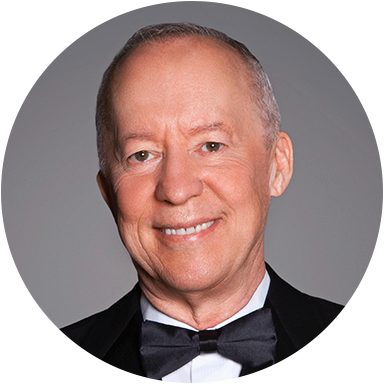
Mark Hayes holds a Bachelor of Music degree summa cum laude in Piano Performance from Baylor University and has established himself as a prolific composer, arranger, and conductor with more than 1,750 published works across all genres. His career has taken him to prestigious venues including Lincoln Center, the National Cathedral, and Carnegie Hall, where he has conducted world premieres of major choral and orchestral works, including his Requiem at St. Ignatius Basilica in Rome as part of a Vatican-sponsored festival.
Beyond his work in sacred and choral music, Hayes is recognized for his contributions to musical theater, orchestration, and record production. His catalog reflects a deep commitment to writing for treble voices, mixed ensembles, and piano, with over 100 piano books in print spanning gospel, classical, jazz, and Broadway styles. In 2010, Baylor University honored him with the Award for Exemplary Leadership in Christian Music, recognizing his sustained impact on the field.
Why we love this
Hayes's setting captures the power of Angelou's poem through immediate, memorable gestures. The opening "See Me Rise" fanfare commands attention, while the rhythmic treatment of the latter half creates forward momentum that energizes singers and audiences alike. This octavo stands as an accessible entry point to a fuller song cycle, making it both a complete performance piece and a gateway to deeper exploration of Hayes's compositional voice.
What to expect
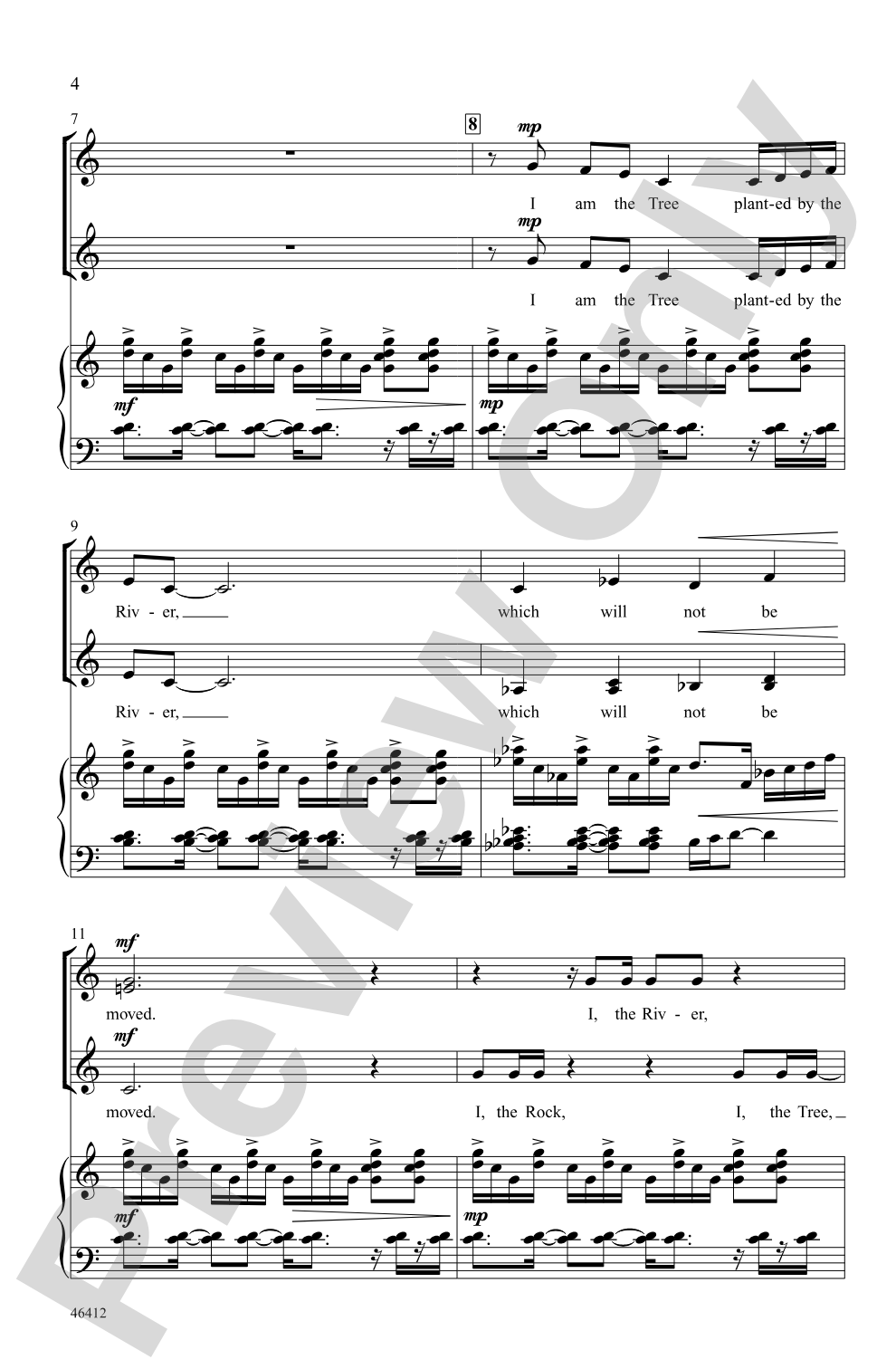
The opening blazes with urgent energy and pride before settling into a rhythmic, propulsive middle section that pulses with hope. The overall effect is one of rising momentum, matching the poem's arc from declaration to affirmation.
Who it's for
Treble voice choirs with intermediate to advanced reading skills will find this octavo both musically rewarding and technically accessible. Directors seeking repertoire that acknowledges significant literary and cultural moments will value the marriage of Angelou's words with Hayes's contemporary harmonic language. This piece serves choirs ready to engage with text that carries historical weight and emotional depth.
How to get the most out of it
- Shape the opening fanfare with clarity and conviction; the choral gesture must land as a proclamation, not decoration.
- Balance the rhythmic exuberance in the latter section so text remains intelligible; articulation of consonants will carry the energy without sacrificing diction.
- If using the recorded accompaniment, allow singers to become familiar with harmonic content first in rehearsal before adding the recording.
- Consider the poem's historical context as a rehearsal touchstone; this awareness often helps singers find authentic commitment to the text.
How to use it
Program this as an opening work on a concert celebrating resilience, unity, or social themes; its confident gestures and brief duration make it an effective conversation starter. It also works well as part of a themed choral concert pairing literary texts with contemporary music, or as a powerful standalone moment in a longer program of American choral literature.
Skills your students will build
- Ensemble balance in homophonic textures with rhythmic precision
- Diction and text projection in contemporary harmonic language
- Understanding how composers shape poetic narrative through musical gesture
- Expressive control across dynamic and rhythmic contrasts