
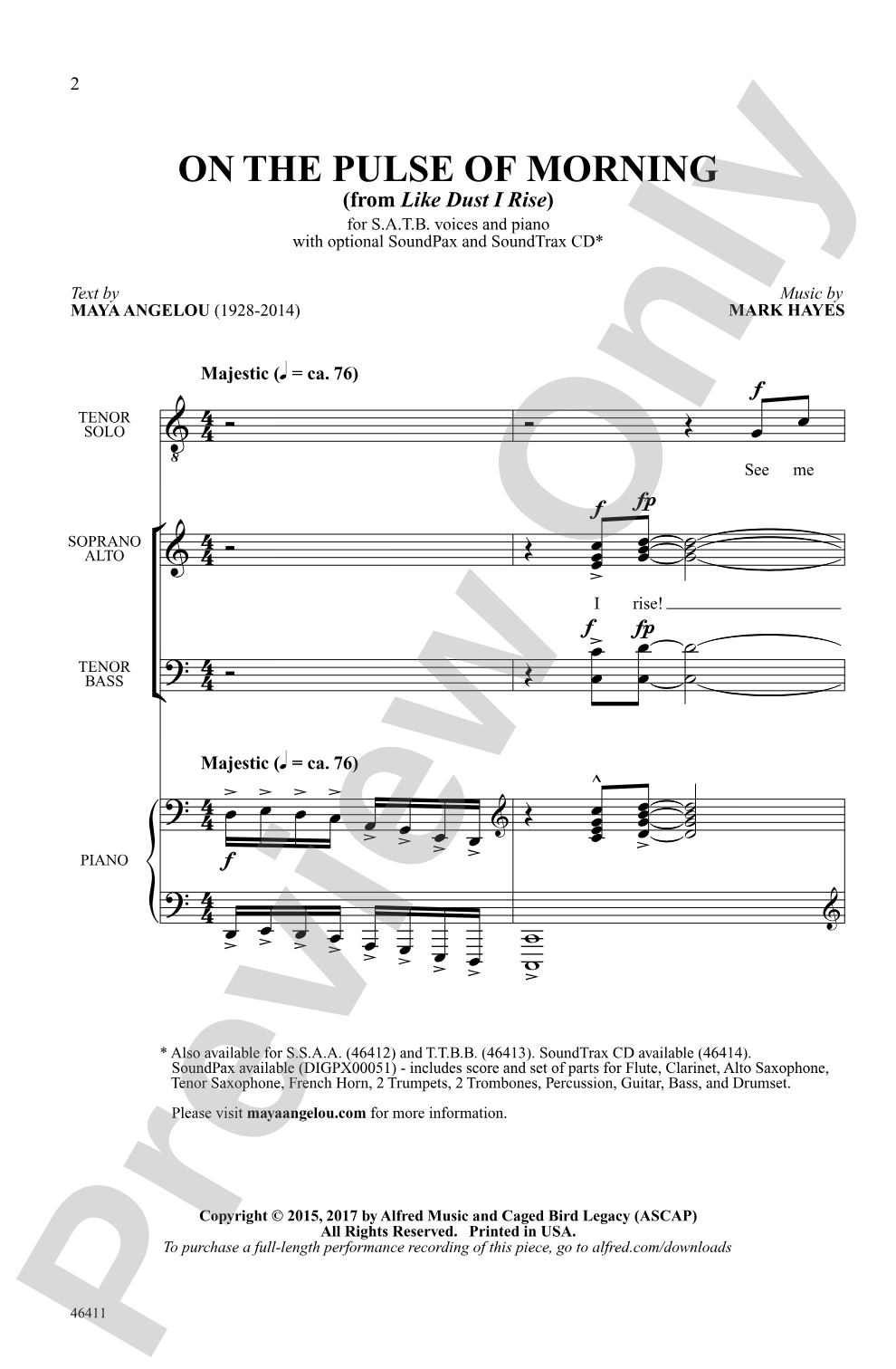
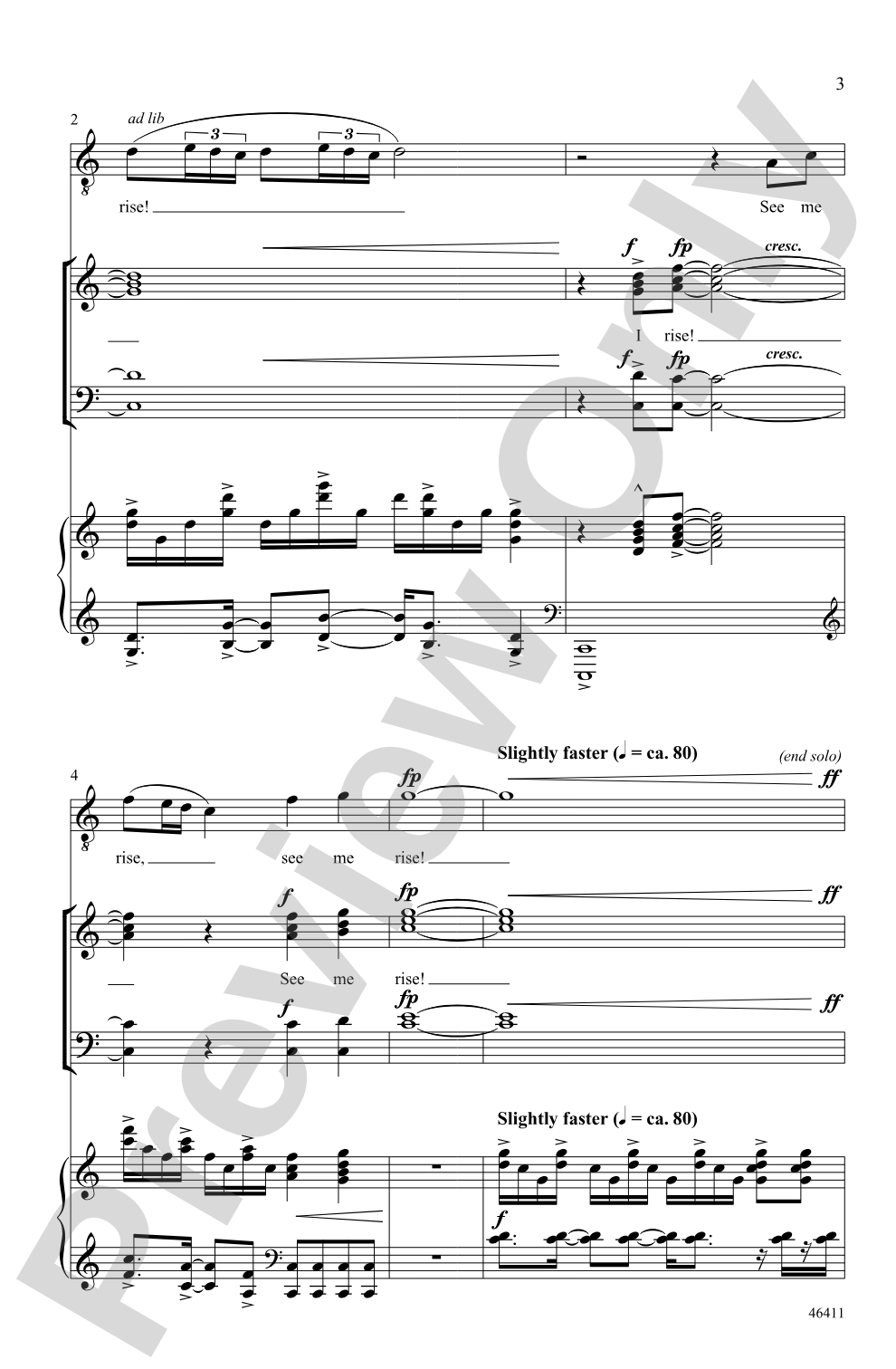
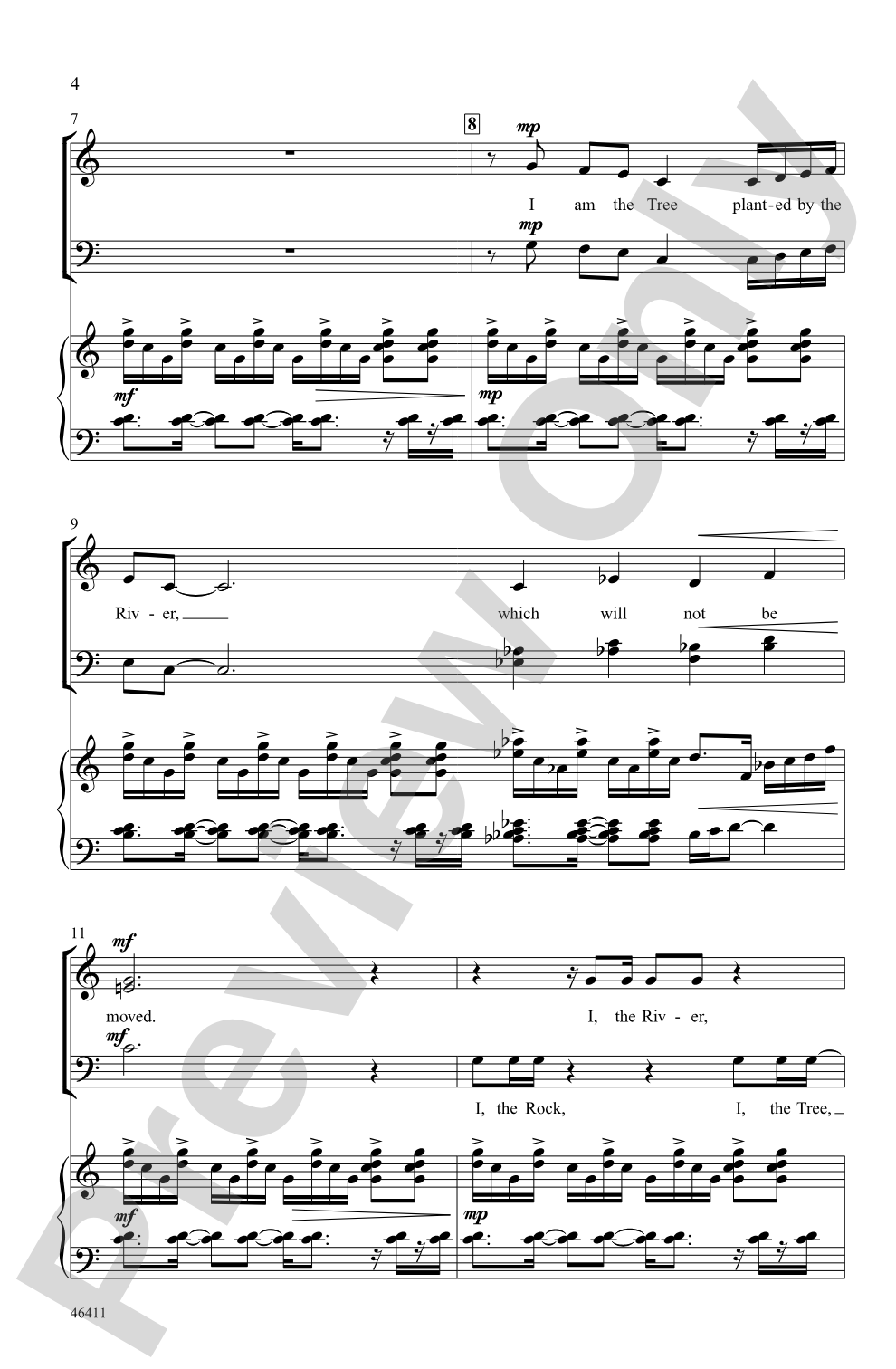

On the Pulse of Morning: SATB Choral Octavo
From Like Dust I Rise (A Choral Song Cycle)
Text by Maya Angelou, music by Mark Hayes
Item: 00-PO-0005650
$1.90
Minimum order quantity: 20 copies
Pickup currently not available
Related Items
On the Pulse of Morning: SoundTrax Digital Audio Download |
$29.99
|
View | |
On the Pulse of Morning: SSAA Choral Octavo |
$1.90
|
View | |
On the Pulse of Morning: TTBB Choral Octavo |
$1.90
|
View | |
On the Pulse of Morning: Choral SoundPax |
$50.00
|
View | |
On the Pulse of Morning: SATB Choral Octavo |
$1.90
|
View | |
On the Pulse of Morning: SSAA Choral Octavo |
$1.90
|
View | |
On the Pulse of Morning: TTBB Choral Octavo |
$1.90
|
View | |
On the Pulse of Morning: Choral Octavo SoundTrax CD |
$29.99
|
View | |
On the Pulse of Morning: Choral SoundPax |
$50.00
|
View |
Description
In 1993, Maya Angelou recited this poem at the inauguration of President Bill Clinton, making her the first African American and the first female poet to deliver an inaugural recitation. Subsequently, Angelou's audio recording of "On the Pulse of Morning" won a Grammy Award® for "Best Spoken Word" in 1994. Mark Hayes opens with a resounding "See Me Rise" choral fanfare before presenting the hope-filled latter half of the poem with rhythmic exuberance. This is the opening movement from the song cycle Like Dust I Rise.


On the Pulse of Morning: SATB Choral Octavo isn't in MakeMusic Cloud just yet...but it could be. Let us know you'd like to see it, and you'll help shape what comes next. In the meantime, start a free trial and dive into thousands of interactive titles your students can play along with today.
Request This Title
Tell us you want it.
Start Your Free Trial
Explore everything that's ready to play right now.
Sample Audio
1
Audio File
--:--
2
SATB Recording
--:--
Audio File
0:00
0:00
Sample Video
Additional Details
Series:
Alfred Choral Designs
Publisher:
Alfred Music
Page Count:
12
SKU:
00-PO-0005650
More about this title
About the Composer: Mark Hayes
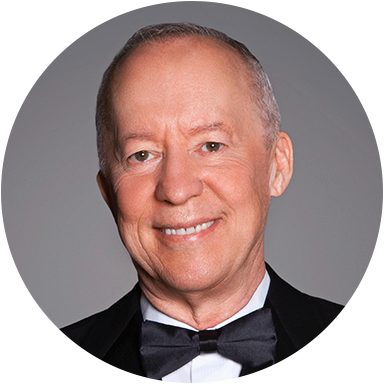
Mark Hayes has established himself as one of the most prolific composers in choral and instrumental music, with more than 1,750 published works across nearly every genre. A summa cum laude graduate of Baylor University's piano performance program, Hayes has conducted major ensembles at Lincoln Center, the National Cathedral, and Carnegie Hall, while maintaining an active career as a concert pianist and orchestrator.
His compositional reach spans sacred and secular contexts, from large-scale works like his Requiem (premiered at Lincoln Center in 2013 and subsequently performed at St. Ignatius Basilica in Rome) to intimate piano collections spanning gospel, jazz, and classical styles. Hayes received the Award for Exemplary Leadership in Christian Music from Baylor University in 2010, and his theatrical work Civil War Voices earned six awards at the Midtown International Theatre Festival. Based in Kansas City, Missouri, Hayes continues to compose and arrange across multiple mediums.
Why we love this
Hayes captures the defiant hope of Angelou's poem in music that demands vocal confidence and ensemble precision. The opening fanfare immediately establishes the piece's monumental scope, while the choral writing in the latter sections builds momentum through rhythmic drive rather than textural complexity, making it accessible for mid-to-advanced ensembles without sacrificing artistic depth. This is repertoire that gives singers something meaningful to sing about and performers something distinctive to own.
What to expect
The piece opens with architectural grandeur, a choral shout that feels like reclaiming space. What follows is forward-moving and bright, with rhythmic vitality that suggests resilience and possibility rather than struggle. Hayes sets Angelou's words to music that honors their gravity while never losing sight of the morning light the poem invokes.
Who it's for
This octavo works for treble to advanced mixed choirs seeking concert repertoire that connects to American poetry and contemporary history. It suits ensembles with secure intonation and rhythmic independence, capable of delivering both fanfare-like projection and sustained legit singing. Choirs programming Peace and Brotherhood themes, or marking significant civic occasions, will find this piece both musically and thematically resonant.
How to get the most out of it
- Shape the 'See Me Rise' fanfare with clear articulation and unified vowels; the energy here establishes the emotional arc for everything that follows.
- Let the recorded accompaniment anchor your ensemble's rhythmic confidence, particularly through the rhythmically exuberant sections that follow the opening.
- Balance the text intelligently across sections so that Angelou's language remains audible even as Hayes layers voices; over-blending obscures the poem's power.
- Attend to dynamic contrast between the fanfare and the hope-filled material; the shift in mood requires a genuine release of the opening's intensity.
How to use it
Program this as a concert opener or as the centerpiece of a set exploring American voices and social themes; its length and impact make it substantive enough to anchor a program without overshadowing other works. It pairs naturally with instrumental interludes or other poetry-based choral work, and its occasion of peace and brotherhood makes it fitting for spring concerts, community celebrations, or repertoire exploring contemporary American composition.
Skills your students will build
- Projecting text with authority while maintaining choral blend
- Executing rhythmic precision through syncopated and energetic passages
- Shaping dynamic contrast between fanfare-like sections and sustained legit singing
- Responding to recorded accompaniment without losing ensemble cohesion
- Interpreting contemporary choral writing that prioritizes text clarity over pure lyricism