
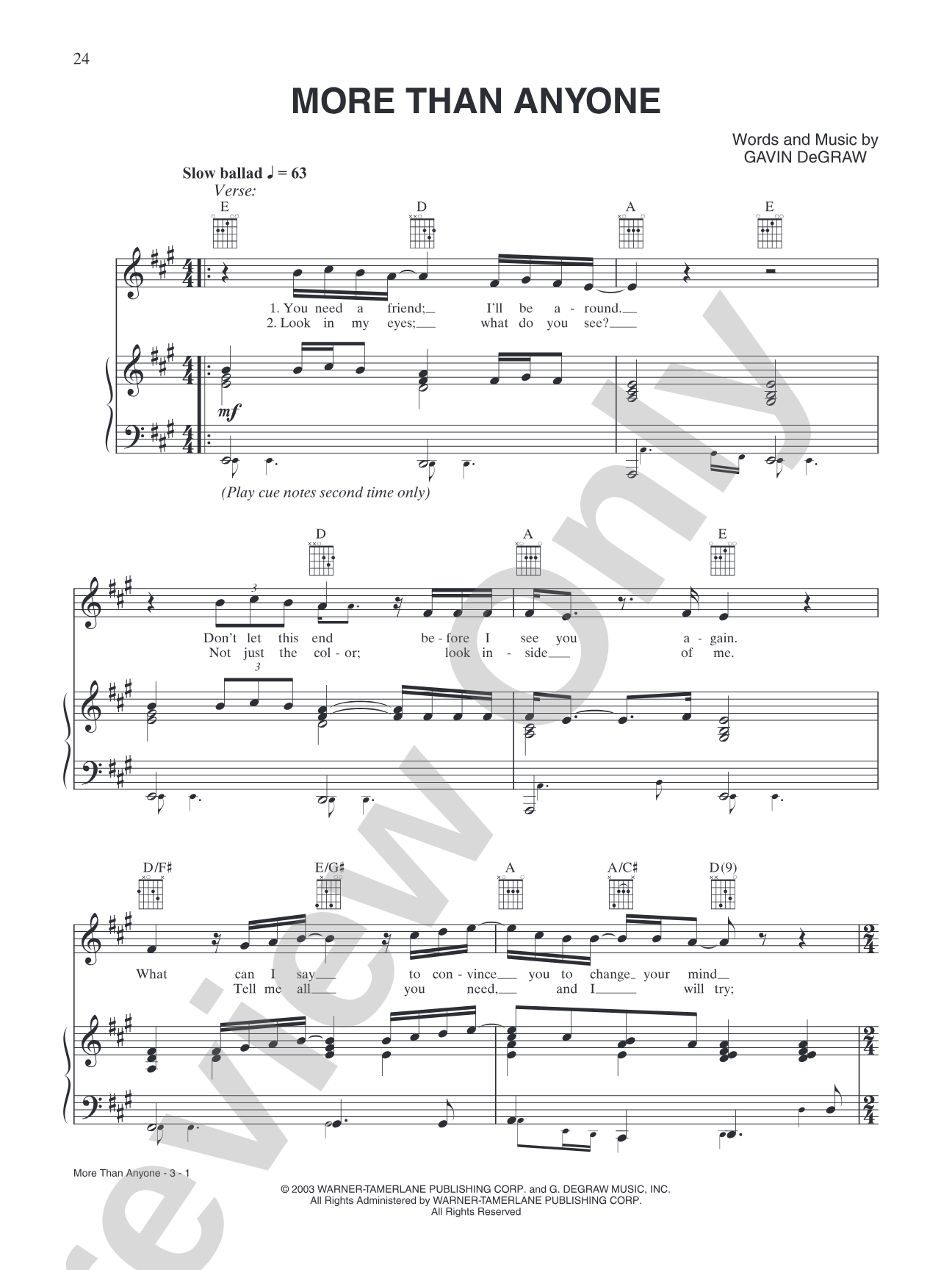

More Than Anyone: Piano/Vocal/Chords
Gavin DeGraw
Item: 00-PS-0013464
$4.99
One moment…
Related Items
In Love With a Girl: Piano/Vocal/Chords |
$5.99
|
View | |
Dancing Shoes: Piano/Vocal/Chords |
$5.99
|
View | |
Just Friends: Piano/Vocal/Chords |
$4.99
|
View | |
She Holds a Key: Piano/Vocal/Chords |
$4.99
|
View | |
Cheated On Me: Piano/Vocal/Chords |
$4.99
|
View | |
I Have You to Thank: Piano/Vocal/Chords |
$5.99
|
View | |
Free: Piano/Vocal/Chords |
$5.99
|
View | |
Run Every Time: Piano/Vocal/Chords |
$5.99
|
View | |
Spell It Out: Piano/Vocal/Chords |
$4.99
|
View | |
Sweeter: Piano/Vocal/Chords |
$4.99
|
View | |
Soldier: Piano/Vocal/Chords |
$5.99
|
View | |
You Know Where I'm at: Piano/Vocal/Chords |
$4.99
|
View | |
Follow Through: Piano/Vocal/Chords |
$5.99
|
View | |
Not Over You: Piano/Vocal/Chords |
$5.99
|
View |
Description
For Gavin DeGraw fans who play piano or guitar, this is the ultimate gift! This collectible songbook contains sheet music for 18 songs selected from DeGraw's first four studio albums, including two songs from Free and six from Sweeter that were not previously available in print. Titles: * Chariot * Follow Through * I Don't Want to Be * Just Friends * More Than Anyone * Cheated on Me * I Have You to Thank * In Love with a Girl * She Holds a Key * We Belong Together * Dancing Shoes * Free * Not Over You * Run Every Time * Soldier * Spell It Out * Sweeter * You Know Where I'm At.


More Than Anyone: Piano/Vocal/Chords isn't in MakeMusic Cloud just yet...but it could be. Let us know you'd like to see it, and you'll help shape what comes next. In the meantime, start a free trial and dive into thousands of interactive titles your students can play along with today.
Request This Title
Tell us you want it.
Start Your Free Trial
Explore everything that's ready to play right now.
Sample Audio
No sample audio found.
Sample Video
No sample videos found.
Additional Details
Series:
Sheet Music Collection
Publisher:
Alfred Music
Page Count:
108
SKU:
00-PS-0013464
More about this title
About the Composer: Gavin DeGraw
Gavin DeGraw emerged as a distinctive voice in early 2000s pop-rock, blending introspective songwriting with soulful vocals and rhythmic piano work. His first four albums established him as a skilled melodist and performer, earning a devoted following through both radio success and deep album cuts that resonate with musicians across genres.
Why we love this
This collection gives pianists and guitarists access to DeGraw's catalog on their own terms, with six tracks from Sweeter and two from Free appearing in print for the first time. The mix of radio hits and deeper album tracks means your students encounter genuine songwriting craft, not just familiar hooks, making this a genuinely rewarding choice for recitals and student repertoire.
What to expect
Honest and emotionally direct. DeGraw's songs balance vulnerability with rhythmic confidence, creating arrangements that feel both intimate and propulsive. Whether tackling a ballad or a groove-driven track, performers encounter melodic sophistication paired with accessible harmonic language.
Who it's for
Pianists, guitarists, and singers who want to perform DeGraw's work in recitals, coffeehouse settings, or ensemble contexts. This collection serves intermediate to advanced students with a genuine interest in contemporary pop-rock songwriting and artists who shaped the 2000s music landscape.
How to get the most out of it
- Study DeGraw's original recordings to absorb the rhythmic pocket and vocal phrasing; his piano parts often lock into groove-oriented accompaniments rather than strictly classical voicings.
- Balance the chord symbols with the staff notation. Guitar players should experiment with fingering patterns that maintain the intended rhythmic feel, especially in pieces driven by syncopation.
- When learning vocally, pay attention to where DeGraw's melodies sit outside traditional song expectations. His phrasing often stretches across bar lines, so mark those moments to avoid forcing lyrics into square phrases.
- Pianists should prioritize the rhythmic foundation over dense left-hand voicings; many of these arrangements work best when the groove stays crisp and the harmony supports the vocal line clearly.
How to use it
Feature these as solo recital pieces across multiple student performers, or build a thematic program around contemporary songwriters who blend classical training with pop sensibility. The range of tempos and moods within the collection means you can program contrasting sets without losing stylistic cohesion.
Skills your students will build
- Reading and performing chord symbols in pop-rock contexts
- Interpreting vocal phrasing that extends across barlines
- Balancing melodic clarity with rhythmic groove in accompaniment
- Translating arrangement notation across different instruments (piano to guitar voicings)
- Understanding contemporary song structure and harmonic progression