
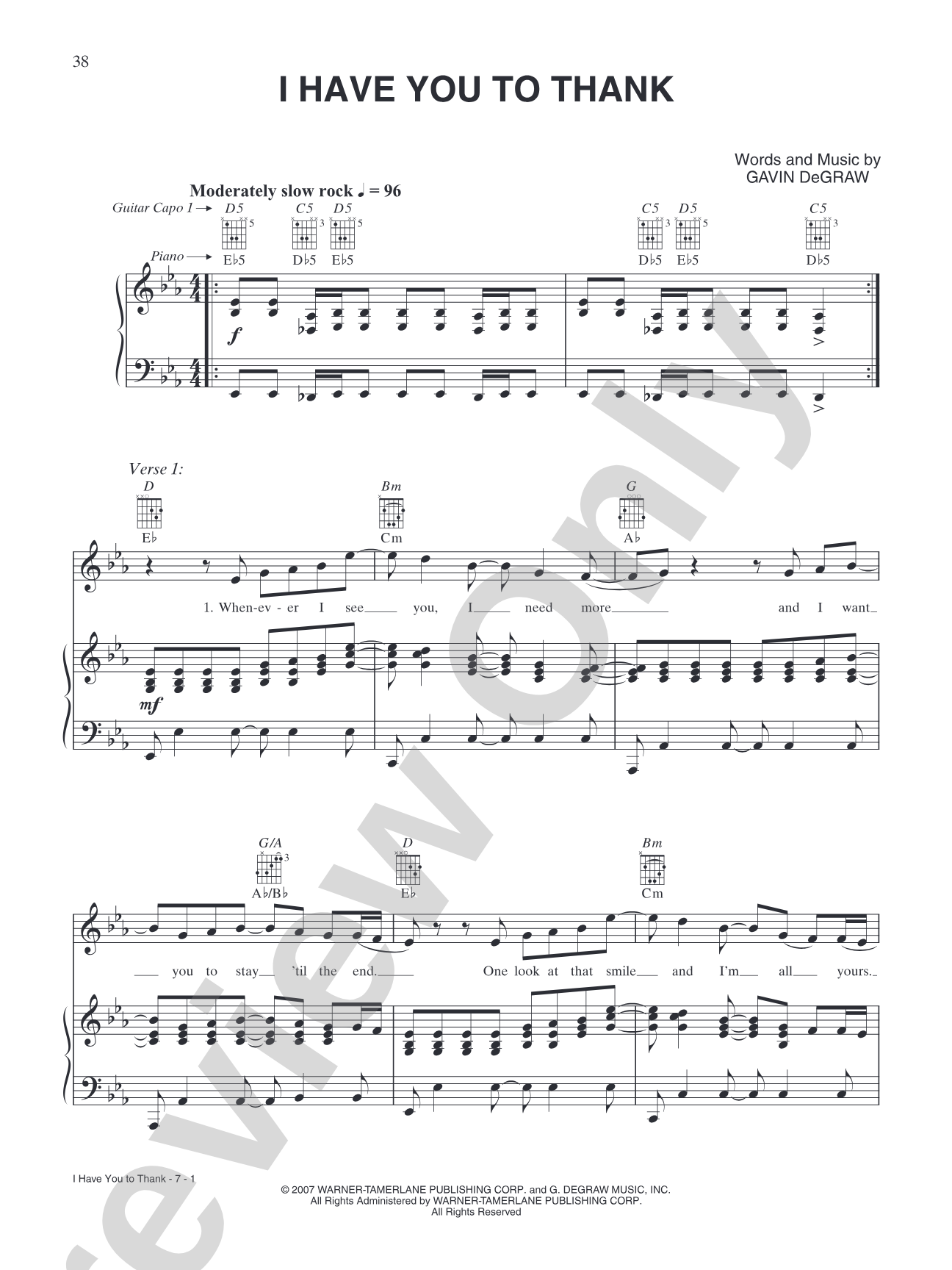
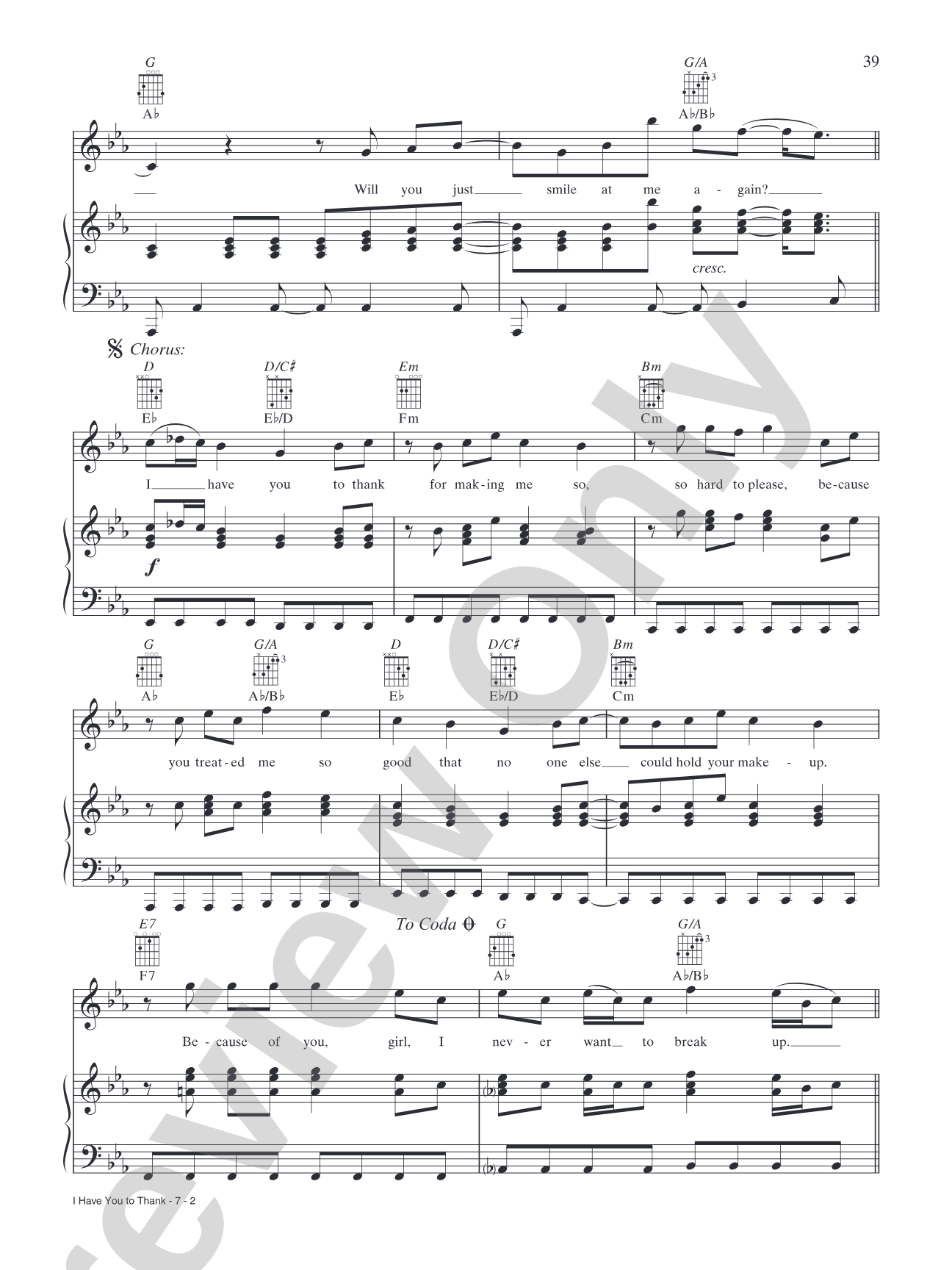

I Have You to Thank: Piano/Vocal/Chords
Gavin DeGraw
Item: 00-PS-0013468
$5.99
One moment…
Related Items
In Love With a Girl: Piano/Vocal/Chords |
$5.99
|
View | |
Dancing Shoes: Piano/Vocal/Chords |
$5.99
|
View | |
More Than Anyone: Piano/Vocal/Chords |
$4.99
|
View | |
Just Friends: Piano/Vocal/Chords |
$4.99
|
View | |
She Holds a Key: Piano/Vocal/Chords |
$4.99
|
View | |
Cheated On Me: Piano/Vocal/Chords |
$4.99
|
View | |
Free: Piano/Vocal/Chords |
$5.99
|
View | |
Run Every Time: Piano/Vocal/Chords |
$5.99
|
View | |
Spell It Out: Piano/Vocal/Chords |
$4.99
|
View | |
Sweeter: Piano/Vocal/Chords |
$4.99
|
View | |
Soldier: Piano/Vocal/Chords |
$5.99
|
View | |
You Know Where I'm at: Piano/Vocal/Chords |
$4.99
|
View | |
Follow Through: Piano/Vocal/Chords |
$5.99
|
View | |
Not Over You: Piano/Vocal/Chords |
$5.99
|
View |
Description
For Gavin DeGraw fans who play piano or guitar, this is the ultimate gift! This collectible songbook contains sheet music for 18 songs selected from DeGraw's first four studio albums, including two songs from Free and six from Sweeter that were not previously available in print. Titles: * Chariot * Follow Through * I Don't Want to Be * Just Friends * More Than Anyone * Cheated on Me * I Have You to Thank * In Love with a Girl * She Holds a Key * We Belong Together * Dancing Shoes * Free * Not Over You * Run Every Time * Soldier * Spell It Out * Sweeter * You Know Where I'm At.


I Have You to Thank: Piano/Vocal/Chords isn't in MakeMusic Cloud just yet...but it could be. Let us know you'd like to see it, and you'll help shape what comes next. In the meantime, start a free trial and dive into thousands of interactive titles your students can play along with today.
Request This Title
Tell us you want it.
Start Your Free Trial
Explore everything that's ready to play right now.
Sample Audio
No sample audio found.
Sample Video
No sample videos found.
Additional Details
Series:
Sheet Music Collection
Publisher:
Alfred Music
Page Count:
108
SKU:
00-PS-0013468
More about this title
About the Composer: Gavin DeGraw
Gavin DeGraw emerged as a singer-songwriter in the early 2000s with a distinctive blend of pop sensibility and rock instrumentation. His early albums established him as a skilled melodist and lyricist capable of crafting both introspective ballads and energetic uptempo songs, earning him recognition across multiple genres and a devoted fanbase.
As a composer, DeGraw writes music that balances accessibility with emotional depth, often drawing on personal narrative and relatable themes. His catalog demonstrates strong songwriting fundamentals: clear harmonic progression, memorable hooks, and vocal lines that sit naturally across a range of voices.
Why we love this
This collection bundles 18 songs across nearly 110 pages, including six tracks from Sweeter that have never been available in sheet music before, making it an essential resource for pianists and guitarists who want to learn contemporary pop-rock songwriting. The variety of tempos, keys, and lyrical approaches means students encounter real compositional choices: how to build energy in uptempo tracks like "Dancing Shoes," how to support intimate moments in ballads like "In Love with a Girl," and how chord voicings and accompaniment patterns shift the emotional weight of a song. For music teachers, it's a practical way to introduce students to modern songwriting without relying solely on covers of chart hits.
What to expect
These songs sit in the emotional center of pop-rock: honest without being overly sentimental, energetic without aggression. The arrangements balance accessibility (mostly diatonic harmony, clear song forms) with enough sophistication to reward close listening, whether you're learning them for the first time or exploring them more deeply as a performer.
Who it's for
Piano and guitar students who listen to contemporary pop-rock and want to learn directly from songs they already know. Vocalists preparing for auditions, recitals, or performance classes will find well-crafted accompaniments and singable melodies across a range of tempos and moods.
How to get the most out of it
- Study the chord voicings in the piano part before deciding how to voice them on guitar; DeGraw's arrangements often favor quartal and slash chords that translate differently across the two instruments.
- Pay attention to the rhythmic feels embedded in the piano accompaniment. Songs like "Free" and "Not Over You" have distinctive groove patterns that anchor the vocal melody, so locking those in first gives the vocalist a stable foundation.
- Experiment with dynamic shaping around lyrical phrases rather than structural sections. Many of these songs rely on subtle intensity building within a verse, so resist the urge to save all the energy for a chorus.
- If singing and playing simultaneously, map out a few versions: one where the accompaniment carries harmonic complexity, and one where you simplify it to stay connected to your own vocal line.
How to use it
Incorporate individual songs as repertoire choices for student recitals, especially for intermediate pianists and guitarists exploring contemporary songwriting. In a choral or vocal jazz setting, use these arrangements as jumping-off points for student-led covers or as supplementary material when studying how pop composers shape melody and harmonic progression. The collection also works well in music literacy courses where students can analyze chord changes and song structure across multiple examples from a single writer.
Skills your students will build
- Reading chord symbols and lead sheet notation
- Translating piano voicings to guitar chord shapes and positions
- Balancing melody and accompaniment when singing and playing simultaneously
- Analyzing song form and harmonic progression in contemporary pop-rock
- Interpreting rhythmic feels and groove patterns from written notation
- Building dynamic expression within verse and chorus structures