
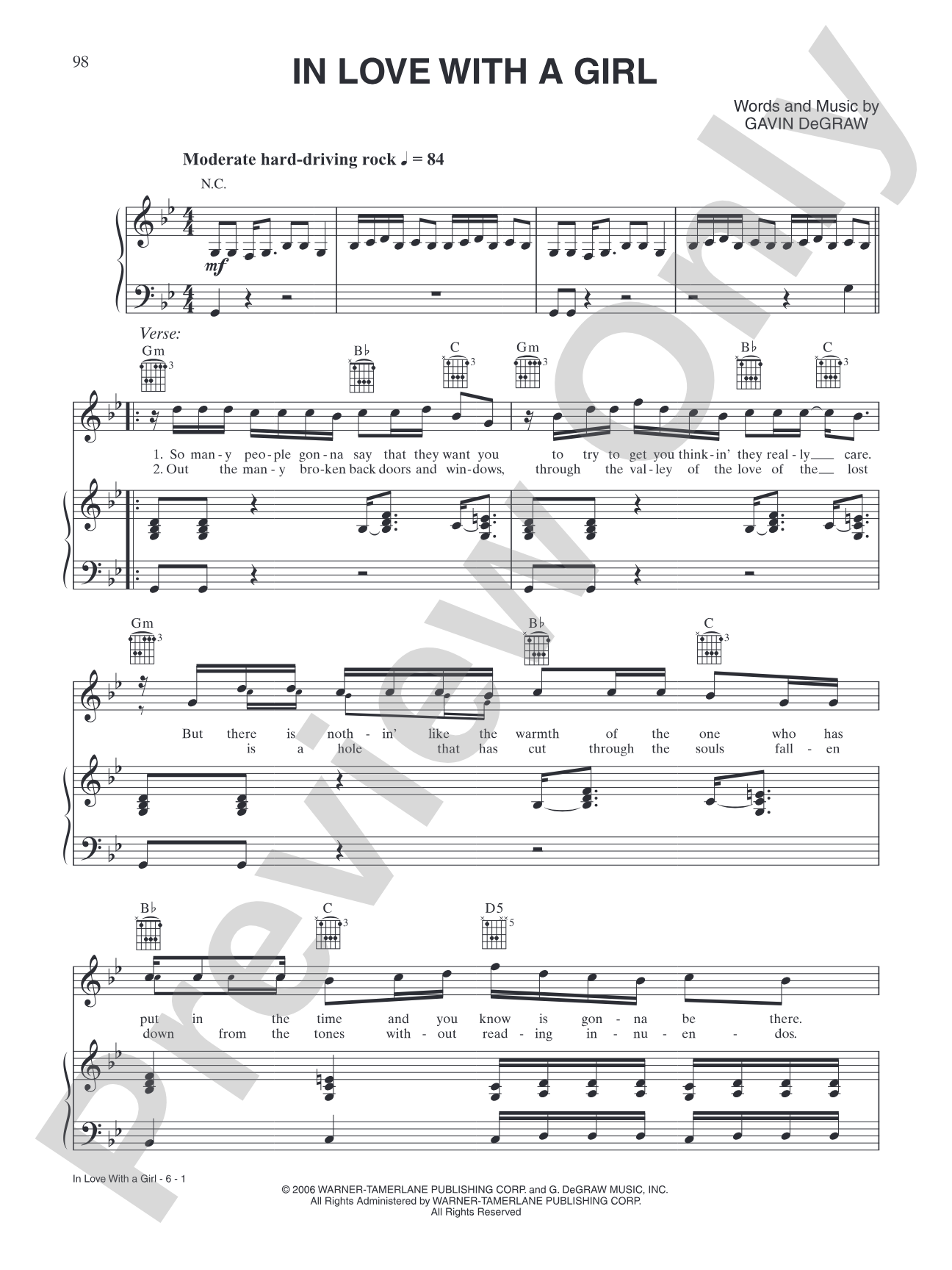
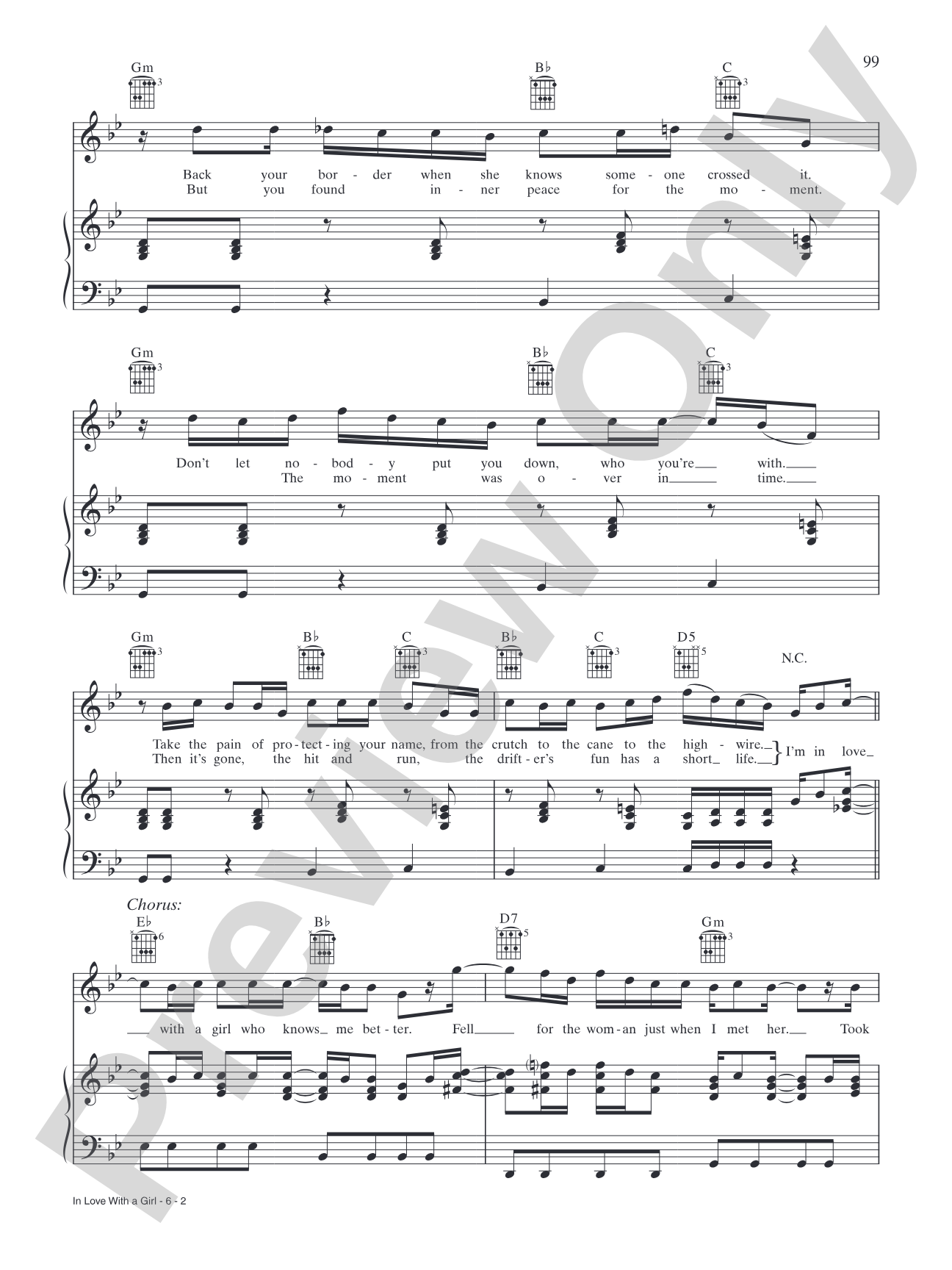

In Love With a Girl: Piano/Vocal/Chords
Gavin DeGraw
Item: 00-PS-0010927
$5.99
One moment…
Related Items
Dancing Shoes: Piano/Vocal/Chords |
$5.99
|
View | |
More Than Anyone: Piano/Vocal/Chords |
$4.99
|
View | |
Just Friends: Piano/Vocal/Chords |
$4.99
|
View | |
She Holds a Key: Piano/Vocal/Chords |
$4.99
|
View | |
Cheated On Me: Piano/Vocal/Chords |
$4.99
|
View | |
I Have You to Thank: Piano/Vocal/Chords |
$5.99
|
View | |
Free: Piano/Vocal/Chords |
$5.99
|
View | |
Run Every Time: Piano/Vocal/Chords |
$5.99
|
View | |
Spell It Out: Piano/Vocal/Chords |
$4.99
|
View | |
Sweeter: Piano/Vocal/Chords |
$4.99
|
View | |
Soldier: Piano/Vocal/Chords |
$5.99
|
View | |
You Know Where I'm at: Piano/Vocal/Chords |
$4.99
|
View | |
Follow Through: Piano/Vocal/Chords |
$5.99
|
View | |
Not Over You: Piano/Vocal/Chords |
$5.99
|
View |
Description
For Gavin DeGraw fans who play piano or guitar, this is the ultimate gift! This collectible songbook contains sheet music for 18 songs selected from DeGraw's first four studio albums, including two songs from Free and six from Sweeter that were not previously available in print. Titles: * Chariot * Follow Through * I Don't Want to Be * Just Friends * More Than Anyone * Cheated on Me * I Have You to Thank * In Love with a Girl * She Holds a Key * We Belong Together * Dancing Shoes * Free * Not Over You * Run Every Time * Soldier * Spell It Out * Sweeter * You Know Where I'm At.


In Love With a Girl: Piano/Vocal/Chords isn't in MakeMusic Cloud just yet...but it could be. Let us know you'd like to see it, and you'll help shape what comes next. In the meantime, start a free trial and dive into thousands of interactive titles your students can play along with today.
Request This Title
Tell us you want it.
Start Your Free Trial
Explore everything that's ready to play right now.
Sample Audio
No sample audio found.
Sample Video
No sample videos found.
Additional Details
Series:
Sheet Music Collection
Publisher:
Alfred Music
Page Count:
108
SKU:
00-PS-0010927
More about this title
About the Composer: Gavin DeGraw
Gavin DeGraw emerged in the early 2000s as a distinctive voice in pop-rock, blending soul influences with contemporary songwriting. His early albums established him as a performer-composer with a gift for emotionally direct melodies and lean, effective arrangements that translate well to acoustic settings.
For music educators and students, DeGraw's catalog offers accessible yet substantive material. His songs feature strong vocal lines, functional harmony, and production simplicity that make them ideal for learning how contemporary pop songs are structured and how to adapt them for different instrumental and vocal combinations.
Why we love this
This collection captures some of DeGraw's strongest early material in one volume, including several tracks that have never been available in print before. The songs work equally well on piano or guitar, making it a genuinely useful resource for students who want to learn contemporary music with real commercial resonance and strong melodic writing.
What to expect
Emotionally open and melodically confident. DeGraw's writing favors direct, singable lines and honest lyrical content, creating songs that feel conversational one moment and soaring the next. There's a soul-pop sensibility running through most of these tracks, even as they sit firmly in contemporary radio formats.
Who it's for
Pianists and guitarists learning contemporary pop-rock repertoire, especially students who want to play songs they actually know and love. Singer-songwriters developing their own arrangements will find clear models for how to adapt full-band productions into intimate acoustic settings.
How to get the most out of it
- Treat the chord symbols as a guide rather than a rule; many of these songs were arranged for full production, so experiment with voicings and substitutions that feel natural on your instrument.
- Focus on the vocal melody first, then build support around it. DeGraw's songs prioritize the lyric and the hook, so make sure those elements breathe even when you're filling in the harmonic texture.
- Listen to the original recordings to understand the dynamic arc of each song, especially how verses sit lower in the mix and how choruses open up. That shaping translates to acoustic settings.
- Don't oversaturate the arrangement with notes. These songs often gain power from restraint; strong single-note bass lines and well-placed voicings will communicate the songs more effectively than dense playing.
How to use it
Feature a student recital or coffeehouse concert around DeGraw's material, either as a full set or mixed with other contemporary artists. These songs work equally well as solo pieces for a pianist or guitarist and as duets between a vocalist and instrumentalist, giving you flexibility in how you structure performance opportunities.
Skills your students will build
- Reading and interpreting chord symbols in contemporary popular music
- Transcribing production arrangements into functional acoustic arrangements
- Balancing melody and harmony in vocal-accompanied pieces
- Understanding contemporary song form (verse, pre-chorus, chorus, bridge structures)
- Developing interpretive choices within a published lead sheet