
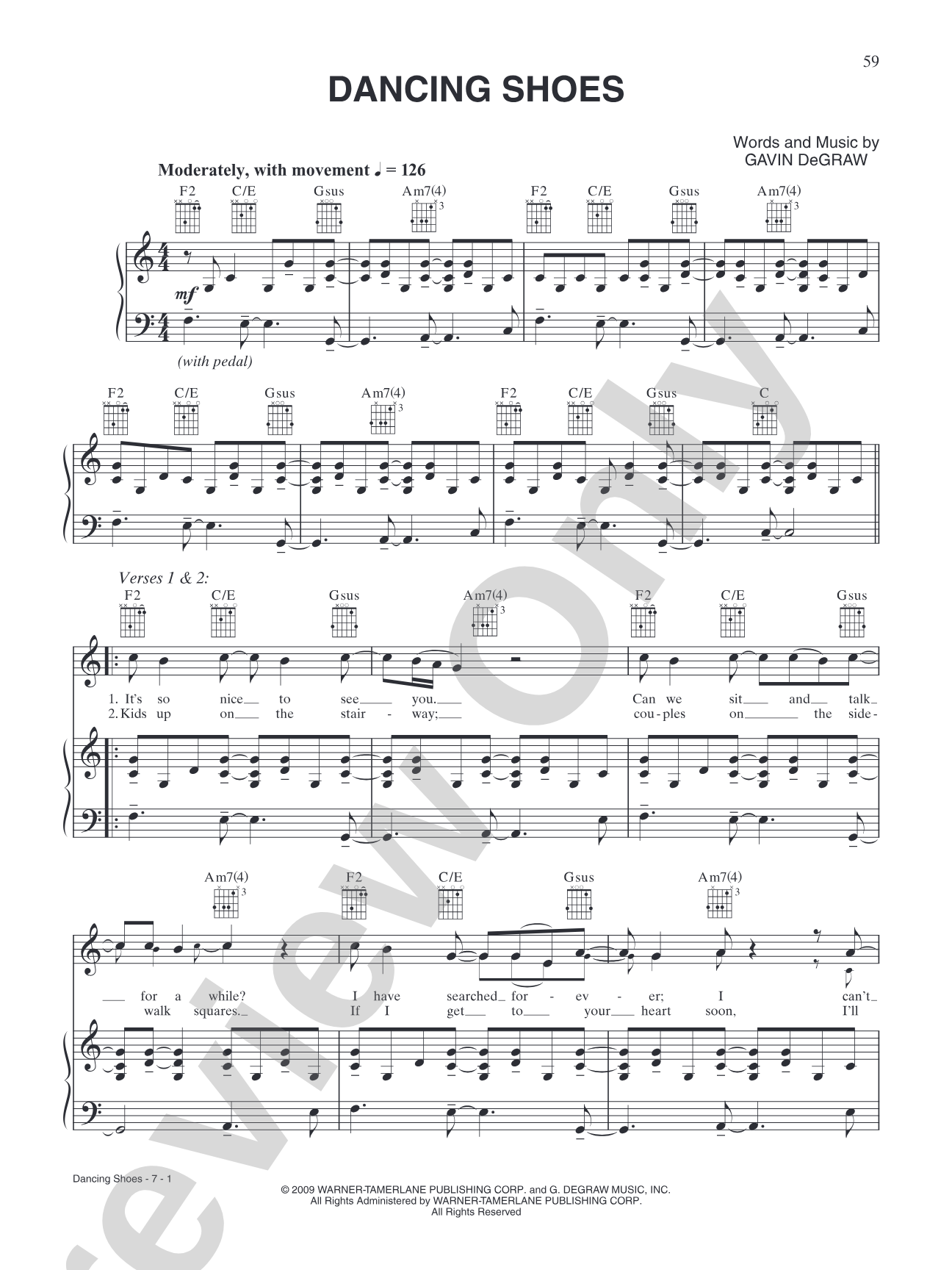
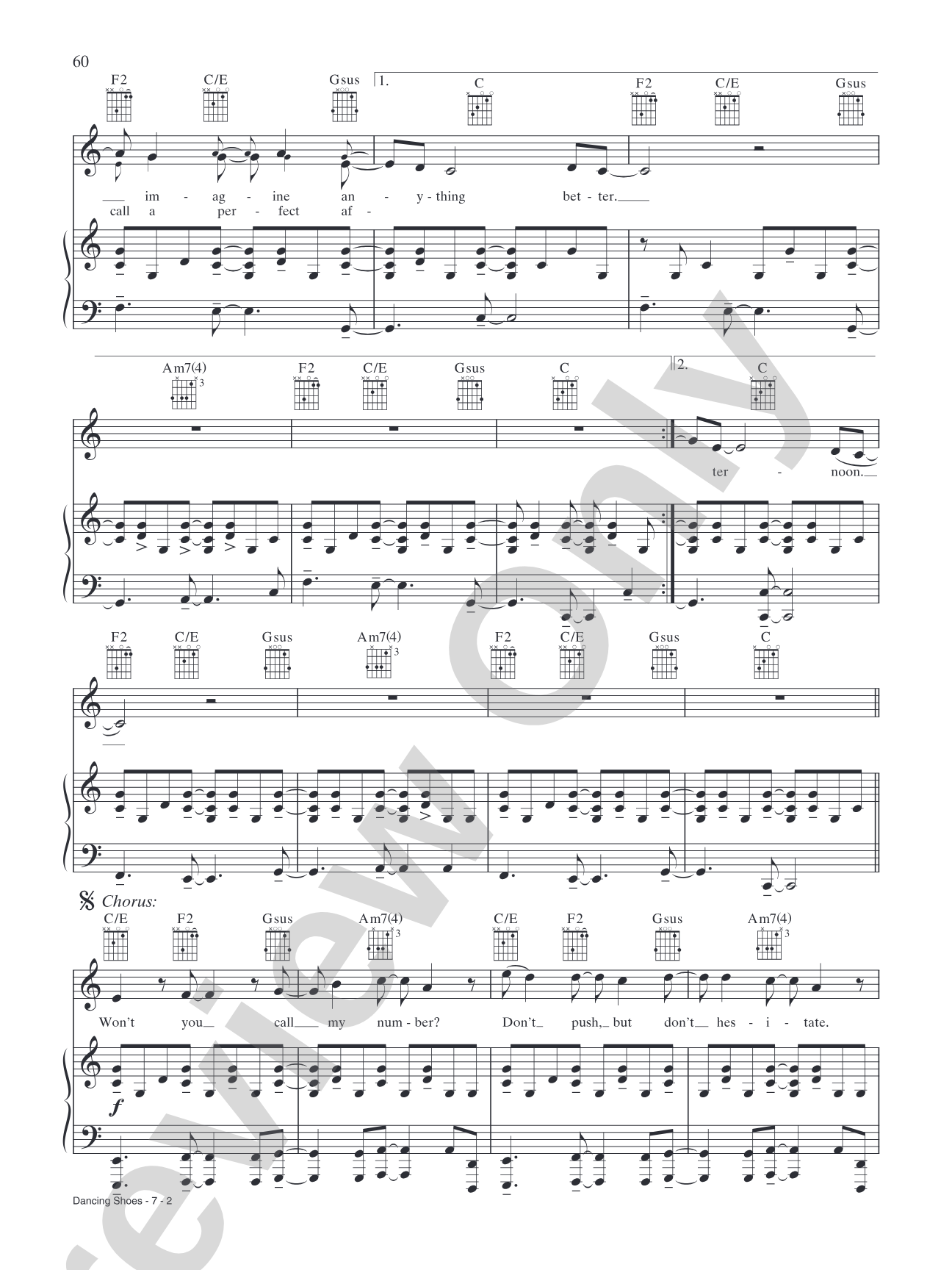

Dancing Shoes: Piano/Vocal/Chords
Gavin DeGraw
Item: 00-PS-0013463
$5.99
One moment…
Related Items
In Love With a Girl: Piano/Vocal/Chords |
$5.99
|
View | |
More Than Anyone: Piano/Vocal/Chords |
$4.99
|
View | |
Just Friends: Piano/Vocal/Chords |
$4.99
|
View | |
She Holds a Key: Piano/Vocal/Chords |
$4.99
|
View | |
Cheated On Me: Piano/Vocal/Chords |
$4.99
|
View | |
I Have You to Thank: Piano/Vocal/Chords |
$5.99
|
View | |
Free: Piano/Vocal/Chords |
$5.99
|
View | |
Run Every Time: Piano/Vocal/Chords |
$5.99
|
View | |
Spell It Out: Piano/Vocal/Chords |
$4.99
|
View | |
Sweeter: Piano/Vocal/Chords |
$4.99
|
View | |
Soldier: Piano/Vocal/Chords |
$5.99
|
View | |
You Know Where I'm at: Piano/Vocal/Chords |
$4.99
|
View | |
Follow Through: Piano/Vocal/Chords |
$5.99
|
View | |
Not Over You: Piano/Vocal/Chords |
$5.99
|
View |
Description
For Gavin DeGraw fans who play piano or guitar, this is the ultimate gift! This collectible songbook contains sheet music for 18 songs selected from DeGraw's first four studio albums, including two songs from Free and six from Sweeter that were not previously available in print. Titles: * Chariot * Follow Through * I Don't Want to Be * Just Friends * More Than Anyone * Cheated on Me * I Have You to Thank * In Love with a Girl * She Holds a Key * We Belong Together * Dancing Shoes * Free * Not Over You * Run Every Time * Soldier * Spell It Out * Sweeter * You Know Where I'm At.


Dancing Shoes: Piano/Vocal/Chords isn't in MakeMusic Cloud just yet...but it could be. Let us know you'd like to see it, and you'll help shape what comes next. In the meantime, start a free trial and dive into thousands of interactive titles your students can play along with today.
Request This Title
Tell us you want it.
Start Your Free Trial
Explore everything that's ready to play right now.
Sample Audio
No sample audio found.
Sample Video
No sample videos found.
Additional Details
Series:
Sheet Music Collection
Publisher:
Alfred Music
Page Count:
108
SKU:
00-PS-0013463
More about this title
About the Composer: Gavin DeGraw
Gavin DeGraw emerged in the early 2000s as a distinctive voice in pop-rock, known for emotionally direct songwriting and multi-instrumental capability. His first four studio albums established him as a songwriter who blends piano-driven arrangements with conversational lyrics, earning him a devoted following and multiple chart successes.
For music students and educators, DeGraw's catalog offers accessible yet substantive material. His songs demonstrate clear harmonic progression, singable melodies, and arrangements that work equally well on piano or guitar, making them ideal for classroom performance and personal study.
Why we love this
This collection gives pianists and guitarists immediate access to songs their students actually want to learn. The mix of tempo and mood across 18 tracks means you can pull repertoire for a variety of classroom moments, from energetic concert selections to reflective practice material.
What to expect
DeGraw's music carries emotional immediacy without melodrama. These arrangements balance introspection with groove, inviting players to explore both the technical demands of the accompaniment and the conversational weight of the melodies. The collection spans multiple moods, from tender and reflective to propulsive and celebratory.
Who it's for
This book speaks directly to pianists and guitarists who gravitate toward contemporary pop-rock and want to expand their performance repertoire with songs they recognize. It's equally valuable for music students building chord reading skills and musicians preparing recital or classroom performance material.
How to get the most out of it
- Use the chord symbols above the staff to experiment with different voicings on guitar or keyboard; DeGraw's arrangements often benefit from fuller, jazz-influenced harmonies beyond basic triads.
- Pay attention to the vocal melody line even when playing an instrumental arrangement; these melodies are conversational and sometimes asymmetrical, so singing through the progression first helps capture the song's phrasing.
- Balance the independence of left-hand patterns on piano, particularly in uptempo tracks where rhythmic lock matters as much as harmonic accuracy.
- Explore the optional decorative notes and passing tones in the published score; they're often integral to the character rather than elaboration.
How to use it
Select individual titles for student recitals, ensemble warm-ups, or performance classes where contemporary material engages learners. The range of tempos and styles makes it possible to program contrasting pieces back-to-back or to revisit the same song across multiple seasons as student technique develops.
Skills your students will build
- Reading lead sheets with piano/vocal/chord notation
- Chord symbol interpretation and voicing choices on keyboard and guitar
- Maintaining rhythmic independence between melody and accompaniment
- Phrasing and interpretation of conversational vocal lines
- Transposing and adapting songs to different keys and instruments