Little Tree Cover Image

Little Tree: SSA Choral Octavo

$1.75 USD
Sale price  $1.75 USD Regular price 
Skip to product information
Little Tree Cover Image

Little Tree: SSA Choral Octavo

Inspired by a poem by e. e. cummings. Words by Sally K. Albrecht, music by Sally K. Albrecht and Jay Althouse

Item: 00-27346

makemusic Cloud badge

Need it now?

Buy Digital Version
$1.75
Shipped

One moment…

Description
A charming and unique Christmas piece with lyrics inspired by a famous e. e. cummings poem. "Little silent Christmas tree, were you sorry to leave the forest?" The music, taking its cue from the text, is beautiful in its simplicity. An elegant change of pace for your holiday concerts. Features an optional solo or small group section.

Don't just read it, hear it, play along with it, and watch your students grow with it. In MakeMusic Cloud, Little Tree: SSA Choral Octavo comes alive with professional accompaniment, adjustable tempo, and built-in practice tools that turn solo practice into real progress.

Sample Pages

Sample Audio
0:00
0:00
Sample Video
Additional Details
Series: Alfred Choral Designs
Publisher: Alfred Music
Page Count: 8
UPC: 038081296067
SKU: 00-27346

More about this title

About the Composer: Sally K. Albrecht
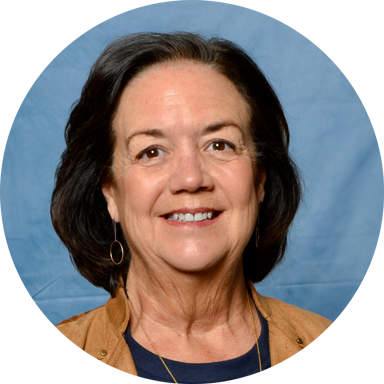
Sally K. Albrecht

Sally K. Albrecht has shaped American choral music for decades as a composer, conductor, and clinician whose name appears on over 600 published choral works. Since 1987, she has received annual ASCAP Special Music Awards, and her conducting has been sought at festivals nationwide, from Lincoln Center to Carnegie Hall to The Kennedy Center. Her deep expertise in choral sound and pedagogy comes from three decades directing choral and vocal publications at major educational music publishers, most recently Alfred Music, combined with teaching appointments at Oakland University, Jersey City State College, and Meredith College.

Albrecht holds degrees from Rollins College (B.A. in Music and Theater, 1976), the University of Miami (M.A. in Drama, 1977, and M.M. in Accompanying, 1979). Her leadership extends beyond composition; she has chaired the Board of Trustees for the Omicron Delta Kappa National Leadership Honor Society and received their "Pillar of Leadership" award. In 2021, both the University of Miami Frost School of Music and Rollins College honored her as a Distinguished Alumna. She lives in Wake Forest, North Carolina, with her husband, composer and arranger Jay Althouse.

Why we love this

Albrecht and Althouse have crafted a December concert piece that sidesteps the predictable by anchoring itself in e. e. cummings' quiet meditation on nature and loss. The lyrical simplicity of the setting allows SSA voices to shine without technical overload, making it accessible for younger or less experienced choirs while remaining genuinely moving. An optional solo or small group section adds programming flexibility and gives singers a moment of intimate expression within the larger ensemble texture.

What to expect

There is something both sorrowful and tender in this setting of Cummings' poem. The music unfolds with the spare elegance of a winter landscape, inviting singers and listeners into an intimate space where a small tree's quiet question becomes universally poignant. You emerge from this piece not jolly, but genuinely moved.

Who it's for

This piece works beautifully for SSA choirs of all experience levels, from middle school through community ensembles. Directors seeking secular Christmas literature that respects their singers' musicality and their audience's intelligence will find a welcome alternative to traditional holiday fare.

How to get the most out of it

  • Honor the stillness in the text by resisting the urge to rush tempos; the elegance of this piece lives in space and breath, not momentum.
  • Balance the optional solo carefully in rehearsal; it should feel like a natural voice emerging from the ensemble, not a spotlight moment that breaks the piece's reflective quality.
  • Shape the SSA voicing with attention to blend in the middle voice; this piece's beauty depends on seamless sonority across the three parts.
  • Experiment with dynamic restraint in performance; the poem's quietness invites vulnerability that can be lost if the piece is sung too loudly or with excessive expression.

How to use it

Position this piece as a turning point in your holiday concert, perhaps after festive or energetic numbers. Its reflective quality makes it an ideal anchor for the second half of a program, or it can stand alone as a meaningful closer for an all-ages audience. The eight-page format suggests it will hold listeners' attention without demanding extensive rehearsal time.

Skills your students will build

  • Legato singing and sustained phrase control across long-lined melodies
  • Blend and balance in SSA voicing, particularly in the middle register
  • Text interpretation in secular, literary contexts
  • Restrained, intentional dynamic control
  • Handling optional solo or small group sections within ensemble context

You May Also Like
