
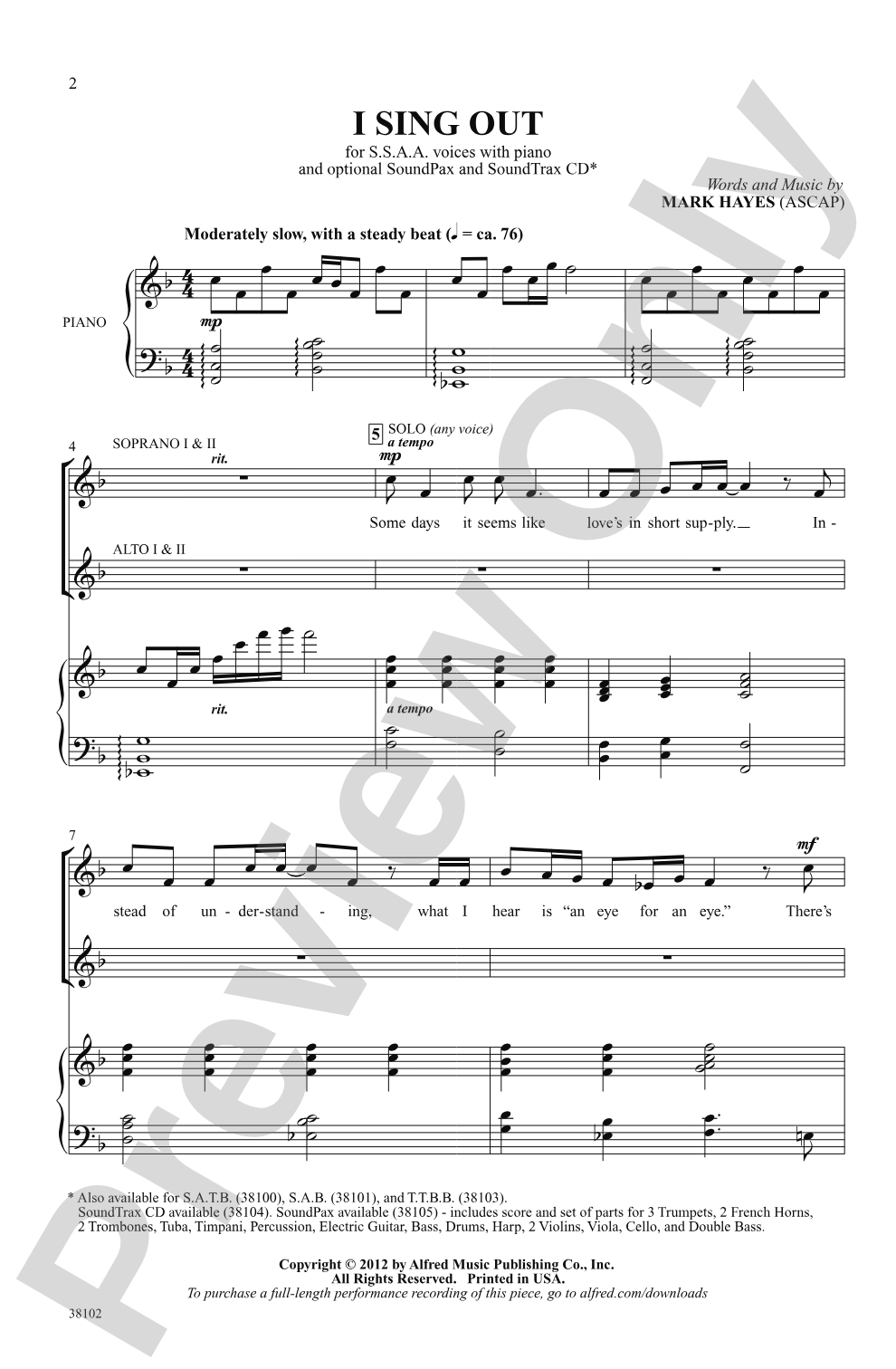
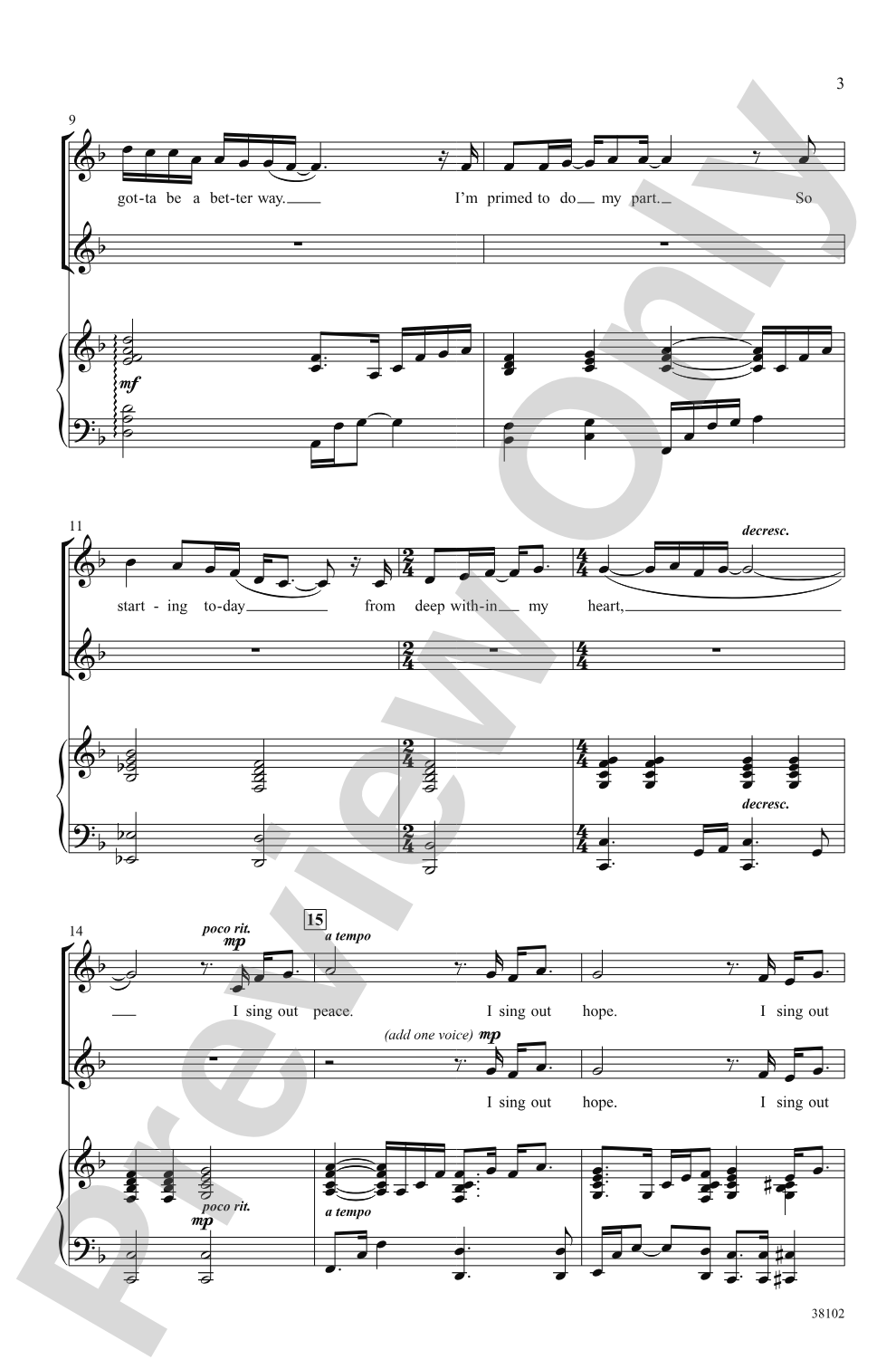
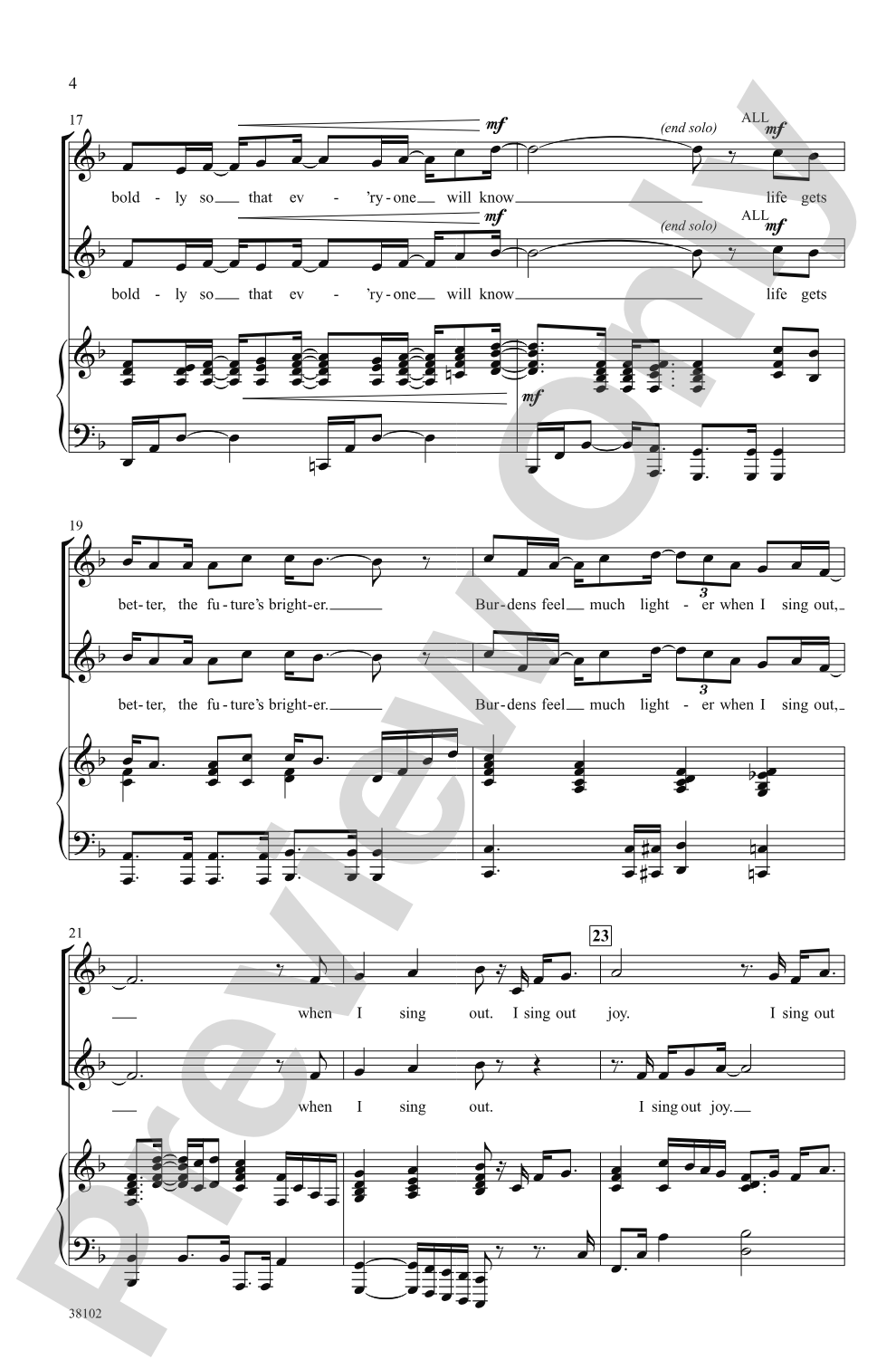

I Sing Out: SSAA Choral Octavo
Words and music by Mark Hayes
Item: 00-PO-0001388
$1.95
Minimum order quantity: 20 copies
Pickup currently not available
Related Items
I Sing Out: SoundTrax Digital Audio Download |
$29.99
|
View | |
I Sing Out: SATB Choral Octavo |
$2.20
|
View | |
I Sing Out: SAB Choral Octavo |
$2.95
|
View | |
I Sing Out: TTBB Choral Octavo |
$1.95
|
View | |
I Sing Out: Choral SoundPax |
$55.00
|
View | |
I Sing Out: SATB Choral Octavo |
$2.20
|
View | |
I Sing Out: SAB Choral Octavo |
$2.95
|
View | |
I Sing Out: SSAA Choral Octavo |
$1.95
|
View | |
I Sing Out: TTBB Choral Octavo |
$1.95
|
View | |
I Sing Out: Choral Octavo SoundTrax CD |
$29.99
|
View | |
I Sing Out: Choral SoundPax |
$55.00
|
View |
Description
From the sensitive opening solo, through the captivating textured polyphony, to the final choral refrain, this contemporary powerhouse teaches an inspiring lesson about the strength of song. "From the very best part of who I am, I sing out!"


I Sing Out: SSAA Choral Octavo isn't in MakeMusic Cloud just yet...but it could be. Let us know you'd like to see it, and you'll help shape what comes next. In the meantime, start a free trial and dive into thousands of interactive titles your students can play along with today.
Request This Title
Tell us you want it.
Start Your Free Trial
Explore everything that's ready to play right now.
Sample Audio
1
Audio File
--:--
0:00
0:00
Sample Video
No sample videos found.
Additional Details
Series:
Alfred Choral Designs
Publisher:
Alfred Music
Page Count:
16
SKU:
00-PO-0001388
More about this title
About the Composer: Mark Hayes
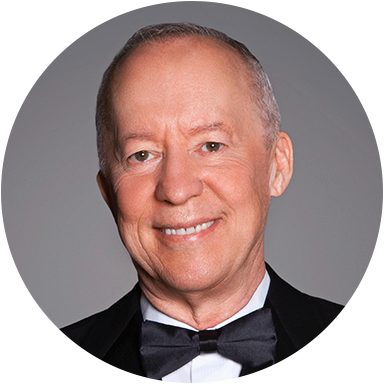
Mark Hayes brings nearly five decades of composition and conducting experience to his work across every musical genre. A summa cum laude graduate of Baylor University with over 1,750 published compositions, Hayes has established himself as a prolific voice in both sacred and secular music. His works have premiered at Lincoln Center, Carnegie Hall, and the National Cathedral, and his reach extends globally from Hong Kong to Rome, where he conducted his Requiem at St. Ignatius Basilica as part of a Vatican-sponsored festival.
Beyond the concert hall, Hayes has shaped contemporary musical theater, orchestrating the hit musical Madame Buttermilk and arranging scores for new theatrical works. His particular gift lies in writing for voices at every level and voicing combination. Baylor University recognized his sustained impact on choral music education with its Award for Exemplary Leadership in Christian Music in 2010. Whether composing at his home in Kansas City or conducting ensembles across the world, Hayes continues to create music rooted in accessibility, beauty, and emotional honesty.
Why we love this
Hayes captures something genuine about ensemble singing in this piece, balancing vulnerability in the opening solo with the cumulative power of voices joining together. The textured polyphony keeps the ear engaged without becoming dense or inaccessible, making it rewarding for treble choirs at the intermediate level and up. Programmatically, it works as both a concert centerpiece and a meaningful moment within a larger set, offering singers a piece they'll remember long after performance.
What to expect
The piece unfolds from a place of introspection and personal conviction, opening quietly as if sharing something essential about oneself. As voices accumulate and interweave, the emotional landscape shifts toward collective strength and affirmation, creating a journey that feels earned rather than imposed. The text anchors everything; singers will connect deeply to the message that their voices, joined together, carry real power.
Who it's for
This piece suits SSAA choirs at the intermediate to advanced level, particularly ensembles with singers ready for polyphonic independence and expressive solo work. Directors seeking contemporary repertoire that balances accessibility with musical substance will find a work that engages both singers and audiences without excessive technical demands.
How to get the most out of it
- Honor the sensitivity of the opening solo by allowing space and breath; this intimate moment establishes the piece's emotional foundation and deserves careful listening from the ensemble.
- Balance independence in the polyphonic sections by having singers identify their specific voice line during rehearsal and trace it separately before blending with other parts.
- Build the final refrain gradually, letting the accumulated voices create power through presence rather than volume alone; Hayes's text carries the strength here.
- Use the recorded accompaniment to lock in harmonic precision during the textured middle sections, where multiple independent lines need clear rhythmic and harmonic anchor points.
How to use it
Position this as a concert highlight or closing number where its theme of finding strength through unity resonates with your program's arc. It also serves well in community or school showcases focused on contemporary choral music, where its accessible idiom and positive message resonate broadly with audiences beyond traditional concert-goers.
Skills your students will build
- Sustaining expressive solo lines while remaining ensemble-focused
- Reading and maintaining independent melodic lines in polyphonic texture
- Balancing blend and clarity across multiple simultaneous voice parts
- Connecting lyrical content to musical phrase shape and dynamic contour