

I Sing Out: SAB Choral Octavo
Words and music by Mark Hayes
Item: 00-PO-0001387
$2.95
Minimum order quantity: 20 copies
Pickup currently not available
Related Items
I Sing Out: SoundTrax Digital Audio Download |
$29.99
|
View | |
I Sing Out: SATB Choral Octavo |
$2.20
|
View | |
I Sing Out: SSAA Choral Octavo |
$1.95
|
View | |
I Sing Out: TTBB Choral Octavo |
$1.95
|
View | |
I Sing Out: Choral SoundPax |
$55.00
|
View | |
I Sing Out: SATB Choral Octavo |
$2.20
|
View | |
I Sing Out: SAB Choral Octavo |
$2.95
|
View | |
I Sing Out: SSAA Choral Octavo |
$1.95
|
View | |
I Sing Out: TTBB Choral Octavo |
$1.95
|
View | |
I Sing Out: Choral Octavo SoundTrax CD |
$29.99
|
View | |
I Sing Out: Choral SoundPax |
$55.00
|
View |
Description
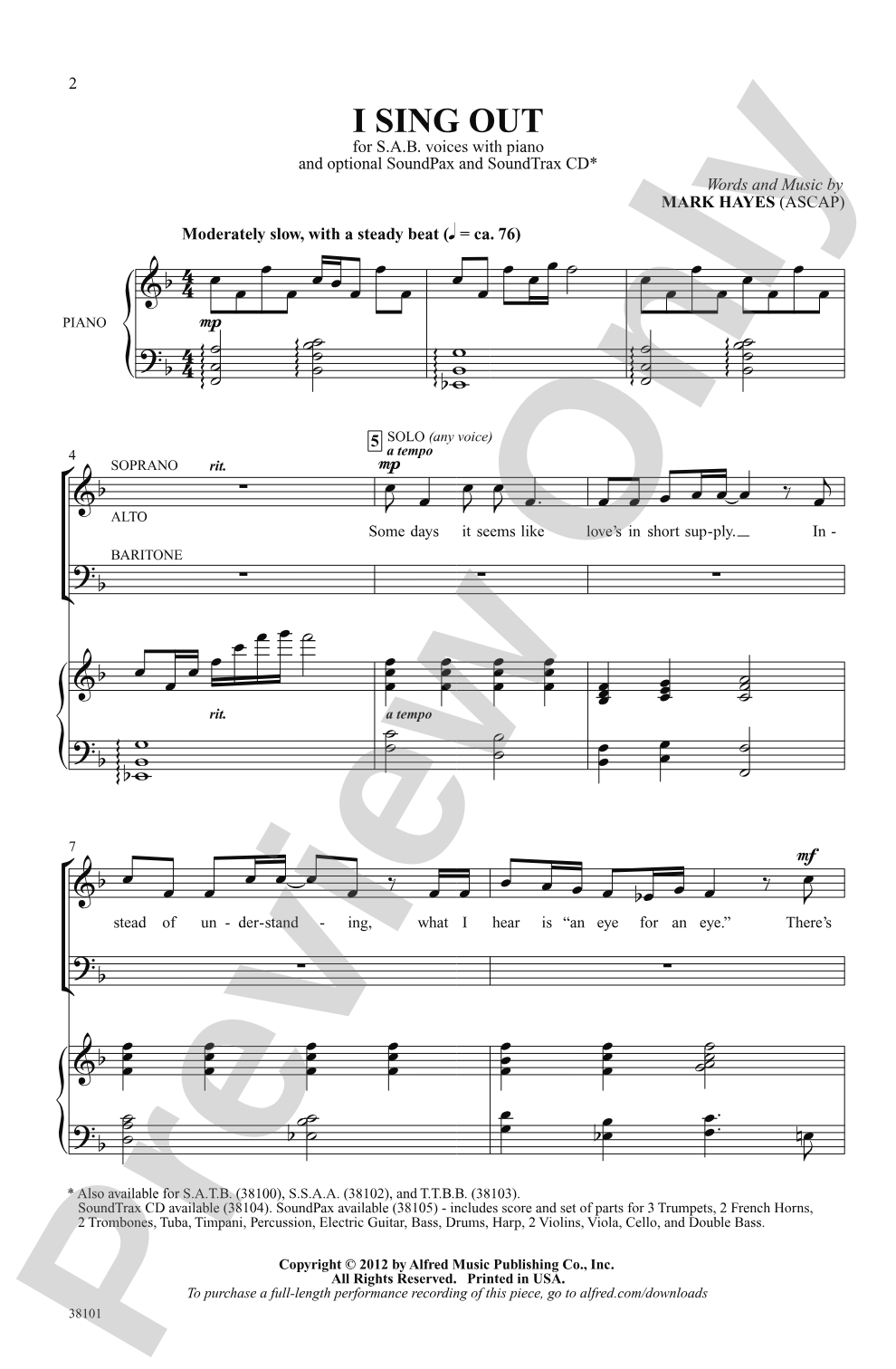
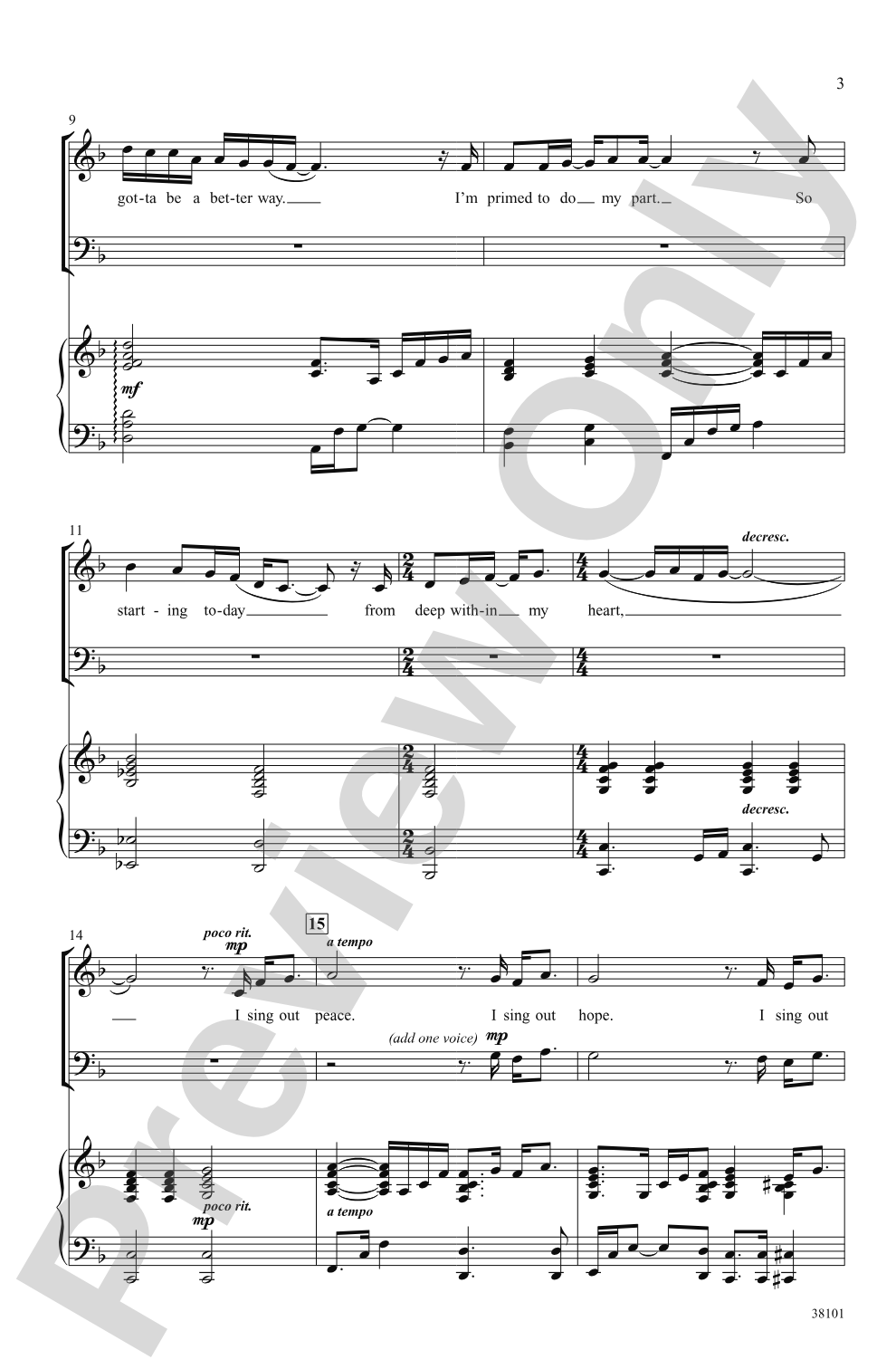
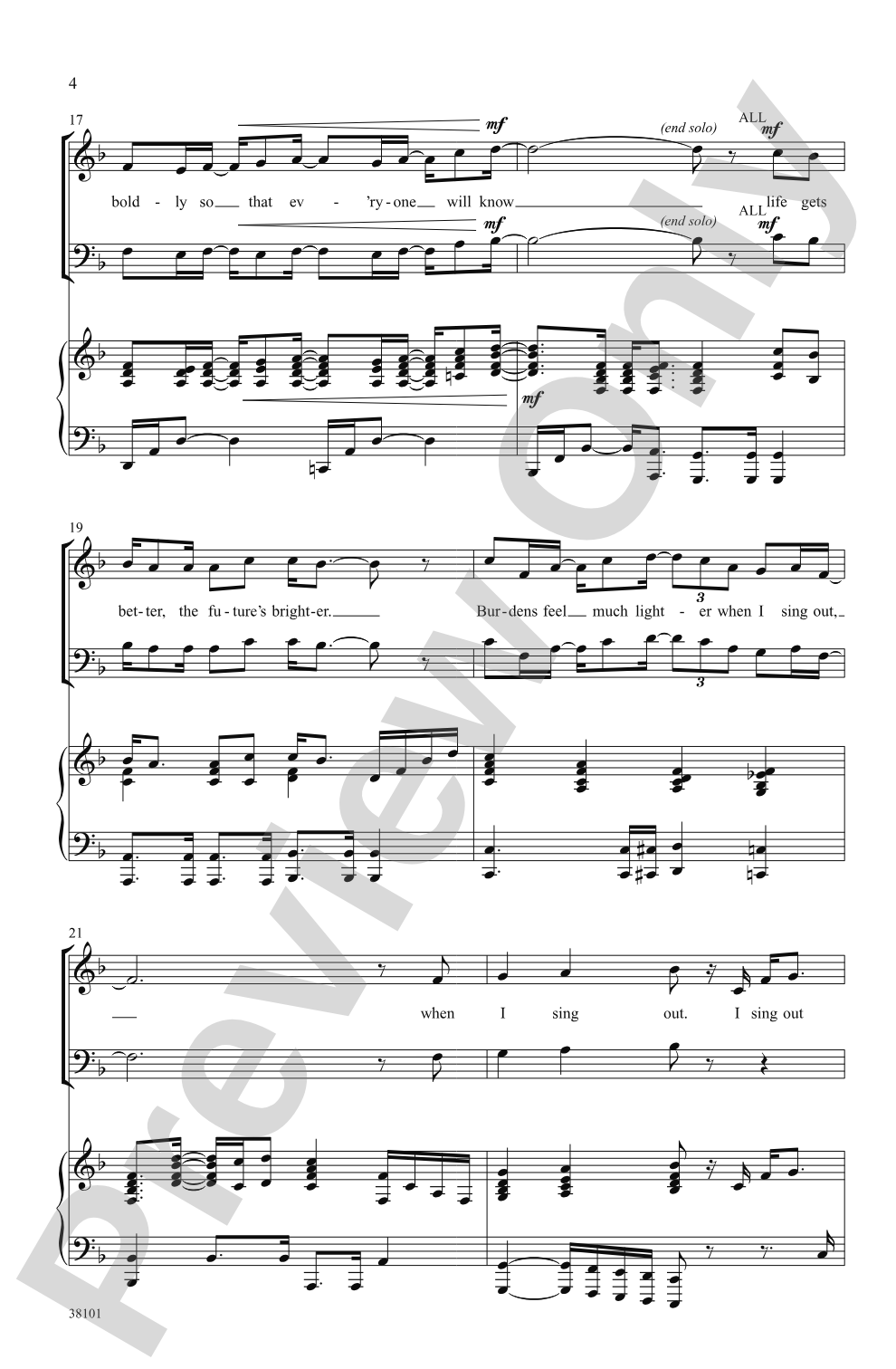
From the sensitive opening solo, through the captivating textured polyphony, to the final choral refrain, this contemporary powerhouse teaches an inspiring lesson about the strength of song. "From the very best part of who I am, I sing out!"


I Sing Out: SAB Choral Octavo isn't in MakeMusic Cloud just yet...but it could be. Let us know you'd like to see it, and you'll help shape what comes next. In the meantime, start a free trial and dive into thousands of interactive titles your students can play along with today.
Request This Title
Tell us you want it.
Start Your Free Trial
Explore everything that's ready to play right now.
Sample Audio
1
Audio File
--:--
0:00
0:00
Sample Video
No sample videos found.
Additional Details
Series:
Alfred Archive Edition: Alfred Choral Designs
Publisher:
Alfred Music
Page Count:
16
SKU:
00-PO-0001387
More about this title
About the Composer: Mark Hayes
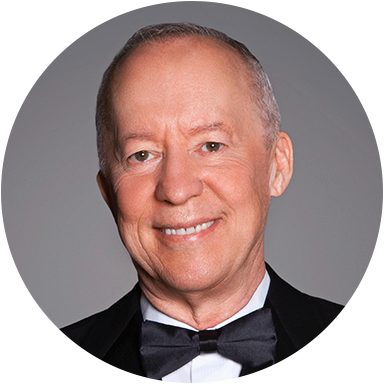
Mark Hayes has established himself as a prolific composer, arranger, and conductor whose catalog spans over 1,750 published works across sacred and secular genres. A summa cum laude graduate in Piano Performance from Baylor University (1975), he has guest conducted at Lincoln Center, the National Cathedral, and Carnegie Hall, and in 2010 received the Award for Exemplary Leadership in Christian Music from his alma mater.
Beyond choral music, Hayes has built a reputation as an accomplished pianist, orchestrator, and record producer. He has premiered major works including his Requiem at Lincoln Center (2013) and conducted international premieres across Hong Kong and Rome. With over 100 piano books in print spanning gospel, classical, jazz, and Broadway styles, his compositional reach demonstrates equal fluency in concert hall and church settings.
Why we love this
Hayes brings sophistication without pretension to SAB voicing. The piece moves through a genuine arc—from intimate solo writing to layered polyphony to collective affirmation—giving each section of your choir genuine musical material rather than padding, and the message lands because the music earns it.
What to expect
The piece opens with vulnerability and introspection before gradually building in collective presence and power. You move from a single voice finding its sound to many voices discovering harmony together, creating an emotional arc that feels both intimate and ultimately celebratory.
Who it's for
Directors working with three-part treble, alto, and baritone ensembles who want a piece with genuine textural interest and an affirming message that doesn't feel didactic. The 16-page score and available instrumental parts make it suitable for high school and adult community choirs seeking contemporary repertoire with concert-quality compositional craft.
How to get the most out of it
- Pay close attention to the textural shifts between sections. The opening solo requires a soloist with commitment to the lyrical line, and the transition into polyphony works best when chords lock in clean attacks rather than bleeding into one another.
- Balance the recorded accompaniment so it supports rather than overwhelms the three-part writing. Hayes tends toward rich harmonic backing, so rehearse without it first to establish strong vocal independence.
- Shape the phrase "I sing out" with intentionality each time it recurs. The repetition is structural, not filler, and small dynamic or rhythmic choices in that phrase can reinforce the building confidence of the text.
- Drill the SAB voice leading in measures where all three parts move; contemporary writing can obscure conventional part-writing patterns, and clean hand-offs between voice parts prevent muddiness in the middle register.
How to use it
Position this as the centerpiece of a concert exploring identity, resilience, or self-discovery themes. It pairs well with spirituals or hymn-based pieces on one end and contemporary secular choral works on the other. The emotional arc also makes it effective as a concert closer, leaving audiences with an uplifting final statement.
Skills your students will build
- Singing sustained lyrical lines with musical independence (solo writing)
- Balancing three-part SAB voicing across textural changes
- Interpreting modern harmonic language and voice leading
- Matching dynamics and tone to shifts between solo and ensemble textures
- Responding musically to recorded accompaniment without losing vocal focus