
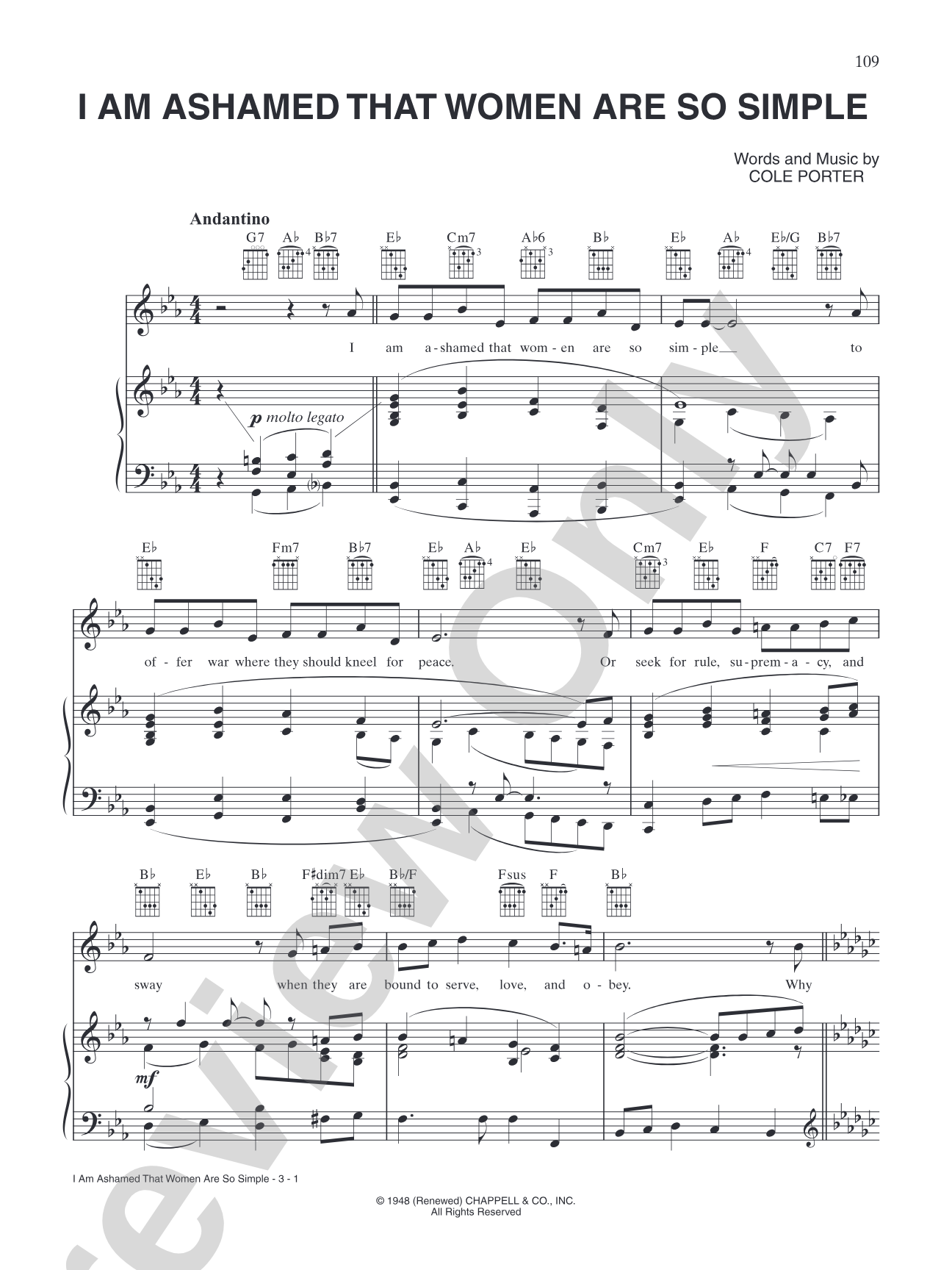

I Am Ashamed That Women Are So Simple (from "Kiss Me Kate"): Piano/Vocal/Chords
By Cole Porter
Item: 00-XS-0000163
$4.99
One moment…
Related Items
Tom, Dick or Harry: Piano/Vocal/Chords |
$5.99
|
View | |
I've Come to Wive It Wealthily in Padua: Piano/Vocal/Chords |
$5.99
|
View | |
Always True to You in My Fashion: Piano/Vocal/Chords |
$4.99
|
View | |
Another Op'nin', Another Show: Piano/Vocal/Chords |
$5.99
|
View | |
Why Can't You Behave?: Piano/Vocal/Chords |
$4.99
|
View | |
From This Moment On: Piano/Vocal/Chords |
$5.99
|
View | |
Brush up Your Shakespeare: Piano/Vocal/Chords |
$5.99
|
View | |
So In Love: Piano/Vocal/Chords |
$5.99
|
View | |
We Open In Venice (from "Kiss Me Kate"): Piano/Vocal/Chords |
$4.99
|
View | |
I Hate Men (from "Kiss Me Kate"): Piano/Vocal/Chords |
$4.99
|
View | |
Were Thine That Special Face (from "Kiss Me Kate"): Piano/Vocal/Chords |
$4.99
|
View | |
What Does Your Servant Dream About (from "Kiss Me Kate"): Piano/Vocal/Chords |
$4.99
|
View | |
We Shall Never Be Younger (from "Kiss Me Kate"): Piano/Vocal/Chords |
$4.99
|
View | |
Bianca (from "Kiss Me Kate"): Piano/Vocal/Chords |
$4.99
|
View | |
Wunderbar (from "Kiss Me Kate"): Piano/Vocal/Chords |
$4.99
|
View | |
I Sing of Love (from "Kiss Me Kate"): Piano/Vocal/Chords |
$5.99
|
View |
Description
This songbook contains all of the classic songs from Cole Porter's greatest success, the hilarious and tuneful Broadway production Kiss Me, Kate. A total of 19 songs are featured in the book, which includes two that were never used. The book also includes an essay about the history of the show, illustrations and memorabilia from its various productions, and a personal remembrance from Patricia Morison, who played Kate in the original Broadway run. Titles: Another Op'nin', Another Show * Why Can't You Behave? * Wunderbar * So in Love * We Open in Venice * Tom, Dick or Harry * I've Come to Wive It Wealthily in Padua * I Hate Men * Were Thine That Special Face * I Sing of Love * Too Darn Hot * Where Is the Life That Late I Led? * Always True to You in My Fashion * Bianca * Brush Up Your Shakespeare * From This Moment On * I Am Ashamed That Women Are So Simple * We Shall Never Be Younger * What Does Your Servant Dream Bout.


I Am Ashamed That Women Are So Simple (from "Kiss Me Kate"): Piano/Vocal/Chords isn't in MakeMusic Cloud just yet...but it could be. Let us know you'd like to see it, and you'll help shape what comes next. In the meantime, start a free trial and dive into thousands of interactive titles your students can play along with today.
Request This Title
Tell us you want it.
Start Your Free Trial
Explore everything that's ready to play right now.
Sample Audio
No sample audio found.
Sample Video
No sample videos found.
Additional Details
Publisher:
Alfred Music
Page Count:
120
SKU:
00-XS-0000163
More about this title
About the Composer: Cole Porter
Cole Porter (1891-1964) brought sophistication, wit, and impeccable craft to American musical theater. A composer and lyricist of exceptional range, he created melodies that were both immediately singable and harmonically inventive, paired with lyrics of remarkable cleverness and cultural polish. His works dominated Broadway and film for decades, and his songs remain standards in jazz, cabaret, and concert repertoire.
Why we love this
Porter's songwriting brilliance shines across every number in this collection. The vocal lines sit naturally for singers while the accompaniments remain rhythmically and harmonically sophisticated enough to hold pianists' interest; you can teach genuine artistry at any level because the material rewards attention to lyrical detail and emotional nuance.
What to expect
Porter's music captures the theatrical world of Kiss Me, Kate with elegance and humor. The songs move from rollicking comedy to genuine romance, with harmonic sophistication throughout; singing or playing them feels like stepping into a world of wit, charm, and musical intelligence.
Who it's for
Singers preparing audition material, pianists building a repertoire of American standards, and musicians exploring mid-twentieth-century musical theater songwriting. The range of styles and story contexts within the collection makes it valuable for anyone developing interpretive skills.
How to get the most out of it
- Shape the phrasing around the lyrical wit. Porter's lyrics are as important as the melody, so encourage singers to clarify the text and let comedic timing breathe without rushing.
- Pay close attention to the harmonic movement in the accompaniment. Many of Porter's chord changes are unexpected and create the song's harmonic personality; don't smooth over them.
- Approach the tempo markings as suggestions rather than absolutes. Many performers find that a slightly more relaxed pace allows the sophistication of Porter's writing to register fully with an audience.
How to use it
These songs work wonderfully in a cabaret or revue format, where you can program them alongside other Porter standards or contemporary pieces. Individual selections also serve as strong audition material or recital repertoire, particularly for mature singers comfortable with character-driven material and rhythmic flexibility.
Skills your students will build
- Interpreting character through song choice and phrasing
- Navigating unexpected harmonic progressions
- Balancing rhythmic precision with lyrical clarity
- Performing with period-appropriate style and sophistication