
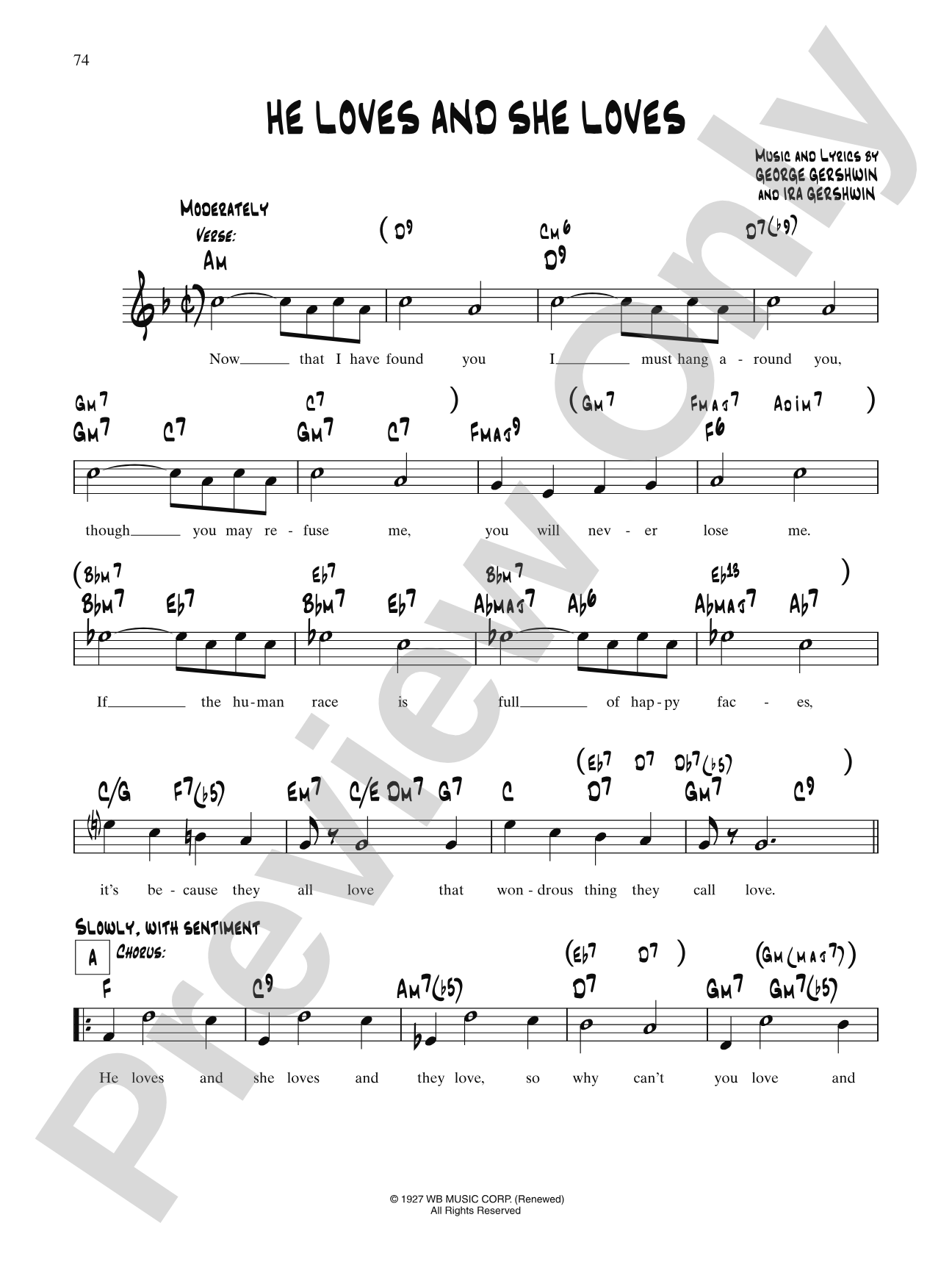

He Loves And She Loves: Lead Sheet
Tony Bennett
Item: 00-PSL-000768
$4.99
One moment…
Related Items
I Wanna Be Around: Lead Sheet |
$4.99
|
View | |
Nice Work If You Can Get It (From "Damsel In Distress"): Lead Sheet |
$4.99
|
View | |
They Can't Take That Away From Me (From "Shall We Dance"): Lead Sheet |
$4.99
|
View | |
The Boulevard Of Broken Dreams (From "Moulin Rouge"): Lead Sheet |
$4.99
|
View | |
People (From "Funny Girl"): Lead Sheet |
$4.99
|
View | |
They All Laughed: Lead Sheet |
$4.99
|
View |
Description
Titles in this 42-song folio include I Left My Heart in San Francisco * Because of You * Nice Work If You Can Get It * Steppin' Out with My Baby * I'll Be Seeing You * Cold, Cold Heart * I Got Rhythm * The Best Is Yet to Come * Rags to Riches * People * Fly Me to the Moon * Call Me Irresponsible * and many more.


He Loves And She Loves: Lead Sheet isn't in MakeMusic Cloud just yet...but it could be. Let us know you'd like to see it, and you'll help shape what comes next. In the meantime, start a free trial and dive into thousands of interactive titles your students can play along with today.
Request This Title
Tell us you want it.
Start Your Free Trial
Explore everything that's ready to play right now.
Sample Audio
No sample audio found.
Sample Video
No sample videos found.
Additional Details
Publisher:
Alfred Music
Page Count:
152
SKU:
00-PSL-000768
More about this title
About the Artist: George Gershwin
George Gershwin (1898-1937) bridged classical and popular music in ways that few composers have matched. His melodic gift, sophisticated harmonic language, and ability to capture the energy of American culture made him one of the most influential composers of the 20th century. Works like Rhapsody in Blue and An American in Paris remain cornerstones of concert music, while his songs for stage and film became the foundation of the Great American Songbook.
For music educators, Gershwin's output offers an exceptional teaching resource. His lead sheets reveal how melody and harmony interact; his chord progressions illuminate jazz and pop harmony; his orchestrations (whether for band or full orchestra) demonstrate sophisticated arranging technique. Teaching Gershwin means teaching music that swings, that reaches audiences, and that rewards deep study.
Why we love this
This folio captures Gershwin's gift for memorable, singable melody paired with accessible but sophisticated harmony. The 42 songs span his theatrical and film work, so you get his full stylistic range in one resource. Whether your students are learning to comp changes, sing with swing inflection, or arrange for small ensemble, these standards reward repeated study and offer endless programming flexibility.
What to expect
These songs pulse with optimism, wit, and genuine affection. Whether bright and clever (Nice Work If You Can Get It) or tender and reflective (I'll Be Seeing You), they carry the confidence of a composer who understood both craft and heart. The collection feels like stepping into an American songwriting tradition where every melody counts and harmony serves the emotion.
Who it's for
Pianists and vocalists in jazz and pop settings will find essential material here. The folio serves music students learning to read lead sheets, improvise over changes, and understand how melody and harmony function in American popular song. Private studio teachers, jazz educators, and directors planning cabaret or revue concerts will reference this resource constantly.
How to get the most out of it
- Study the chord voicings before improvising. Gershwin's changes often contain chromatic voice leading or unexpected substitutions that reshape the melody's harmonic landscape.
- Sing these melodies with rhythmic swagger. The straightforward notation masks the swing eighth-notes and syncopated phrasing that make Gershwin songs dance.
- Use the lead sheet as a springboard for arrangement. These songs work beautifully as trio settings, big band charts, or vocal ensemble pieces; the skeleton is strong enough to support many interpretations.
- Listen to multiple recorded versions before performing. Compare how different eras and singers have shaped the time feel and lyrical phrasing; each reveals something about the song's architecture.
How to use it
Build a jazz standards set around these titles for a cabaret concert or end-of-year revue. Use them as sight-reading material in piano or voice lessons, returning to them across multiple years as students' skills deepen. In a jazz ensemble or combo class, assign different charts to small groups and have students trade off vocals and accompaniment, building fluency with the repertoire.
Skills your students will build
- Reading lead sheet notation and interpreting chord symbols
- Singing with swing phrasing and jazz inflection
- Comping changes in a jazz keyboard style
- Understanding voice leading in mid-century popular song harmony
- Improvising melodies and fills over standard changes
- Recognizing common harmonic progressions (ii-V-I, tritone substitutions, chromatic bass movement)