
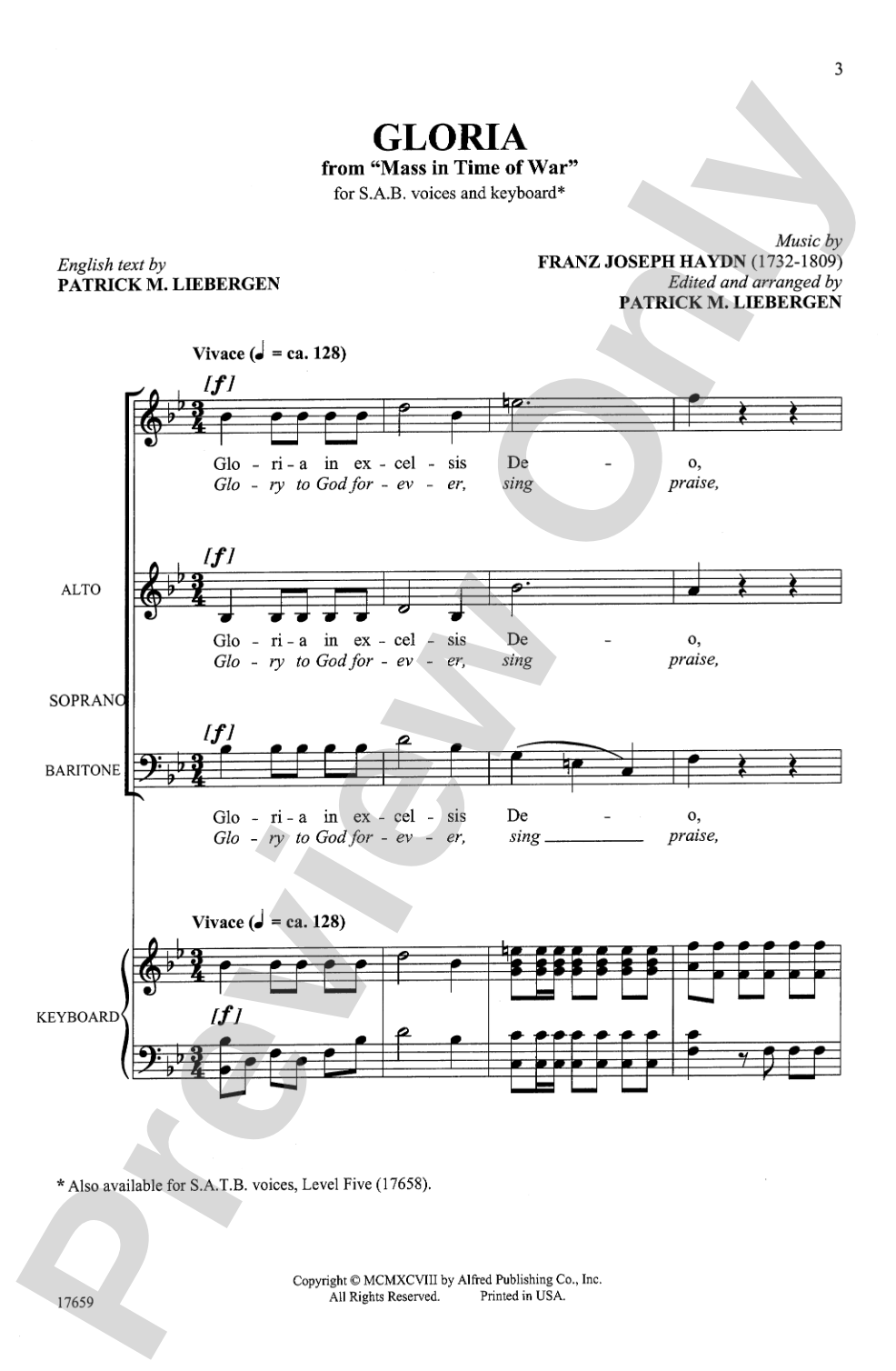

Gloria (from Mass in Time of War): SAB Choral Octavo
From Mass in Time of War
By Franz Joseph Haydn / arr. Patrick M. Liebergen
Item: 00-PO-0003998
$2.95
Minimum order quantity: 20 copies
Pickup currently not available
Related Items
Gloria: PianoTrax Digital Download |
$9.99
|
View | |
Gloria (from Harmoniemesse): SATB Choral Octavo |
$1.75
|
View | |
Gloria (from Heiligmesse): SATB Choral Octavo |
$2.25
|
View | |
Gloria (from Heiligmesse): 3-Part Mixed Choral Octavo |
$2.25
|
View | |
Gloria: SSA Choral Octavo |
$2.25
|
View | |
Gloria: SATB Choral Octavo |
$2.25
|
View | |
Gloria (from Mass in Time of War): SATB Choral Octavo |
$2.95
|
View | |
Gloria (from Teresienmesse): SAB Choral Octavo |
$2.25
|
View | |
Gloria: SATB Choral Octavo |
$1.75
|
View | |
Gloria: SATB Choral Octavo |
$2.50
|
View | |
Gloria: 3-Part Mixed Choral Octavo |
$2.25
|
View | |
Gloria: SSA Choral Octavo |
$2.25
|
View | |
Gloria: SATB Choral Octavo |
$2.25
|
View | |
Gloria: SATB Choral Octavo |
$2.95
|
View | |
Gloria: SAB Choral Octavo |
$2.95
|
View | |
Gloria: SAB Choral Octavo |
$2.25
|
View |
Description
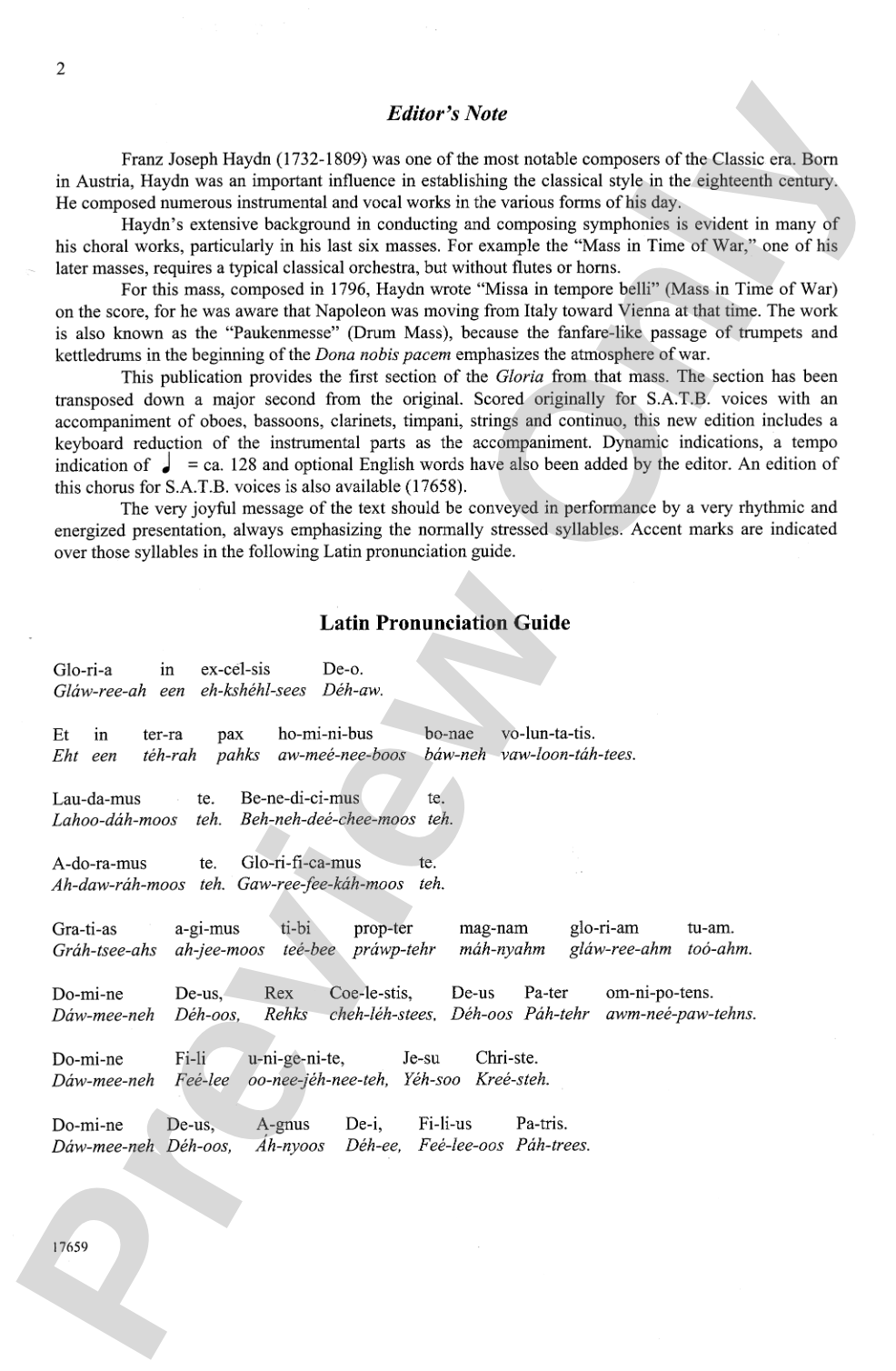
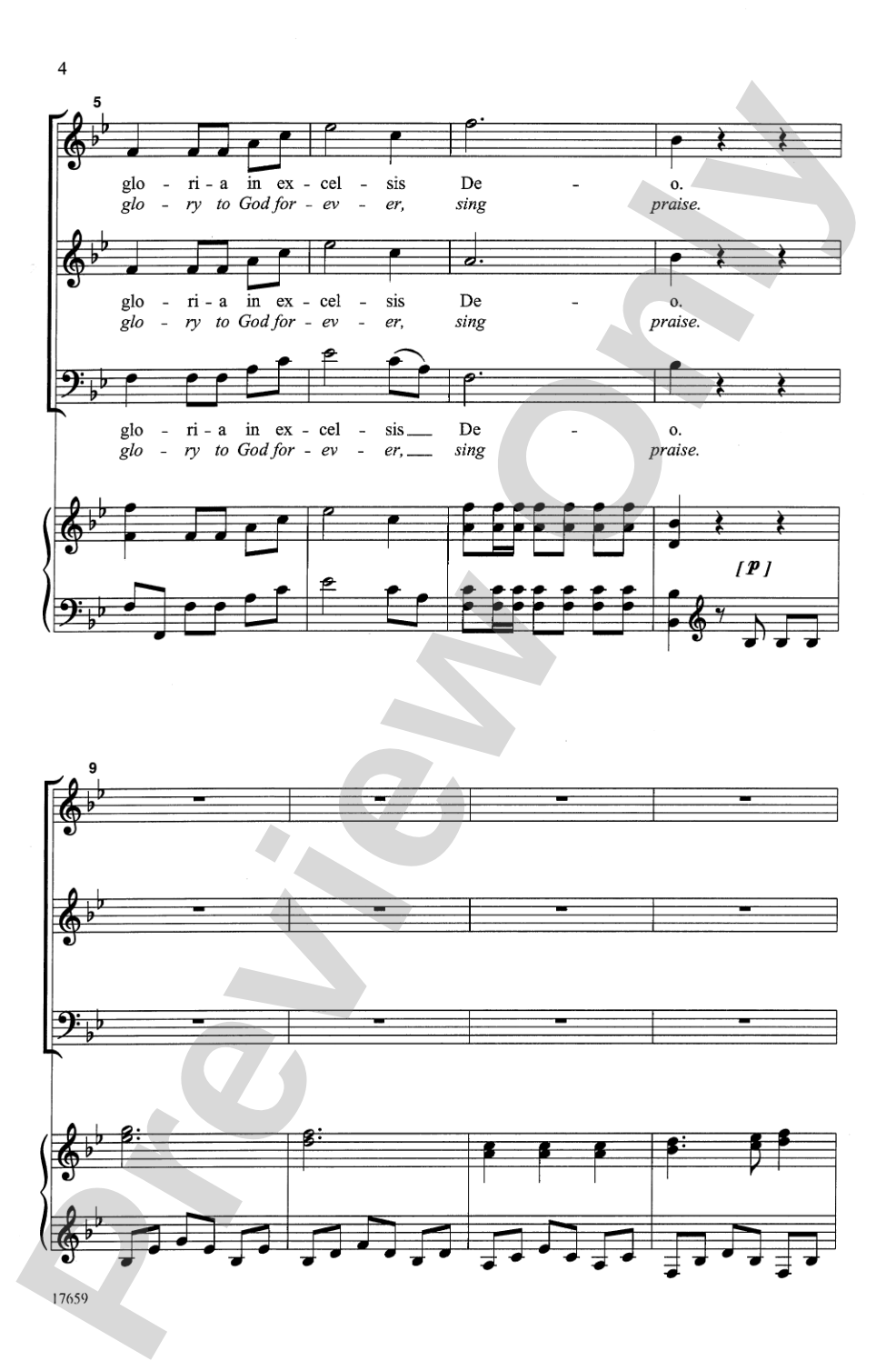
Outstanding edition from Haydn's "Mass in Time of War." Includes Latin pronunciation guide and optional English text. No divisi, no solos, moderate ranges.


Gloria (from Mass in Time of War): SAB Choral Octavo isn't in MakeMusic Cloud just yet...but it could be. Let us know you'd like to see it, and you'll help shape what comes next. In the meantime, start a free trial and dive into thousands of interactive titles your students can play along with today.
Request This Title
Tell us you want it.
Start Your Free Trial
Explore everything that's ready to play right now.
Sample Audio
1
Audio File
--:--
0:00
0:00
Sample Video
No sample videos found.
Additional Details
Series:
Alfred Archive Edition: Alfred Choral Designs
Publisher:
Alfred Music
Page Count:
16
SKU:
00-PO-0003998
More about this title
About the Composer: Franz Joseph Haydn
Franz Joseph Haydn (1732-1809) was a towering figure in the Classical era, composing across every major genre and establishing formal structures that composers still follow today. His 14 masses, written over five decades, represent some of the deepest sacred music of the period; the "Mass in Time of War" (Missa in angustiis, 1796) was composed during the Napoleonic conflicts and carries both urgency and profound spiritual weight.
Haydn's gift for clarity and directness makes his choral writing exceptionally teachable. He avoids unnecessarily florid writing while maintaining harmonic sophistication, and his sense of proportion ensures that even ambitious works sit comfortably in rehearsal rooms.
Why we love this
This arrangement preserves the architecture and emotional impact of Haydn's original while sitting squarely in the SAB rehearsal room. Patrick Liebergen has removed the technical barriers (no divisi, accessible ranges) without flattening the musical content, so your singers experience authentic Haydn craftsmanship without unnecessary complexity.
What to expect
The Gloria unfolds with classical clarity and forward momentum, built from clean harmonic progressions and crisp text setting that keeps the work moving without breathlessness. There's weight and dignity throughout, even in moments of brightness; it feels like music written by someone who understood both the liturgy and the human voice.
Who it's for
Choirs with solid intonation and basic reading skills who want to perform genuine masterwork repertoire without extensive arranging away the composer's voice. This works especially well for mixed choirs that don't have the resources for full SA(T)B voicing but want something more substantial than simplified pop arrangements.
How to get the most out of it
- Address the Latin pronunciation early in rehearsal using the included guide. Clean diction on consonants clarifies the harmonic movement, especially in the faster sections.
- Shape phrases around the text rather than resting at barlines. Haydn's harmonic rhythm often propels across printed measures, so encourage singers to follow the text's natural breathing.
- Balance the three parts so the melody doesn't overpower the inner voices. The SAB texture shines when all three lines carry equal weight and clarity.
- If using the English text option, rehearse it separately and decide which version you'll perform before dress rehearsal. Switching between the two mid-preparation muddies both.
How to use it
Pair this with your existing sacred music programming during Advent or Lenten season services, or program it alongside other Classical-era works on a concert celebrating choral craft. The 16-page octavo length makes it a strong anchor piece without demanding an entire concert program devoted to a single mass.
Skills your students will build
- Latin diction and pronunciation in a liturgical context
- Reading part-writing in SAB voicing with independent harmonic lines
- Phrasing across harmonic rhythm rather than note-based barlines
- Balancing three-part texture to prevent melody dominance
- Distinguishing between English and Latin text placement on the same melodic line