

Gloria: SATB Choral Octavo
From Mariazellermesse
By Franz Joseph Haydn / ed. and arr. Patrick M. Liebergen
Level: Moderate
Item: 00-PO-0005140
$2.25
Minimum order quantity: 20 copies
Pickup currently not available
Related Items
Gloria: PianoTrax Digital Download |
$9.99
|
View | |
Gloria (from Harmoniemesse): SATB Choral Octavo |
$1.75
|
View | |
Gloria (from Heiligmesse): SATB Choral Octavo |
$2.25
|
View | |
Gloria (from Heiligmesse): 3-Part Mixed Choral Octavo |
$2.25
|
View | |
Gloria: SSA Choral Octavo |
$2.25
|
View | |
Gloria (from Mass in Time of War): SATB Choral Octavo |
$2.95
|
View | |
Gloria (from Mass in Time of War): SAB Choral Octavo |
$2.95
|
View | |
Gloria (from Teresienmesse): SAB Choral Octavo |
$2.25
|
View | |
Gloria: SATB Choral Octavo |
$1.75
|
View | |
Gloria: SATB Choral Octavo |
$2.50
|
View | |
Gloria: 3-Part Mixed Choral Octavo |
$2.25
|
View | |
Gloria: SSA Choral Octavo |
$2.25
|
View | |
Gloria: SATB Choral Octavo |
$2.25
|
View | |
Gloria: SATB Choral Octavo |
$2.95
|
View | |
Gloria: SAB Choral Octavo |
$2.95
|
View | |
Gloria: SAB Choral Octavo |
$2.25
|
View |
Description
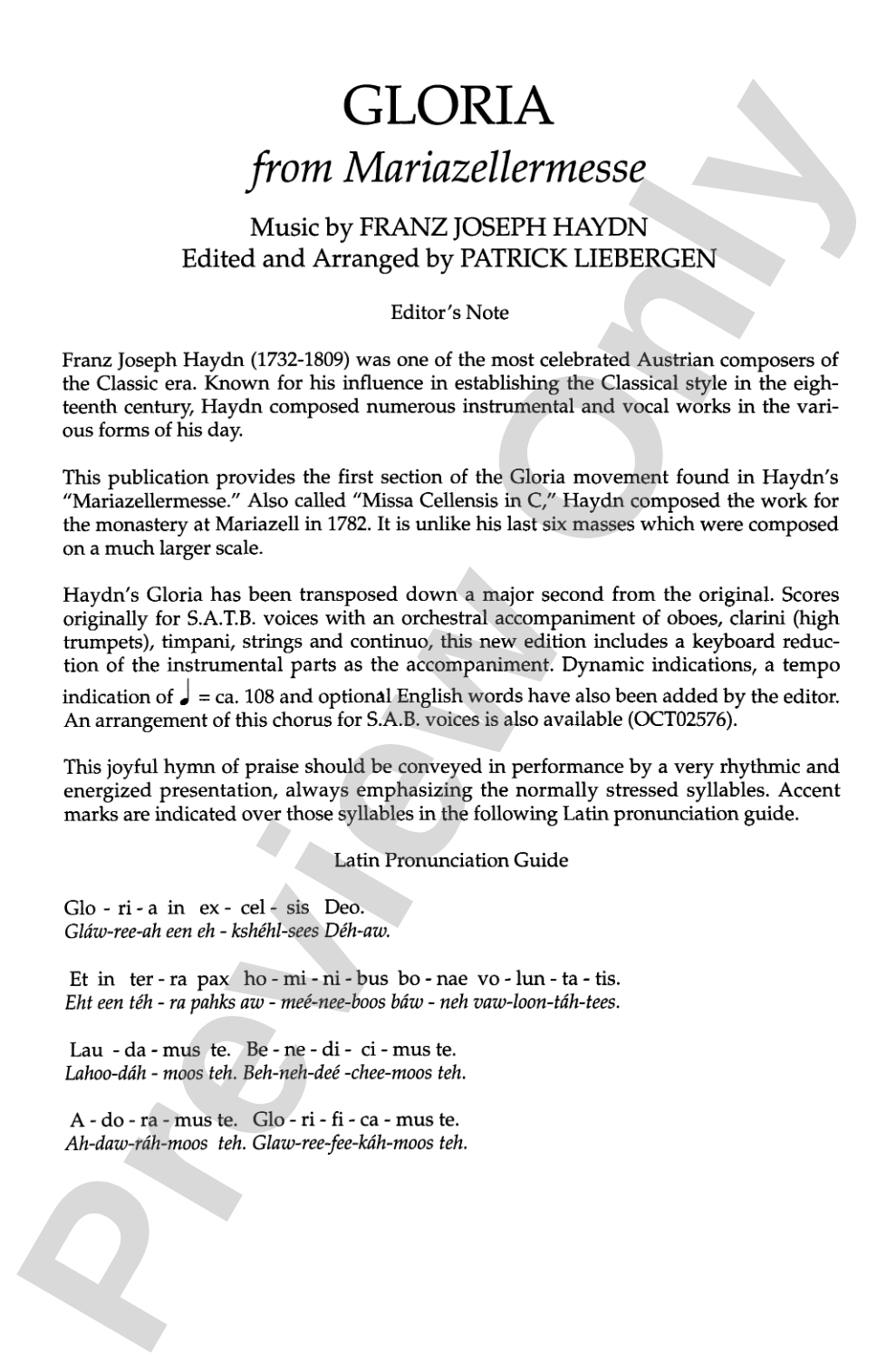
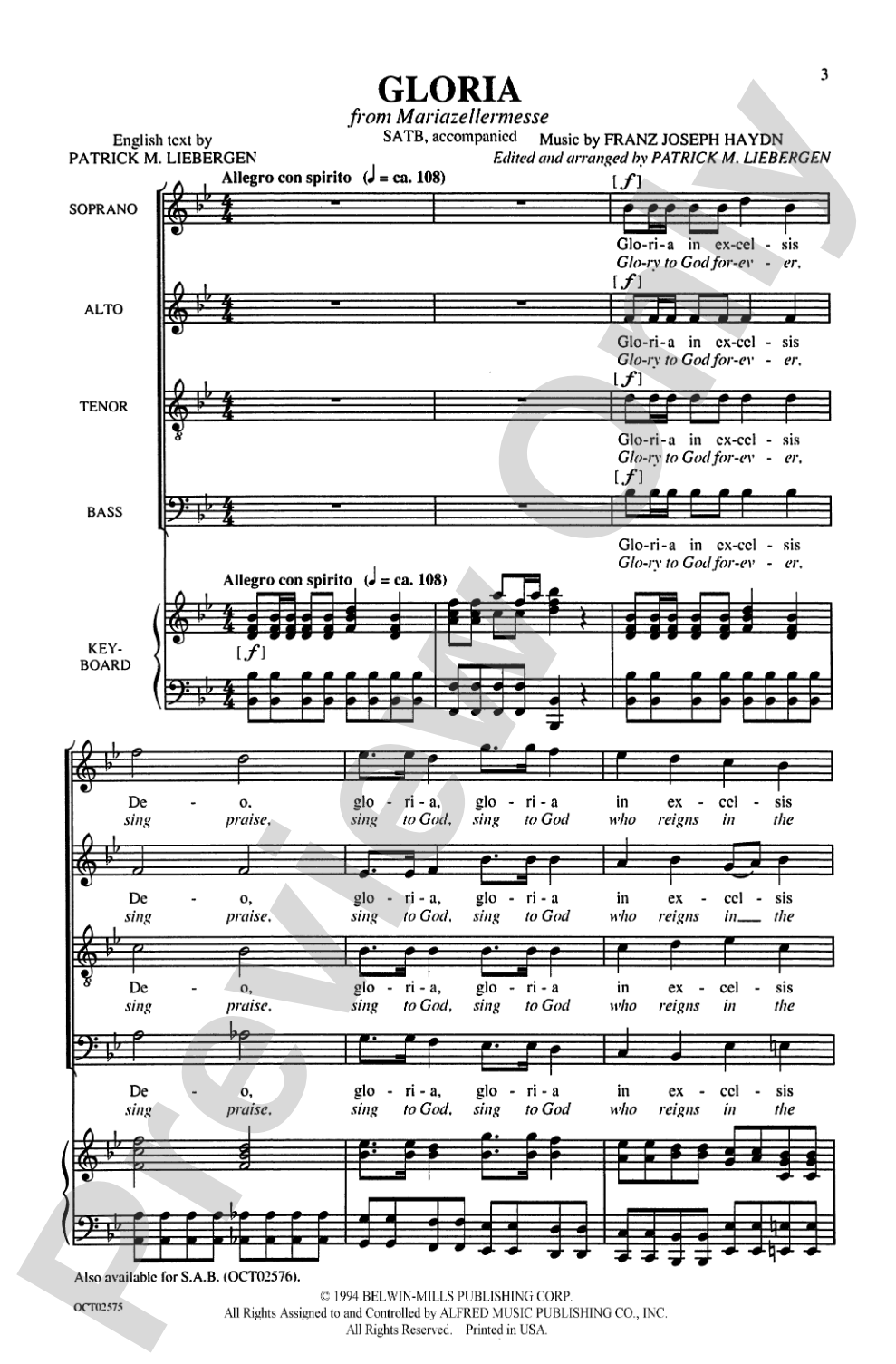
Enjoy the excitement of this Gloria by master composer Haydn. Its fast-moving tempo and rhythmic drive are infectious. Great for contest and festival use. The SAB version is especially strong for the up-and-coming ensemble.


Gloria: SATB Choral Octavo isn't in MakeMusic Cloud just yet...but it could be. Let us know you'd like to see it, and you'll help shape what comes next. In the meantime, start a free trial and dive into thousands of interactive titles your students can play along with today.
Request This Title
Tell us you want it.
Start Your Free Trial
Explore everything that's ready to play right now.
Sample Audio
1
Audio File
--:--
0:00
0:00
Sample Video
No sample videos found.
Additional Details
Series:
Alfred Archive Edition: Belwin Sacred Choral Series
Publisher:
Alfred Music
Page Count:
12
SKU:
00-PO-0005140
More about this title
About the Composer: Franz Joseph Haydn
Franz Joseph Haydn (1732-1809) was the dominant orchestral and chamber composer of the Classical era, whose prolific output shaped musical language across every genre he touched. His sacred works, including numerous masses and Gloria settings, showcase the same structural clarity, harmonic sophistication, and infectious melodic invention that made his symphonies legendary. Haydn's ability to marry profound spirituality with infectious rhythmic energy makes his sacred music accessible to choirs of modest ability while offering real musical substance.
Why we love this
This arrangement captures the propulsive joy that defines Haydn's Gloria idiom without requiring virtuosic singers or complex voice leading. The rhythmic drive makes it memorable after a few rehearsals, which means your ensemble can nail a polished performance quickly enough to program it alongside weightier repertoire on a festival or contest program. Liebergen's SATB writing sits well for standard high school and adult choirs, delivering authentic Classical style without unnecessary complications.
What to expect
Energy and clarity define the character here. The fast-moving tempo and rhythmic drive create momentum that carries listeners along, while Haydn's gift for memorable melodic lines keeps everything singable and satisfying. You hear the exuberance of the Baroque-to-Classical transition, when sacred music began to embrace joy as fully as ceremony.
Who it's for
Growing choirs working toward contests and festivals will find this a natural fit for their intermediate repertoire library. Directors seeking an arrangement that teaches Classical style and maintains choir morale through its sheer musical energy will value how quickly it rewards rehearsal investment.
How to get the most out of it
- Keep the tempo brisk but controlled; Haydn's fast moving sections only sparkle when each rhythmic figure lands clearly. Muddiness kills the infectious quality, so articulation matters more than volume.
- Balance the sopranos through the passagework without letting them overshadow the harmonic foundation. The excitement comes from rhythmic precision across all four parts, not soprano dominance.
- Shape phrases by feeling the harmonic rhythm rather than singing every note with equal weight. Classical style thrives on gentle dynamic motion that respects the underlying chord progression.
How to use it
Pair this with a slower, more reverent Gloria or other sacred work to showcase different approaches to the same text. Its moderate difficulty and relative brevity also make it ideal for a lighter second-half of a program, or as a closing number that leaves audiences with infectious energy.
Skills your students will build
- Rhythmic precision in fast-moving passages at Classical tempo
- Balancing individual voice parts within a four-part harmonic texture
- Phrasing shaped by harmonic rhythm rather than text alone
- Performance style conventions of the Classical era