

Gloria (from Heiligmesse): 3-Part Mixed Choral Octavo
From Heiligmesse
By Franz Joseph Haydn / arr. Patrick M. Liebergen
Item: 00-PO-0002942
$2.25
Minimum order quantity: 20 copies
Pickup currently not available
Related Items
Gloria: PianoTrax Digital Download |
$9.99
|
View | |
Gloria (from Harmoniemesse): SATB Choral Octavo |
$1.75
|
View | |
Gloria (from Heiligmesse): SATB Choral Octavo |
$2.25
|
View | |
Gloria: SSA Choral Octavo |
$2.25
|
View | |
Gloria: SATB Choral Octavo |
$2.25
|
View | |
Gloria (from Mass in Time of War): SATB Choral Octavo |
$2.95
|
View | |
Gloria (from Mass in Time of War): SAB Choral Octavo |
$2.95
|
View | |
Gloria (from Teresienmesse): SAB Choral Octavo |
$2.25
|
View | |
Gloria: SATB Choral Octavo |
$1.75
|
View | |
Gloria: SATB Choral Octavo |
$2.50
|
View | |
Gloria: 3-Part Mixed Choral Octavo |
$2.25
|
View | |
Gloria: SSA Choral Octavo |
$2.25
|
View | |
Gloria: SATB Choral Octavo |
$2.25
|
View | |
Gloria: SATB Choral Octavo |
$2.95
|
View | |
Gloria: SAB Choral Octavo |
$2.95
|
View | |
Gloria: SAB Choral Octavo |
$2.25
|
View |
Description
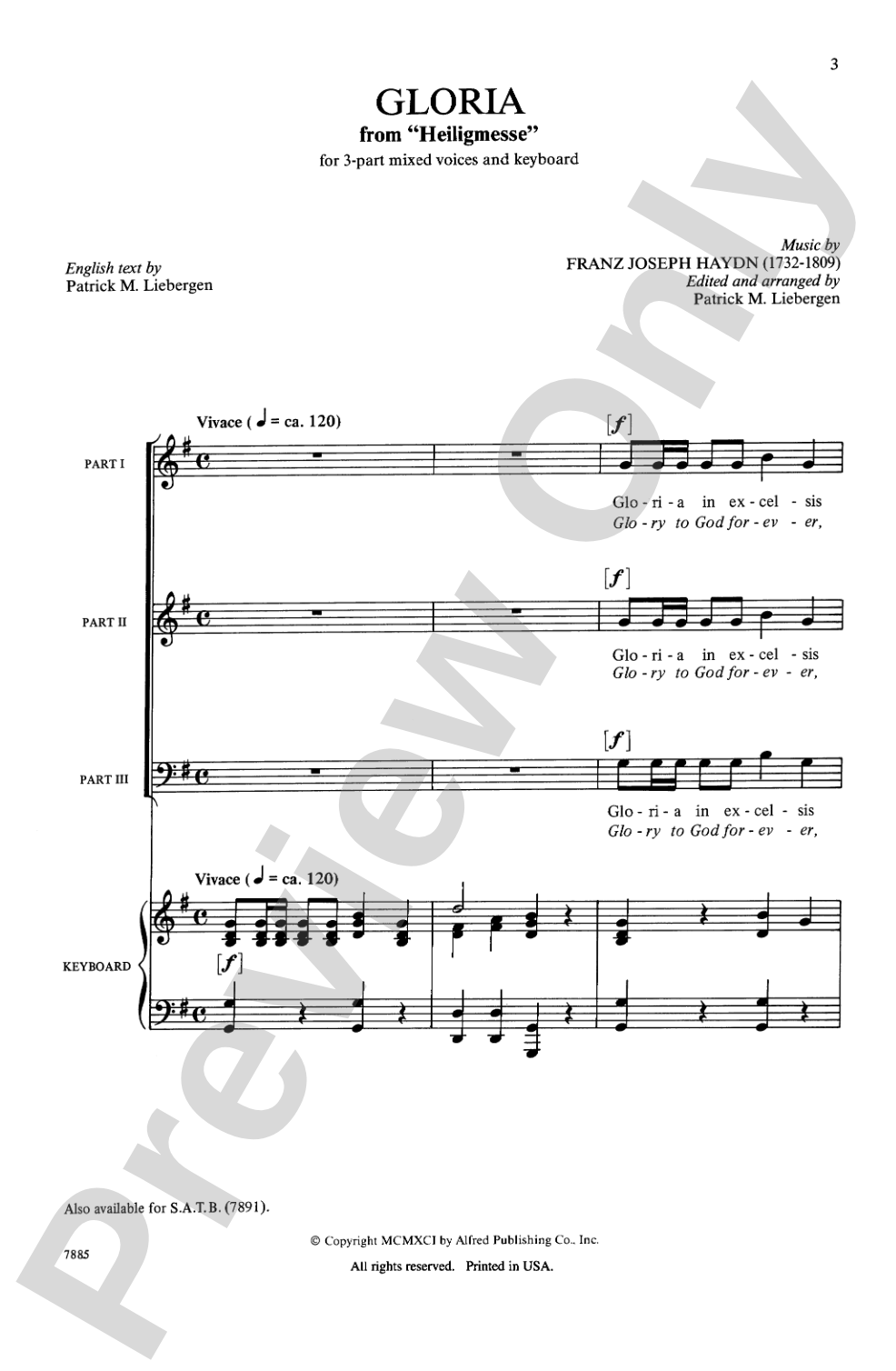
An easy-to-read Haydn masterwork skillfully edited for today's choirs by Patrick Liebergen. The strong accompaniment (piano or organ) and dramatic dynamic changes make this piece an ideal Classical choral feature for your choir-at concerts or festivals. Also suitable for church choirs.


Gloria (from Heiligmesse): 3-Part Mixed Choral Octavo isn't in MakeMusic Cloud just yet...but it could be. Let us know you'd like to see it, and you'll help shape what comes next. In the meantime, start a free trial and dive into thousands of interactive titles your students can play along with today.
Request This Title
Tell us you want it.
Start Your Free Trial
Explore everything that's ready to play right now.
Sample Audio
1
Audio File
--:--
0:00
0:00
Sample Video
No sample videos found.
Additional Details
Series:
Alfred Archive Edition: Alfred Choral Designs
Publisher:
Alfred Music
Page Count:
12
SKU:
00-PO-0002942
More about this title
About the Composer: Franz Joseph Haydn
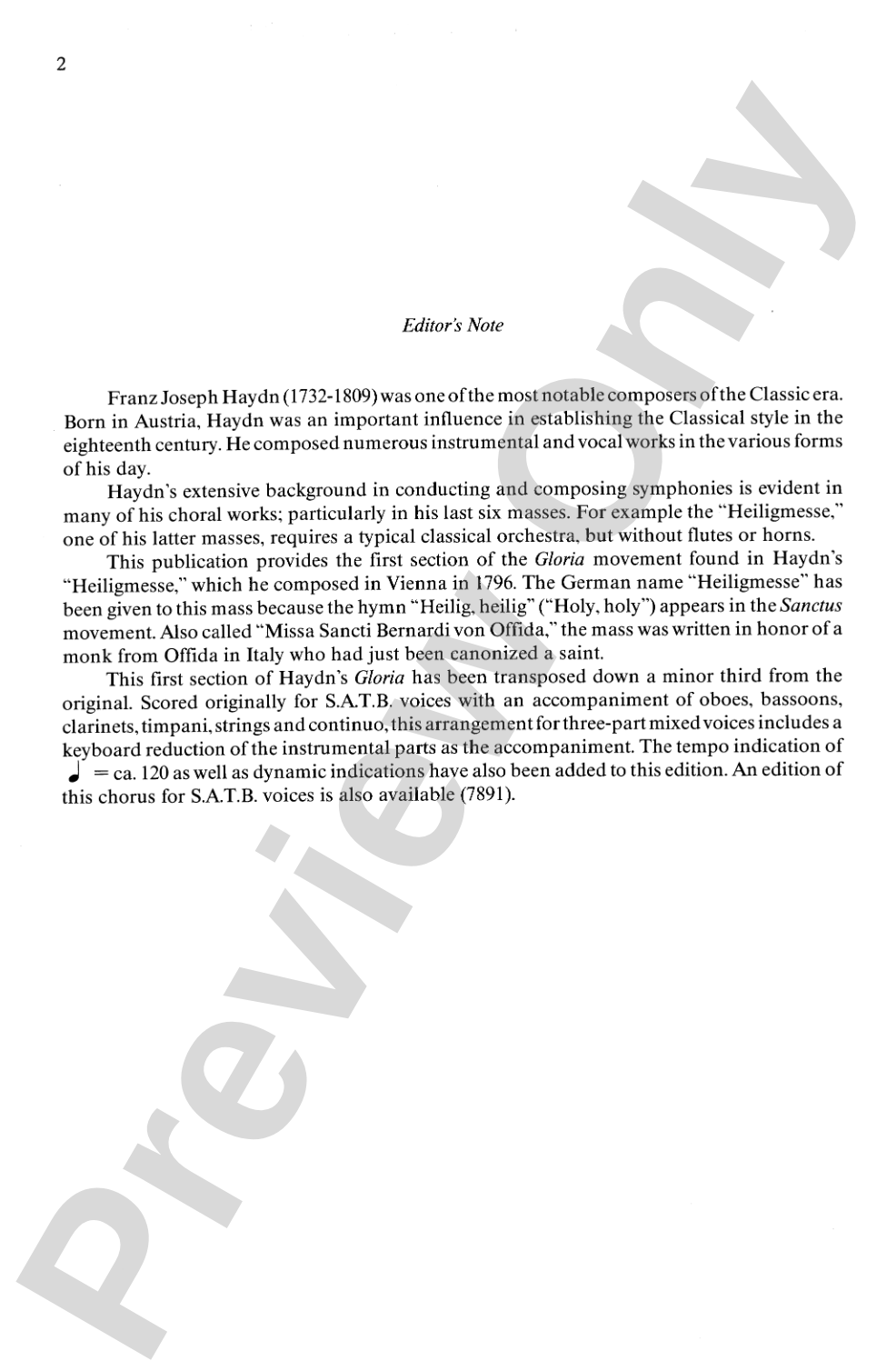
Franz Joseph Haydn (1732-1809) spent most of his career as Kapellmeister for the Esterházy family in Hungary, a position that demanded constant output across every musical genre. His sacred choral works, composed throughout his life, balance the grandeur of the Classical symphonic tradition with the intimate devotional needs of the liturgy. Haydn's ability to write music that is both formally sophisticated and emotionally direct made his masses and motets enduring standards in choral repertoire.
The "Heiligmesse" (Mass in B-flat Major, Hob. XXII:10), composed around 1796, represents Haydn's mature sacred style. Its "Gloria" movement exemplifies his gift for combining brilliant orchestration with singable, memorable vocal lines—qualities that transcend the centuries and speak directly to modern choirs.
Why we love this
Haydn's Gloria sparkles without requiring a virtuosic choir. Liebergen's three-part arrangement opens this masterwork to choirs that lack large SATB resources, and the dramatic shifts in dynamic and texture give conductors real interpretive choices. The combination of strong harmonic writing and accessible ranges means your singers will sound sophisticated without the labor of learning a heavily layered part.
What to expect
The Gloria moves between moments of celebration and reverence. Haydn's harmonic language glows in places, shifts suddenly in others, and the interplay of the three voice parts creates a sense of layered conversation. The strong keyboard accompaniment grounds the piece in Classical elegance while the singers ornament and illuminate the text above.
Who it's for
Choirs with solid fundamentals but mixed voice ranges benefit most from this edition. Community choirs, smaller church choirs, and festival ensembles seeking a piece that sounds substantial without overwhelming rehearsal schedules will find this an excellent fit.
How to get the most out of it
- Shape the piece through contrast rather than constant volume. Haydn writes distinct sections at different dynamic levels; respecting these shifts (marked in the score) creates momentum without requiring aggressive singing.
- Balance the piano or organ accompaniment carefully in rehearsal. The keyboard part carries substantial harmonic and rhythmic information, so ensure it sits underneath the voices rather than competing with them.
- Address the text clarity early. "Gloria" contains familiar Latin words, but the rhythmic setting can obscure them if singers focus only on pitch. Isolate key phrases like "Domine" and "Deo Patri" to lock diction.
- Prepare for the dramatic alto (middle voice) writing. This part has prominent moments that deserve confident, supported singing; consider how your alto section's strength affects the overall balance.
How to use it
Program this as a concert feature that anchors a sacred or seasonal concert. Its twelve pages and moderate difficulty allow singers to prepare it thoroughly in standard rehearsal time, and its formality makes it equally at home in a church service or festival competition where you want to represent Classical choral literature.
Skills your students will build
- Reading three-part mixed voicing (SAB) and understanding voice independence within that texture
- Singing sustained Classical lines with proper phrase shaping and text projection
- Balancing accompaniment and vocal blend across ranges separated by wide intervallic leaps
- Responding to dynamic markings that shape dramatic and devotional character in the same piece