

Gloria (from Harmoniemesse): SATB Choral Octavo
From Harmoniemesse
By Franz Joseph Haydn / ed. and arr. Patrick M. Liebergen
Item: 00-PO-0000855
$1.75
Minimum order quantity: 20 copies
Pickup currently not available
Related Items
Gloria: PianoTrax Digital Download |
$9.99
|
View | |
Gloria (from Heiligmesse): SATB Choral Octavo |
$2.25
|
View | |
Gloria (from Heiligmesse): 3-Part Mixed Choral Octavo |
$2.25
|
View | |
Gloria: SSA Choral Octavo |
$2.25
|
View | |
Gloria: SATB Choral Octavo |
$2.25
|
View | |
Gloria (from Mass in Time of War): SATB Choral Octavo |
$2.95
|
View | |
Gloria (from Mass in Time of War): SAB Choral Octavo |
$2.95
|
View | |
Gloria (from Teresienmesse): SAB Choral Octavo |
$2.25
|
View | |
Gloria: SATB Choral Octavo |
$1.75
|
View | |
Gloria: SATB Choral Octavo |
$2.50
|
View | |
Gloria: 3-Part Mixed Choral Octavo |
$2.25
|
View | |
Gloria: SSA Choral Octavo |
$2.25
|
View | |
Gloria: SATB Choral Octavo |
$2.25
|
View | |
Gloria: SATB Choral Octavo |
$2.95
|
View | |
Gloria: SAB Choral Octavo |
$2.95
|
View | |
Gloria: SAB Choral Octavo |
$2.25
|
View |
Description
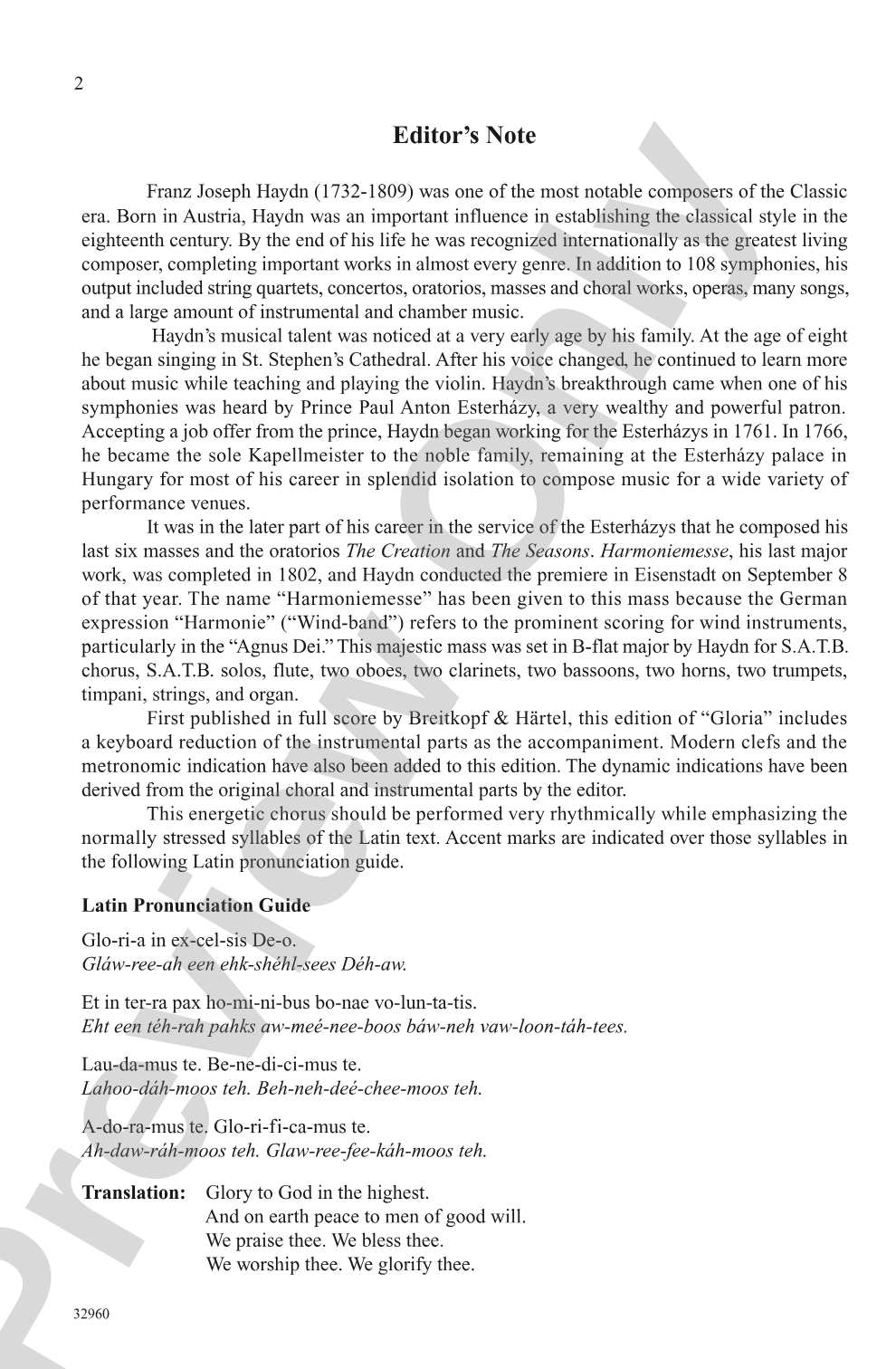
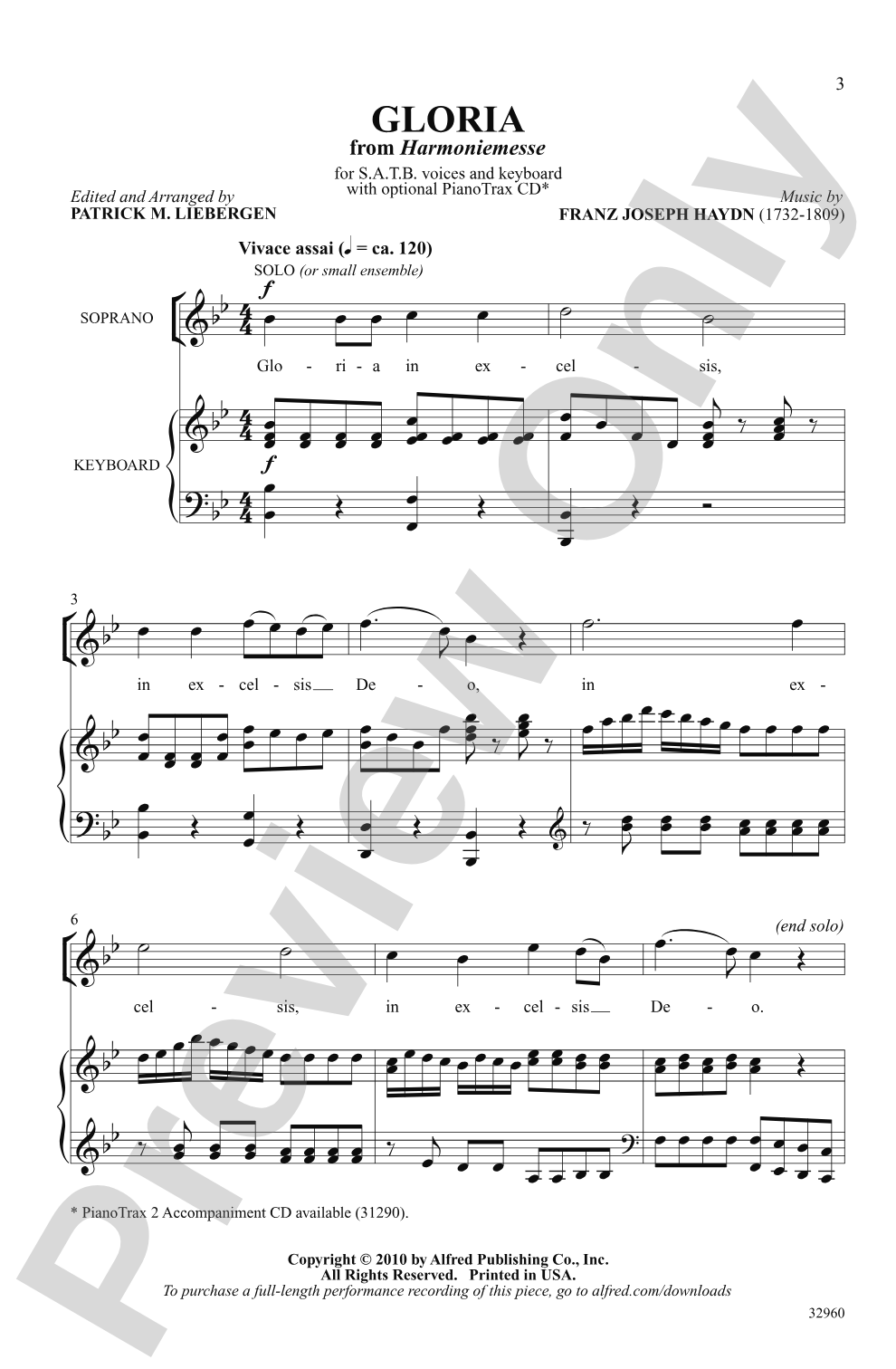
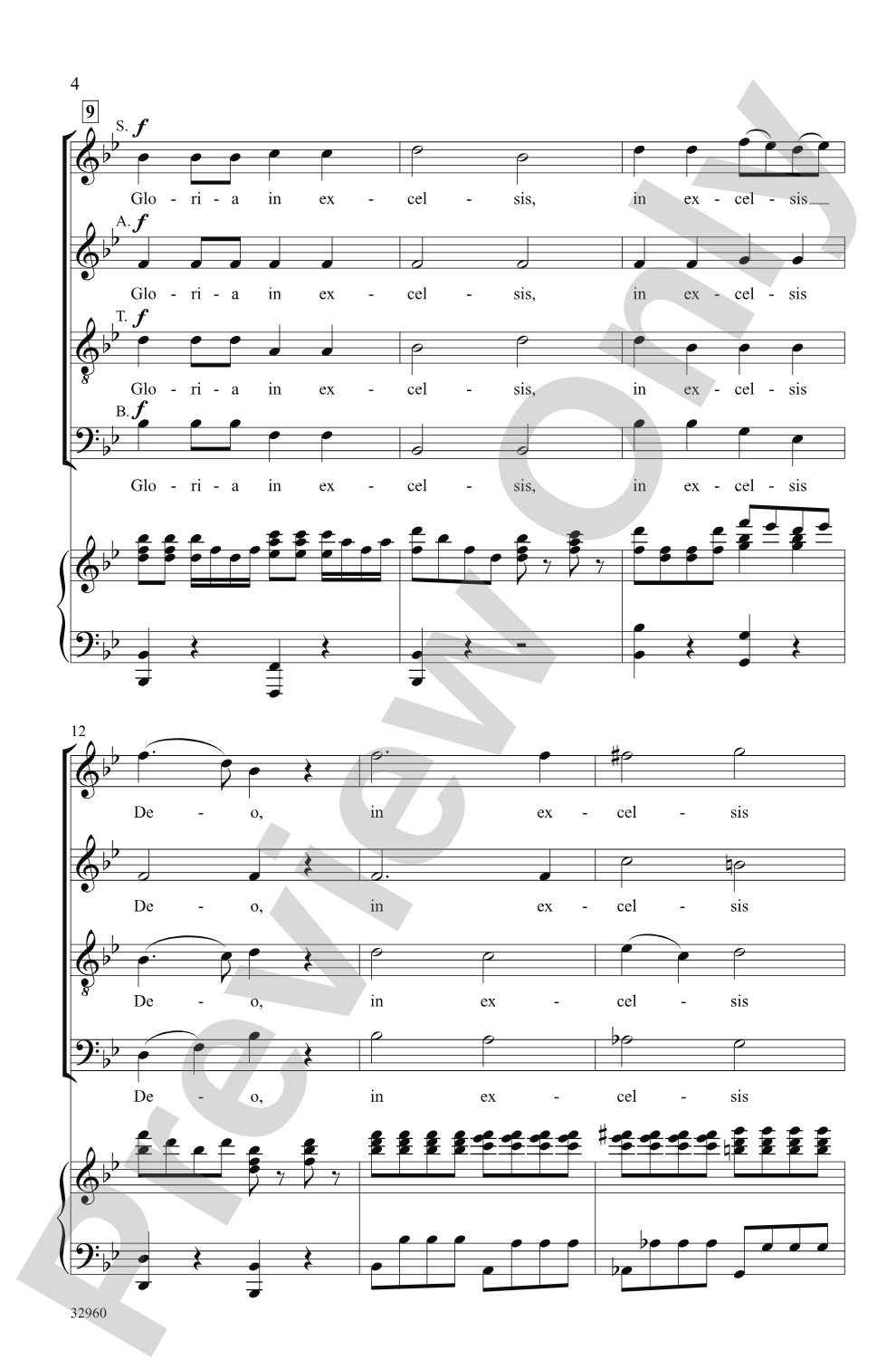
A majestic chorus from Haydn's final mass. Opens with a solo for your most developed soprano, followed by joyful classical singing for the entire group. Accompaniment included on PianoTrax 2 CD (00-31290).


Gloria (from Harmoniemesse): SATB Choral Octavo isn't in MakeMusic Cloud just yet...but it could be. Let us know you'd like to see it, and you'll help shape what comes next. In the meantime, start a free trial and dive into thousands of interactive titles your students can play along with today.
Request This Title
Tell us you want it.
Start Your Free Trial
Explore everything that's ready to play right now.
Sample Audio
1
Audio File
--:--
0:00
0:00
Sample Video
No sample videos found.
Additional Details
Series:
Alfred Choral Designs
Publisher:
Alfred Music
Page Count:
12
SKU:
00-PO-0000855
More about this title
About the Composer: Franz Joseph Haydn
Franz Joseph Haydn (1732-1809) was the most prolific and influential composer of the classical era, shaping the symphony, string quartet, and sonata form through decades of relentless innovation. His final works, written in his seventies, show deepening spiritual maturity; the Harmoniemesse (Mass in B-flat) stands among his most inspired sacred compositions, blending the architectural clarity of his instrumental writing with profound liturgical warmth.
Haydn's influence on music education remains foundational. His works reward careful attention to phrase shape, articulation, and ensemble balance, making them essential repertoire for choirs seeking to develop musicianship beyond surface expression. Teachers value him precisely because his music demands precision while remaining deeply human.
Why we love this
This movement gives your choir direct access to Haydn's gift for balancing soloistic brilliance with collective joy. The soprano entrance immediately signals that your best singer has earned a moment in the light, while the homophonic writing that follows lets the full choir sing with transparency and elegance. Few arrangements at this level offer such natural paths for both spotlight and ensemble work.
What to expect
The music radiates classical optimism and refinement, opening with a moment of intimate beauty before expanding into radiant, full-voiced affirmation. The overall effect is joyful without sentimentality, elegant without coldness, inviting singers to experience both the confidence of ensemble singing and the responsibility of transparent part-writing.
Who it's for
This octavo serves choirs with a secure soprano section and solid foundational musicianship. The part-writing assumes confident readers and attentive ensemble awareness, making it ideal for community choirs, collegiate ensembles, and advanced high school groups seeking sacred repertoire beyond beginner arrangements.
How to get the most out of it
- Shape each phrase as a gentle arc rather than pushing through to the barline. Haydn's classical lines reward restraint and breath at musically logical points.
- Maintain lightness in the choral sections despite the 'majestic' character. Classical jubilation comes from clarity and buoyancy, not weight.
- Distinguish the soprano solo's intimate character from the choral passages by allowing slightly more expressive freedom in the opening line before settling into the collective ensemble sound.
- Balance the parts carefully in the full sections; the alto and tenor lines contain important harmonic motion that will disappear if the sopranos dominate.
How to use it
Program this as the centerpiece of a sacred music concert or as a major work within a longer liturgical or thematic program. Its twelve pages and moderate difficulty make it a substantial closer or anchor piece that lifts the entire programming by its association with Haydn's masterwork status. It also pairs naturally with other mass movements or classical sacred literature.
Skills your students will build
- Singing classical phrase shapes with proper curve and breath placement
- Balancing parts transparently without sacrificing harmonic sonority
- Responding to contrasts between soloistic and tutti textures
- Executing clean diction and articulation in English text underlay
- Reading and executing accurate classical rhythm and metric integrity