Fill Your Life with Music Cover Image

Fill Your Life with Music: SSA Choral Octavo

$2.05 USD
Sale price  $2.05 USD Regular price 
Skip to product information
Fill Your Life with Music Cover Image

Fill Your Life with Music: SSA Choral Octavo

(Musica Dei)

Words and music by Sally K. Albrecht and Jay Althouse

Item: 00-46601

makemusic Cloud badge

Need it now?

Buy Digital Version
$2.05
Shipped

One moment…

Description
Though most of the piece is in English, a brief Latin phrase provides the framework for this pensive meditation on the world of music and sound that surrounds us. The gentle ebb and flow of tempo allows choirs to explore new depths of choral expression. Sign language is available on Alfred's Movin' DVD.

Don't just read it, hear it, play along with it, and watch your students grow with it. In MakeMusic Cloud, Fill Your Life with Music: SSA Choral Octavo comes alive with professional accompaniment, adjustable tempo, and built-in practice tools that turn solo practice into real progress.

Sample Pages

Sample Audio
0:00
0:00
Sample Video
Additional Details
Series: Alfred Choral Designs
Publisher: Alfred Music
Page Count: 8
UPC: 038081531762
SKU: 00-46601

More about this title

About the Composer: Sally K. Albrecht
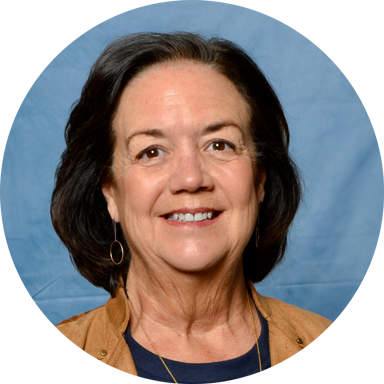
Sally K. Albrecht

Sally K. Albrecht has shaped American choral music for over four decades as a composer, conductor, and clinician with a particular gift for integrating movement into vocal performance. She has maintained an extraordinary publication record—over 600 choral works plus 75 full-length musicals and songbooks in print—while simultaneously conducting honor choirs at major venues including Lincoln Center, Carnegie Hall, and The Kennedy Center. Her contributions to music education earned her continuous recognition through the ASCAP Special Music Award since 1987, and she served for more than 30 years as Director of School Choral, Vocal, and Elementary Publications at major music publishers, including Alfred Music. She holds degrees from Rollins College (B.A. in Music and Theater, 1976), the University of Miami (M.A. in Drama, 1977, and M.M. in Accompanying, 1979) and has taught at Oakland University, Jersey City State College, and Meredith College.

Beyond her publishing legacy, Albrecht has earned recognition as a leader in music education and institutional governance. She chaired the Board of Trustees for Omicron Delta Kappa National Leadership Honor Society and received their "Pillar of Leadership" award. In 2021, both the University of Miami Frost School of Music and Rollins College honored her with Distinguished Alumna Awards. She resides in Wake Forest, North Carolina, with her husband Jay Althouse, a composer and arranger in his own right.

Why we love this

Albrecht and Althouse create pieces that sing naturally across middle and developing voices while offering genuine artistic depth. The interplay of English text with a Latin framework gives singers something substantive to explore, and the rubato approach to tempo change rewards choirs willing to invest in careful ensemble listening and expression. The inclusion of sign language staging opens accessibility and adds visual dimension without requiring extensive choreography expertise.

What to expect

A contemplative, gently swaying meditation that invites singers to inhabit quiet reflection on the music that surrounds us. The flowing tempo changes feel less like disruption and more like natural breathing, creating moments where a choir can discover ensemble balance and emotional honesty together.

Who it's for

SSA and SSAA choirs seeking a piece that feels substantial enough for concert and festival programming without requiring advanced vocal ranges. This works well for middle school, high school, and community ensembles that want to grow expressive nuance and explore how text setting shapes musical meaning.

How to get the most out of it

  • Map the tempo fluctuations in rehearsal before adding text. Establish where the piece breathes and where it pulls forward, helping singers feel the shape rather than simply following a conductor.
  • Balance the Latin phrase with clarity; these words anchor the piece's meaning, so diction work here repays the investment across the entire performance.
  • If incorporating the sign language option, teach it early and integrate it naturally into vocal rehearsal rather than as an afterthought. Singers who understand the physical vocabulary will shape their tone and phrasing to match the movement.

How to use it

This octavo pairs beautifully with other contemporary secular works in a concert centered on text and meaning. Its introspective quality makes it especially effective as a transition piece or program centerpiece that showcases choral artistry without demanding high technical virtuosity from singers.

Skills your students will build

  • Singing with flexible tempo and responding to expressive conducting without losing ensemble cohesion
  • Latin diction and vowel formation in a brief but significant musical context
  • Connecting physical movement (if staging) to vocal line and musical phrasing
  • Building dynamic balance and blend in SSA voicing

You May Also Like
