
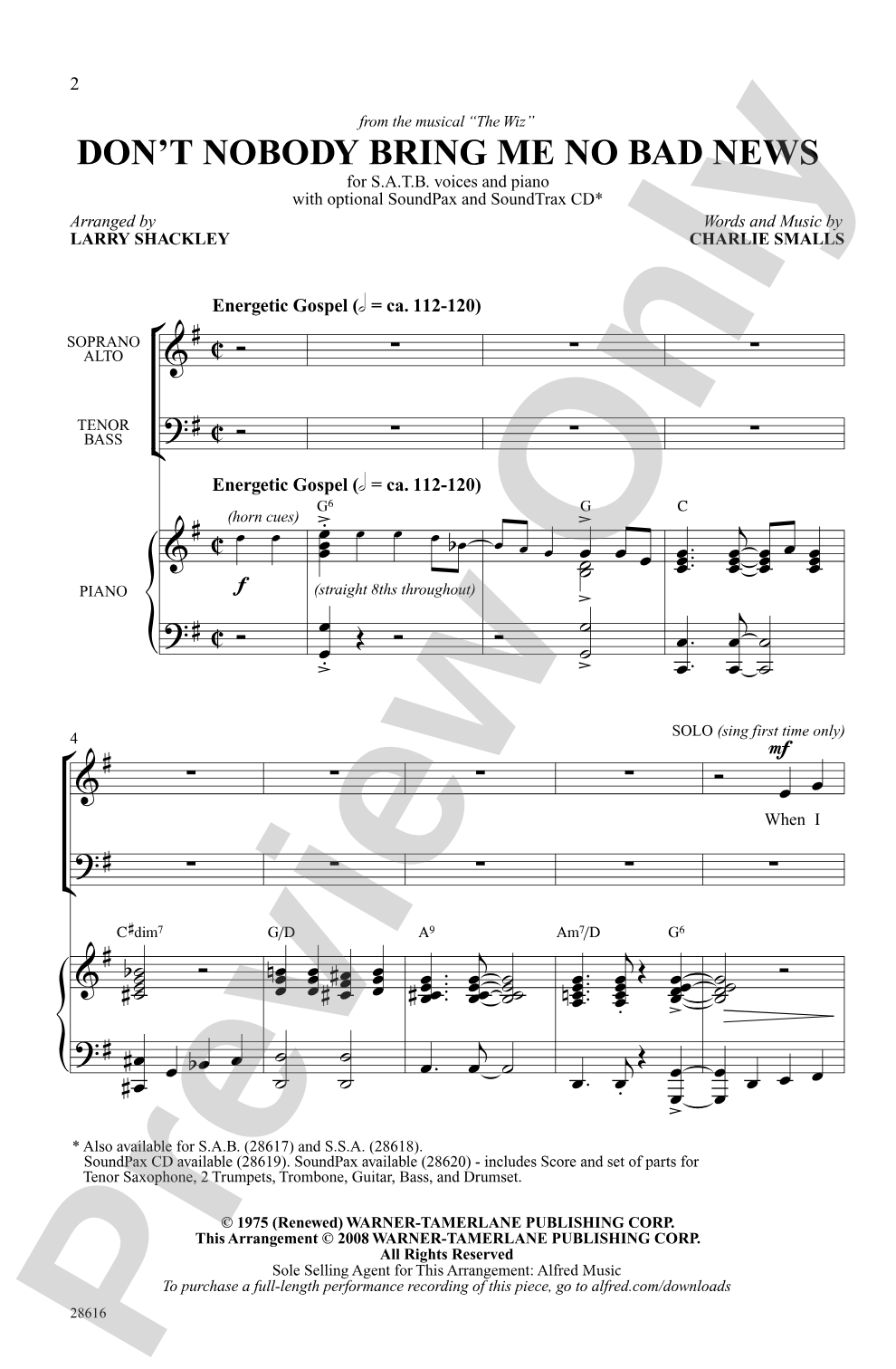

Don't Nobody Bring Me No Bad News (from the musical The Wiz): SATB Choral Octavo
From the Musical The Wiz
Words and music by Charlie Smalls / arr. Larry Shackley
Item: 00-PO-0004374
$2.95
Minimum order quantity: 20 copies
One moment…
Related Items
Don't Nobody Bring Me No Bad News: SoundTrax Digital Audio Download |
$27.99
|
View | |
Don't Nobody Bring Me No Bad News: SAB Choral Octavo |
$1.95
|
View | |
Don't Nobody Bring Me No Bad News: SSA Choral Octavo |
$1.95
|
View | |
Don't Nobody Bring Me No Bad News (from the musical The Wiz): Choral SoundPax |
$35.00
|
View | |
Don't Nobody Bring Me No Bad News: SATB Choral Octavo |
$2.95
|
View | |
Don't Nobody Bring Me No Bad News: SAB Choral Octavo |
$1.95
|
View | |
Don't Nobody Bring Me No Bad News: SSA Choral Octavo |
$1.95
|
View | |
Don't Nobody Bring Me No Bad News: Choral Octavo SoundTrax CD |
$27.99
|
View | |
Don't Nobody Bring Me No Bad News: Choral SoundPax |
$35.00
|
View |
Description
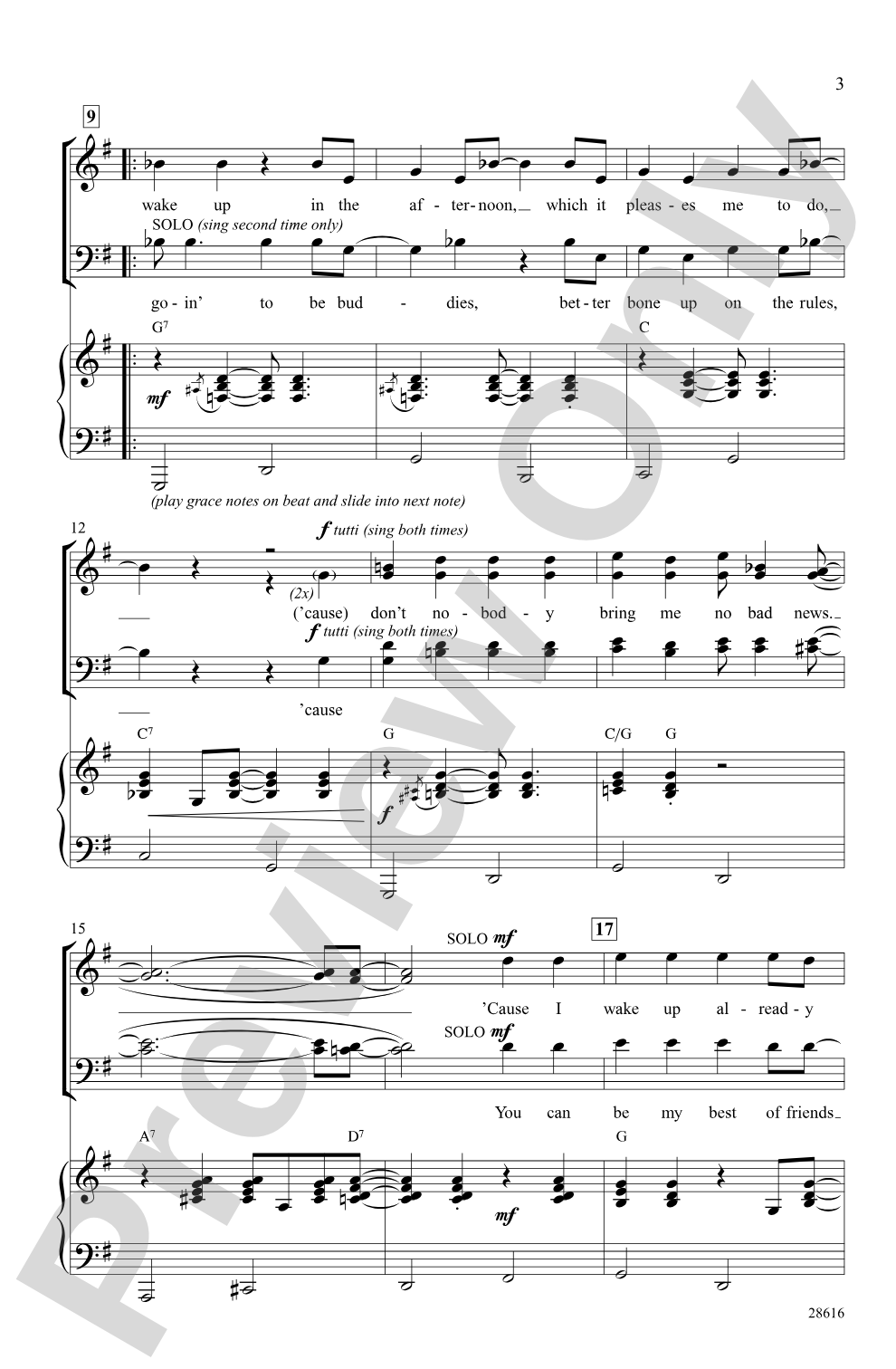
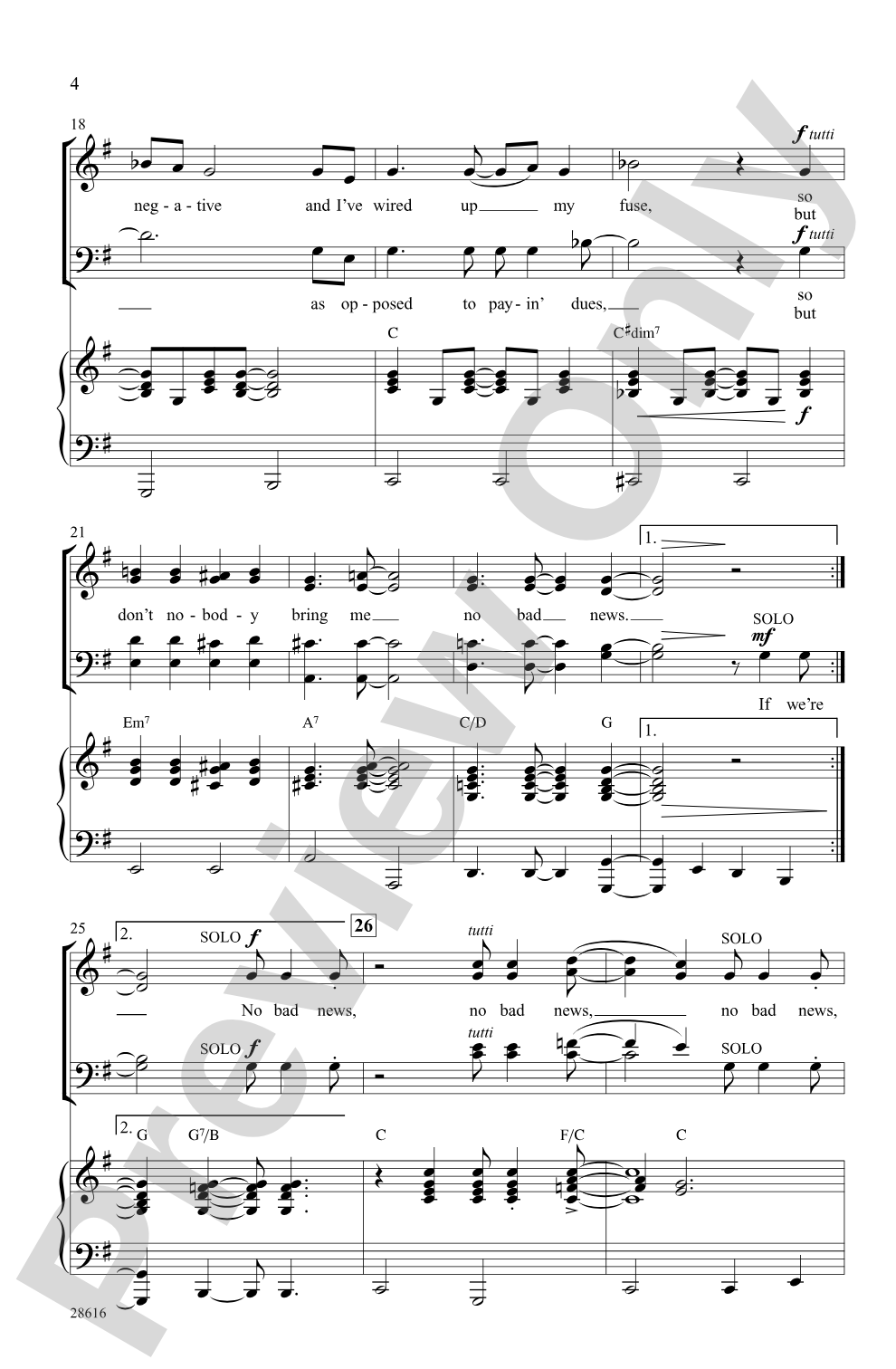
One of the many hits from the groundbreaking musical The Wiz. It's arranged in a gospel style with several brief solos. Appropriate for concert and pop choirs. After all, who wants to hear bad news?


Don't Nobody Bring Me No Bad News (from the musical The Wiz): SATB Choral Octavo isn't in MakeMusic Cloud just yet...but it could be. Let us know you'd like to see it, and you'll help shape what comes next. In the meantime, start a free trial and dive into thousands of interactive titles your students can play along with today.
Request This Title
Tell us you want it.
Start Your Free Trial
Explore everything that's ready to play right now.
Sample Audio
1
Audio File
--:--
0:00
0:00
Sample Video
No sample videos found.
Additional Details
Series:
Alfred Archive Edition: Alfred Pop Choral Series
Publisher:
Alfred Music
Page Count:
16
SKU:
00-PO-0004374
More about this title
About the Composer: Charlie Smalls
Charlie Smalls composed the entire score for The Wiz, the 1975 Tony Award-winning musical that reimagined L. Frank Baum's classic story through an African American lens. His work on The Wiz remains his most celebrated contribution to American musical theater, blending soul, gospel, and pop influences into songs that resonated across generations. Smalls' ability to craft accessible, emotionally direct melodies while maintaining sophisticated harmonic language made The Wiz both a commercial and critical success.
Beyond The Wiz, Smalls worked as a composer and arranger in popular music and theater, though The Wiz secured his legacy in the canon of American musical composition. His score demonstrated that Broadway music could authentically draw from African American musical traditions while reaching mainstream audiences.
Why we love this
Shackley's arrangement captures the infectious gospel energy of the original without overwhelming singers or requiring extensive harmonic sophistication. The brief solo passages give individual voices moments to shine while keeping the piece ensemble-focused, and the style offers natural opportunities to explore vocal color and rhythmic precision that feel fun rather than technical.
What to expect
Upbeat and irreverent, with the conversational tone of someone waving off unwelcome drama. The gospel foundation gives the piece soul and warmth, while the melodic clarity and rhythmic energy keep it light and fun rather than heavy. There's a built-in smile here; the piece practically performs itself.
Who it's for
Concert and pop choirs looking for accessible contemporary material with built-in variety and engagement. Singers benefit from the clear style and straightforward harmonic language, while directors gain a recognizable title that audiences know and enjoy. The solos make this ideal for choirs with singers eager for spotlight moments without requiring operatic technique.
How to get the most out of it
- Let the rhythm section lock the groove first. The pocket of this piece depends on confident, relaxed timekeeping from your accompanists, so rehearse the rhythm parts thoroughly before full choir run-throughs.
- Shape the solos as confident statements, not apologetic passages. These singers are delivering news, so encourage them to commit fully to their lines and phrases rather than shrinking back to support harmonies.
- Lean into the gospel articulation without overdoing it. Short, energized vowels on key syllables and gentle tail-offs on phrases will capture the style's character without requiring stylistic instruction beyond what most singers instinctively understand.
- Balance the ensemble and solos dynamically. The contrast between full choir and individual voices disappears if solos aren't sung at similar volume levels to the full sections, so work this balance in rehearsal.
How to use it
Program this in the second half of a concert where you want to shift to a lighter mood and energy. It pairs well alongside other pop or contemporary choral selections and works as a strong closer if you want the audience leaving in a satisfied, entertained frame of mind. The recognizable source material also makes it effective for school or community concerts where accessibility matters.
Skills your students will build
- Gospel vocal style and articulation techniques
- Part independence within a rhythmically driven ensemble texture
- Solo confidence and projection in a supported choral context
- Reading and performing unison and divisi passages with clarity
- Listening to and locking with rhythmic accompaniment