

Don't Nobody Bring Me No Bad News: SSA Choral Octavo
From the Musical The Wiz
Words and music by Charlie Smalls / arr. Larry Shackley
Item: 00-PO-0007988
$1.95
Minimum order quantity: 20 copies
Pickup currently not available
Related Items
Don't Nobody Bring Me No Bad News: SoundTrax Digital Audio Download |
$27.99
|
View | |
Don't Nobody Bring Me No Bad News (from the musical The Wiz): SATB Choral Octavo |
$2.95
|
View | |
Don't Nobody Bring Me No Bad News: SAB Choral Octavo |
$1.95
|
View | |
Don't Nobody Bring Me No Bad News (from the musical The Wiz): Choral SoundPax |
$35.00
|
View | |
Don't Nobody Bring Me No Bad News: SATB Choral Octavo |
$2.95
|
View | |
Don't Nobody Bring Me No Bad News: SAB Choral Octavo |
$1.95
|
View | |
Don't Nobody Bring Me No Bad News: SSA Choral Octavo |
$1.95
|
View | |
Don't Nobody Bring Me No Bad News: Choral Octavo SoundTrax CD |
$27.99
|
View | |
Don't Nobody Bring Me No Bad News: Choral SoundPax |
$35.00
|
View |
Description
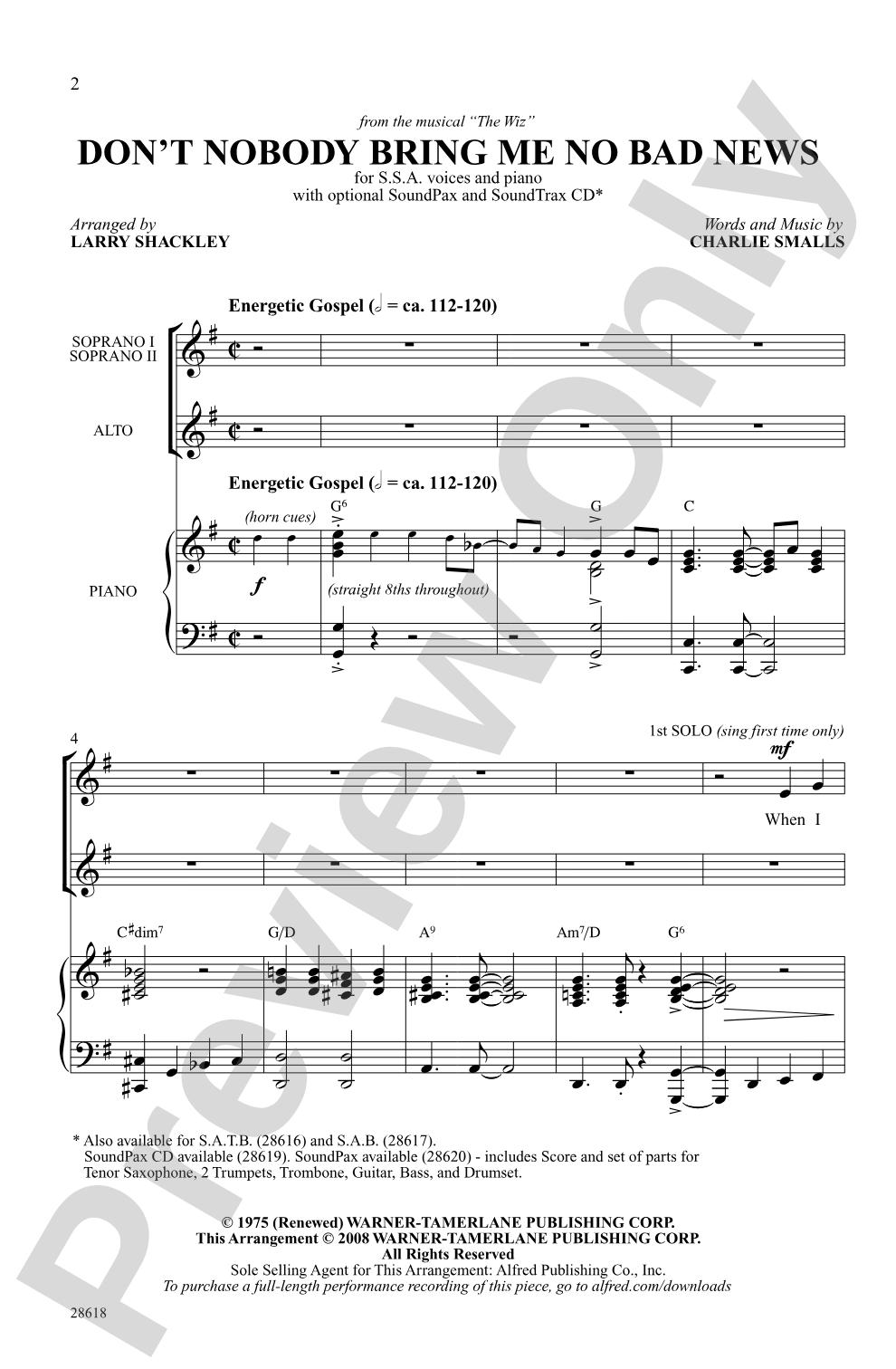
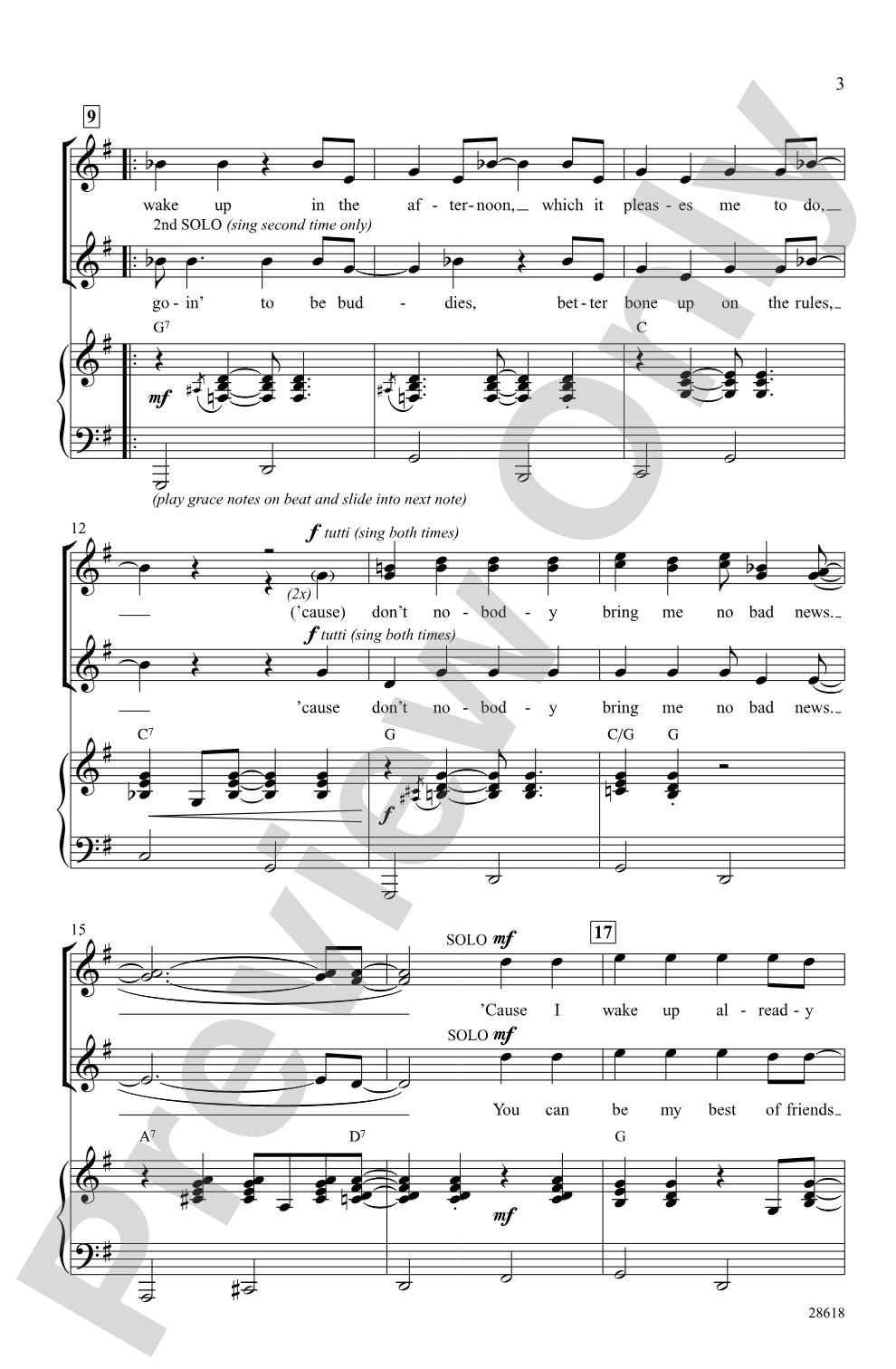
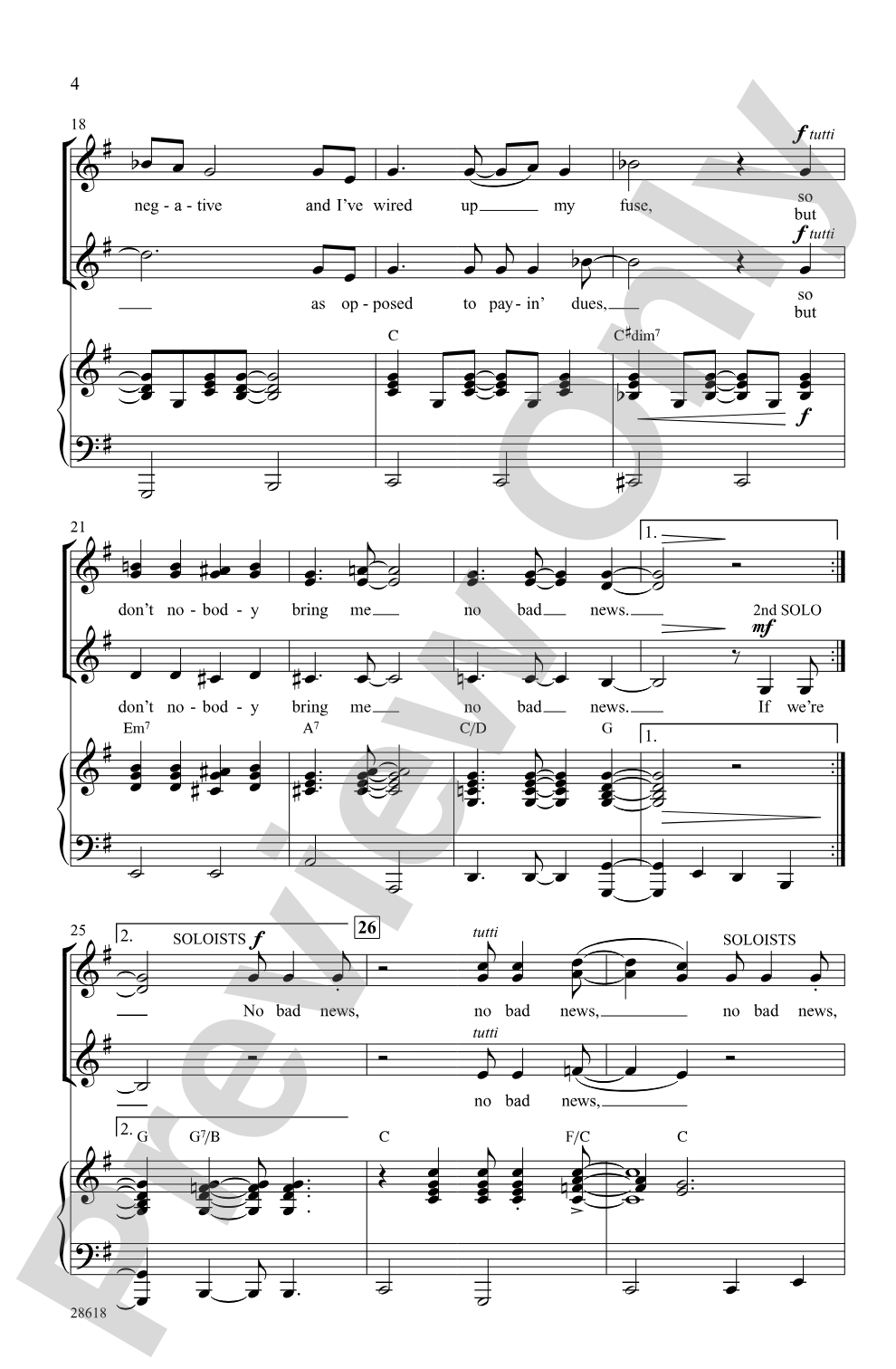
One of the many hits from the groundbreaking musical The Wiz. It's arranged in a gospel style with several brief solos. Appropriate for concert and pop choirs. After all, who wants to hear bad news?


Don't Nobody Bring Me No Bad News: SSA Choral Octavo isn't in MakeMusic Cloud just yet...but it could be. Let us know you'd like to see it, and you'll help shape what comes next. In the meantime, start a free trial and dive into thousands of interactive titles your students can play along with today.
Request This Title
Tell us you want it.
Start Your Free Trial
Explore everything that's ready to play right now.
Sample Audio
1
Audio File
--:--
0:00
0:00
Sample Video
No sample videos found.
Additional Details
Series:
Alfred Pop Choral Series
Publisher:
Alfred Music
Page Count:
16
SKU:
00-PO-0007988
More about this title
About the Composer: Charlie Smalls
Charlie Smalls composed the score for The Wiz, the 1975 Broadway musical that reimagined L. Frank Baum's The Wonderful Wizard of Oz through an African American lens. His work on that production earned him a Tony Award nomination and established him as a significant voice in musical theater during a transformative era for the art form. Smalls' gift for memorable melody and rhythmic sophistication shaped a show that has remained in the cultural conversation for nearly 50 years, influencing how educators and artists approach adaptation and representation in music.
Why we love this
Larry Shackley's arrangement captures the infectious energy and gospel warmth of the original while keeping the technical demands reasonable for developing choirs. The brief solos create natural opportunities for feature singers without requiring extended performance experience, and the SSA voicing keeps this accessible to most ensemble levels. You get a song that lands immediately with audiences and brings genuine joy to performers.
What to expect
Buoyant and sassy. The piece swings with a gospel confidence that feels celebratory rather than heavy, even as it touches on the very human desire to avoid bad news. There's a playfulness in the arrangement that makes singers smile while performing it.
Who it's for
Concert choirs and pop choirs wanting a crowd pleasing number with genuine musical substance. Ensembles that include strong solo voices will have particular fun with this arrangement, though it's written to accommodate varying levels of solo experience.
How to get the most out of it
- Build the groove steadily through rehearsals rather than locking the tempo too early. Let the rhythmic feel breathe and find its swagger naturally with the ensemble.
- Highlight the contrast between the soloists' conversational delivery and the full ensemble responses. This interplay is what makes the arrangement sparkle.
- Work the diction with particular care around the playful title phrase. The clarity and attitude in that lyric sets the entire tone for the piece.
- Use the recorded accompaniment to anchor the harmonic movement and gospel inflections, especially in the piano voicings that give the arrangement its character.
How to use it
Pair this with other uplifting pop or Broadway selections for a concert that celebrates musical theater beyond traditional operetta. It also works beautifully as a mood shifter in a mixed program, offering audiences a chance to lean back and enjoy themselves after weightier repertoire.
Skills your students will build
- Gospel style phrasing and swing articulation
- Trading solos and ensemble call-and-response textures
- Rhythmic precision in syncopated passages
- Stylistic accuracy in pop choral idiom
- Balancing solo presence with ensemble unity