

Caged Bird: SSAA Choral Octavo
From Like Dust I Rise (A Choral Song Cycle)
Text by Maya Angelou, music by Mark Hayes
Item: 00-PO-0005654
$1.90
Minimum order quantity: 20 copies
Pickup currently not available
Related Items
Caged Bird: SoundTrax Digital Audio Download |
$29.99
|
View | |
Caged Bird: SATB Choral Octavo |
$1.90
|
View | |
Caged Bird: TTBB Choral Octavo |
$1.90
|
View | |
Caged Bird: Choral SoundPax |
$50.00
|
View | |
Caged Bird: SATB Choral Octavo |
$1.90
|
View | |
Caged Bird: SSAA Choral Octavo |
$1.90
|
View | |
Caged Bird: TTBB Choral Octavo |
$1.90
|
View | |
Caged Bird: Choral Octavo SoundTrax CD |
$29.99
|
View | |
Caged Bird: Choral SoundPax |
$50.00
|
View |
Description
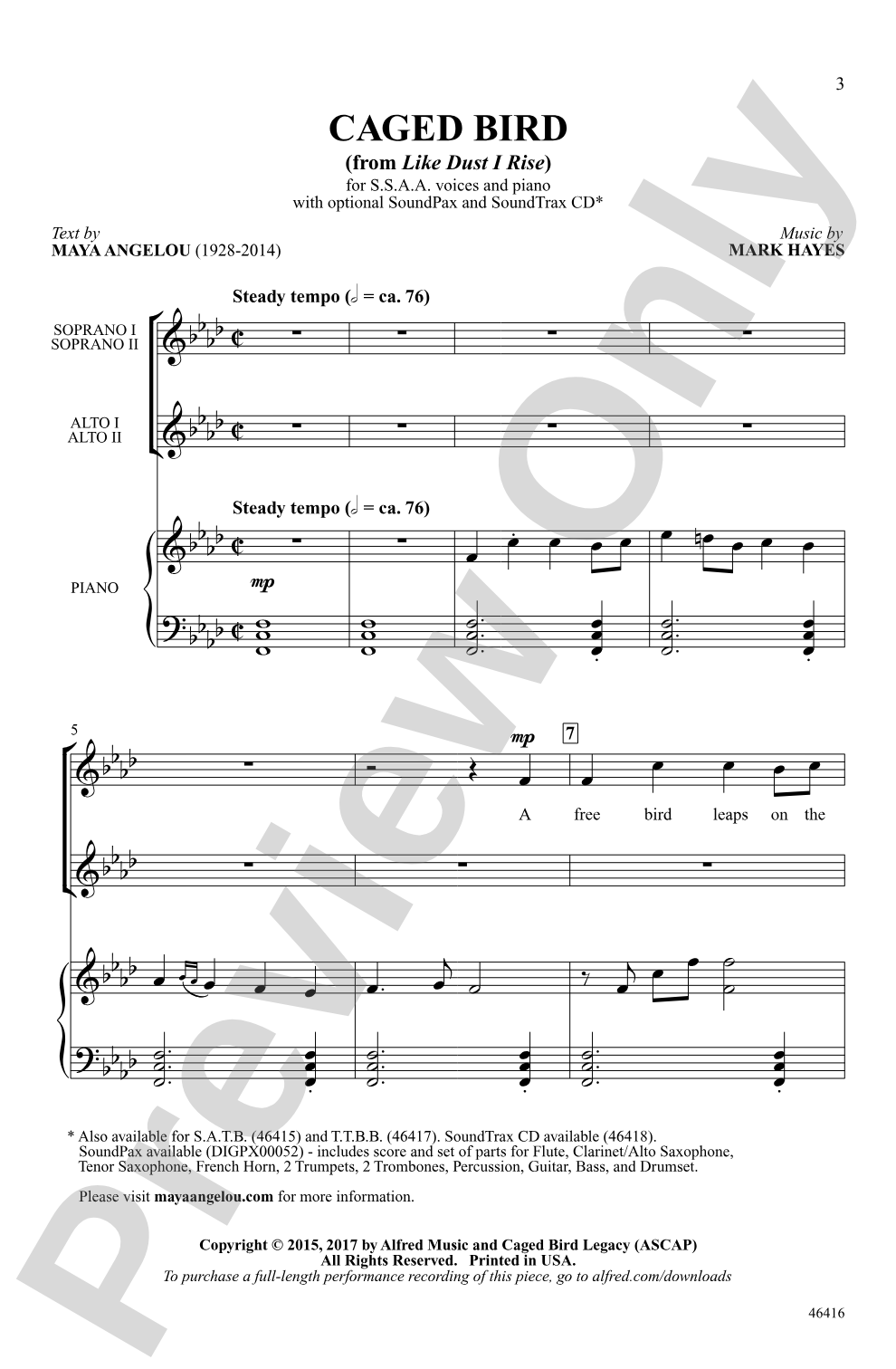
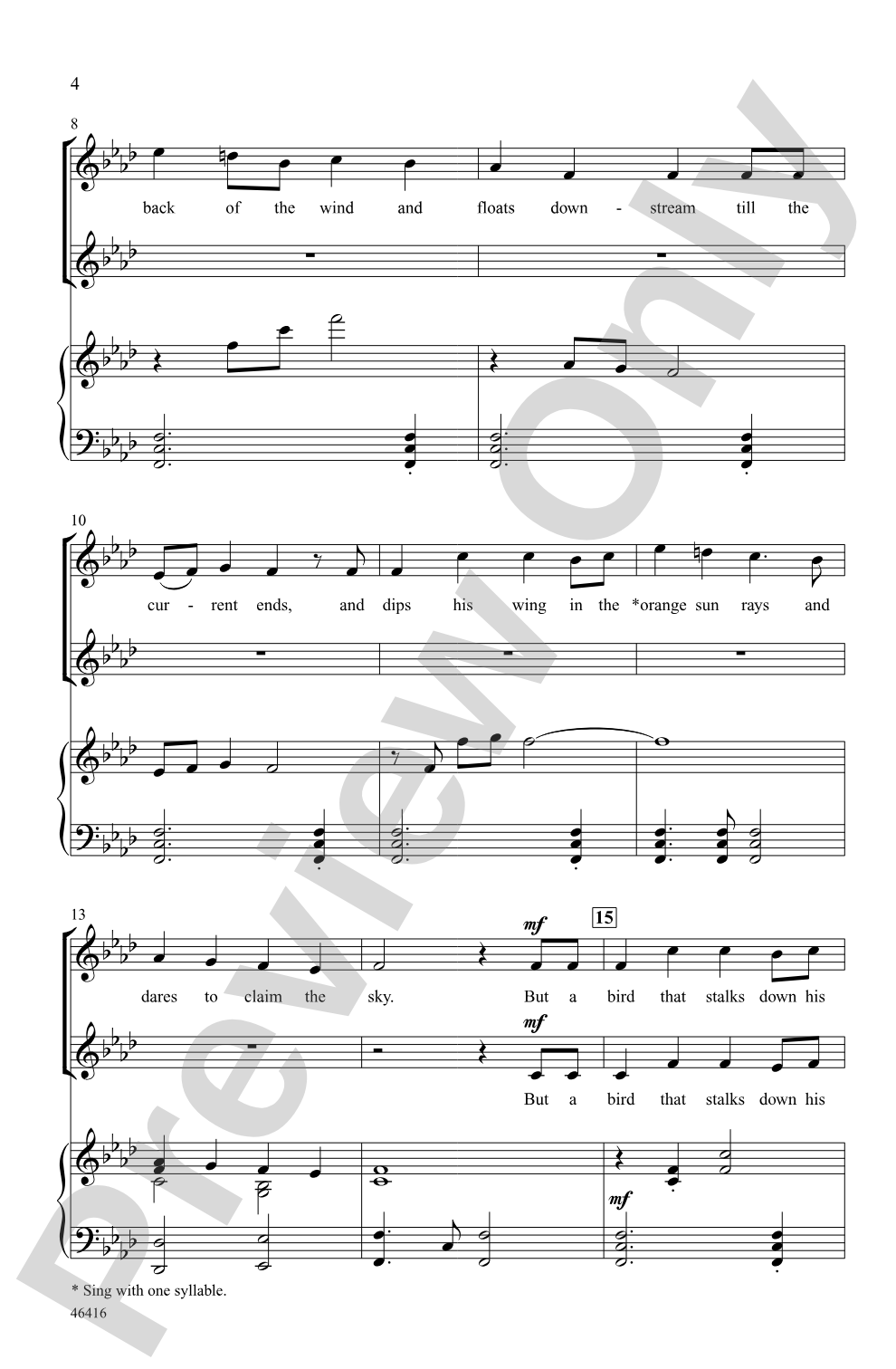
A folk-like setting of Maya Angelou's empowering poem, which compares a bird's longing to be liberated with that of all people. Hayes chooses a minor key with plenty of harmonic tension and a walking tempo that suggests the footsteps of those who have come before. The final Picardy third is the ultimate symbol of freedom. This is the second movement from the song cycle Like Dust I Rise.


Caged Bird: SSAA Choral Octavo isn't in MakeMusic Cloud just yet...but it could be. Let us know you'd like to see it, and you'll help shape what comes next. In the meantime, start a free trial and dive into thousands of interactive titles your students can play along with today.
Request This Title
Tell us you want it.
Start Your Free Trial
Explore everything that's ready to play right now.
Sample Audio
1
Audio File
--:--
2
SATB Recording
--:--
Audio File
0:00
0:00
Sample Video
Additional Details
Series:
Alfred Choral Designs
Publisher:
Alfred Music
Page Count:
12
SKU:
00-PO-0005654
More about this title
About the Composer: Mark Hayes
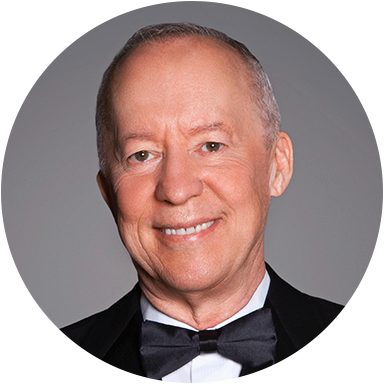
Mark Hayes stands among the most prolific composers working in choral and vocal music today, with over 1,750 published works spanning classical, sacred, and popular styles. A summa cum laude graduate in Piano Performance from Baylor University, Hayes has built a career conducting at major venues including Lincoln Center, Carnegie Hall, and the National Cathedral, while commissioning and premiering large-scale works like his Requiem at St. Ignatius Basilica in Rome and his treble-voice concerto for Hong Kong's 100th anniversary celebration.
Beyond the concert hall, Hayes has shaped contemporary musical theater, orchestrating the musical Madame Buttermilk and arranging scores for theatrical productions that have won recognition at major festivals. His personal passion for piano composition has yielded over 100 published books across genres from gospel to classical to jazz. Based in Kansas City, Missouri, Hayes continues to balance his work as a conductor, orchestrator, and record producer with his core mission of creating accessible, meaningful music for performers and audiences worldwide.
Why we love this
Hayes captures the raw tension and ultimate triumph of Angelou's poem through deliberate harmonic choices: the minor-key setting creates genuine unease, while the final Picardy third lands as a powerful statement of hope rather than a decorative gesture. The walking tempo keeps the piece grounded and human-scaled, making it accessible for student choirs while maintaining artistic depth that adult ensembles will respect.
What to expect
Caged Bird unfolds with quiet, deliberate intensity. The minor tonality creates an atmosphere of longing and restraint, while the steady tempo grounds the piece in human footsteps and lived experience. When the final shift to major arrives, it breaks open like light, transforming everything that came before into a statement of resilience and freedom.
Who it's for
This octavo serves SSAA and SSAA choirs looking to program meaningful repertoire that engages both the head and heart. It works equally well in high school concert settings, college choral ensembles, and community choirs seeking literature with genuine artistic substance and social relevance.
How to get the most out of it
- Attend carefully to the harmonic tension in the middle sections; resist the urge to soften it or resolve early. Let the minor tonality do its work until the final shift.
- Shape the "walking" tempo as a steady, purposeful stride rather than a march. Think pilgrimage, not procession.
- The Picardy third shift to the major key needs clarity and commitment from all four voice parts to land its full impact. Rehearse this transition in isolation if needed.
- Use the recorded accompaniment to lock in the harmonic foundation, especially during the moments of greatest tension, so singers can focus on emotional delivery rather than pitch security.
How to use it
Program this as a centerpiece for a concert exploring themes of freedom, justice, or resilience. It pairs naturally with other spiritually minded secular works or with orchestral selections that explore similar emotional territory. The piece also serves as a powerful teaching tool in units on contemporary choral literature, text painting, and harmonic function.
Skills your students will build
- Reading SSAA voicing and maintaining independent melodic lines within a four-part texture
- Interpreting harmonic tension and understanding how minor tonality creates emotional color
- Sustaining longer phrases at a walking tempo while maintaining rhythmic precision
- Recognizing and executing the major-key shift (Picardy third) with expressive confidence
- Connecting poetic meaning to musical structure and performance choices