Caged Bird Cover Image

Caged Bird: SSAA Choral Octavo

$1.90 USD
Sale price  $1.90 USD Regular price 
Skip to product information
Caged Bird Cover Image

Caged Bird: SSAA Choral Octavo

From Like Dust I Rise (A Choral Song Cycle)

Text by Maya Angelou, music by Mark Hayes

Item: 00-46416

makemusic Cloud badge

Need it now?

Buy Digital Version
$1.90
Shipped

One moment…

Description
A folk-like setting of Maya Angelou's empowering poem, which compares a bird's longing to be liberated with that of all people. Hayes chooses a minor key with plenty of harmonic tension and a walking tempo that suggests the footsteps of those who have come before. The final Picardy third is the ultimate symbol of freedom. This is the second movement from the song cycle Like Dust I Rise.

Don't just read it, hear it, play along with it, and watch your students grow with it. In MakeMusic Cloud, Caged Bird: SSAA Choral Octavo comes alive with professional accompaniment, adjustable tempo, and built-in practice tools that turn solo practice into real progress.

Sample Pages

Sample Audio
1 Audio File --:--
2 SATB Recording --:--

Audio File

0:00
0:00
Sample Video
Additional Details
Series: Alfred Choral Designs
Publisher: Alfred Music
Page Count: 12
UPC: 038081527956
SKU: 00-46416

More about this title

About the Composer: Mark Hayes
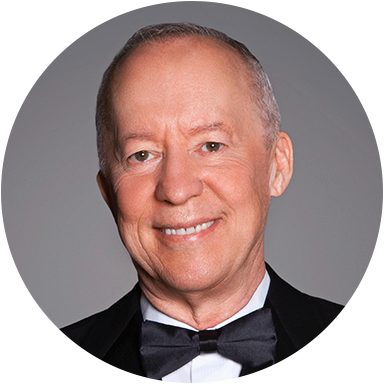
Mark Hayes

Mark Hayes has established himself as a prolific composer and conductor whose catalog encompasses over 1,750 published works across multiple genres and ensembles. A summa cum laude graduate in Piano Performance from Baylor University, Hayes brings concert pianist credentials to his compositional voice while maintaining deep connections to choral and orchestral music. His work has been performed at major venues including Lincoln Center, Carnegie Hall, and the National Cathedral, and his sacred music commissions have taken him from Hong Kong to Rome, where he conducted his Requiem as part of the Vatican-sponsored Festival Pro Musica E Arte Sacra in 2014.

Beyond the concert hall, Hayes has contributed to musical theater, producing orchestrations and arrangements for stage productions and writing the score for Civil War Voices, which garnered six awards at the Midtown International Theatre Festival. His particular devotion to piano writing has resulted in over 100 published piano volumes spanning gospel, classical, jazz, and popular song arrangements. Throughout his career, Hayes has maintained commitments to education and artistic excellence, receiving the Award for Exemplary Leadership in Christian Music from Baylor University's Center for Christian Music Studies in 2010.

Why we love this

Hayes transforms Angelou's urgent, resonant poem into music that refuses easy resolution. The harmonic tension he builds throughout the piece mirrors the bird's struggle, while the unexpected major shift at the final cadence lands with genuine spiritual weight, making this an intellectually honest setting that challenges singers to inhabit the emotional arc rather than simply deliver sentiment.

What to expect

The piece inhabits a minor-key landscape that feels introspective and searching, with harmonic restlessness that mirrors the poem's central metaphor of confinement. Then, unexpectedly, light breaks through. That final major cadence feels less like a conventional ending and more like a threshold crossed, leaving singers and listeners in a space of hard-won possibility.

Who it's for

Choirs with intermediate to advanced musicianship and the vocal maturity to engage substantive text. The SSAA voicing and harmonic complexity suit upper-level high school choirs, collegiate ensembles, and community choirs seeking meaningful secular repertoire with literary weight.

How to get the most out of it

  • Shape the walking tempo as though propelled by the voices of ancestors; avoid metronomic evenness by allowing slight rhythmic elasticity in the longer phrases.
  • Emphasize the text underlay carefully, ensuring each word is voiced with intention through the harmonic shifts, especially in the minor-key passages where diction clarity matters.
  • Let the Picardy third emerge naturally without preparation or apology; rehearse so the singers understand it as a harmonic resolution, not a surprise.
  • Balance the SSAA voicing so upper voices maintain definition within the thicker harmonic texture without forcing tone.

How to use it

This works powerfully in a concert exploring themes of freedom, resilience, or social consciousness, or paired alongside other African American literary settings. The relatively compact length (12 pages) makes it suitable as a centerpiece in a thematic program or as a substantive closer that leaves audiences thinking beyond the final note.

Skills your students will build

  • Reading and sustaining interest through harmonic ambiguity and minor-key harmony
  • Interpreting poetic text with musical intention and emotional authenticity
  • Balancing four voice parts with clarity within thick harmonic textures
  • Understanding and executing modal mixture and the Picardy third as a harmonic choice
  • Maintaining ensemble intonation across extended passages with chromatic movement

You May Also Like
