

Accent on Achievement, Book 2: B-flat Bass Clarinet Book & Online Audio/Software
$11.99 USD
Sale price
$11.99 USD
Regular price
Skip to product information



Accent on Achievement, Book 2: B-flat Bass Clarinet Book & Online Audio/Software
By John O'Reilly and Mark Williams
Level: Beginning
Item: 00-18260
$11.99
One moment…
Description
Accent on Achievement is a revolutionary, best-selling band method that will excite and stimulate your students through full-color pages and the most complete collection of classics and world music in any band method. The comprehensive review cycle in books 1 & 2 will ensure that students remember what they learn and progress quickly. Also included are rhythm and rest exercises, chorales, scale exercises, and 11 full band arrangements among the first two books. Book 3 includes progressive technical, rhythmic studies and chorales in all 12 major and minor keys. Also included are lip slur exercises for increasing brass instrument range and flexibility. Accent on Achievement meets and exceeds the USA National Standards for music education, grades five through eight. This title is available in MakeMusic Cloud.


Don't just read it, hear it, play along with it, and watch your students grow with it. In MakeMusic Cloud, Accent on Achievement, Book 2: B-flat Bass Clarinet Book & Online Audio/Software comes alive with professional accompaniment, adjustable tempo, and built-in practice tools that turn solo practice into real progress.
Open in the Player
Jump straight in and assign it today.
Start Your Free Trial
Open this title and explore the full library in minutes.
Sample Audio
1
America the Beautiful
--:--
2
Yankee Doodle
--:--
America the Beautiful
0:00
0:00
Sample Video
No sample videos found.
Additional Details
More about this title
About the Authors
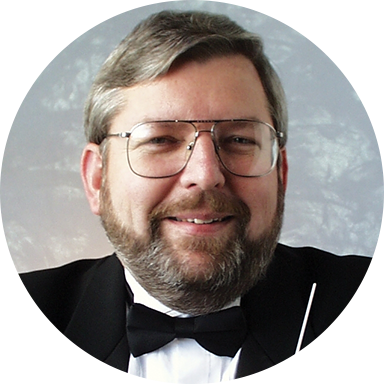
Mark Williams stands among the most celebrated composers for school bands and orchestras. He co-authored the widely used Accent on Achievement Band Method and accumulated over 200 published compositions throughout his career. His work spans band, orchestra, and choral music, earning recognition across the educational music world.
Williams built his reputation through extensive clinical work and conducting appearances across North America and beyond. He traveled as a guest conductor to 34 states, 5 Canadian provinces, and Australia, sharing his expertise with students and musicians everywhere. His achievements include winning the Western International Band Clinic's Gralia Competition and receiving multiple ASCAP Special Awards.
Based in Washington state for much of his career, Williams taught music in schools there with a particular focus on elementary band instruction. He earned both a Bachelor of Arts in Education and Master of Education from Eastern Washington University. Beyond composing and teaching, he performed bassoon professionally, including service as a woodwind performer and arranger with the 560th Air Force Band, and served as Conductor and Artistic Director for the Spokane British Brass Band.
Williams built his reputation through extensive clinical work and conducting appearances across North America and beyond. He traveled as a guest conductor to 34 states, 5 Canadian provinces, and Australia, sharing his expertise with students and musicians everywhere. His achievements include winning the Western International Band Clinic's Gralia Competition and receiving multiple ASCAP Special Awards.
Based in Washington state for much of his career, Williams taught music in schools there with a particular focus on elementary band instruction. He earned both a Bachelor of Arts in Education and Master of Education from Eastern Washington University. Beyond composing and teaching, he performed bassoon professionally, including service as a woodwind performer and arranger with the 560th Air Force Band, and served as Conductor and Artistic Director for the Spokane British Brass Band.