

White Fields in Winter: SATB Choral Octavo
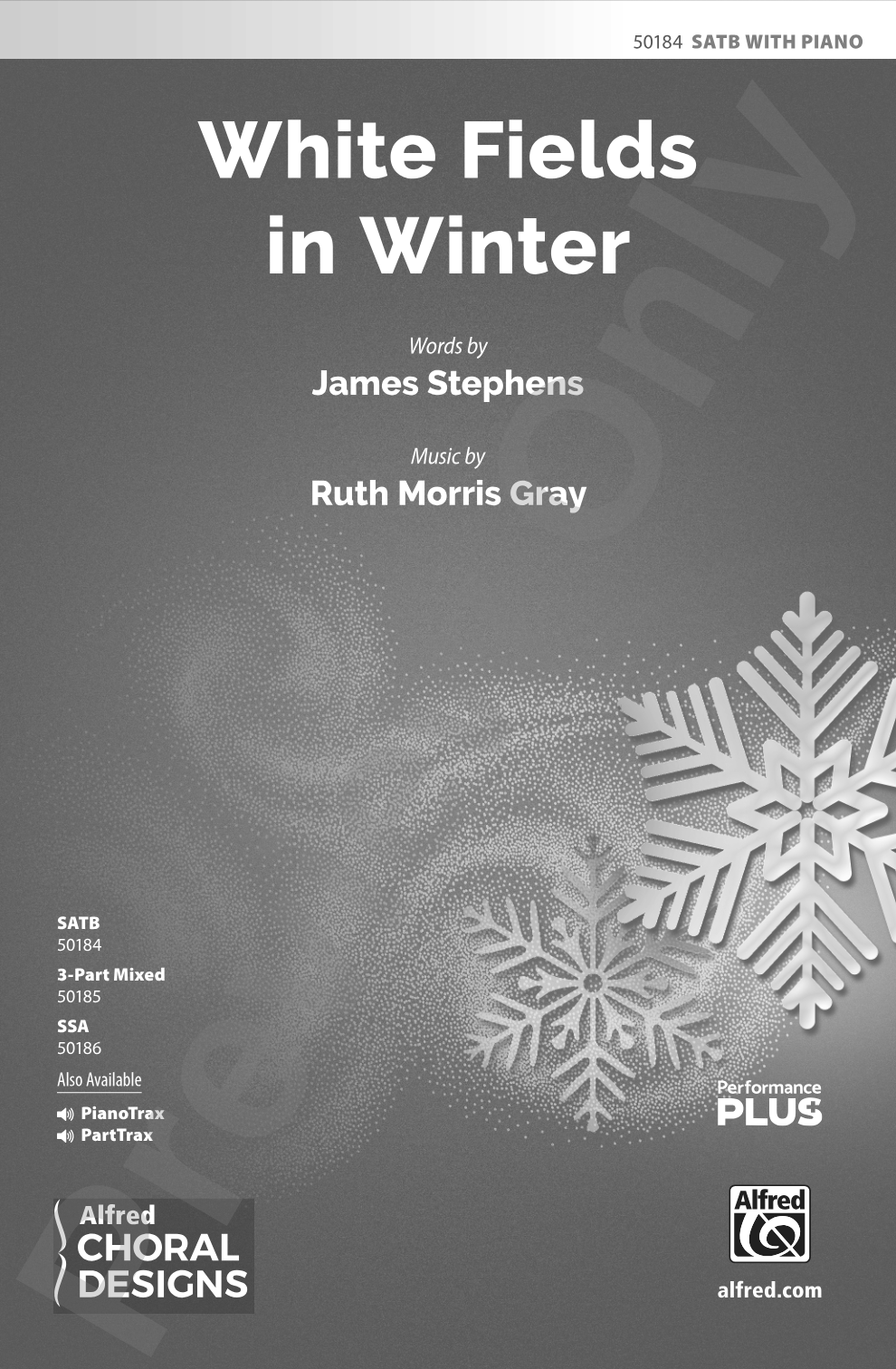
Words by James Stephens, music by Ruth Morris Gray
Item: 00-PO-0008393

$2.50
Minimum order quantity: 20 copies
Pickup currently not available
Related Items
White Fields in Winter: SATB Choral Octavo |
$2.05
|
View | |
White Fields in Winter: 3-Part Mixed Choral Octavo |
$2.05
|
View | |
White Fields in Winter: 3-Part Mixed Choral Octavo |
$2.50
|
View | |
White Fields in Winter: SSA Choral Octavo |
$2.05
|
View | |
White Fields in Winter: SSA Choral Octavo |
$2.50
|
View | |
White Fields in Winter: PianoTrax Digital Audio Download |
$9.99
|
View | |
White Fields in Winter: PartTrax Digital Audio Download |
$49.99
|
View | |
White Fields in Winter: PartTrax Digital Audio Download |
$49.99
|
View | |
White Fields in Winter: PartTrax Digital Audio Download |
$49.99
|
View | |
White Fields in Winter: SATB Choral Octavo |
$2.50
|
View | |
White Fields in Winter: 3-Part Mixed Choral Octavo |
$2.50
|
View | |
White Fields in Winter: SSA Choral Octavo |
$2.50
|
View |
Description
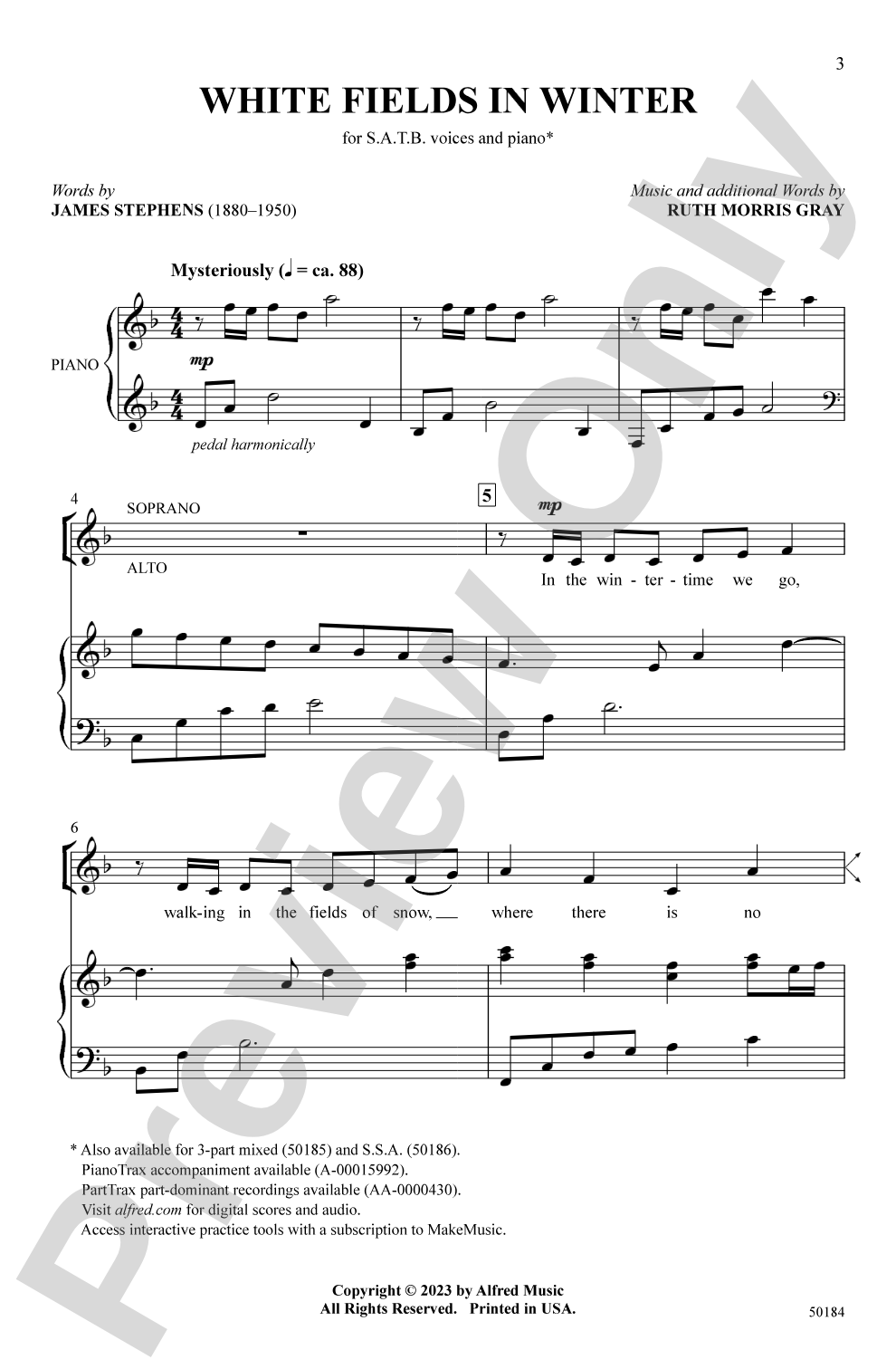
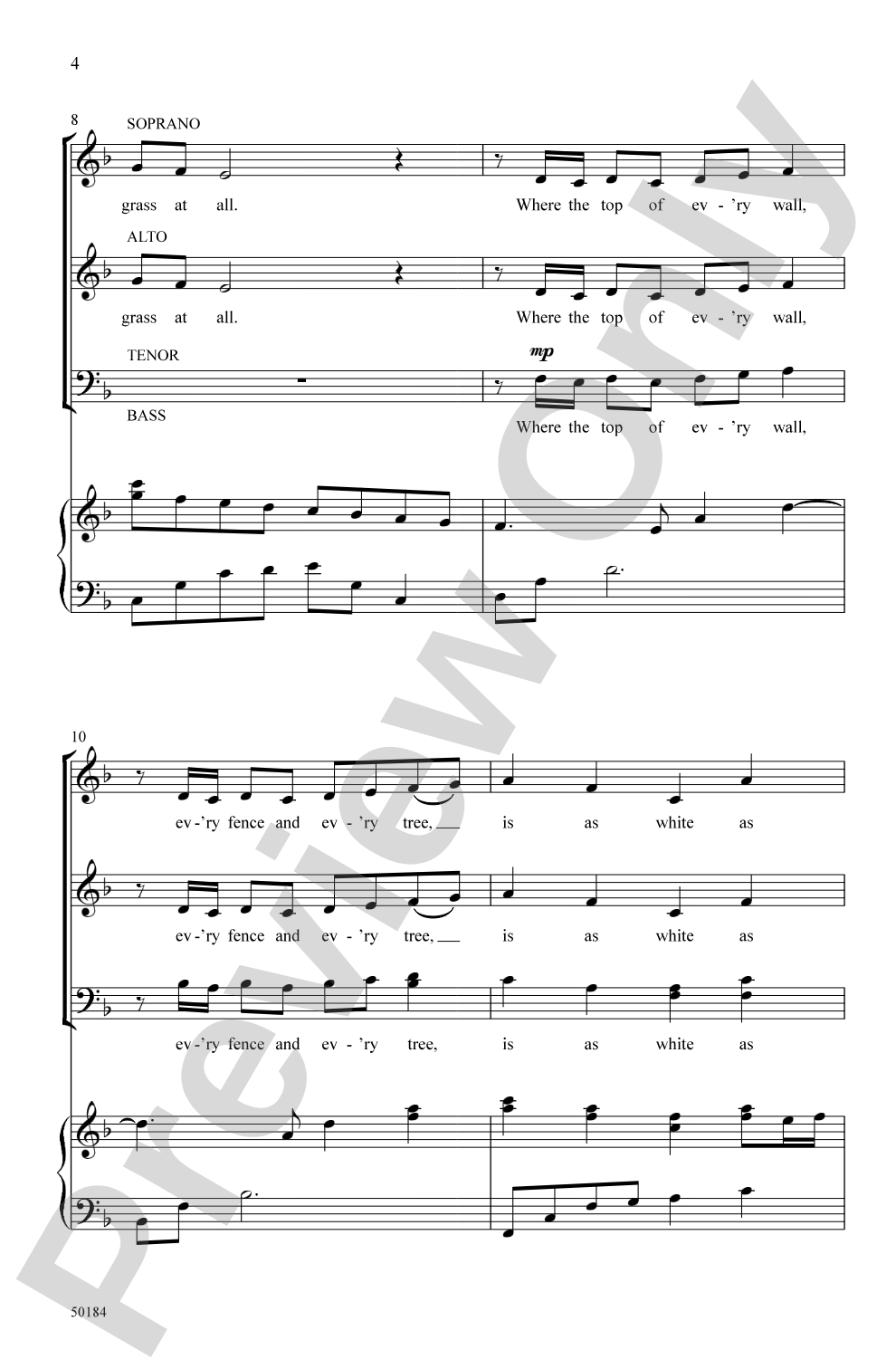
This delightful winter poem imagines footprints in the snow as "prints of silver filigree." Ruth Morris Gray's captivating musical setting seamlessly alternates between major and minor keys. Enunciate clearly on the lightly lilting verses, sing lyrically on the legato refrain, and then enjoy the surprise when the two distinct motives come together near the end.
The PerformancePlus+ series is an innovative addition to the ever-expanding MakeMusic Cloud interactive library. These engaging selections are presented with educational resources designed to enrich the rehearsal process and create outstanding performances. Including:


The PerformancePlus+ series is an innovative addition to the ever-expanding MakeMusic Cloud interactive library. These engaging selections are presented with educational resources designed to enrich the rehearsal process and create outstanding performances. Including:
- Assignment, recording, and assessment tools within MakeMusic Cloud
- Part-predominant and accompaniment tracks
- Printable sheet music (with a standard MakeMusic Cloud subscription)
- Correlated rehearsal guides and performance notes
- Rights to perform in a live or virtual setting
Don't just read it, hear it, play along with it, and watch your students grow with it. In MakeMusic Cloud, White Fields in Winter: SATB Choral Octavo comes alive with professional accompaniment, adjustable tempo, and built-in practice tools that turn solo practice into real progress.
Open in the Player
Jump straight in and assign it today.
Start Your Free Trial
Open this title and explore the full library in minutes.
Sample Audio
1
Audio File
--:--
2
Audio File
--:--
Audio File
0:00
0:00
Sample Video
Additional Details
Series:
Alfred Choral Designs
Publisher:
Alfred Music
Page Count:
12
SKU:
00-PO-0008393
More about this title
About the Composer: Ruth Morris Gray

Ruth Morris Gray has been shaping choirs at Rosemead High School since 2004, where she directs and teaches both piano and vocal music. Her compositional output spans over 100 published works, grounded in training that includes a Bachelor of Music in Piano Performance and Composition from Biola University, a Master of Arts in Music Composition from UC Santa Barbara, and a California Single Subject Music Credential from Cal State Northridge.
Beyond the rehearsal room, Gray is an active traveler, swimmer, reader, and e-bike enthusiast who explores the world with her husband Douglas. Her dual life as both an educator and prolific composer gives her distinctive insight into what resonates with student singers and directors.
Why we love this
Gray's tonal palette here feels genuinely thoughtful rather than decorative. The interplay between major and minor keys creates harmonic interest without sacrificing singability, and the architectural moment when the two motives converge gives your choir something musically substantial to build toward. Winter programming often defaults to the familiar; this piece stands apart with a poetic text that invites singers to find beauty in restraint.
What to expect
Silver and quiet, with a sense of hushed discovery. The alternation between major and minor creates a gentle emotional landscape that mirrors the winter scene, never harsh but never purely cheerful either. The culminating moment when both melodic ideas converge brings a satisfying sense of arrival.
Who it's for
This octavo works well for intermediate to advanced high school choirs, adult community ensembles, and collegiate sight-reading groups seeking repertoire that rewards careful attention without excessive difficulty. The poetic imagery appeals to singers who connect music to text, while the harmonic sophistication keeps musicians engaged.
How to get the most out of it
- Shape the verses with gentle forward motion through the lightly lilting sections; resist the temptation to drag or over-sentimentalize the text imagery.
- On the legato refrain, anchor the ensemble's blend by having singers listen inward to the harmonic color rather than pushing for volume.
- Mark the moment where both motives combine in your score before rehearsals begin, then isolate that passage early so singers understand how their individual melodic lines contribute to the unified texture.
How to use it
Nestle this into a winter concert as a reflective interlude between more energetic selections, or pair it with other contemporary seasonal works to showcase variety in modern choral writing. Its moderate length and concert-ready character make it equally suitable for festival competition or a themed program exploring nature in music.
Skills your students will build
- Singing across major/minor harmonic shifts with tonal stability
- Balancing lyrical legato lines against articulated text in the verses
- Listening to harmonic color and blend without sacrificing individual melodic clarity
- Tracking two simultaneous motives during the final convergence section